Jan 18, 2016
green1 The car never assumes a lane change, but when a car changes lanes in front of you revealing a stopped car, it has no way of differentiating this from the case of a curve in the road with a fixed object ahead. As a result, the car often assumes you will continue to follow the moving car around the curve instead of drive in to the stopped car.
There's no good way to fix this without also having the car slam on the brakes every time you have a curve in the road with a fixed object (parked car, billboard, big rock, jersey barrier) on the outside of the curve.�
Jan 18, 2016
msnow Green the peacemaker...I like this approach better. [emoji3]�
Jan 18, 2016
bhzmark
"TACC did not pick up the new target car that was stopped in the lane"
is ambiguous between:
1) TACC did not switch the target/following car to the car that was stopped in the lane (even though it may have sensed that something was there -- as it almost certainly did -- because it's right there!).
2) TACC did not sense (even as parked car or other fixed object of some kind) the car that was stopped in the lane.
I think what happened is Case 1 above. TACC *did* pick up the car that was stopped, just as it often picks up parked cars. But it didn't label it a target to be followed, and thus stopped, because it was projecting some other path, such as following an original tracked car which was driving around it.
This happens all the time when the Tesla doesn't screech to a halt when there are cars that are parked in a way just past two lanes merging into one where the merged lane is replaced with a lane of parked cars. TACC senses the stopped cars, but doesn't slam on the brakes each time because it predicts usually correctly, that parked cars shouldn't be followed but rather driven around.
This can cause problems when the driver is steering, and plots a different course than TACC (e.g., driver: I will stay in this lane and expect TACC to stop behind the new car in front of me vs. I will follow the currently tracked car and drive around that stopped/parked car directly in front of me and thus expect TACC to follow the other car (or even if there is no other car, simply know that I will be in the other lane) rather than stop behind a parked car).
But Autosteer replacing the driver steer should avoid this mismatch -- TACC and autosteer should agree on whether to stop behind a stopped/parked car, or plot a path around it and maintain speed.�
Jan 18, 2016
green1 Don't worry, I'll still chastise people who blame the car for the crash. But figuring out why the car didn't prevent the driver from making the mistake is actually a worthwhile exercise.�
Jan 18, 2016
jeffro01 I do not disagree, simply was replying to an unsolicited post directed at me...
I shall not continue.
Jeff�
Jan 18, 2016
bhzmark yes exactly -- and more succinctly than I explained it.�
Jan 18, 2016
jeffro01 I see this as one of the last remaining holes that needs to be closed and I'm not sure if the current combination of hardware is sufficient to close it. That being said, if your on a freeway that's going in a straight line I'd like to think the system should be able to discern that since you didn't change lanes or follow that car, what it's now seeing is your lane being stopped\obstructed and react accordingly.
Jeff�
Jan 18, 2016
green1 It won't know that you didn't follow the car until it's too late. And it currently doesn't have the information to know that the freeway continues in a straight line instead of a curve. Even if it relied on the maps (horribly outdated by the way) it wouldn't be able to handle a situation where a road changes from the map data, which happens more often than you might like.
I'm not certain how much more sensors would help, this feels more like a really tough software problem than a "throw more hardware at it" problem.�
Jan 18, 2016
jeffro01 I hear you completely. Although I'd argue the map data is accurate enough to be used, if it isn't already, in regards to how the system calculates actions and reactions.
Jeff�
Jan 18, 2016
green1 I think the map data could help inform it's decisions, but I worry it will cause problems similar to people reporting oddball slowdowns on straight sections of highway where a curve may once have been on a previous roadway. I also am uncertain how small a curve could be in a road and still be placed accurately to help, keep in mind how slight a curve would be to match the amount of sideways movement of a simple lane change. one of those could be off by quite a distance on a map without anyone knowing.
This is likely where Elon's touted hyper-accurate mapping comes in. In places with that level of detail you could do this, without it I'd be much more suspicious.�
Jan 18, 2016
AWDtsla All the legal talk should be quarantined to it's own forum.�
Jan 18, 2016
thegruf So this forum has <10% of owners on it.
Of those only a tiny proportion are interested enough to contribute to this thread.
And I am actually very concerned at the lack of consistent knowledge (my own included) by this select group about how these critical assistance systems actually operate.
This, I think requires susbstantially more pro-active education by Tesla (emailing owners with links to videos for example) in order that owners can understand properly how they work, how to interact with them and their limitations.
If ppl here are arguing about it, you can bet that the typical owner knows a whole lot less.
Nobody is querying the fact they are assistance systems and the driver retains responsibility but (especially) as new technology owners should be educated as to their functionality and limitations.
And yes, I am talking about far more pro-active than rtfm, which at least 50% of the population wont do as a matter of pride, along with never asking for directions.�
Jan 18, 2016
bhzmark Apple theory of ui says customer shldnt have to read a manual. There is something to that. Best would be if it just worked as people wld reasonably expect it to work.�
Jan 18, 2016
Andyw2100 No one is going to kill themselves or anyone else by incorrectly operating an iPhone.�
Jan 18, 2016
Tourman Did Tesla get back to OP with what the logs said? Don't want to crawl through 42 pages of speculations.�
Jan 18, 2016
msnow They said everything worked as it should and that he's responsible. Didn't produce logs for him to see though.�
Jan 18, 2016
Tourman That's slightly disappointing to hear. GL OP and just be careful out there.�
Jan 18, 2016
Auzie I would not use iphone whilst charging. Some people got zapped.
Also when my ipad is charging, I can feel tingling on the metal surface if I touch it. I only charge it when it is away from flammable stuff. Better safe than sorry.
All my chargers are original Apple chargers.�
Jan 18, 2016
Caligula 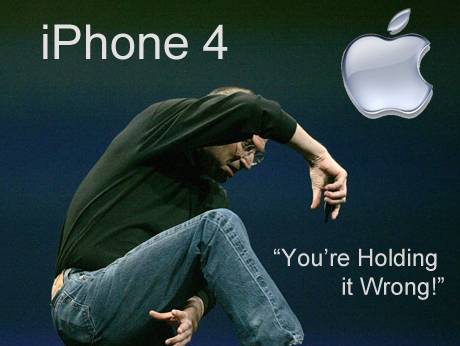 �
�
Jan 18, 2016
bhzmark And what follows from that?
The Tesla UI needn't strive to be intuitive?
Handguns are used by people to kill themselves and used incorrectly.
What follows from that?
A large percentage of the people will not read the manual for a handgun or for a Telsa.
Well designed cars, guns, cell phones, and everything else operate as intuitively as possible.�
Jan 18, 2016
Andyw2100 thegruf pointed out that with all the confusion among members here, who are almost certainly better informed than the average Tesla owner, it was clear Tesla could be doing more to educate its owners on how the cars' features work.
You countered with the point about Apple and how UIs should be intuitive.
My point was that while that's all well and good, right now that isn't the case with Tesla's features, where the stakes are a lot higher, and where the cost of misunderstanding the features and how they work could be catastrophic. Sure, Tesla can work to get where Apple tries to be. But a quicker solution, that could be implemented much sooner, and could very possibly save lives, would be something along the lines of what thegruf was suggesting.�
Jan 18, 2016
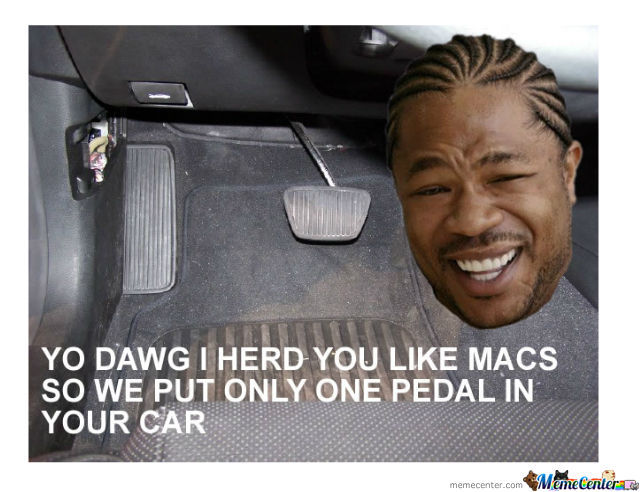
Caligula Maybe Tesla should just make everything operate off of a single large button?
 �
�
Jan 18, 2016
AWDtsla Documention is never a substitute for a good implementation.�
Jan 19, 2016
sms A little off topic? A number of responder have indicated that they set the distance/stopping time at 6 or 7 when driving at hwy speeds. Does anyone have an opinion whether if one is drafting behind a tractor/trailer or bus it would be safe at a lower number than when following a car because I assume that it takes the big rigs significantly longer to stop? Thanks
- - - Updated - - -
A little off topic? A number of responder have indicated that they set the distance/stopping time at 6 or 7 when driving at hwy speeds. Does anyone have an opinion whether if one is drafting behind a tractor/trailer or bus it would be safe at a lower number than when following a car because I assume that it takes the big rigs significantly longer to stop? Thanks�
Jan 19, 2016
Deeppurple Here�s the excerpt from the Tesla Manual�s Automatic Emergency Braking section:
�When Automatic Emergency Braking has reduced the driving speed by 40 km/h (25 mph), the brakes are released. For example, if Automatic Emergency Braking applies braking when driving at 90 km/h (56 mph), it releases the brakes when the speed has been reduced to 50 km/h (31 mph).
Automatic Emergency Braking operates only when driving between 5 mph and 85 mph. �
Perhaps the system worked and the emergency breaking kicked in, reduced the speed of the car by 25mph and then disengaged letting the car continue to roll. The driver then applied the breaks hard.�
Jan 19, 2016
Andyw2100 A lot of people think it is a pretty bad idea to draft behind tractor trailers. That being said, a quick Google search turned this up:
"At 55 mph, it takes a large truck two football fields to come to a stop. In general, it takes an 18 wheeler 40% longer to stop than an average car. In adverse road conditions, it can take much longer. "�
Jan 19, 2016
theslimshadyist That was pretty damn funny!�
Jan 19, 2016
AWDtsla You think it's a joke but go check out the other thread about owners not being able to tell their feet apart and accidentally hitting the gas.�
Jan 20, 2016
Ivo-G Tell their feet apart? I only use one foot to go or brake, my right foot.
Not being able to tell the pedals apart, or inadvertently striking both pedals if wearing booths, that I can imagine happening.�
Jan 20, 2016
LetsGoFast Wow. That's a pretty terrible implementation.�
Jan 20, 2016
msnow I thought he said TACC had slowed the car to about 5 mph but didn't stop which resulted in the accident. If that was the case AEB wouldn't have kicked in because it was outside of the lower limit.�
Jan 20, 2016
JST I've been thinking the same thing and trying to figure out why they would do it that way.
Best I can guess, they figure AEB is a system to buy time for the driver to react--it's not supposed to fully take over, just brake hard and fast to bridge the gap between the need for action and the driver reacting.
As for why it doesn't work under a certain speed, my SWAG here is that the parking lot case is hard for the car to deal with; when the car is moving that slow, it's presumably because there are obstacles around that the driver is aware of and paying attention to. Discriminating between a stopped car and a slow moving one that the driver is aware of is probably harder when the closing speeds are that low.
Again, just a guess.
It also sounds like TACC will generally slow the car down to a full stop when enabled. This is separate from AEB. In this case, it sounds like TACC got confused at a very low speed, below the threshold for AEB. The OP fell into a gap between AEB and TACC capabilities.
All of this, to me, is just further evidence that these systems aren't as advanced as maybe we think they are.
Edit: I will also note that I really wonder about the summon feature, in light of the lower limit on AEB. Is the calculus there that the "driver" is going to be paying careful enough attention that she will be able to stop the car if the sensors lose the plot? Or are there different default rules for what the car does under "summon" than what it does when using TACC?�
Jan 20, 2016
brec Hitting the ... what?!�
Jan 20, 2016
msnow You remember don't you? Back in the day they used to have this thing called a "gas pedal".�
Jan 20, 2016
AWDtsla Don't worry, no carbon was released in that post.�
Jan 20, 2016
Andyw2100 I'm not sure how you are comparing Summon and TACC. With Summon the car is moving very slowly, and presumably using the sonar sensors to maneuver very precisely. Summon, driving at 1 or 2 MPH , if that, is certainly going to allow the car to get closer to known objects than the car is ever intentionally going to get when TACC is engaged.�
Jan 20, 2016
dhanson865 The long skinny pedal on the right.
I learned in physics class in high school that calling it an accelerator pedal is a misnomer because the brake pedal causes acceleration as well.
Notice that it doesn't say that the value has to be positive or negative. Some people get caught up on the term deceleration and assume acceleration is the opposite when in fact acceleration in physics is a neutral term that covers both gaining speed and losing speed.�
Jan 20, 2016
bws Hi,
I would like to provide an alternative view. It is not necessary to set the TACC distance lower either because your speed changed, because traffic is is heavier (or lighter), or because you are driving in California with more aggressive drivers.
We drive in the San Francisco Bay Area in heavy traffic all the time. Both my wife and I leave the TACC distance set to 7 at all times. While it may be annoying the first few days when a few people cut in front of you, if you are able to take a few deep breaths and relax, you may find that AP allows you to drive with less stress and build a lot less road rage. With the value at 7, there is much more time to react to situations when you need to take over, and once you give up on trying to prevent anyone from 'getting in front of you' your stress level when driving in heavy traffic will go way down. Even at 7, the car will come to a complete stop in heavy traffic, you do not need to lower the value. (The distance decreases dramatically when going at low speeds, I am not sure you can even tell the difference between 4 and 7 when going under 10 MPH, I don't change it, but you are quite close enough even at 7).
I hope this perspective is useful to some,
-Brent�
Jan 21, 2016
Ocelot I agree completely with Bhuwan.
The only thing I hope he is wrong about is the admission of guilt. If there is something wrong history tells us best to admit it and move on...rather than cover things up...GM ignitions...Toyota sudden unintended acceleration etc. I find it super surprising that some people can be such staunch defenders of a brand new technology with still lots of unknowns. For full disclosure I am heavily invested in TSLA.
Personally I do not think I would use any autonomous features...until much more proven.
- - - Updated - - -
That about sums it up.
- - - Updated - - -
Well that helps sum it up as well.
here is another thread with several reports of the near same experience as OP...
What the Heck is up with Autopilot?�
Jan 21, 2016
Ivo-G Thank you Brent, you may not often post but when you do...!
I will certainly consider using the TACC at setting 7 after reading this and thinking deeply about it (once I get my car that is).
In my experience people will try to cut in front of you no matter how big a gap you leave, so best to have te room to react than to try and dissuade them with smaller gaps.�
Jan 21, 2016
Krugerrand Brent's post was great. So many people in a hurry to go nowhere. If it's that important for someone to get a few feet closer to their destination, have at it I say. For sure I won't be the one on the side of the road collecting or giving insurance information.�
Jan 21, 2016
McRat I feel for the OP. That must have been very embarrassing and quite a hassle. Glad everyone is OK. I'm not so quick to blame the car mfr though. The following is not going to be popular, but is true:
Even if cars are truly cross-linked autonomous, auto braking and adaptive cruise should be thought of as a second line of defense, not the decision maker when it comes to safe car operation. If somehow you are distracted or suddenly incapacitated (fall asleep is #1), auto systems should save your life and other motorists.
Like airbags, you should have them, but not need them for survival. Very cool technology, but will never be able to do 100% threat assessment, deer strikes come to mind as does wrong way drivers. You should decide your following distance based on current conditions and traffic behavior, something computers cannot do unless cross-linked. Conditions include long range visibility, your "space pillow", and how the driver ahead of is acting (texters need more following distance, since their braking is based on crumple zones during impact, not car performance). You should always be able to easily outbrake the car in front by looking further ahead. Always have a escape plan. ABS allows you to MASH that pedal violently as you firmly steer the car around threats. If you aren't hitting the brake rapidly and with great force, it doesn't do it's job as well, it has to enable ABS before you can steer the car aggressively under max brake effort for the best results. Lanes are 12' wide normally, and you can split lanes like a motorcycle in an emergency to reduce impacts, or keep the tailgater from giving you whiplash.
If you have NOT experienced max ABS braking while rapidly changing directions, it costs between $250 and $2500 to learn this in a safe environment. IMO, should be mandatory, all my family has had it, I have taken many classes, and continue to do so. Classes are fun, and keep you sharp. Most people in classes are surprised how hard any modern car will brake today. Normally the instructor will tell you, "again, faster and harder" during ABS training until you get angry on the brake pedal.
Cliff Notes: Be alert, get training, predict problems.�
Jan 21, 2016
thegruf Reading the first post again it seems that both TACC and AEB should have worked (assuming he was travelling >5mph).
This strongly suggest a detection failure.
I am surprised that Tesla have not sent a specialist to test in detail and review the operation of all the sensors and systems involved.
There is a lot of Tesla reputation at stake here.
I have been educated by this thread how AEB works ie reduces by 25mph, or if travellling at <25mph presumably is supposed to stop the car. I can see the thinking here, that at highway speed abruptly braking by 25mph will alert the driver who will instinctively take over, however abruptly braking for say 60mph to a standstill on a highway could be exceptionally dangerous in the event the sensor misdetected a threat (dog running across road perhaps (make that a roo for the Aussies here) ie a brief threat that clears but that sensors could detect as a stationary object).
It is essential that the owner clearly understands the nature of this functionality. I admit I didn't. I doubt I am alone.
However I am confused, consider:
I am travelling at 50mph, the car detects a (eg stationary car) threat in front of me and activates, it reduces speed to 25mph.
I am then doing 25mph, the threat is still there so this is a valid condition for AEB to activate again?
The evidence suggests not, but where is the line in the Tesla text, so specify how the AEB is reset to reactivate?
We can all assume how it works, but for such a safety aid, surely it is critical to explain the operation fully to the user.�
Jan 21, 2016
Electricfan I have not read every post, so if I'm repeating something somebody else said, forgive me.
I think AP may recognize cars faster and better than 18 wheelers. This is based on an unscientific sample size of one - me and my experience. I drive in Houston rush hour traffic 5 days a week on beltway 8, with AP engaged. The car has never come close to rear-ending another car. But today, for the first time since 7.1 came out, I almost hit an 18-wheeler. I would have hit him at about 5 or 10 mph if I had not stomped on the brake at the last second. I let it get extremely close because I wanted to see if the Model S would stop, but it didn't.
What happened was this: I was in the center lane with cruise set to 73 (distance at 7 as always) and the lane was clear in front of me. Then this 18-wheeler decides to pull in front of me from the lane to my right. (I ordered a new dashcam today, will be installed tomorrow, because my dashcam failed me) The Model S started slowing but only on regen. And it didn't start slowing until long after I was aware the truck was pulling in. (because it took it too long to recognize the truck?) I didn't feel the brakes cut in, and that really puzzles me because I know sometimes they do kick on. So, the car slowed but not enough and as I was about to smack the rear of the truck I decided to exercise the better part of valor and step in, braking just in time to keep from hitting it.
I am mystified why Tesla would program the car to let it hit an object it knows is there. Why not brake?? It was slowing quickly on its own. Why on earth did it not use the brakes and slow just a little more to avoid an accident?
The only answer I can come up with is this: I was wrong. It wasn't going to hit the truck. But I've been driving for 40 years, and all my instinct says I would have hit him. Again, I wish I had the dashcam footage, but dashcam is in trashcan now. New one on way.�
Jan 21, 2016
AWDtsla I don't seem have a problem doing it for free. LOL. How can you trust any car and your ability to drive it you don't push the limits on regularly? In fact when it gets slippery out you should try tapping the brakes or using the throttle often to test surface friction.�
Jan 21, 2016
Ulmo I've always set the Tesla to 7 (max distance) during all my Tesla test drives 100% of the time, and each drive when I had a time where I had to take over, the distance was enough that I easily knew when I had crossed the "threshold" for it being too weird, so it was easy for me to know when to take over. Also, I've almost never had people cut me off for Tesla's "7". I normally have much more following distance than a Tesla 7 when I drive myself in my own car. I was just taught that way. That's when people cut me off left and right. I usually laugh, because I'm very good at lane picking and almost always end up passing them again without trying. I swear by max following distance every time (except when I'm trying to do precise psychological programming of the behaviors of others around me in order to open up a hole or wake someone up, but that's pretty rare after I've educated all the common companion commuters on a particular route and time of day).
I'm much more at risk of becoming bored with driving. I can't wait until "autonomous" is working proficiently enough. I wonder if they realize the gaps in redwood trees above show the next curve angle before you can see it, if they know headlamps reflecting off around curves might be a car, the crest of the road is the middle divider (unless marked), the minimum stopping distance around a turn, looking between the cars to see all the cars ahead for a mile ahead all thousands of them, looking at their weaving back and forth, their inattentiveness, their tail lamps, and can make psychological profiles of each driver from the front view cameras to know what they're all up to and plot routes through them as the car drives ... that's what us experienced human drivers do, so anything less and the autonomous cars aren't going to be that smart. Here's hoping they are.
For now, when it's set to 7, and the car wants to drive you into a concrete center divider, you're already steering it back into the lane, no problem. If you have it set to 2, then all of a sudden you have no idea when to start reacting, and then it's too late already. Who cares if someone cuts you off. That's so irrelevant.�
Jan 22, 2016
sandstruck New Embarrassing (to me) Information from the logs
I received a phone call an hour ago from my Tesla Service manager who told me the following:
My car had been traveling at approximately 40 MPH when it engaged the AEB. He told me that the engineers determined that the car in front of must have slammed on the brakes ("a rapid emergency deceleration"), and the AEB significantly slowed my car, thus avoiding a much worse accident. In fact, the damage to my car is negligible (broken nose cone).
As I repeatedly mentioned in my posts, I remembered something very different transpired--a gradual slowing down, synchronously, with the car ahead of me to about 5 MPH--and a surprising, last-second failure of my car to stop. That's how I remembered it, anyway (I'd have sworn on a stack of bibles). It now seems that my version of events was dead wrong. It makes me wonder how many other memories I have mistakenly fabricated.
The important thing is that I believe Tesla's interpretation of events more than my own. And I want to apologize to everyone who wasted time on this thread and on me, and who believed me at my word. To those posters who accused me of acting irresponsibly by posting before I had the full information from the logs--you were right!
I will slink away now to my basement, inebriate myself perhaps, and marvel at my fallibility, at the frailty of my memory. Mea culpa.�
Jan 22, 2016
ecarfan @sandstruck, again I applaud your openness and thank you for sharing that information from Tesla.
It is well established that human memory can be remarkably inaccurate, especially when a series of events occur very rapidly. And trial lawyers know very well that "eyewitness" accounts where the witness states emphatically that they are accurately describing what they saw may in fact be wildly inaccurate.
I remain convinced that a TACC setting of 6-7 is significantly safer than a lower setting. It not only gives the driver more time to react, it also gives the AEB more time to analyze the situation and respond. It seems likely that a greater following distance might have prevented this accident.�
Jan 22, 2016
andrewket +1 on your transparency. Also +1 on dashcams.�
Jan 22, 2016
msnow No "slinking" necessary @sandstruck. #1 no one got hurt #2 you have proven to be an honest person and #3 it was a stimulating and knowledge provoking thread.�
Jan 22, 2016
calisnow The autonomous cars don't have to be as good as humans at interpreting complex visual pictures - they just have to cause accidents at lower rates than humans do and they will have beaten us at our own game despite being "dumber." As for their ability to interpret complex visual pictures - that will improve continuously of course.�
Jan 22, 2016
jeffro01 Indeed. I want to say "I told you so" but that wouldn't be fair since my original premise was that the OP wasn't being honest. That clearly isn't the case, the OP was being honest based on what they thought happened so I stand corrected in my insinuation that the OP was not being truthful. As always there is a difference between genuinely thinking you're being honest and well, not...
Jeff�
Jan 22, 2016
calisnow You didn't waste anybody's time, nor were you irresponsible in describing your memory of the incident. The only time wasters were the jerks on the thread who attacked you. The discussion itself has been very helpful.�
Jan 22, 2016
Ivo-G Sandstruck, thanks for sharing it all with us. When so many can post about nags or delivery times or what they bought for X-Mas and who knows whatever other topics, you chose to share with us one of the most horrifying moments a (new) car owner could experience, and I for one definitely learned a lot from it. These lessons will stick with me for a long time I hope and may one day save me from being in such a situation myself.�
Jan 22, 2016
msnow True but you did call it right when you said to wait...that we didn't have all the information. I'm glad that Tesla was more forthcoming with what the logs showed rather than the "sir we are not responsible" comments.�
Jan 22, 2016
bhzmark That's exactly how AEB is supposed to work.
But was TACC on? And if so, why didn't it stop the car?�
Jan 22, 2016
McRat Probably not news, but when "exciting" things happen that cause adrenaline to kick in, your perception of time and speed changes. Everything slows down. It's normal, and nothing to be embarrassed about.�
Jan 22, 2016
ModelX Thanks for sharing, both your original perceptions and your new knowledge!:smile:�
Jan 22, 2016
Andyw2100 Thanks for the follow-up, sandstruck. No need to apologize!
For those who are not interested in a dashcam as an option to be able to go back and at least partially recreate for yourself something like this, should it happen, the logging sites / software now available might be good alternative solutions. If sandstruck had been using one of them, he could have checked the log of his speed himself almost immediately after the accident.
Visible Tesla is free software that would allow you to log your car's activity. Two newer services are EVMote and TeslaLog. There are threads here on TMC on all three.
TACC was on. The OP has said this many times, and it was confirmed by Tesla. The reason it didn't stop the car was that the target car did "a rapid emergency deceleration." TACC is not designed to slow the car in that situation. AEB kicked in, and did reduce the impact of an unavoidable frontal collision, which is what it is supposed to do.�
Jan 22, 2016
gothmog2 He was following at 2 car length difference. If it had been four lengths AEB might have had enough time to stop. If the car in front does an emergency stop, AEB can only do so much at close range (and did what it could)
Thanks for sharing, Sandstruck.�
Jan 22, 2016
AWDtsla This is the real question.�
Jan 22, 2016
Canuck "You must spread some Reputation around before giving it to sandstruck again."
(No need to slink away -- you should proudly enjoy that drink. Cheers!)�
Jan 23, 2016
thegruf I'm going to buck the trend here - with the obvious caveat that I was not there so do not know what really happened and I dont have the logs from Tesla.
That said ...
If AEB kicked in - ie the car slammed on the brakes - I would be astonished if the driver didnt clearly recall this.
An attentive driver would be alert to a sudden rapid deceleration, and inattentive driver would be woken up by it.
I'm no conspiracy theorist but something doesn't stack up.�
Jan 23, 2016
WarpedOne The most probable reason fort things not stacking up was already given:
Human memory is very imperfect thing. A person may be 100% honest in his recollection and interpretations, but he has no clue about accuracy of those memories and interpretation. Human brains are an imperfect recording machines when in 'normal' state. When they jump into panic mode, it only gets worse.
Go watch some mind games documentaries. It gets interesting and scary how 'removed from reality' are our perceptions.�
Jan 23, 2016
bhzmark If TACC is on and senses a rapid decelerating car in front, it damn well better stop my car behind it -- or at least try its hardest. There is no reason it shouldn't. It seems to do that regularly in quickly stopping traffic. Even when making the tracked car red, but it still supplies sufficient braking to stop. I still don't see why it didn't ok in this case.
Also sandstruck didnt report that tesla said anything about TACC in this latest call. I would him to ask them this question. Why didn't TACC stop the car?�
Jan 23, 2016
davidc18 Sandstruck thanks for sharing, it was an interesting thread. Glad you are okay.�
Jan 23, 2016
TSLA Pilot TESLA MOTORS: WHERE ARE YOU?
One event is an anomaly; two is a trend.
It's time to send out some engineers and start carefully inspecting hardware and reviewing vehicle logs--here is a perfect example, and the OP's new car too, of course.
Let's nip these problems in the bud before we start reading some remarkably bad headlines . . . .
Thanks.
- - - Updated - - -
Whoa. Don't be so hard on yourself.
What you've been told does not necessarily indicate what actually transpired. Yes, being an eyewitness may not mean you saw everything correctly either, but nor is the car infallible either.
What the car "reported" may not have been exact because what the logs show is simply what the car sensed--and it may not sense correctly.
Regardless, this has been a very informative thread and we appreciate your candor.
I'm going to start looking for dashcams--do we have a thread for those on here?�
Jan 23, 2016
sandstruck This squares with what the Service Manager told me. At the time of the event, TACC was functioning correctly. Had my distance been set higher than two, he said I'd likely have avoided the collision (i literally needed an extra foot).
Extrapolating from this, it seems obvious that depending upon one's speed, even with the maximum setting of 7, the system's radar and cameras cannot see far enough ahead to avoid all accidents (i wonder if i'd been going sixty at the time, with a setting of 7, would the car have stopped on time? How about at seventy?).
Some on this thread have posited that tbe system reacts faster than a driver ever can. but (and this is also obvious) in many cases a driver might see brake lights ahead cosiderably sooner than TACC senses that car's rapid desceleration.�
Jan 23, 2016
msnow True.�
Jan 23, 2016
dsm363 Thanks for sharing and glad you are ok as well. That explanation does seem more plausible as if there was a gradual deceleration to 5 mph you should have been able to stop the car easily. Memory can be a tricky thing when events like this happen. Agree dash cams seem more and more useful as time goes on.
- - - Updated - - -
TSLA pilot: there is a thread for dash cams on TMC
How about a DashCam option? - Page 19�
Jan 23, 2016
ecarfan Tesla does not claim that TACC will bring the car to a complete stop in every situation. At this point the system is not capable of doing that. The AEB kicked in at 40mph and significantly reduced the impact speed. The TACC setting was 2 on a scale of 1 to 7. The following distance was not enough to give the system time to react and avoid a collision.
The system is not yet perfect. You seem to think it should be at this early stage of development. I'm sure it will improve over time.
My conclusion is that at this time Tesla should not allow such low TACC settings. It can give drivers a false sense of security.�
Jan 23, 2016
dsm363 Agree. If someone is following that close they should be in control and responsible. Not depending on some system that isn't designed to completely protect them in every situation.�
Jan 23, 2016
mkjayakumar For those who say AEB will release the brakes after reaching 5mph, have you seen the video titled: Autopilot saves the day (Tesla Autopilot saves the day - YouTube) where the car initially traveling at 45mph sees an object cut across and comes to a complete stop with inches to spare.
You will notice that the car was never locked onto anything in the front, but it still came to a complete stop when it noticed a stationary obstruction.
So this 'AEB will reduce by 25 mph and will give up after reaching 5 mph' isn't true as you can clearly see on that video�
Jan 23, 2016
pdq In the 4 months I've had my P90D I've used TACC as often as I can -- love it. I don't like people who tailgate me, and I don't tailgate, so I have my car set to a separation distance setting of 7 which gives plenty of time if TACC were to not respond properly.
AP OTOH still scares me. I tell people it's like being a passenger in a car with someone who has just gotten their learners permit.�
Jan 23, 2016
Pollux I admire your willingness to re-examine your position.
While confabulating is way more common than any of us would like to believe, I'm still struck by the variation between your memory and the report from Tesla. The engineer who used to reside within my body would want to see the actual data and/or engineering root cause analysis rather than have it filtered through a service manager. Not that I would ever doubt the chain that reliably transported data and interpretation all the way from an overworked individual contributor in a core engineering team all the way through a sequence of managers and departments until it finally reached you.
Alan
�
Jan 23, 2016
AWDtsla Just trying out 7 tonight. That's really really far, at embarrassing levels even. It's like you're "that guy" with a line of cars behind you, trying to pass you over the shoulder one at a time�
Jan 23, 2016
bhzmark From the OP:
No one said TACC should be able to avoid a collision in all cases. But it should try. And certainly in this case. If it is following a car for a few minutes, and that car brakes hard, even screeches to a halt, there is no reason TACC shouldn't do the same. And it should be able to do it much faster than any person can.
And also, why was AEB engaged when TACC was on and functioning? Why didn't TACC do the braking (to a stop) instead of AEB braking (just reduce speed by 25mph)?
I still think something else went on. From my extensive experience with TACC (and its counterpart in other cars) I have seen auto braking very aggressively when the locked on car in front brakes hard.
Which best explains what happened?
1) Sometimes when TACC is on and functioning and following a locked on car and that car brakes hard, TACC might run into it anyway. (or just hand over the braking to AEB which won't brake to a stop).
OR
2) While TACC will normally brake hard to try to stop when the car in front brakes hard to a stop, in this case there was weird condition such as some lane-changing by cars in front, or a hill, or a curve, or sun glare, or accidentally disengaging TACC or something else that better explains the failure to brake hard to a stop.�
Jan 23, 2016
ecarfan TACC set at 6 or 7 provides a safe following distance and allows the driver to react in time if the car in front slams on their brakes. A lower TACC setting is not safe.
What "embarrasses" you does not embarrass me. Your attempted comparison of TACC to someone driving with a line of cars behind them on a single lane road and no one in front of them is obviously incorrect. TACC operates by locking on to the car in front and then maintaining a fixed distance.�
Jan 23, 2016
woof Playing armchair engineer...there are other possibilities. I'm sure the data show AEB suddenly kicked in at 40 MPH due to the rapidly decreasing distance between you and the car in front. However, there are alternate possibilities as to why TACC saw that.
Imagine this scenario:
- You are Car T moving 60 MPH, Car B is directly in front of you moving 60 MPH, Car C is directly in front of her, slowing down from 60 MPH to come to a stop up ahead.
- Car B sees Car C slowing down, and moves to the right lane to pass Car C, slowing down to 50 MPH, then 40 MPH.
- Car T is tracking Car B as she moves right and slows. Car T slows as well. Car B is moving faster than Car C.
- Car B passes Car C, which is now moving 20 MPH. Car T moving 40 MPH (because it was tracking Car B) switches to track Car C.
- Car C is moving significantly slower than Car T.
- Car T applies AEB as it calculates Car C is in collision path.
I'm guessing the data Tesla sees is that the tracked car suddenly slowed, thus AEB was applied. What it probably doesn't show is that Mobileye just switched which car it was tracking, which I've seen occur quite often when using the Mobileye based ACC in the BMW. I use ACC almost every day, even though every day does something "wrong" at least once, and I need to correct it. It's still a useful feature that I prefer over regular cruise control.
So have that drink, but mull over the possibility you may not be as wrong as you think.�
Jan 23, 2016
AWDtsla Lots of people do stupid things all the time and failed to be embarrassed by them.
Regardless, while it is tracking the other car, your brake lights often light up while tracking at this distance. Again I don't care if YOU are not embarrassed, but being a football field length away from the car in front of you and randomly hitting the brakes just screams "old man, should have had license revoked, steer f****** clear!"�
Jan 23, 2016
DougH For what?�
Jan 23, 2016
scottf200 Answered numerous pages back at the beginning. Summary: he ran into the back of someone and they don't blame the person that gets run into.�
Jan 23, 2016
DougH Yeah I got that. And I did not quote you I quoted the OP.�
Jan 23, 2016
scottf200 Ok. He answered it early on. Go read it.�
Jan 24, 2016
bhzmark AEB should only apply when TACC isn't on. When TACC is on TACC should brake to a stop when needed under any condition where AEB would brake only decreasing speed by 25.�
Jan 24, 2016
mkjayakumar Then how do you explain the video titled, 'Autopilot saved the day'? It brings the car to a complete stop from 45 mph in less than 2 seconds.�
Jan 25, 2016
davidc18 That may be so but it is the setting that allows the maximum time for the driver to intervene if necessary. I would never recommend any other setting while the system is in 'beta' and has proven to be negative results at lower setting.�
Jan 25, 2016
AndreyATC I always have AP on 7
I find it perfectly fine
It keeps 3-4 car lengths or so while you are following someone and stops keeping half-a-car length
Also, it does a very good job on what distance to keep depending on the speed
Overall, fairly accurate, with just a tad on the safer side
P.S. This is what i have for as a dashcam option
Amazon.com : Pyle Compact HD Dash Cam, Hi-Res 1080p DVR Video Recording, Image Capture, LCD Display, Micro SD Card Slot, Windshield Mount : Car Electronics
Good and reliable cam after 2 yrs of ownership�
Jan 30, 2016
pdq TACC isn't controlled by just the separation setting you choose, but also your speed. At 35MPH you maintain a certain distance between you and the car in front of you, but at 75MPH, it is greater -- check it out. My commute to work in the morning is on a 3 lane divided highway and it's not unusual for me to be on TACC at 75 - 90MPH. Sure, I've got a decent separation between me and the car in front of me, but guess what -- the entire column of cars is similarly spread out. No one tailgates at those speeds and in 15 years of driving that route I've never seen an accident.�
Jan 30, 2016
Electricfan My car tried to sideswipe a truck today. I grabbed the wheel and avoided the accident - I'm 100% sure it would have hit the truck. I trust AP much less now than I did when I woke up this morning. Sure hope we see a massive improvement soon. If anybody can see anything in the video that might have confused AP, please comment. I can't think of anything. The windshield was clean. The lane ahead was clear, no confusing markings of any kind. The car just dove to the right like it wanted to ram the truck. I did not hit the wheel causing it to move. I wasn't touching the wheel. My arms were at the sides on armrests. My leg didn't hit the wheel. The wheel moved completely of its own accord.
�
Jan 30, 2016
DougH Not good. Thank god you were paying attention.�
Jan 30, 2016
Andyw2100 And not reading a book...
�
Jan 30, 2016
Electricfan Right before that video I had spent 30 minutes in a bumper to bumper traffic jam, and was very happy to get be moving again. But I was reading during the bumper to bumper part. I only read on beltway 8, (or in bumper to bumper stop and move 4 ft, stop again traffic) where I thought it was safe. I'm rethinking that now. This is the first time the car ever just dived toward another vehicle for no reason. Really scared me. I have said before and now I say it again with greatly renewed conviction - I don't think Tesla should have released autopilot if they knew it was as bad as it is. Somebody is going to die, and there is going to be a very costly lawsuit, more costly in terms of lost sales and popularity of the car than in money, by far.�
Jan 30, 2016
ecarfan If that's what it takes...�
Jan 30, 2016
theslimshadyist
I'd take that video to your service center to see what sort of unacceptable hypothesis they try to feed you. Wanna take it to another level? Post the vid on twitter and tag both Tesla and Musk, ask them to comment.�
Jan 30, 2016
vgrinshpun I have an older P85+, but tried autopilot on a loaner for couple of days. As far as I remember, the car beeps if driver takes over from the AP. I was wondering why there was no beep when you grabbed the wheel to correct the course. Could it be that the AP was not on at the time you were passing the truck?�
Jan 30, 2016
sorka It's a two tone beep with lower tone following a higher tone. You can here it in the video about a half second after the manual steering correction. Easier to hear with headphones on.
Mine has done exactly this with 7.1 twice. I've stopped using it altogether except for brief intervals of just a few seconds when I need to reach down to get something and only when there are no other cars around. Really wish I could go back to 7.0 for AP but keep 7.1 for summons.�
Jan 30, 2016
vgrinshpun I've listened again, with ear phones, on high volume and can't hear any beeps...�
Jan 31, 2016
ankitmishra @ElectricFan
The road has a consistent black strip marking. I am not sure what happened there, but it is the only remote possible reason I can think of. These markings are present in the lane you were driving and in the lane truck was. Maybe your car begin following the false lane formed between black markings. I think your car was swerving between the real lane and pseudo lane much before the truck came. Check around 0:11, your begins correcting into real lane and then swerves again. 0:08-0:11, your car is going into false lane. Hey, I tried my best and I could be terribly wrong. Just trying to help.�
Jan 31, 2016
ChadFeldheimer I've encountered AP (7.0) shifting lanes on its own (into other traffic), but my experience was not nearly as smooth as in Electricfan's video. In my case, my car swerved quickly while traveling roughly 50mph. This happened twice, and I caught it both times. It was almost as if the car suddenly realized we were straddling a lane marker. I haven't had a recurrence with 7.1.
In my personal experience, the radar and ultrasonic sensors appear to be quite reliable - in the sense that if an obstacle is in range of those sensors, the car will take appropriate action. On the other hand, the image/object recognition lane detection system in the (I believe) Mobileye processor is much more prone to error. In my opinion, it is in the dangerous territory of being reliable enough to give some confidence, yet unreliable to actually depend upon. It seems to me that Tesla pushing the limits of the technology here - even Mobileye has publicly stated as much.
At speeds below 30mph or so, my car appears to be reasonably capable of autonomous (hands completely off) travel. The range and reliability of the radar and ultrasonics appear to be sufficient in this slower speed range to inform the car to drive reasonably well even with little human supervision. Once I get above 35mph, the car can get itself into trouble much more quickly, especially with lane detection mistakes.
As such, in heavy congestion (stop and go), I let autopilot do its thing and it has done a great job for me. I feel comfortable diverting much of my attention to my phone, checking and responding to messages. But when traffic allows speeds beyond 30mph or so, I begin to transition to paying close attention to the driving task and being ready to take over instantly (in terms of human reaction time).
It appears that Electricfan's video was shot at ~78mph. The steering corrections that I experienced with 7.0 were dramatic enough that they would have been quite strong swerves at 78mph. Granted, the car presumably have swerved to the same degree at 78mph.
Electricfan: glad you caught it and thanks for sharing. I need to get a dashcam so I can share mine too!�
Jan 31, 2016
green1 Please do us all a favour and launch a law suit and get it over with. You already admitted multiple times that you have completely ignored Tesla's instructions on how to use AP, and that at the time of this incident you in fact did not have your hands on the wheel, despite all the instructions to do so.
PLEASE sue Tesla so we can get this out of the way and finally prove to you that YOU are responsible for the vehicle at all times. I hope the judge is smart and awards costs to Tesla.�
Jan 31, 2016
JunesongProvisn I really hope the most recent update fixes these issues. I also never experienced it with 7.0 but with 7.1 have seen my car try to dive into the other lane like Electricfan's vid. Very unsettling for sure.�
Jan 31, 2016
Electricfan I can't hear any beeps either. But, you also can just BARELY hear the talk radio station I had on. So its not surprising to me that the dashcam mostly recorded road noise. I played back the original .mov file at high volume and the road noise is all I can hear, with just a whisper of talk.
I realize since you can't see the instrument cluster you might wonder. But if AP was off, why did the car dive to the right? For it to do that I would have had to hit the wheel with my leg. As a human I could be mistaken about AP being on, but I'd also have to basically be a liar, because if AP didn't steer the car to the right then I must have, and I didn't.
So, I guess it boils down to taking my word, or not. I posted because I think that Tesla owners need to be aware AP will exhibit this kind of behavior. I had never seen this before. I can't imagine what would happen if you were beside an 18-wheeler and not paying strict attention (forget reading a book, what if you were just scratching your eye, or tuning the radio, or reaching for something in the glovebox?) and the car suddenly dived to the right?? Death - yours, passengers and other cars - it could truly end in a horrific accident. That's the only reason I'm posting about it.
All I've seen before is AP will drift across the lanes, but I had thought it would not do it if there was a car nearby because the ultrasonic sensors would prevent it. I was wrong about that.
I'm wondering if the white/black stripes had something to do with it, and caused AP to get confused about the lanes, as ankitmishra suggested above. You can see in the video the car did drift to the left right before it dove to the right.�
Jan 31, 2016
AWDtsla Looks like the the "normal" ping-pong behavior lots of people (everyone?) sees. Where 7.0 was scary with no bias, 7.1 may hit the lane marker while another car is doing the same. I see no preference to biasing away from moving objects as advertised.�
Jan 31, 2016
Discoducky Record that section again, at the same time of day, in the same weather conditions and post the video.�
Jan 31, 2016
ChadFeldheimer The pickup truck has running boards and a stylized groove along the bottom of the doors. Perhaps AutoSteer picked up on those cues and interpreted those as lane markings?
As to why the ultrasonic sensors didn't pick up the truck - I don't believe the range on the ultrasonic sensors is long enough to be of much use with the closing speed in the video. Where you took over control is probably at the limits of the useful range of the ultrasonic sensors.�
Jan 31, 2016
Electricfan It will have to wait. That road is I-610, the south loop, and right before where the incident in the video took place the road is currently under construction - 3 lanes become 1. I was stuck for a half an hour waiting to get through it, and am not about to go through there again.
I also didn't charge my Tesla last night, planning to charge it during the day today on solar, but the sun isn't cooperating at all. Or actually I guess you have to blame the clouds; I'm sure the sun is still shining but we can't see it in Houston right now.

- - - Updated - - -
I've wondered about this - can the car "see" a trailer that's flat and has no load on it, as well as it "sees" a full-box type trailer? And I've noticed it doesn't seem to "see" a tow truck very well - had a tow truck pull in front of me recently and if I hadn't taken over it would have rear-ended it for certain. So, I think you're on to something - the car doesn't "see" odd shapes as well as normal shapes.�
Jan 31, 2016
ankitmishra I think I didn't explained myself properly the 1st time. I was not talking about the real lane boundary painted in white/black stripes. I am talking about the consistent black thick marking in the middle of your lane and in the truck lane. They might be tyre tracks or something else. But my suspicion is this that those black marks form a pseudo/false lane of their own and the car might have been overwhelmed by the continuously changing data. As you also noticed, it was swerving before the truck. I hope that this helps. If you didn't misunderstood me the 1st time, I hope I am not bothering by repeating myself.
Still, my suggestion would be to contact Tesla as they will be able to tell what happened.�
Jan 31, 2016
ChadFeldheimer Neural networks are the state of the art technology for feature and object detection. They consist of a very rudimentary model of how our brains work to achieve the same task - layers of interconnected neurons progressively identify fundamental lines, then features, then shapes, and objects. They are not explicitly programmed - instead, they are trained. The neural network is shown thousands or millions or even billions of examples of objects. The network gradually learns how to recognize the objects that it is trained with.
At a minimum, for AP in the 7.1 release, the distinct objects the processor is trained to recognize include lane markings, speed limit signs, trucks, cars, and motorcycles. Obvious, because this is the feedback we get from the instrument cluster.
The neural network in the current AutoPilot hardware has limited processing ability. It is nowhere near the complexity of the portion of the human brain that we use to drive on the highway - even ignoring street signs, traffic lights, traffic cones, pedestrians, animals, etc etc.
Like you, I've also observed that it doesn't classify certain vehicles very well. There was a picture uploaded in this forum earlier of AP 7.1 identifying a car (sedan, I think) in a drive-through bay as a semi-truck - possibly the tall rectangular outline of the drive-through bay tricked the neural network into identifying the car as a truck. These poor classifications could either be a fundamental limit in the processing ability of the processor hardware or in the breadth training data - or both.
Since identifying the exact type of vehicle isn't critical (versus, say, finding lane markings), I'm guessing Tesla hasn't devoted much time to getting that classification to perform well. Especially for less common vehicles, like the tow trucks or empty trailers that you've noted.�
Jan 31, 2016
Electricfan Ok, I understand you now. I don't know if that could be the answer because those dark stains (ICE vehicles are so nasty!) from gasoline and diesel exhaust fumes and leaking oil are so common that the car would be having this problem much more often. But who knows? Only Tesla, at this point. And I can't believe they are unaware of this behavior of their AP. I think they're most likely working extremely hard on 7.2, and I hope to God they fix this bug before an accident happens.�
Jan 31, 2016
Beryl Excellent post.
This is how I use autopilot now that my camera and sensors have been calibrated correctly. If I'm all alone on a relatively straight road above 30mph, I can comfortably divert my attention a bit more.
What is the speed limit on that road anyway?�
Jan 31, 2016
ChadFeldheimer I believe the thick black marking is accumulated motor oil =) With enough Teslas on the road, those will eventually go away!!!
I had the same thought. But the motor oil was quite consistent throughout the video, and the car only drifted when the truck was close. So I looked at the truck for visual cues that look similar to lane markings. Both are plausible explanations, given the little information we have.�
Jan 31, 2016
Electricfan 118 kph = 73 mph. Speed limit is 65. If you drive 65 you get run over in Houston. 73 is on the slow side of normal Houston speeds.�
Jan 31, 2016
AWDtsla I have never seen my car use the ultrasonics to get away from another car, or for the matter even the front radar when the car notices another car encroaching on the shared lane marker.
I always take over past a certain point of anxiety, and I let it get _real_ close. Passenger commented yesterday on how close we were to another car and I didn't take over for it.�
Jan 31, 2016
Quantum` Owner's manual says the ultrasonics turn off over some minimal speed. But I've got to think they at least pretend to turn on for lane-changing.
The radar -and- camera are ostensibly used for Autopilot, and the radar should be an absolute dead-reference that something's in front of you, but this is letting us down. This is why I say the software is overwhelmed and getting way behind in these swerves and close calls.�
Jan 31, 2016
ChadFeldheimer Me neither, although I regularly have side collision avoidance push me away from stationary barriers. It only kicks in for me when the barriers are within about 2 feet away.
I don't let other cars get that close - the side mirrors would be inches away at that point, which is too close for comfort.�
Jan 31, 2016
Beryl Yes. I live in a Houston suburb. Many Texan have insane driving habits which I don't plan to adopt. +5 is enough for me unless I'm passing or driving in the left-most lane. (Haven't been run over yet, thank God.)�
Jan 31, 2016
copyhacker After watching several times, that is what I think is happening as well. Especially given the (dusk?) lighting conditions and the fact that the yellow left edge line begins to be smudged about the time the car starts heading to the right. As you look toward the horizon at that point, the parallel oil stains are much clearer than the real lane markings, and it looks like the car is beginning to track them instead. FWIW.�
Jan 31, 2016
davidc18 �
Jan 31, 2016
ecarfan Well, maybe. To me, the image quality of the video is too poor to make a determination as to the clarity of the lane markings.
Agreed. We are years away from AUTONOMOUS driving. Autopilot DOES NOT equal Autonomous.�

Không có nhận xét nào:
Đăng nhận xét