Dec 20, 2011
smorgasbord Am I missing the advantage(s) of the Twin Chargers option? I don't see any:
20KW means something like 90amp delivery, which means over 100amp circuit breaker. You're not going to find those on the road, so it's only for home, where you've probably got enough time to charge at the usual 40/45 amps.
For Supercharging, we apparently don't need the Twin Chargers, just the 85kWh battery. That's what we'd target for long road trips.
So, why get the Twin Chargers? This is reason alone for me to not upgrade to a Signature model (don't want to pay for options I won't ever use).�
Dec 20, 2011
markwj I guess that is the reason why they split it (10KW+10KW).
With the roadster, everyone has it, has to pay for it, but most don't (or rarely) use it. Making it an option is a good compromise, imho.�
Dec 20, 2011
clea i was thinking the same thing ...
I now need to spec out the car without the options given by the signature that i don't need and think about if i want to downgrade or not ...�
Dec 20, 2011
Kevin Sharpe We already have a number of HPC's charging at 60A and 70A in Hotels and similar locations in Europe... I use the UK HPC network to undertake long distance trips and to extend range... no reason why you shouldn't do the same (assuming you can get HPC's installed) :wink:�
Dec 20, 2011
AnOutsider isn't the 20kw option needed for the HPC? Maybe I need to go back and re-read the page�
Dec 20, 2011
PopSmith The HPC just says "with a power supply of up to 20kW". Since it says "up to 20kW" I think that means it will work without the Twin Charger option.�
Dec 20, 2011
dsm363 I'm not sure if it's required but you couldn't charge any faster than the standard 240 included charger.�
Dec 20, 2011
GSP I would consider the Twin Chargers if I was buying a 160-mi car. For some unknown reason Tesla is not supporting DC fast charging on these. The 80-amp TwinChargers allow you to add range at about 60 mph, instead of "only" 30 mph for the 40-amp standard unit. When on a road trip this will be well worth the TwinCharger price.
You will have to find a 70-80 amp EVSE to take advantage, but Tesla might sell an adaptor for the "Tesla" (Roadster) stations in California, and maybe some 70-80 amp J1772 stations will spring up. Even with 80 amps only available at home, you could add extra miles after work, or when running multiple errands during the weekend. This is more likely to be needed with shorter range cars, and during the winter.
That said, 30 mph, 40 amp, charging will be plenty for me, and probably 99% of the population, except when on road trips.
Note that DC fast charging will allow 320 mph! This is an order of magnitude less than a gas pump, which can "recharge" at about 3000 mph. However, this will be all that is needed to almost completely replace gas cars, I think.
GSP�
Dec 20, 2011
Todd Burch I agree, GSP. With the expected nationwide supercharger network, I think Elon may truly be putting the range anxiety question to rest...or at least we're on the very verge of that!�
Dec 20, 2011
TEG I would assume that a car with only 10kW charger could plug into an HPC and charge at 10kW even if the HPC was configured to allow higher levels.
Basically the EVSE offers a possible level, and then the charger in the car draws as much current as it can _up to_ that level. So basically, lowest common denominator.�
Dec 20, 2011
Todd Burch I mentioned this in another thread, but I believe Tesla is restricting base pack access to the Supercharger for business reasons, not technical reasons.
Force users to upgrade to help subsidize a nationwide charging network.�
Dec 20, 2011
Mycroft I disagree Todd. I think it's because of technical reasons. The supercharger only works to fill the batter half-way in 30 minutes and that's if the battery is completely empty. So in the real world, the 160 mile battery would be down to 20 miles charge and the supercharger would only be able to toss in about a 60 mile charge in 30 minutes. Not quite what the intention of having supercharging stations every 150 miles or so.�
Dec 20, 2011
smorgasbord I think (almost) all the public Tesla stations are now J1772 equipped, many at 70 amps. So the Model S's standard J1772 adapter should work fine.�
Dec 20, 2011
richkae Here are several reasons to buy the 2nd onboard charger, none may apply to you:
1) You have a small fleet of Model S cars. You know that your usage model does not require charging faster than ~20kW, nor do you want to spend the money installing your own Superchargers. However at $1500 per car, fully utilizing your own ( very inexpensive ) ~20kW AC hookups is total worthwhile.
2) You are a private owner, you know you will make one or more specific trips that are unlikely to be served by Superchargers on a regular basis and it is worth your while to install your own ~20kW charger ( HPC ) on the route.
3) You believe that publicly available ~20kW level 2 chargers will be more plentiful than Superchargers ( or plentiful enough to be useful ) in the future.�
Dec 20, 2011
EVNow That is still a business decision - not a technical one.
It should be technically very easy to achieve a 40kW charging of the 40kWh pack @ 1C. That would give a decent "80 mile" range boost in 1/2 hour - enough for me to go to Vancouver or Portland from Seattle.
BTW, I should say a 20kW charger for the 40kWh car, would come in quite handy even if SuperCharging is not allowed.�
Dec 21, 2011
NielsChr is there something about the regen is using the cars built in charger to put the energy back into the batteryes ? - if so, the regen can be more effecient if a 20 kw charger is onboard - potentially giving a longer range....I don't know, maybe others know how roadster handle this�
Dec 21, 2011
bolosky I'm not quite sure how the Roadster handles it, but max regen is ~36kW, and the fastest charging you can get is < 17kW (240V x 70A). So, either it's got a bigger charger than it needs for plug-ion charging just to do regen, or else it's doing something else.
10kW regen on a heavy car like the S would be really wimpy.�
Dec 21, 2011
Robert.Boston I would love to know whether Tesla can retrofit a Model S with a second charger after delivery. Currently, I see no need for one. But if the world evolves to have a lot of 70A public charging stations, I'd hate to be limited to using just half that capacity. Nearly all the public chargers around New England, however, are all below the 10kW mark, so currently I would never have any use for the second charger.�
Dec 21, 2011
dpeilow Often a device (charger, wire, etc) can operate at over rated power for a few seconds without overheating or destroying itself. That's enough for braking. However long durations require it to be used at a lower power.�
Dec 21, 2011
ljbad4life Tesla restricting access to super chargers probably has to with the warranty. traveling and fast charging a 160 mile battery puts a lot more cycles on it than a 300 mile pack (traveling the same distance). Ex: I have a 300 mile pack, I travel NYC->Boston. A 160 mile pack would have to charge 1-2 times. while a 300 mile pack would have to charge 0-1 time. The longer the trip the number of super charges become multiplicative. Boston->DC 300 mile pack super charges 1-2 times while 160 super charges 3-4 times. The super charging really adds up for the 160 and that's what Tesla wants to avoid. Li-ion battery packs have a cycle life. So to provide a warranty of 8 years would require them to sacrifice the super charging.�
Dec 21, 2011
eledille Neither the roadster nor Model S uses the regen to charge from the grid, so additional chargers will have no effect on the regen.
It can be done, though, the regen is essentially a three phase battery charger. Renault has built one (75 A, 400 V, 52 kW).
bolosky: Perfectly right, the Roadster has a three phase charger handing regen which is twice as powerful as the single phase charger used for recharging. As dpeilow says, continuous charging would require more cooling, which might be a problem in the air-cooled Roadster. If the regen is liquid cooled, this should not be too hard to do. A small ICE produces more heat when idling than a 50 kW three phase charger does at full power.�
Dec 21, 2011
TEG I am guessing that the regen is handled by the inverter electronics inside the motor / transaxle housing, and the separate charger(s) (under the rear seats) only handle grid charging, and not coupled to regen at all. I am also guessing that the inverter / regen circuit is totally Telsa custom / proprietary, but the charger(s) may be more "off the shelf". Anyone know if Tesla has designed the charger(s) themselves from scratch?�
Dec 21, 2011
dhrivnak Could it mean that there are two separate chargers and plugs on board so one could plug into two J1772 plugs? Most public chargers have multiple plugs and as long as a second EV is not next to you one could use both to charge faster.�
Dec 21, 2011
WhiteKnight This sounds right to me. You should not buy the 40 kWh pack if you want to take a road trip - won't work.
Highway Range Ignorance�
Dec 21, 2011
WhiteKnight I would love to know the answer to this question. I would like to hope you could use two plugs but wouldn't that require two charging doors?�
Dec 21, 2011
Mycroft The chargers are mounted under the rear passenger seat. There is room for one or two chargers. They're linked together to the single charge port.
The second charger is ONLY beneficial (to the best of my knowledge) if you want to be able to charge from a power source greater than 50amps. i.e. the HPC 2.0.
I'm sure more information will be forthcoming.�
Dec 21, 2011
TEG I suggested that as an idea a while back. But there is no sign whatsoever from Tesla that they intend to do that.
Rather, as-stated, I think the intention is for them to be linked, and just pull from the one plug at higher current rates.
A socket on each side to "double dip" would also make sense in that the Model S is so wide it might span two parking spaces!
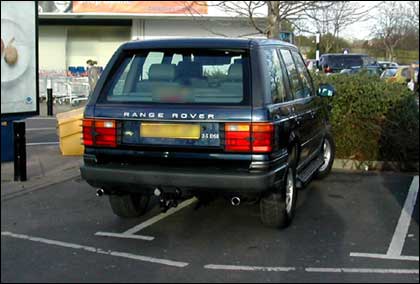
(Compact parking spaces? Sure - I'll take two! All your charge spots R belong to us! )�
Dec 22, 2011
ljbad4life Well from a time stand point anything less than 200 mile doesn't make sense for road trips. drive 2 hours to wait 30-40 minutes? rinse and repeat. The longer the trip the more tedious traveling this way. More than 1/3rd of your time is spent charging. I wouldn't call that ignorance, Tesla gives a FAR more comprehensive and FAR more accurate estimate of Range than any other EV manufacturer. Nissan Leaf is rated for 100 miles at an avg speed of 20 mph same thing goes for the Mitzubishi iMeiv. So Tesla rating of range at 55 mph is good enough for me.�
Dec 22, 2011
dsm363 You're correct in that it's a 50A outlet which means you can pull 40A. The HPC will allow you with the second charger to go to 80A.�
Dec 22, 2011
Eberhard I want not only two but three charger - could connect each charger to a different phase for 3-phase charging.�
Dec 22, 2011
Mycroft I hope you get it Eberhard. They could mount the third charger in the Frunk or possibly the jumpseat footwell, (without the jumpseats of course.�
Dec 22, 2011
Robert.Boston Or, more to the point, simply have a single 3-phase charger in the place where the two 1-phase chargers fit. The problem lies not with the charger, I believe, but rather with the pin design of the charging port, which clearly cannot handle 3-phase power.�
Dec 24, 2011
cinergi This is what I was told at the Model S Beta event. The PEM in the Roadster does both regen and charging, but that's been separated to separate components in the Model S. The "Drive Inverter" is NOT responsible for grid charging in the Model S.�
Dec 24, 2011
Larry Chanin Hi,
I think in the vast majority of cases early adopters will find very little utility in purchasing dual on-board chargers for at least a number of years and perhaps never.
We obviously don't need this when charging at home, at work or during hotel stays. The main utility would be along major highway routes, just like Superchargers. Whereas I would be interested in hearing more details about how widespread the HPC network is, I'm inclined to believe it is still insufficient in most areas of the country. Likewise, I don't think that there are many, if any Tesla stores located along highways to constitute a useful high amperage network.
However, there may be certain conditions where using dual on-board chargers in conjunction with high amperage roadside sources may be preferable to Supercharging. Please refer to the following posting for one possible example.
So if someone makes frequent long roadtrips it might be better if they used high amperage AC charging using the dual on-board chargers rather than DC Supercharging to avoid undue degradation of the battery pack. The problem is that currently there is not much in the way of high amperage sources located along strategic highway routes.
As I see it the only high amperage AC sources are located at RV parks, at Tesla stores and at the HPC network sites. I am not familiar with how widespread the HPC network is, but I'm pretty sure that most RV parks and Tesla stores are not along strategic highway routes. So to make use of these sources in most cases we would have to detour off of a direct highway route. Such a detour probably wouldn't save much time versus a 30 amp source along a highway.
So from my perspective it would be better to defer the purchase of the second on-board charger until there is a clearer picture of whether or not there is widespread adoption of high amperage sources, particularly along strategic highway routes. Well, you may ask do you have any reason to believe that retrofitting a second charger is feasible? Please refer to an excerpt from this posting.
So we have a legitimate reason to believe that retrofitting in the future may be possible even though Tesla currently recommends purchasing the second charger in advance of the establishment of a widespread high amperage source network.
Larry�
Dec 24, 2011
TEG Actually I think it would be unusual to find an RV park or campground outlet that provides more than 10kW.
Typically an HPC type connector is "hard wired" and not run through a plug/socket. So primarily at high end homes (with 200amp+ service), or at dedicated HPC sites of which there aren't a whole lot outside of California or parts of Europe.�
Dec 24, 2011
Larry Chanin Hi TEG,
Thanks for the information.
I guess that further strengthens my argument about the limited utility of dual on-board chargers for early adopters.
Larry�
Dec 25, 2011
TEG Yes, and helps explain why Tesla has decided to make 10kW standard, and 20kW optional.�
Dec 25, 2011
Larry Chanin Hi TEG,
Yes, but only on the standard models, not the Signatures. :biggrin:
Larry�
Dec 25, 2011
jkirkebo It would be much less limited utility if they would allow the second charger to be powered from a separate source. Imagine a second charge port on the other side of the car. You could get 19.2kW from dual 14-50 outlets! Us europeans could get 7.4kW from dual 16A 230V outlets or 14.7kW from a three-phase 32A outlet with a breakout cable. That would make me definately order the second charger.
Which charge port powers what is easy to control. First port connected gets the first charger *and* the second if the pilot exceeds 42A or so. Second charge port gets the second charger if it's still available.
Bonus is you now have a charge port on either side of the car for convenience.�
Dec 25, 2011
Larry Chanin Hi,
From my layman's perspective that sounds like a very reasonable option. Have you forwarded it to Tesla for consideration? I know that so far they've been rather reluntant to pursue alternative charging approaches, particularly three-phase. Nevertheless, I still think it couldn't hurt to send them a request for future consideration.
Larry�
Dec 25, 2011
Eberhard Why not have an additional socket inside the car? Then we can have a "Mennekes Type 2 socket" which is inside the car and more protected against vandalisms.�
Dec 25, 2011
Eberhard i agree completely.�
Dec 25, 2011
jcstp put a mennekes or other 3-phase socket behind the numberplate!
is near the normal location of the chargeport & the chargers�
Dec 25, 2011
dsm363 70 or 80A public chargers seem to be extremely rare. One case to make is that they are much cheaper to install than a super charger or DC fast charger. If you're able to talk a business or hotel into installing one, you'd have a much easier time with a $1,200 investment and maybe another 1-2 thousand for installation than a much more expensive charger. Not a common scenario I realize, but we were able to get a hotel in Texas to install a J1772 80A charger recently.�
Dec 25, 2011
efusco I've mentioned this a couple times and it seems to get completely ignored...but one place I believe will widely provide higher amperage charging points where having dual chargers would be advantageous is car dealerships. GM now sells the Volt and I recall them saying they plan to have charging available at dealerships, likewise Nissan with the Leaf, and with other car makers with EV plans (Mitsubishi, Ford, etc...) I suspect all or at least most car dealerships will be offering high voltage chargers and I suspect they would allow non-brand cars to charge there as well (probably for a fee).
Northern California Nissan Dealers offering Electric Vehicle Charging
Southern California Nissan EV Chargers
Certainly these are not widespread now, but as they manufacturers try to build their market share and convince folks that range anxiety need not be a concern and such, I think that availability of these level 2 chargers and probably fast chargers will be pretty darn common over the next several years.
Also, people keep saying things like "obviously we won't need this when at home". Well, that's not so obvious to me. I plan to have an HPC on a high amp circuit. It is not at all uncommon, as a busy father of 3 to have a lot of running around to do in a rather rural area of the country. It's not uncommon for me to drive 60-80 miles in a day just running errands. After such a day I may be planning on a highway drive to visit family or to travel to St.Louis or Tulsa or Kansas City (~200 miles or so) to start a trip (major airports there). As such, the ability to top up my battery would allow me to make the trip via the Model S. It I have to wait 3-4 hours to top up the charge then I would have to consider an alternate vehicle.
I'm not everyone, but I think that even if used infrequently it's one of those things I'd much rather have available and not need than not have and have opportunities to use without having to compromise time or change to an alternate vehicle.�
Dec 25, 2011
EVNow They are all 6.6 kW chargers. Why would they install high power chargers when the cars only support 3.3 kW now (and unlikely more than 6.6 in the next gen). Since Nissan has come up with a $10k CHAdeMO charger - that is what the dealers will install in the future. Compare that with $6K for a pedestal Coulomb L2 6.6 kW charger.
The basic problem Ecotality is having trying to install CHAdeMO is not the charger expense (it is free under EV Project) - but the high power requirement. The high power requirement pushes up the demand charges - which can be very expensive on a monthly basis. No business wants to deal with that. For eg., just to get 3P 480V connection here is $40K. Apart from that they will have to pay demand charges if they the power / consumption exceed their limits.
It may be easier to get businesses to install 20kW chargers - the business won't have to deal with 3p or demand charges. But they would have to be installed just for Tesla owners (i.e. the upgrade would be only for Tesla owners).�
Dec 25, 2011
Lloyd I plan to install several 80 amp EVSE's at my business as soon as they are available. I would like to have EATON's as soon as they are produced and available.�
Dec 25, 2011
Larry Chanin Hi Evan,
You make a good point, I should have more accurately said most of us won't need this when at home.
Happy Holidays.
Larry�
Dec 25, 2011
TEG That would be nice, but I wouldn't count on it.
None of the California (USA?) Nissan dealers have CHAdeMO (yet), only J1772.
Also, there are many stories of people being denied access to the EVSEs even if they come in a Nissan LEAF.
Some dealers have said "customers only". I think Nissan corporate encouraged them to be more magnanimous but that may apply only to LEAFs bought from other dealerships, not so much other brands of cars. Also, for dealers that allow non-customer charging, I frequently find all of their EVSEs are already in use. They may have test drive/demo cars left on charge, and customer cars being charged/prepped in anticipation of delivery. Also, cars brought in for service. So, I wouldn't call the Nissan dealers "public charging locations", but more like "quasi-public", "frequently unavailable", "hit-or-miss" possible charging locations.
Also, I haven't heard of any charging for access. They don't seem to have a plan to do that.�
Dec 25, 2011
Larry Chanin Hi Evan,
As TEG points out it remains to be seen how accommodating the car dealers will be.
Regardless, the real utility of high amperage source (just like superchargers) is to locate them along strategic highway routes where you can get a relatively fast charge on long road trips. For the most part someone traveling along a major highway would have to make a time-consuming detour to get to a car dealership, thus defeating the utility of a faster charge.
Larry�
Dec 25, 2011
TEG Perhaps not entirely. Car dealer franchises tend to cover a region, so, for instance, having a CHAdeMO at every Nissan dealer provides good regional spacing and coverage.
Also, car dealers like to get good drive-by visibility, so they ARE frequently located in prominent areas near to major highways.
The problem is they are in business to sell & service their cars, not offer charging services to other types of vehicles.
Another thing going for auto dealerships is they tend to have industrial power (for shop tools and such) as well as lots of parking.
But, there usually isn't much to do there other than shop for cars. So may be better at a restaurant, movie theater, shopping mall, etc.�
Dec 25, 2011
dhrivnak I have charged at 3 TN Nissan dealers and all three were VERY accommodating and very happy to let me charge. All three location have public access 24x7 with no fees. So in my humble opinion Nissan has been great, at least in TN. The only downside is their plug-ins (like ALL other J-1772 plubs I have found) are limited to 30 amp and 208V or 6.2kw. In more than 6,000 miles of driving Ihave only found one Level 3 charger, 2 miles off the interstate, and no level 2's greater than 30 amps.�
Dec 25, 2011
efusco First, gentlemen, I'm not "counting on it", but rather optimistically thinking there will be some availability. Second, I don't know what highways you drive upon, but there are few I've been on across the US that are not within 10 minutes of a car dealership at many many stages of the route. Frankly, most car dealerships are likely to be much closer to reasonable places to get a bite to eat, relax, shop, etc. It's fine if they're located at a rest area I guess, but give me a location with 10 different restaurants nearby with lots of choices while my car charges for an hour and I'll make that 10 minute detour. IMO, the potential utility of this particular option is worth the modest additional cost vs the inconvenience of not having it if I need it and have the option of using it.�
Dec 26, 2011
gg_got_a_tesla Completely agree. Gave up on something else more useful rightaway - like the aero wheels - to get the second charger instead in my config:
So... what base + options combo are you going to order eventually?�
Dec 28, 2011
WhiteKnight Any car dealer that sells electric cars ought to allow any electric car to charge at the dealership in order to encourage that car owner (who is already sold on electric car ownership) to become a customer. Tesla ought to let every Leaf and Volt owner charge at their stores so they can aspire to a Tesla.�
Dec 28, 2011
Larry Chanin Will they be furnishing them with adapters? :wink:
Larry�
Jan 3, 2012
Trnsl8r OK, so this is an old thread and I haven't reread the whole thing and may very well repeat what's already been said, but... as I happened to ask this question at Santana Row yesterday and got a very concise and sensible answer, I thought I would relay it.
The twin chargers are useful only for high-powered quick-charging, such as "real" charging stations
They are not useful to the "dryer" outlets (since they don't go above 40-50 amps) and obviously not for the regular 110 outlet. Also not needed for Tesla's network of super-chargers, since they bypass the onboard chargers entirely.
His advice was to rather get the twin chargers than spend money on a home charging station, FWIW. Presumably since most of the home charging will happen at night when time is not much of an issue.�
Jan 3, 2012
kgb Here is another scenario in which I think the double charger might help... at least it is why I was considering it.
My business offers shuttle service to customers. Although individual trips will not exceed the 300 ideal mile range, it may come up that the vehicle might have to travel more than 300 ideal miles in one day. (Note I am careful to state "ideal miles" because the minimum safe highway speed in texas is 75 mph). So at home base (my business) I was thinking of setting up whichever charging set up that would allow use of the double charger...
Can someone point me in the direction of a commercial EVSE. I wouldn't mind making my Charger available to the public - I am located right next to a gas station �
�
Jan 3, 2012
dsm363 The ClipperCreek CS 100 (they made the original Tesla HPC) is supposed to be good. They make a 80A J1772 charger which is the one the Austin Hilton should be installing soon. You can also install an access control and billing function too I think. There may be better ones out there since I haven't looked at all the available ones. If the Tesla HPC 2.0 is rated for outside, could always install one of those I guess.�
Jan 7, 2012
brianman Too lazy to start a new thread...
My understanding is that the general guidance is (1) plug in every night and (2) beware of supercharging too often.
For the $1,200 charger, does (2) apply or should we just stick with (1)?�
Jan 7, 2012
Todd Burch The supercharger is DC...so it bypasses the onboard Model S chargers. (2) applies regardless, and is due to the impacts of high charging rates on battery lifetime.�
Jan 7, 2012
brianman I'll try asking my question a different way.
If I consume 20mi of range daily, should I avoid HPC for typical nightly charge (in favor of range/dryer or normal outlet)?�
Jan 7, 2012
Todd Burch Ah...misunderstood when you used the term "supercharging"
I believe buried somewhere in the Roadster threads that the sweet spot for charging and battery life is in the range of 240V 40A, so I'd use a NEMA 14-50 over the HPC in that case. Of course, the chemistry of the 300mi pack is different and the Model S pack might behave a bit different in general.
Regardless, with the lower charging rate you won't waste as much energy cooling the battery while charging.�
Jan 7, 2012
brianman I'm more worried about battery capacity and longevity for this concern, than efficiency of wall power consumption.
If the HPC is only for periodic and/or range charging (rather than daily use) that makes it less compelling to me.�
Jan 7, 2012
Doug_G You can charge at 70A without degrading your batteries. However I don't usually do that as it makes my garage rather warm, and it is unnecessary.�
Jan 7, 2012
richkae We don't have enough data to know if charge rate affects battery life. Is is likely to be insignificant compared to depth of discharge, temperature, and max charge ( using range mode ).
Tom Saxton's experiments Tesla Roadster Charging Rates and Efficiency - Tom Saxton's Blog found that 40amps to be optimal for energy efficiency.
Ambient temperature, cooling efficiency, charging efficiency of the Model S could easily make it different.�
Jan 7, 2012
Mycroft The nice thing about the HPC is that you can program the car to draw at 40A most nights, but you'll have the full 80 whenever you need it.�
Jan 7, 2012
brianman Excellent. Do you have any links to detail this? They might help me with the decision. Thanks!�
Jan 7, 2012
Doug_G That's the way the Roadster works now. I have mine programmed to charge at 40A every night at 2 am. But if I ever want to charge fast I just hop in and dial it up to 70A.�
Jan 8, 2012
Todd Burch Agreed...While 40A appears to be optimal for other reasons, I'm somewhat extrapolating that lower charging currents do less harm to the battery...but I agree that in the 40-80A range, it may have a very small to insignificant effect on battery life.�
Jan 8, 2012
rlawson4 I could use some help. I am honestly confused. I am getting the 300 mile battery because there are about 10 days a year I drive about 200 miles in a day for work and will not have time to stop and charge. I will never take the car on a road trip. My wife would never have the patience to deal with charging. She is far too high strung. So, we will take her Mariner Hybrid. So, this charging issue has me confused. I plan on installing a 220 in the garage. How many chargers or what do I need. I was hoping just to plug it in to the 220 each night and top it off. I have also heard about a special charge for the 10 days I drive 200 miles. Please explain if you can. Thanks in advance. I would like to make this as simple as possible.�
Jan 8, 2012
ckessel The way I understand it is twin chargers help when you're doing fast AC charging (60 miles returned per hour of charge vs 30 with one charger), but that requires a really high amp connection, such as the Tesla charger you can install in your house. So, in your case (and mine) you only need one charger. It's actually one of the reasons I chose to step down from the Sig because the 2nd charger was useless to me.
The "special" charge you mentioned is the quick charge, which is a DC charge and unrelated to whether you have the twin chargers (since those are AC). You don't need anything special for the DC quick charge except for the fact the 40kWh battery isn't supported, but you're getting the 85kWh so that's not a problem for you.�
Jan 8, 2012
Mycroft You'll be installing a 50amp 240v receptacle in your garage and you will only need a *single* 10kw charger in the car for that receptacle.
Tesla hasn't said yet, but with the Roadster, there are two applicable charging modes. Standard and Range mode. The "standard" mode, which you would use daily maintains the battery at approximately a 75% charge. So a 300 mile pack would be normally charged such that you would have a 225 mile range. When you're going to be driving a longer distance, you set the charge the night before to "Range" mode. Then the batteries will be charged up to the top.
Edit: As ckessel says, to take advantage of the optional second 10kw charger in the car, you would have to use Tesla's HPC (High Power Connector), which will most likely use a 100amp circuit.�
Jan 8, 2012
rlawson4 Thank you. I was very confused. It was starting to make me re-think even getting the car. Sometimes information overload leads to decision anxiety. I need this to be as simple as plugging it in every night. Anything more and I would lose all interest. I assume if I called an electrician and told him I wanted a 50amp 240v receptacle that he wold do that without any issue?�
Jan 8, 2012
ckessel Pretty much. Just tell him you want the standard 14-50 socket. From a sheet Tesla has on their website about the charge adapter "Tesla recommends installing a NEMA 14-50R receptacle connected to a non GFCI 50A breaker".
I'd wait until the Model S charging sheet is formally released though just in case they have any changes, but in short, it should be a really simple, standard socket to have installed.�
Jan 8, 2012
Andrew Wolfe Most of the battery degradation due to fast charging is related to localized heat buildup. At 70A - you will only be charging for about 30 minutes - so not too much heat buildup, but probably enough to make a measurable difference. At 40A you will still be charged in under an hour.�
Jan 8, 2012
smorgasbord I've been told by a couple different Tesla employees that the standard cable included with the Model S will support the NEMA 14-50. It's cheap and easy to install at home, and ubiquitously found at RV Parks while on the road. Almost impossible to imagine them changing this.
BTW, don't tell your electrician that you're getting an electric car. Tell him you need the 14-50 for an RV you'll sometimes have there.�
Jan 8, 2012
ckessel I'm curious, why does it matter? Some extra paperwork or fees required?�
Jan 8, 2012
rlawson4 Thanks all. I feel much better now. I now understand that most of the charging discussion is for charging outside of the home. That is extremely unlikely to matter for me. Thanks again.�
Jan 8, 2012
Mycroft I just remembered, make sure your electrician uses an RV style 50A receptacle and not a kitchen range style. The difference is that the RV style is designed to be plugged and unplugged relatively frequently while the less expensive kitchen range type is meant to be plugged in once and kept there. My understanding is that Tesla will have recommended receptacles available for purchase later.�
Jan 8, 2012
brianman Can this heat buildup be detected and accounted for in the charging process? For example, defaulting to 70A charging and automatically dropping to 40A (and then maybe down to 20A) as necessary to minimize degradation. This would allow the fastest, min-degradation charging sweet spot wouldn't it? With no human hassle/fiddling after initial configuring.�
Jan 8, 2012
brianman Is there a better (numeric?) way to refer to these two types of plugs?�
Jan 8, 2012
richkae Nema 14-50�
Jan 8, 2012
dsm363 NEMA 14-50R outlet is what you'd need.
Would be the same as for the Roadster
Universal Mobile Connector - Available in North America Only Tesla Motors�
Jan 8, 2012
richkae The Roadster runs the cooling system to cool the batteries during charging. Their software already tries to find the sweet spot.�
Jan 8, 2012
Doug_G I think there's a little confusion here. Fast charging is 90 kW, that's 480V / 200A. That will 80% charge an 85 kWh pack in 45 minutes.
40A and 70A charging is at 240V, and is 16.8 kW and 9.6 kW, respectively. At 40A you're talking 6 hours for a full charge, or 10 hours at 70A. These rates will not degrade the pack. Also the pack is actively cooled during charging.�
Jan 8, 2012
richkae I'm going to split hairs and point out that all charging "degrades" the pack. Every time you charge or discharge it you make a tiny impact on its useful life. There may be a difference in life after charging at 16.8 kW vs 9.6 kW, but it may be so small it is difficult to measure. We simply don't have the data to be able to say for sure.
Likewise we don't have any data on how much 90kW charging "degrades" the pack. The accepted wisdom is that using a lot of fast charging it gives you less useful life than 16.8 or 9.6kW charging, but nobody knows how much.
Suppose charging at 90kW every time you charged produced a useful life of 2% less than 16.8kW. Is that worth the word "degraded"? I don't think so.
10% less? 20% less? 50% less?
I'd love to have actual data.�
Jan 8, 2012
Doug_G Yes, "using" the pack degrades it. We're talking about degradation above and beyond normal "wear".�
Jan 8, 2012
Andrew Wolfe Sure it could. Generally charger's are set to drop current when hear could cause "substantial" damage to the cells - not just "detectable" or "measurable" wear. No reason it couldn't be done - but also not often a big priority. In the example you gave, a hybrid-rate charging plan might only save a few minutes.
All the chargers drop back when they near full to avoid overcharging.�
Jan 8, 2012
Andrew Wolfe All charging degrades the pack. A 70A full charge will not damage the pack. The amount of degradation is generally more when more heat is generated.
Also - I think your numbers are backwards.�
Jan 9, 2012
Doug_G I already addressed that point two messages above yours:
Sorry, was writing on my phone at the time. I think the intent was clear.�
Jan 9, 2012
richkae It might seem like I am arguing about an insignificant point, but I don't think it is insignificant...
The battery degradation from normal use is unknown. The battery degradation from quick charging is unknown.
It is possible that the range of degradation from different normal use cases is wider than the effect of quick charging.�
Jan 18, 2012
ETM can someone explain to me what the High Power Wall Connector and the Twin Chargers are and their significnce? in laymen terms please. I am pretty uneducated about this charging stuff. :tongue::smile:�
Jan 18, 2012
Mycroft A single charger can handle a normal 50A receptacle. To take full advantage of the 100A HPC requires two chargers.
- You can still use the HPC with a single charger, but it would be dialed down to half the amps.
- You can still use two chargers with a single 50A receptacle, but you wouldn't charge any faster than with a single charger.�
Jan 18, 2012
gg_got_a_tesla Not layman terms in my opinion, Mycroft :smile:
My shot at it:
- With the High Power Wall Connector and the Twin Chargers, you can juice up at upto 62 miles of range per hour of charging time. Really only needed if your battery is drained and you need to 'fill up' really quickly; very unlikely if your commute is not too much and probably not at all if you plugin religiously to 'top up' every night (as Tesla recommends).
- Without the Twin Chargers, the HPC can only give you upto 31 miles of range per hour of charging time. No different than plugging the (standard, included) Universal Mobile Connector cable into a 240V, 50 A wall outlet (like that for an electric clothes dryer).
- The UMC and the Single Charger (coupled with a 240 V, 50 A outlet) are good enough for daily top ups; can definitely get a drained pack (even the largest, 85 kWh one) juiced up to the recommended 80% within a few hours overnight.
- Getting a 240 V, 50 A outlet (NEMA 14-50 to get technical) installed is a lot cheaper (a couple of hundred $ utilizing a good electrician?!) than buying the HPC and then getting the house ready for 100 A supply (put together, will cost well in excess of $2K?!).
- If your commute is just a handful of miles every day, then, you can conceivably top up from a regular 110V outlet using the UMC and the Single Charger onboard and wait to see if you even need the 240V/50A installation.
- Although Tesla recommends getting the Twin Chargers upfront for those who are paranoid, they didn't rule out making the installation of the second charger in the car possible after the fact.
- The Single/Twin Charger aspect is not relevant if utilizing the proposed Tesla Supercharger network while on the road - those superchargers 'pump' DC directly into the battery pack and bypass the onboard charger(s).
Folks, please correct me if I'm off-base anywhere...
�
Jan 18, 2012
Lyon I am about the farthest thing from an electrical engineer or electrician or anyone else who knows about this stuff. That said, isn't the power in Kw of an outlet just volts*amps? And, if that's right, wouldn't a 240v*50A=12000w or 12Kw?
If I'm correct then twin chargers would give a slightly higher charge from a 240v, 50A than would single chargers?
Please, someone correct me here. Also, I apologize profusely, and prostrate myself before the Internet Gods, if this same exact question has been asked and answered here.�
Jan 18, 2012
Mycroft My understanding Lyon is that you can only draw 80% of the amperage rating.�
Jan 18, 2012
Tommy The confusion is because the electrical code requires a circuit to be rated at 80% for this type of application. In other words, a 50A circuit protected by a 50A circuit breaker can only draw 80% or 40A. In practice that means the NEMA 14-50 outlet although rated at 50A is only permitted to draw 40A. Hope this clarifies.�
Jan 18, 2012
Tommy To add a little more info; from what I remember of the electrical code, the wiring, circuit breaker and outlet must be rated 125% of the maximum ampere draw. So if a charger is drawing 40A than 40A x 125% = 50A rated wiring, circuit breaker and outlet is needed. We tend to use the 80% method because the math is easier to do in the head.�
Jan 18, 2012
Trnsl8r My understanding is that a twin charger could also be beneficial if using a non-Tesla charging station in the wild for a slightly faster charge, correct?
If so, I would lean towards a twin charger in the car rather than a HPC at home.�
Jan 18, 2012
smorgasbord OK, for the 100th post in this thread, thought I'd post my current thoughts.
1) If you need to fast charge at home, get the second charger.
2) If there are HPCs along road trip routes you want to take (eg, 101 in CA), get the second charger as it might be awhile before Tesla puts Superchargers along that same route.
Otherwise, only get the second charger if you want to be able to take advantage of faster charging in unknown (for today) situations, and don't mind the additional money expenditure. Note that the second charger is $1500, so if during the lifetime of the car you end up sitting around at public HPCs for 30 extra hours, you've spent $50 for each hour you've saved. Roadster owners probably have a better idea of how much public charging they'll need to do than non-EV owners.
My thinking is that very few HPCs are going to get installed now. Thanks to the Leaf, the non-Tesla going rate is 30amps through J1772. So a single charger is more than enough for that, slow as it is. Any place that wants something faster, or wants to appeal to Tesla owners, will probably arrange with Tesla to get a Supercharger. And, you don't need the second charger for that. Put the $1500 towards the Air Suspension or Leather seats instead.
Unless someone can convince me that rate of HPC installation (that is, 220 volts and 60 amps or greater delivered) is going to rise in CA, I'm not getting the second charger.�
Jan 18, 2012
strider Well, the number of >50A AC chargers in the wild is extremely small. I'm thinking for fleet uses (taxis) that HPCs and twin chargers would be crucial. But for regular folks, the UMC and single charger will be plenty and you can use the DC superchargers when traveling.
gg, nice write-up.�
Jan 18, 2012
Lloyd That will be true when they start producing EVSE's with greater than 40 amps. Most of them are limited to 30 presently.�
Jan 18, 2012
Andrew Wolfe Actually - the Leaf is limited to 16A. The 30A number comes from the original Level 2 charging spec.�
Jan 18, 2012
ETM
thanks, this cleared things up for me.
I dont really need the 62 miles range per hour. Could I get just the HPWC with out the twin chargers? Would this give me 31 miles per hour? this would be more than enough to top off at night after work. I would also rather have the smooth design of the HPWC than a cable jutting out of my wall.�
Jan 18, 2012
AndrewBissell Yes you could�
Jan 18, 2012
Lyon @ Mycroft and Tommy: Thanks, that clears it up. It makes sense that we want the electrical equipment in our homes not to be running at the ragged edge of its capabilities.�
Jan 18, 2012
smorgasbord My point was that many feel that 30amps is enough, given that Leafs today can do only 13 amps or so. Even with the rumor that for 2012 Leafs will be able to double that (from 3.3kW to 6.6kW, maybe), that's still only 25 amps. Again, no impetus to raise demand for higher power charging stations.
Anyone want to go in a pool to choose the date on which there are more Model S's on the roads than Leafs? Maybe July, 2013?�
Jan 18, 2012
Larry Chanin I gather that this a tongue-in-cheek remark? I was under the impression that Leaf production will be at least 7.5 times the Model S 2013 production rate.
How Nissan LEAF Is Speeding Into Europe
Larry�
Jan 18, 2012
TEG LEAFs currently come with a 3.3kW charger ([email�protected]).
It is all but confirmed that the 2013 model will have a more reasonable 6.6kW.
I think originally, they rationalized that the J1772 slow(ish) charging was OK because you could do CHAdeMO quick charging, but lack of CHAdeMO in USA means that many are frustrated by the "half speed" charger they included in the 2011/2012 models.
Given that most public J1772 is limited to 30A, and getting larger than a 40A breaker put in a new household circuit can be difficult in many cases, I think the 30A charging is the "sweet spot" in terms of broadest availability. Model S will have so much more pack capacity though, that charging times from 30A will be much longer (for a full charge) than would be for a LEAF (with its' small pack).�
Jan 18, 2012
smorgasbord Actually, it wasn't - but clearly I was wrong, even if Leaf sales don't take off. Sorry 'bout that.�
Jan 18, 2012
Larry Chanin No problem. This information supports your key point that the Leaf AC charging infrastructure only needs to support a much lower amperage than the Model S. This is true even if the Leaf's on-board charger is doubled in size.
Larry�
Sep 24, 2012
Kipernicus Now that we've seen the plans for an extensive and free supercharger network this question begs to be asked again.
Today the twin chargers are still useful along the 101 and 80 up to north Tahoe, but if in the near future those routes are covered by superchargers it makes those hpcs and $1500 twin chargers redundant and a waste of money, right?�
Sep 25, 2012
smorgasbord Thanks. Looks like the coast route only gets Santa Barbara, which is too far from SF if you're on Hwy 1. They need one in Monterey.
Until that happens, I'll probably continue to use the Rabbobank HPCs along the coast route, which unfortunately means twin chargers.�
Sep 25, 2012
RDoc If the twin chargers had twin plugs, they would make a lot of sense for use at public charging stations when there were two adjacent slots empty. From looking at the EV charging stations around Boston, that seems pretty common here. Without twin plugs though, it seems pretty limited in it's use to me. At least around here, I don't believe there are many (if any) public charging stations that a single charger couldn't handle.�
Sep 25, 2012
TEG To me, twin chargers mostly makes sense only if you get an HPC2 at home, and want to be able to do 19kW charging there.
That way you could easily re-fill a full 85kW pack overnight. Most people won't even come close to running down their 85kWh pack in a day, so it would probably only get really used occasionally. Say you went out on a multi-day > 250 mile weekend trip away from any charging and got back home late Sunday night near empty but wanted your Model S full before the drive to work early Monday morning.�
Sep 25, 2012
dsm363 If Tesla decided to extend their charging network with some HPWCs in places as placeholders for future Supercharger sites, that'd be useful but don't think they're planning on that. If you know someone with a HPWC on a route you take that is willing to let you charge there, it can be useful too. It's really not needed much though for most people I'd imagine.�
Sep 25, 2012
pilotSteve I continue to believe that with the J1772 network continuing to grow that 70A/230V Level 2 with the adapter will be useful in many places, especially airports, municipal parking garages and hotels. Perhaps supercharging weakens the argument to buy the twin chargers. Time and individual travel patterns will tell.�
Sep 25, 2012
dsm363 That would be useful but most of the chargers that have been installed that I know about we're subsidized by DOE and they only install 30A chargers for some reason.�
Sep 25, 2012
wycolo Why I ordered Twin 10kw Chargers from day one:
1. Roadster has 20kw charger, therefore MS should have equivalent capability.
2. If one craps out, the twin can seamlessly take over.
3. TM will provide a DIY kit someday soon to enable twin charging from adjacent EVSEs.
2 & 3 are components of a recurring dream I've been having. 1 is simply the consistency of a small mind.
--�

Không có nhận xét nào:
Đăng nhận xét