May 8, 2016
mzairboy The point of this post is to gain insight from veteran Tesla owners and pass it onto those who are getting into the EV scene.
I am 22 years old and placed a reservation for an M3 on May 1st. In high school we watched Who Killed the Electric Car, and later, Revenge of the Electric Car. We built an electric bike in our physics class and visited Brandon Hollinger who converts vehicle to electric. My first ride in an EV was in his converted Miata. As part of the physics class, I also helped install a solar energy system on our school roof. I drive a Jeep Wrangler as my daily driver. While I believe in being a good steward to the planet and respecting nature, I wouldn't consider myself a "save the planet" type of person. I enjoy technology, and I believe that is part of what intrigued me about electric vehicles. What sold me on a Tesla was being able to drive one. Someone offered to let me drive his Roadster to an EV event, and I quickly jumped on the opportunity. He also let me drive his Roadster to the same event the following year, and I also was given a ride in his Model S. The Tesla Grin won me over. I am a Jeep guy, it's a Jeep thing, you wouldn't understand. However, I knew right then that one day I would own a Tesla, and now that the M3 is coming out I am able to afford one.
I am reading through this forum and there is so much information. What are some really important things that new owners should know? Features to order, habits to form, proper etiquette? I'll throw out some examples, and please don't limit it to these, throw in your opinions about what I should be aware of! These are just some questions off the top of my head.
1. Charging: Should I plug in often, or run the battery down some? Is it better for a modern battery to be recharged often? Does Tesla explain all this when you purchase the car? I have about 6 miles to drive to work. Is it a good idea to charge every day, or drive the battery down half way before charging, or it doesn't really matter?
2. Insurance: Good insurance companies for better rates? Things to be aware of?
3. Air suspension vs regular suspension: This is a question I have. Is the air suspension that much better? I'm used to a bumpy Jeep suspension so I assume the regular coils will be an improvement than what I am used to.
4. Sound system: I figure that since I will be driving a vehicle with virtually no noise, I will listen to the radio more often. Can guys with the premium upgrade chime in on if it is an impressive improvement over the regular sound options?
5. Service: Nearest Tesla station is over an hour away. I won't need to go probably more than once a year? Do you recommend prepaying for a service plan?
6. Warranty: I'm buying this Tesla expecting a premium car. What can I expect for warranty? I heard Tesla is very good with customer service, but I hear this from guys who have multiple Tesla vehicles. Of course they will get top notch service. Can I expect this with an M3?
7. Tesla App: I have a Windows 10 smartphone. Not interested in switching to iOS or Android at this time. I don't expect an app to be made for Windows. Will I be missing some awesome features by not having an app?
8. Charging Cables: I have a 110 outlet outside my office at work. Anything wrong with charging this way with a regular extension cord? Remember, I only have a short drive to work. At home I have a 220 plug. Is it necessary to purchase a Tesla wall charger, or can I just plug into that?
9. Cold weather package: What is this exactly? Is it necessary for PA winters? I sometimes scrape ice off the INSIDE of my Wrangler windshield, so I'm used to the cold weather with a softop vehicle.
10. Vehicle SIM Card: Would the M3 have a SIM card in it so it is always connected? Who pays for this data? Is it built into the price of the car?
Thanks for any input you may have as I launch into this adventure.�
May 8, 2016
cpa I cannot speak to a lot of your questions, but will try to answer the charging ones. Tesla says "a plugged in Tesla is a happy Tesla." Generally, most of us plug in each night regardless of our daily driving requirements. With your six-mile commute, the better thing (and there will be those who will disagree -) would be to keep your battery charge level around 60-70%. You can always increase it when you get home if you expect a long drive the next day. But, plug your car in every night. I work from home, and keep the share of charge at 65% unless I am going out of town. But my car is always plugged in.
The EEs on here can address the use of an extension cord, but from what I have gleaned on this site is that this is not a good thing unless your extension cord has a heavy-duty rating. So, I would not charge at work.
Conventional 110V/15A charging is s-l-o-w. You might get 4 miles of range per hour when the weather is decent, but many have said that during winter they are lucky to gain 1 - 1 1/2 miles per hour because the battery management system draws power to keep the battery warm. For home charging you need to determine what type of receptacle you have in your garage. There are several kinds. Tesla includes an adapter for the RV park 14-50 plug. That can charge as fast as 26-29 miles of range per hour. Once you identify the type of receptacle you already have, you will need to find the right adapter for it. I do not know which ones Tesla still sells separately. You can check Tesla's web page for charging accessories to find out. Personally, I would not invest in the High Powered Wall Charger unless the Model 3 comes with an optional 72A charger and you need a lot of range frequently for weekend trips.�
May 8, 2016
MSullivan Luckily when you get your 3 you will be 25 and eligible for lower insurance rates.�
May 8, 2016
mzairboy Thanks for that info! Charging at work would be more convenient for me, and I own a heavy duty cord. Even at a worse case 1 mile per hour charge rate, if I work a normal 10 hour day that almost covers all my driving for that day. Of course, if such a slow charge rate could be bad for the car, I would obviously not want to do it. Also, is there a reason to keep a 70% battery level? I'm slightly OCD and would have to get over not seeing a fully charged car when I jump in. I admit, range anxiety will be something I will need to get over. I am constantly keeping my cell phone charged full because...well I like a full battery indicator.�
May 8, 2016
Jayc Great set of questions mzairboy, I too would be very interested to know answers to some of them.�
May 8, 2016
zenmaster What should my ideal charge percentage be?�
May 8, 2016
mblakele Quite a few of your questions are about charging, so take a look at FAQ: Home Tesla charging infrastructure Q&A
Typically you'll see 3 to 4 rated miles per hour from a standard 110V wall outlet. Those are EPA rated miles not actual miles: depending on your driving style, weather, and route you might need more than one rated mile per actual mile. But it sounds like you'd be ok with that charge rate under pretty much any circumstances.
Tesla tells us that it's bad for battery longevity to keep it at 100%. I see this as a great opportunity to tame that OCD. There's nothing wrong with a little OCD, as long as it's your servant and not your master. Maybe you could get in practice by plugging in your phone a little less often: it should last longer too.
I didn't bother with air suspension or premium sound. So far I have no regrets.
The TMS and TMX both come with a Tesla-supplied SIM card, paid for by Tesla. With the TM3 your guess is as good as mine.�
May 8, 2016
mzairboy My phone has wireless charging. I never plug in.�
May 8, 2016
Jayc So does that mean we can setup upper charge threshold and keep it plugged in?�
May 8, 2016
Bimbels I would not fixate on charging at work. If you charge at home and have such a short commute, I would just plug in each night - if that. I know people say "a plugged in Tesla is a happy Tesla" but we don't do that. In general we plug it in when it gets below say 100 miles of range - or to charge up for our commutes (which are long.) For instance, my husband came home from his commute last friday, charged to 90%. We've been driving it all weekend short distances, not plugging in each night. He will plug it in tonight to get ready for his commute to Philly tomorrow. But that is our driving habits. With yours, I would take the above advice and aim for 60-70% unless you are going on a long trip.
There is much debate re: the suspension system. We opted not to go with it - and our roads are pretty crappy. The ride is still amazing. If you had some driving conditions you knew you would regularly encounter that would make it a necessary option, then by all means....
We also opted for the standard sound system. We'd read you can get much better aftermarket systems for the money, compared to Tesla's premium system. Figured we'd try out the standard and decide later if we wanted to upgrade with an aftermarket system. The standard has been fine for us.
Our service center is also an hour away. We've had to take it in only for our annual service. No big deal. that said, I do expect the service centers to expand for the Model 3 launch and and hoping one opens up closer eventually. We did pre-pay for the service plan, but I think they've changed it since we did so I'd have to look it over to see if anything changed that would make me not do it again.
We did get the warranty but because we tend to keep our cars for a long time. There are definitely warranty/no warranty camps.
If you have a 220V 14-50 plug then no, it is not necessary to purchase the Tesla charger. The car comes with a cord with 14-50 prongs. It is more for convenience. (not having to pull your plug out every time - the Tesla HPWC is always ready.) That said, we do not have the HPWC and it has been totally fine. We don't have a garage and for us the installation would have been kind of a production. That said, even with a garage I'm not sure I'd get it, since we've been fine without it thus far.
The cold weather package includes heated rear seats, heated steering wheel, and i think heated washer fluid nozzles? (I'm not sure what the technical term is there ha.) We did not get it in RI - figuring we would just use the preconditioning feature to have the cabin warm and toasty for us. That has been fine - but I will say that is the one feature maybe I'd get next time. Only for the rear heated seats - we have a lot more passengers in our Tesla than we ever had in any other car.�
May 8, 2016
mblakele I'd expect so: https://www.teslamotors.com/sites/default/files/Model-S-Owners-Manual.pdf describes the TMS charging system starting on page 104. I can't see why they'd drop any of these features for the TM3, and we may even see some improvements.�
May 8, 2016
Bimbels Yes. that is what the S and X have and I'm sure the Model 3 will have the same.�
May 8, 2016
thimel The app has many features I like. The feature I use the most is to turn on the climate control. Do this five minutes before going to drive the car and the interior is a comfortable temperature. Next is checking the charge level. I use this on long trips when stopped at a super charger. If you forget where you parked your car, the app will show you its location on a map and can pass that to google maps which will then navigate you to it. You can also honk the horn and flash the lights. If for some reason you don't have your key fob, you can unlock and start the car.
All the above is for the Model S. Just assuming Model 3 will be similar.�
May 8, 2016
StraightDave If I live in California, what will it cost me per month to charge my M3?�
May 8, 2016
jsanford This thread is a great idea. In fact, "in the field" advice from current owner experience is why I joined this forum.
My plan at this point is to drive the Tesla daily on my 24-miles-one-way commute through the Seattle downtown traffic snarl. How is range affected by stopping, going, speeds between 30-70mph on a good commute run?
When I had an Insight, the batteries did not tolerate parking at all well when I stopped using it for commuting, which is why I plan on using the car for commuting. Ideally I'll have a carpool. My employer has no interest in installing charging facilities at the office, so the car will sit unplugged for 8.5-10 hours during the day (the longer, the less speed variation en route home).
Rain. We often have standing water on streets and the freeway during the winter. One of my griefs with the Insight is that it had "low rolling resistance" tires which were terrible in heavy rains and prone to punctures. It's my *hope* that since Tesla emphasizes good performance that the Model 3's tires will be more conventional.
Charging: We have an available 220v circuit after switching our stove to gas from electricity. How much charge will we get if the car is plugged in overnight for 10-12 hours?�
May 8, 2016
Borgholio Depends on your electric rate and your power usage. I will be getting about 12 cents per kwh and a 120 mile round trip commute. Assuming 3.5 kwh per mile, it will cost me about 90 dollars per month in electricity. Compared to my Prius at $140 per month, it's still a measurable savings.�
May 8, 2016
melindav Also a future owner, and spend about 2 hours of my day in Portland's traffic ...
I watched a Model S 'road trip' video last night where the driver encountered a construction backup before the Centralia Supercharger and commented that (paraphrasing) "luckily, you can crawl along endlessly in traffic and never run out of juice before you reach your destination".
If interested, let me know and I can find the video link and send it to you.�
May 8, 2016
Bimbels The Model S range is actually better in traffic - especially bumper to bumper - because of the regenerative braking.�
May 8, 2016
wdolson It all depends on how much you drive. I did post this yesterday which is my own analysis of the cost/mile to drive an EV vs an ICE.
Cost Comparison EVs vs ICE
The EPA energy WH/mi is very close for all the EVs on the market now. I would expect the M3 to be a little better than the Model S, but probably not better than the i3 which is the most efficient. I believe the average cost of electricity in California is $0.12/KWh. That is the US national average.�
May 8, 2016
wdolson When you're moving slower than about 40 mph you also have very little drag which helps efficiency more than regen braking. The hypermiler experiments (attempts to get the most range possible out of a single charge) with the Model S have all been done at around 25 mph and trying to go as constant speed as possible. For those runs it's taken close to 24 hours to run the battery down.�
May 8, 2016
ucmndd All of the large CA utilities have electric vehicle rate schedules that provide heavily discounted rates during overnight off-peak periods. As others have mentioned, this is generally around 11 or 12 cents /kWh. Figure between 3-4 kWh per mile driven and do the math.�
May 8, 2016
wdolson I am kind of answering this thread oddly, but here goes. My Model S is on order now, so I've been exploring some of these things in depth this last week.
Others have addressed this, but Li-ion batteries don't like to sit at full charge. However the Tesla charger in the car can be set to shut off at any level you want. The recommendation is to set it to 90% and only charge to 100% occasionally and to drive the car as soon as it hits 100%.
Li-ion batteries degrade when the charge is allowed to go to low and when it sits at 100%.
I'm getting insurance quotes now. So far I've only gotten a quote from Amica and it looks pretty good compared to my current insurance, though I will be adding comprehensive and collision I don't have on my current car.
We don't know what the suspension options will be on the M3, but assuming they will be the same as the M S/X, I went with the air suspension. Some people have said the standard suspension is more reliable and it may be, though I have air shocks on my 1992 car with auto leveling and I'm on the original shocks.
I went with the air shocks because the Model S is pretty low to the ground (the M3 will probably be too) and I don't want to scrape the bottom on steep driveways. My SO has a Subaru Impreza that rides kind of low and she's always scraping the bottom on steep driveways. The driveway at our doctor's office is so bad I have to get out of the car for her to park without scraping too badly and I'm not that heavy.
Teslas are quieter than most cars, but you still have road noise. If I want a good high fidelity experience, I'm going to listen to my homes stereo with the tower speakers. Yes the high tech sound system will sound nicer, but IMO it isn't necessary in a car.
I'm thinking about it. They do give you a price break if you pre-pay. Tesla will build more service centers in the next year. Who knows if there will be one near you, but I'm in the same boat as you with the nearest SC an hour away.
How often you go to the SC depends on whether your car has problems or not. The early Model 3s will have some teething problems. All new cars have them. It will probably be better than the Model S or X, but they will happen.
Currently it's a 4 year warranty. I don't know how that will change with the M3, but I expect it will be similar. Tesla will probably be stressed to offer the same level of customer service for the M3, but I expect it will still be better than average.
Windows is a pretty uncommon OS for cell phones. There are a lot of apps for Android and iOS. I did a search in Apple's store the other day and came up with pages and pages of third party apps. You can do a search and see if there are any Windows apps for Teslas.
In three years Microsoft may have abandoned the phone market. Interestingly I was involved in development on Microsoft's first ventures into the phone market and they abandoned that after a year.
A 110V outlet will charge very slow. Tesla provides a set of common connectors and cables, but the higher power connection you can get the faster the car will charge.
I suggest looking at the videos on YouTube by Bjorn Nyland. He's one of the most prolific video bloggers about Tesla. He had a video about a year back in which he went over all the features that were available when he bought his car and whether he thought they were worthwhile. He got the winter package because he was in Norway, but after a couple of winters he didn't think it was necessary, though if you have back seat passengers a lot, it might be useful. The front seats are heated on all Teslas, but the winter package gives back seat heaters too.
Tesla uses AT&T wireless for their connection. I am not 100% sure it's always free, but I know it's included initially. They do need a way to download updates, so it may always be included.�
May 8, 2016
proven Here's my answers to your questions. Some of this is fact and some is opinion!
1. Plug in every night and set it to somewhere between 60% and 90% charge. It's better for the battery to be charged regularly. To answer someone else's question, yes you set what the max charge should be and just plug it in. If you have time-of-use electric rates you can also set what time it should start charging. For example, our rates go down after 9pm, so our cars charge after that.
2. Insurance rates vary greatly not just by company, but also by person. My advice would just be to shop around.
3. We have air suspension. The main advantage seems to be that you can raise it at locations that have low clearance--such as a steep driveway or a big speed bump. The car remembers that location via GPS and automatically raises the suspension as you approach that location. The negative would be that it will be expensive to repair as the car gets older.
4. That depends on the M3. On the S the sound upgrade was pretty good, but not amazing. The X sound upgrade is really great. But either way, the base sound is just fine unless you are a serious audiophile.
5. For the S and X, the annual service is optional, and is not necessary to maintain the warranty. You could easily save money by only doing the annual service every other year and not bother pre-paying. All of this may be different on the Model 3.
6. As far as I know, every Tesla owner (so far) has received the same warranty service. The battery and drivetrain get 8 year, unlimited mile warranties and everything else gets 4 years. I would expect the Model 3 to be the same or similar. The real question is, will Tesla be able to ramp up their service center capacity at the same rate that they can ramp up production? The good news is that every year their warranty costs go down (that means that their cars are having fewer issues).
7. For the S and X there are third-party apps for the windows phone. They sometimes lag behind in features, but the basics are there.
8. With such a short drive to work I wouldn't bother plugging in there on a 110v outlet. Just charge at home using your 220 outlet with an adapter. What is it exactly that you have? The standard outlet for a Tesla in the U.S. is typically the NEMA 14-50 (240v, 50amp) and the car charges at 40 amps. The advantages of installing a wall charger at home is that it can give you higher charge rates (if you purchased that option in the car itself), and it also gives you a permanent cable in your garage. With just an outlet you will use your mobile charge cable that you may want to bring with you occasionally for trips.
9. The cold weather package is seat warmers for the back seats, a steering wheel warmer, washer nozzle heaters, and windshield wiper defrosters. For the Model 3, we'll just have to wait and see what comes with the car and what is an option.
10. Currently, Tesla cars use AT&T for connectivity and it's paid for by Tesla. I think the logic behind Tesla paying for the service is that the mapping system on the touchscreen is based on google maps and requires an internet connection, and the autopilot software is constantly sending data to the cloud to improve the system for everyone. I would imagine that Tesla will continue to pay for this service even for the Model 3 because of the autopilot data. Several notes about the data connectivity: 1. The car can't be used as a hotspot. 2. You can't stream video to the built in web browser, 3. The navigation system uses a combination of on-board navigation and internet based traffic data--so you can still get directions even without a signal from AT&T. 4. The audio system offers internet radio (Slacker and Tunein) for the base audio system, which requires an internet connection. Of course, all of this could change for the Model 3.�
May 8, 2016
NeilErdwien The chart linked above is more comprehensive and accurate. But my rule of thumb is that with today's low gas prices, the electricity cost of the model S is about 1/3 of the gas price of a ICE car.�
May 8, 2016
Twiglett from a charging perspective, I still have my leaf and heading towards 30k miles in two years and still haven't lost any battery bars.
I have a 55 mile round trip commute and auto charge to 100% every day - however, I have the charge timer set to complete two hours before I'm due to leave for work. So the battery only sits for a few hours at 100%.
The leaf has really crappy active battery maintenance, with no real heat/cooling capability so is about as bad as it gets.
I'm hoping/assuming/begging that the Model 3 will have Tesla style battery systems.
A long way of saying - don't leave it sat for extended periods at 100% and don't worry about it�
May 8, 2016
ronsbell I'll take a few of your questions:
4. Sound system: I figure that since I will be driving a vehicle with virtually no noise, I will listen to the radio more often. Can guys with the premium upgrade chime in on if it is an impressive improvement over the regular sound options?
I'm glad to have extra speakers and a subwoofer to play streamed audio and music via bluetooth, but to be honest the sound is tinnier than I'd like. For radio and talk shows, I notice no difference.?
7. Tesla App: I have a Windows 10 smartphone. Not interested in switching to iOS or Android at this time. I don't expect an app to be made for Windows. Will I be missing some awesome features by not having an app?
Good news! Someone appears to have written an unofficial Tesla app for Windows 10:
Tesla Connect � Windows Apps on Microsoft Store
The official Tesla app enables features such as remotely locating the car, preconditioning the vehicle, locking and unlocking the car, and remote start (e.g. without the keyfob). To my knowledge, however, the official app is also the only way to synchronize your phone calendar with the car's calendar.?
8. Charging Cables: I have a 110 outlet outside my office at work. Anything wrong with charging this way with a regular extension cord? Remember, I only have a short drive to work. At home I have a 220 plug. Is it necessary to purchase a Tesla wall charger, or can I just plug into that?
I won't tackle whether that regular extension cord can withstand the outdoor elements in Pennsylvania...but how short *is* your commute?
The Model S comes with a Mobile Connector and adapters for a 110 volt outlet and a 240 volt outlet. At 110v, you should expect no more than 3 miles per hour of charge. A 240v outlet delivers closer to 29 miles per hour of charge. If your commute is short, you may not need to charge at work.
As for a Wall Charger, you probably don't need one. I had a NEMA 14-50 240v outlet installed at home. However, the electrical code in my jurisdiction required this to be placed on a circuit separate from the rest of the house so you might check into local requirements.?�
May 8, 2016
S'toon On the topic of air suspension. I've never sat inside a Model S, so all I have to go by is what's written in these forums. The people who get the air suspension, really like the air suspension. The people who have the coils, really like the coils. Both camps seem happy with their choice.
The coils sit slightly higher than the "normal" setting of the air suspension. The only real advantage I've read about the air suspension is you can raise the car very high if you have a steep driveway, and want to avoid scraping the front of your car. However, the Model 3 is a smaller car, so I don't know if that will be as necessary.
Wow. Typing is harder when you're slightly drunk.�
May 8, 2016
melindav and you can run with them lower if you prefer to have a lower car but still be able to raise them up to get into driveways and across speed bumps�
May 8, 2016
Vistan A couple of responders on this thread have cited a thumb rule of "3-3.5 KWh per mile" for calculating range. Actually, they have it upside down. It should be about 3 miles per KWh.�
May 8, 2016
Az_Rael As far as the upgraded sound system goes, in the S and the X, you have to upgrade to get XM/Sirius satellite radio capability. So it's not just about the extra speakers.
I am a huge XM radio junkie, so I will be paying the price if it stays that way in the 3. I just have to hope it's priced a bit more reasonably.�
May 8, 2016
GoTslaGo Here's what we do:
1) Charging-- plug it in every night using 14-30 (17 miles/hour). Our commute is approx 20-30 miles round trip. 90% charge target. Never had to charge around town during day trips etc. Given base range and your 6 mile commute, unlikely you will need to plug in at work. Don't bother. Better off at home. Someone may walk off with your heavy duty cord.
2) Insurance-- We use Geico. Heard mixed comments here about them. Shop around. Just be prepared to pay more. Wife got sticker shock from our insurance price. I suspect you will too especially vs. a Jeep
3) Suspension-- Coils. We like them. We did get a loaner with air and noticed the ride was more compliant. My understanding is that the coils should last forever and air typically costs more as the car ages. Still not sure what we'll do with next Tesla.
4) Sound-- Regular sound, can't offer advice regarding premium sound.
5) Service-- We did not prepay. No problems at all from our service center, no charges at all at this point. Still got loaners, etc... We plan to do standard annual services as recommended.
6) Warranty-- We plan to get extended as we intend to keep the car for a long time.
7) Apps-- Can't comment on W10 apps, we use IOS.
8) Cables-- Not sure which plug you have with 220. Check the forums with style of plug diagrams and UMC adapters. You're rate of charge will vary. We did buy two UMC cables. One to leave plugged in at home, and one to leave in the car. This actually proved handy when we were bouncing between two houses for a while.
If you need other adapters try to get Tesla UMC adapters. Tesla UMC adapters are particularly good because they will automatically change the amps your car draws when you plug in. If you use other vendors, then you will have to remember to manually dial down your amp limit before you start charging or else you can trip your breaker or worse. This is why I hope Tesla will begin to reissue some of the discontinued adapters.
9) Can't comment on cold weather pkg.
10) Suspect Tesla will leave things status quo regarding data, as they benefit tremendously from the data we provide them from driving, and it keeps them more competitive by providing OTAs.
Have fun!�
May 8, 2016
JoeCoolMan24 The OP is 22.....I am sitting here at 25 feeling like a real piece of *sugar* right now.�
May 9, 2016
Bimbels I also am an XM person - I have it in my ICE (that the model 3 is replacing) but with slacker and now supposedly Spotify coming, I don't miss it. I only listen to music stations on my XM, however.�
May 9, 2016
Jason Bourne I have XM in my current car, which the Tesla Model 3 will be replacing. I plan to ditch it when I get my Tesla (even though I pay ~$70/yr for it). I am still on the fence about whether to get the upgraded sound system though. I love clear loud music, and I mostly listen to EDM which covers a wide range of the audible frequency spectrum. I also recently downloaded Slacker on my iPhone and have been building playlists and training it what I like so that way when I stream it in the Model 3, my account has already accumulated hundreds of hours of play time so it know what I like.�
May 9, 2016
Az_Rael Yeah, I don't listen to the music stations on XM anymore, I am all about the talk stations. Those I have not found a good alternative for on any streaming service. Many of the talk hosts/shows are exclusive to XM.�
May 9, 2016
ModelNforNerd
I have XM in my current car too. I'm a fan of the comedy channels on long trips. Other than that, mainly music, which I can replace with streaming in the Model 3.�
May 9, 2016
Borgholio Depends on the car. Compared to a highly efficient car like a Prius, it's about 40% cheaper to drive. Compared to a standard full ICE car that gets 30 - 40mpg, the savings is even greater.
Whoops...that was a bit of a typo. Yes, I meant miles per Kwh. If it was 3.5 kwh per mile, that would be horrible range.�
May 9, 2016
Alketi Thank you! There were others saying that an advantage of the wall charger is that you can leave your cable in the car, which left me wondering why you couldn't just buy two cables and skip the wall charger?? Seems like a much cheaper option if you don't need the faster charge rate offered by the wall charger.�
May 9, 2016
metier If you buy the cable kit from Tesla $550, it's the same amount of money as the wall charger with the 24 ft cable.
One cable kit comes with the car
Tesla � Model S > Charging and Adapters�
May 9, 2016
Alketi Oh, wow. I figured the cable would be cheaper than a full wall charger. The tradeoffs make sense now.�
May 9, 2016
garsh The naming gives the wrong impression. The actual *charger* lives in the car.
The car comes with a "mobile connector" that lets you plug the car into an outlet.
You can also buy a "wall connector" to charge your car.
Neither is a charger. Technically, they are both EVSE's. It makes sense that they are priced similarly.�
May 9, 2016
GoTslaGo When we bought our S we opted for a 14-50 NEMA outlet at our house. Approximately 600 (installation, permitting, etc...). Got the extra UMC for an additional 650. At the time HPWC charger was 750, and we did not get the dual charger (80Amps) to be able to take full advantage of it.
Now we have moved and the new house came with a 14-30 outlet built in. So we contacted our Service Center for a 14-30 UMC adapter, which they were able to get for us. 45 bucks.
If the new house did not have a plug built in, given the current pricing we would probably opt for the newer HPWC. Two UMC's proved useful for us, because there was a time where we had to bounce between the two houses and could charge at both (left one at old house, and brought the spare UMC in the car).
If you opt for a 14-50 outlet (not HPWC), some have said that if you constantly plug and unplug your UMC from that outlet that the UMC can drop out over time due to wear. But now that the HPWC is cheaper, it's probably a better option, and you can leave the UMC in the car.
Definitely get some type of higher charging capacity as the 110 V is just too slow. You can probably get by, but if you really want to use the car, and not have it plugged in all the time you really should get an HPWC or 14-50. Hope that helps.�
May 9, 2016
1000Down This thread is pure gold. Thank you to all the current owners taking the time to post.�
May 9, 2016
wdolson At the US national average of $0.12/KWh and a gas price of $2.50/gallon, a 50 MPG car costs about $0.05 a mile and the Model S 90D/70D costs about $0.04 a mile. Of course electrical rates are more stable and gas prices are at their lowest in over a decade.�
May 9, 2016
Sharkbait Yes, as at least one has said it depends on how much you drive - right? Of course.
However, it�s not that simple to say the rates are 12 cents a kWh. That simply isn�t true if your provider is Southern California Edison in southern California.
First, the rates per kWh are tiered and vary by season. For this month, May, they start at 17 cents per kWh. Look at your bill. That rate will perhaps take you through the first 10 days of the billing period, maybe two weeks depending on your usage. It depends on many things. Do you cook with electric or gas? Do you use a lot of air-conditioning? Do you have a pool with a pump that runs 10-12 hours a day?
So tier one starts at 17 cents per kWh for the first 307 kWh of usage for the the billing period. Tier two is 22 cents for the next 308 - 400 kWh, tier three 26 cents for the next 401 - 615 kWh, and 32 cents per kWh above 616 kWh of billing for the relevant month. Rates vary by season. I'm under Southern California Edison.
Because I have solar, I am under net metering. My residential solar system will supply all the power for my future M3 and residence, so I'm not concerned about the rates. At the end of the day, whether you have solar or not, electric power will be cheaper than gasoline. It will be even cheaper if your rate is determined by time of use (TOU), when charging at night is cheaper than charging during the day.
It is complex to say the least. The monthly bill is a nightmare to read and interpret. That�s the way the utility likes it.�
May 9, 2016
ucmndd It would be incredibly cost-ineffective to remain on a standard tiered residential rate schedule as you're describing above with an electric vehicle.
SCE does provide time-of-use plans for electric vehicles that have off-peak charging rates right in that ~12 cents/kWh ballpark:
Electric Vehicle Rates | Electric Vehicles | Your Home | Home - SCE
...which is a more than adequate measuring stick for ballpark estimates of what it would cost to operate a BEV.�
May 9, 2016
Az_Rael Staying on the tier plans are a very expensive way to charge your car. That will quickly add up to more expensive than gasoline, especially at Tier 4. (Trust me, when I first got my Volt, it was cheaper to drive it on gas at the end of the month).
However, SCE offers several Time of Use programs that do have 12 cents per KWH during super off peak hours. I switched my whole house over and haven't looked back since.
In the end figuring out how much it was going to cost me to charge my car for the various rate plan options in CA involved several excel spreadsheets and the raw data dumps from SCEs website. It wasn't for the faint of heart, and that I blame solely on our overly complicated rate system here. You need to be a rocket scientist to figure it out, and as a rocket scientist, even I had a hard time.�
May 9, 2016
Sharkbait I am under net metering, and I don't believe I can have both net metering and TOU at my residence if under solar, even with a separate meter. Besides, all my needs will be met with solar. I will pay the current minimum fee of around $10 monthly for all my power. Edison has a lot of fine print in their agreements, which beg detailed scrutiny. If others here under TOU are paying on 12 cents kWh, that's what it is. I doubt they have both NM and TOU at the same residence.�
May 9, 2016
GoTslaGo If you're coming from an automatic ICE car, consider using full regen braking with creep mode. Makes it feel more like an automatic ICE car without giving up too much of the regen braking. Many have felt initial nausea with regen and no creep. Stops very abruptly without creep. Also makes reversing easier.�
May 9, 2016
ucmndd I can't speak with authority for SCE, but know with certainty that with PG&E rate schedule and net metering are completely independent.�
May 9, 2016
Az_Rael I believe you can have both net metering and TOU. The SCE website even mentions that the TOU-d-t plan is popular with solar customers. The advantage of being on a TOU plan with solar is you are potentially being credited during the generation hours for the crazy high KWH peak rate. If you can generate more than you use during the peak hours, those credits at the peak rate go pretty far towards offsetting the non-generating hours use.�
May 9, 2016
Blu Zap Ya I heard something from Tesla a while back. In bumper to bumper traffic a fully charged battery can last 24 hours. Haven't tested that, but I believe it is right. I don't have a range degeneration when in traffic.
Also, PG&E in NorCal has an EV rate after 11:00 pm. It was around $.10/kwh. So setting the car up to charge after 11:00 pm was the best. I charge to 90% when taking a trip - 140 miles round trip. 65-70% when around town.�
May 10, 2016
Jeff4155 Then I guess this is for you
Meet the Plugless Level 2 wireless EV charging station�
May 10, 2016
bornnacadillac You mentioned you were 22 years old, I strongly would advise you to reconsider decision. Paying ~45K for a car at your age would be a terrible decision. Avoiding school loans and saving should be your primary goal. I can appreciate the enthusiasm about Tesla and the Model 3... but, there are more affordable means of transportation especially for young people like yourself.�
May 10, 2016
AB4EJ Just as a note - the "cable" that comes with the car is more than just a cable - it has an electronics package in the middle of it (close to where you plug it in) which shows voltage status and gives info to the car's charging system as to available current (so this can be managed automatically).�
May 10, 2016
AB4EJ I had XM on another car, and it did not suit my wants. My 2 favorite programs are NPR's All Things Considered and Morning Edition - neither of which are available on XM. So I was paying over $160 per year for a service I used precisely twice a year - on long trips. So I discontinued it. XM contacted me almost on a daily basis for 6 months after that trying to talk me into re-upping. I finally had to order them to put my phone# on their do-not-call list.
That said, I know several people who love XM. and listen to it all the time. Depends so much on whether you like the programming available.�
May 10, 2016
AB4EJ You can have both net metering and TOU (at least in Alabama). I have this for EV charging plus a grid-tied solar array. In addition, Alabama Power pays a different rate for power you generate (and push to grid) depending both on time of day and month of the year (they pay a higher rate for power generated during summer peak, etc.).
Even with all that, payback period for solar array is long (~15 years) because Alabama Power pays you only the wholesale rate for power you push to the grid (2.8 to 4.7 cents per kWh). The difference is the cost of grid maintenance. Several states already have this, or are moving to it.�
May 10, 2016
beantobe Agreed. Assuming there are loans to be paid- hard to know what peoples' financial situation is sometimes. I'm 34 and I know plenty of people that would give me the same advice because, fortunately for me, I'm more successful than they think....good for OP for having excellent taste in cars!! I say,"if you have the means, I highly recommend you pick one up."�
May 10, 2016
Borgholio I think your numbers are a bit off. Using the SoCal best gas prices (from Costco) at $2.65 per gallon, a Prius costs 5.3 cents per mile to operate (assuming 50mpg). Using an electric car average of 3.5 miles per kw/h and 12 cents per kw/h (it works out to 3.4 cents per mile, or about 36% more efficient (close to my original estimate of 40%).�
May 10, 2016
JeffK There's also the comfort of knowing your money isn't going to the oil companies and that's priceless. Although most of our gas comes from the US nowadays I'm still tired of seeing those rich Dubai kids... (yes, I'm jealous)�
May 10, 2016
Borgholio This is correct. The on-peak summer rates are something insane like 45 cents per kw/h. So if you have solar, you will essentially be generating power at that rate which will mean your payback period will be quite short. At the same time, if you charge after 10pm, you get the super-off-peak rate of 12 cents per kw/h. So best of both worlds.�
May 10, 2016
ModelNforNerd
wow, we're lucky here on the East Coast, then.
We switch from our winter rate of .13/kWh sometime soon, and we get the summer rate of .08/kWh.
considering my new commute will only be ~8 miles/day (car portion...i'll be stuck on the train for a while....), charging my Model 3 will cost less per day than my coffee.�
May 10, 2016
melindav Having zero idea, except age, to someone's finances and situation is totally inappropriate. I know 22 year olds who made a couple really great choices and have cars paid for, house, plenty of discretionary cash, etc... And I know 55 year olds up to their eyeballs in debt without a spare dime at the end of the month who still think they need everything and get a tax refund and go out and buy something instead of pay off something... Just illustrations, everyone's situation is different, and age as nearly nothing to do with it. So unless you are Bornnacadillac's parent or spouse, you probably should keep your advise to the questions asked, and not unsolicited financial advice .�
May 10, 2016
ModelNforNerd
to add on and agree, I know 22 year olds that attended dual-enrollment high schools and graduated college with a 4 year degree at 20, and are already semi-established in actual careers, and since the 1st 2 years of college was covered (aka free) as part of their dual enrollment, their student debt is very manageable.
everyone is different. for a generation some of us heap a whole lot of disdain on for what we perceive as a lack of work ethic, there are plenty out there doing it "the right way". don't discourage them.
To the OP 22 year old: kudos. if you're mature enough to set a goal and bust your butt achieving it, don't stop. Get your Model 3.�
May 10, 2016
Sharkbait I think my check from Edison after the first year worked out to about 3 cent per kWh. It's hard for me to believe the difference goes to maintain the grid. The way I see it is that my excess power goes to the nearest transformer and then is resend to the closest residence (shortest path), where it get sold at standard rates. I will certainly be calling them about adding TOU to my plan if I can charge at night for 12 cents kWh. Does TOU require a separate meter?�
May 10, 2016
nd4spd569 Tou does not require a separate meter but you can if you want.�
May 10, 2016
wdolson I used the EPA numbers for EV efficiency. The Model S 90D and 70D are rated at 330 WH/Mi. In the spreadsheet I created I calculated using gas prices in $0.50 increments from $2.00 to around $4, I forget how far up I went now. In any case, EVs are cheaper per mile than even the most efficient hybrids unless gas gets very cheap or electricity is expensive.�
May 10, 2016
wdolson I didn't buy my first new car until I was 26, but I bought my first house at 22. My coworkers the same age thought I was nuts, but some of them came to me later and said I made the right choice when they tried to buy a house and found prices had doubled since I bought.
I also graduated college with no debt. I lived at home (which sucked especially since my parents hated one another and refused to divorce) and went Cal Poly, which is a state school in California and was very cheap then.
My SO's law partner started college at 14 on a hockey scholarship and graduated by 18. He worked a few years before going back to law school, but if he had gone straight through he could have had a law degree before he was old enough to drink. His daughter is planning just that.�
May 10, 2016
Jayc Hmm logged in to check latest updates on tips for new owners but we seem to have gone off topic. Don't mean to be rude or anything but this thread is quite important to some of us with zero EV experience so would be good to stay on course.�
May 10, 2016
Canuck I disagree. In my opinion, bornnacadillac provided excellent advice. Of course, there's exceptions to every rule, but in the vast majority of cases, a 22 year old spending what it will cost to buy a Model 3 is not a wise decision (to say the least), and that was simply the point he made. If it doesn't apply to the OP he can disregard the advice. Even if it does apply, he can disregard it, of course. However, if it does apply, and if he neglects to heed the sage advice, it most likely will be something he comes to regret later. And older people have a moral and ethical obligation to at least impart their knowledge to the young, in my opinion. I wouldn't be in the financial position I'm in today if I had bought an expensive car that young. I paid off all my debts, made investments, and had more than enough money in the bank before it ever even crossed my mind to buy a new car. I'm glad sound financial advice was stressed to me from a young age even though I never asked for it. It has bought me financial freedom. That's huge.
This is one of the best posts I've read on this site and calisnow says it much better than me. Of course, it may not apply to the OP, and it was directed to the medical profession, but it's along the same lines, and it may help others:
Guidance aimed at those in the medical field, when financing while in Res/Fellowship.�
May 10, 2016
dgpcolorado The questions have been well covered by others but I'll add my 2�:
1. Keep the car plugged-in at home with the maximum charge set at 50-60%, unless you plan to take a long trip the next day and you need to raise it. Set the timer to start after your off-peak rate begins, if you have Time of Use (TOU) electric rates.
As for "OCD" and keeping the battery full, do NOT do that. Lithium batteries are happier in the middle range of charge (20-80%). Leaving the battery at "100%" (the car won't actually allow true 100%) or 0% for days is bad for it. So, just leave it in the happy middle unless you need more range for that day. You might want to charge to 95% or so every once in a while because that will let the battery management system balance the cells. But if you do, arrange it so that you drive soon after it gets to that charge, to reduce the charge level by driving.
8. The car will (likely) come with a portable EVSE called a "UMC" that plugs into a 14-50 outlet (240 volts 50 amps). If your 240V circuit is different you can have it changed or just use an adapter. With a Tesla you can set the charge rate, in amps, which is very handy for different kinds of outlets and circuits. The maximum rate for a 14-50 is 40 Amps (80% of the circuit breaker maximum). I use 32 amps, figuring that it is a bit less stress on the UMC, since that's plenty fast enough (~26 miles per hour) for my home charging purposes.
I would suggest not bothering to plug-in to 120V at work. It is very slow and definitely not worth the hassle of packing up the UMC, pulling it out, plugging it in, and so forth. If you try to charge at work that way you will find that the process gets really tedious. So, leave the UMC plugged-in at home unless you are going to go on a road trip and might actually need it. That also means a lot less wear-and-tear on the expensive UMC and its plug.
You will have at 100+ miles of range when you leave home each day. Why worry about charging? Now, if your employer puts in actual charge stations, then feel free to use them (unless others with short range EVs have a greater need). But plugging-in with your own EVSE every day when you don't need to? No way, don't go there.
I disagree. I came from a LEAF with creep and found that I preferred the no creep setting on my Tesla. I was concerned about parking but found that the accelerator is very easy to "feather" at slow speeds, so it wasn't a problem with either forward or reverse parking. I also found that single pedal driving with full regen ("standard") was very intuitive and even people who test drive my car rapidly become accustomed to it and really like it. So, I stick with full regen and no creep.�
May 10, 2016
Unbeliever Yes, I'm on SCE with solar and a TOU-D-T rate, which is 1 peak period 1 off-peak period. No super-off-peak. Peak is Noon-6pm non-holiday MTWTF, non-peak is all other times.
Below are the current rates:
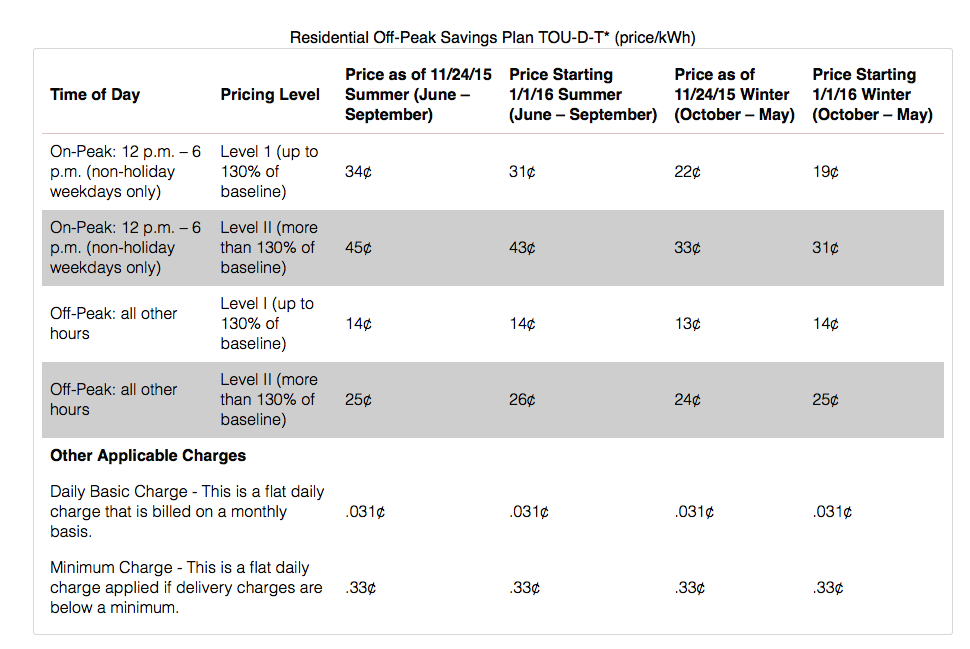
This is after SCE reduced the on-peak period a couple years ago. It used to be from 10am to 4pm or so, now shifted to Noon-6pm. So you lose a couple hours of prime generation.�
May 10, 2016
Fallenone Wow this thread is very valuable. I can't contribute anything yet but will definitely save it for future reference.�
May 10, 2016
nd4spd569
That's nice. Here's SDG&E's from their website. Minimum we get is $0.18... not as great savings here, but still saving. Now to get out of the condo so I can get solar.
EV Rates | San Diego Gas & Electric
![[?IMG]](https://lh3.googleusercontent.com/blogger_img_proxy/AEn0k_ty1RXBoyxVq-kGlyjkeTrK8Ylf_ZpLzGZvRlBQtFbNmNoCYdPt6_pmNkzGgKYJOgh8qY4OYFzfTvAKy2PAmOibF05mqTGN5D4Cr8-jjvzYOndCySY6B1KLUizLZ0FfpffP3lQ=s0-d) �
�
May 10, 2016
Borgholio Have you considered the TOU-D-B plan? It does have super off peak and no worry about tiers if you charge your car often enough. With my commute I'll be blowing through almost 900 kw/h per months just charging the Tesla, so using the TOU-D-T plan I'd be in Tier 2 rates all the time.�
May 10, 2016
mzairboy Thanks for all the info. It really gives me a lot to think about regarding different options that the M3 might have. I appreciate all the input given, but I will say I have zero debt and work a full time job as an operations manager. I paid attention to the Dave Ramsey financial class my senior year and learned a lot from it.
My current vehicle (09 Jeep Wrangler on 37" tires) only gets about 200 miles per tank. I fill up every week. It would be much easier for me to plug in at work, and my employer is not against plugging in. I work in a secure fenced in area, and I have no fear of anyone walking off with charging cables. I have permission to put a 14-50 outlet where I park. We will see what the scenario is like in 2-3 years. It sounds like I could charge to 75% and drive a few days and plug in when my battery is around 50% and the Tesla would be fine with that. Battery technology could certainly change until my vehicle arrives. I look forward to not having to constantly visit the gas station, and the savings that will come with that.
With all that said, what if I drive my battery down to 30%? What is a "danger zone" I should stay away from? I'm sure dropping the battery down low won't hurt once in a while, but I shouldn't make it a habit.
I live on a no winter maintenance dirt road. In the winter, 4wd is almost a necessity. I am saving for an AWD performance model. Insane mode at minimum. My plan is to blow the doors off of my friend's vehicles when they mock my "battery car". Because I live on a dirt road, and the roads in PA are terrible at best, I think I will go with the standard size wheel. A larger wheel might handle better, but be more prone to damage on the bumpy roads.
I am leaning towards a silver model because my vehicle is either dusty or sloppy. Silver will not show the dirt as much when I am unable to give it a good cleaning. Do the sensors for Autopilot get picky if a light film of dirt is covering them? My fear is dirt build up could affect the readings of the sensors.
What is a go to app or software to plan trips for EV's?
I highly doubt I will ever use a public charger because of my driving habits, but others will. What is some good charging etiquette you would like new owners to be aware of?
I mentioned previously that I drive a Jeep Wrangler. All Wrangler's wave to each other on the road. It's called the Jeep wave and is part of the fun Jeep community. Do Tesla's have their own "wave"? We might have to come up with something as more Tesla's will be flooding the road!�
May 10, 2016
mzairboy Does anyone have experience with this type of charger? My Lumia 920 had wireless charging and I said I would never go back to plugging in. My Lumia 1020 and current Lumia 950 has wireless charging. It is slower than USB type c fast charging, but very convenient. The lack of wireless charging is the main reason I won't even consider the current iPhone. It will be interesting to see what the price will be like and if there is support for M3.�
May 10, 2016
Az_Rael A few good etiquette public charger tips:
- Never treat a charging spot like a parking spot. When your car is done charging, return and move it to a regular parking space
- Never unplug another person's car unless there is a note stating you can. Doesn't matter if you think you deserve the charge more than they do because they are a Plug-in-Prius or a Volt, they got there first. (I use this rule even if they don't appear to be charging - all EV's use different lighting systems to indicate charging status, so unless you are 100% sure they are NOT charging anymore, don't assume and unplug)
- If an EV is parked next to you while you are using a charger and leaves their charge door open, that is generally accepted to be an invitation to plug their vehicle in when you are done. Assuming the charger is free, and you are comfortable with it, you may plug them in.
And, if you accidentally throw the breaker trying to plug your EV in at a poorly wired hotel charging station that a Tesla is also charging at, report it to the manager so they can get the breaker reset for the poor soul you who's charging you just killed (I have NO personal experience with this at all, nope, none�
May 10, 2016
mzairboy Are Tesla Superchargers exclusive for Tesla's, or can other EV's feel free to use them?�
May 10, 2016
Az_Rael Right now they are exclusive. Tesla has stated they are open to other manufacturers buying into the system, but as of now that hasn't happened. So I don't really consider Superchargers as "public" charging stations yet.�
May 10, 2016
proven I'm always amazed at how expensive the power is in California when I read these threads. Where I live on the east coast the flat rate is about 10c per kWh. We have solar and are on TOU rates which are even lower than that. During on-peak there is a strange, rolling 15 minute peak usage surcharge that gives you a good incentive not to cause a spike in your usage during peak hours. Off-peak is about 5.7c per kWh which makes charging our cars very inexpensive.�
May 10, 2016
wdolson Looks like a mixed bag today of advice and chit chat. Threads morph. I'm sure people will be happy to answer any questions you may have.�
May 10, 2016
wdolson Here in Washington State the abundance of hydroelectric gives us rates averaging $0.08/KWh. I pay just a tiny fraction of a cent more than that. A friend of my SO pays $0.07/KWh. It may be a contributing factor to Washington being one of the highest EV adopting states (per capita).�
May 10, 2016
FlatSix911 Welcome to California ... the home of high energy rates.
 �
�
May 10, 2016
thimel Www.evtripplanner.com�
May 10, 2016
GoTslaGo @mzairboy
Definitely get the 14-50 at work. You do that and with your original 6 mile commute, you'll never worry about charging. I assume you can also access after work and on weekends.
Friend of mine let's his Tesla run down pretty far and only charges intermittently. Told me he will run it down to 20% sometimes, then start charging. We're too compulsive.
Judging from your driveway, you may benefit from air suspension. Although I've heard mixed things about their long-term reliability. Also you're also better off with standard wheels. Don't worry you'll still kick any ICE car off the line. Now if you're racing another Tesla or going up against lolachampcar's toys, that may be an issue.
I recall there was a thread about a Tesla wave somewhere. When we first got our Tesla I would try, but got no response and irritated/embarrassed my wife. So I stopped.
If you are inclined you can watch some Youtube videos by "kmanauto" and "bjorn nyland". They cover a lot of Model S issues from the beginning.�
May 11, 2016
wdolson I second kmanauto and Bjorn's YouTube videos. FullyCharged is another broader subject video blog about EVs and related topics done by the actor who played Kryton on Red Dwarf and did Junkyard Wars. kmanauto has a disabled son who is often in the car with him and I find it distracting sometimes (he's a single parent and needs to watch the kid, so I'm not throwing stones), but he has a wealth of information.
In 5-10 years I think the ultra low profile tires are going to look dated. They do offer a little better performance for people who really like to push their cars and throw it around curves, but the trade off is you're much more likely to damage the rims hitting potholes or scraping a curb and the tires wear out uber fast. From reading various posts of people talking about tires here, the 19" tires on the Model S last about as long as I would expect 30-35K miles, but the 21" tires often wear out after only 15K miles and they are more expensive.
In a few years when all those low profile tires being sold on new cars (not just Teslas) wear out twice as fast as smaller tires, most people will move back to more practical tires and the only people who will stick with them are those who have the money to burn and are probably putting them on some sort of sports car, or a show car. New regular driving cars will all have higher profile tires.
The low profile tire craze may be related to the CAFE requirements pushing ICE cars more and more into low performance slugs. We're seeing the swan song of the ICE muscle car as they will be almost impossible to make and meet the MPG requirements in a few years. The sports car tires on everything might be a reflection of the angst over ICEs getting more pokey across the board.
Of course that is a golden opportunity for Tesla and any other companies in position to build high performance BEVs. For those who like the noise of a muscle car, they are out of luck unless they have their BEV to play recordings, but the Model S/X can already outperform muscle cars in many ways right now. Kind of embarrassing when a Dodge Hellcat can be tamed by a 7 passenger SUV.
Back to tires, personally I would prefer 17" tires on my Model S, but they aren't available and won't fit on the hubs, so I'm stuck with 19". I would rather get long life and higher resistance to road hazards out of my tires than look like a wanna be sports car.�
May 11, 2016
jerry33 Right. I've never been impressed by ricers.�
May 11, 2016
eisbock Can you elaborate more on this? Maybe with some pictures? I'm having trouble visualizing what exactly a UMC is and why you need it.
Is it something that you plug into an outlet, and then plug the UMC into your car? Or do you plug an extension cord into the UMC then into the car?
Do I always need this UMC for every charging method? Is the UMC like an adapter?
Let's say my house has a 120 outlet in the garage. Can I plug a simple extension cord into that outlet, then plug directly into my car? I'd assume you'd need some sort of male/female adapter to go from the 5-15R of the extension cord to the car charging port.�
May 11, 2016
dgpcolorado Good question. You can go down to "0%" if you have to, but do charge back up over 20% as soon as you can. Otherwise, anywhere between 20% to 80% is fine and many Model S owners routinely keep their cars charged to 90%.
Something you might not have considered: a Tesla battery will lose charge gradually as it keeps the car systems powered. This is called "vampire drain" here at TMC and it can be higher in winter if the car is using energy to keep the battery warm. So, parking the car at a very low battery level could be a problem (and the car will warn you about that). You can preheat the car, before you get in to drive, which is helpful in winter. But you need enough energy in the battery or the car needs to be plugged-in. The Tesla smartphone app will allow preheating/precooling, charge start/stop, and other things, such as remotely unlocking the car, even flashing the lights or honking the horn.I also live on a dirt road, but mine is plowed so my problem is getting up my long steep driveway. You definitely need to go with AWD and the smaller wheel/higher profile tire option, if there is one on the Model 3. It would appear that you would be better off using snow tires in winter.If you do want to use your car for long trips you would at least want to use the Supercharger Station network. That might, or might not, be an extra cost option on the Model 3. We don't know yet. This is the current Supercharger network map, with more stations to come:
supercharge.info
The regular public charge stations figure to change a lot over the next few years, so it is hard to predict whether they would be useful for you several years in the future. For local driving you won't need them, as you suggest.
One thing to be aware of, however, is that a Tesla is so much fun to drive that you likely will end up driving it more than you expected. And with the Supercharger network allowing easy long distance travel you might find yourself doing more traveling just because you can.�
May 11, 2016
GoTslaGo The UMC is essentially an adapter. Plugs into car, with control module included. It has the ability to accept different plugs for different outlets (14-50, 14-30, 5-15, etc...). Then this plugs into the car.
Here is the link to the unit on Tesla's website. Price is if you buy an extra one. It comes with the car.
Tesla � Mobile Connector Bundle
If you use HPWC wall charger it comes with a plug that goes right into the car. If you use supercharger, it too plugs right into the Tesla. UMC only for non Tesla specific charge options.
Hope that helps.�
May 11, 2016
proven The UMC is the universal mobile connector, which is just a fancy term for the cord that plugs into your car and has several adapters to plug into different wall outlets. It comes with 5-15 and 14-50 adapters and they have a couple of others like a 5-20.
For charging in public you don't usually need this cord as car chargers have their own cords already. You'll get a J1772 adapter which is the most common charging standard. Basically you plug the adapter onto the end of the public charging cable and then put that into the car. Tesla also sells a CHAdeMO adapter which is a level 3, DC charging standard that charges much faster than your standard public chargers. Tesla superchargers have their own cord and plug directly into the car.
The only times you'll need to have the mobile connector (cord) with you is when you need to plug into a wall outlet of some kind. Many people only bring it with them when they are on a road trip.�
May 11, 2016
jerry33 You don't use an extension cord with the Tesla according to the manual. In practice, it's possible to use an extension cord (it must be connected to the UMC) if it's heavy duty. If the Tesla detects that it's connected by a light duty extension cord, it will stop charging. A heavy duty extension cord will just look like a wall outlet.
You plug the UMC into the wall. It's the basic charging cable that comes with the car. Useful for home charging, RV park charging, and anyplace where you are plugging into an outlet. Two adapters come with the UMC 5-15R and 14-50R. Other adapters can be purchased separately. Also included with the car is a J1772 adapter. You don't use this with the UMC. In addition, there is a CHAdeMO adapter that can be purchased. Supercharger and HPWC (high power wall charger) do not require any adapters, you just plug in.�
May 11, 2016
dgpcolorado All good questions. The "UMC" (Universal Mobile Connector) is a portable EVSE (Electric Vehicle Supply Equipment). It serves to connect the car to an AC power source. Tesla also sells the HPWC (High Power Wall Connector) that would be permanently mounted on the wall of a garage (or hotel or other place to charge). The UMC comes with a 14-50 plug but it can be used with adapters to fit other outlet and circuit types. The Model 3 will (likely) come with a UMC and a NEMA 5-15 adapter for standard 120 V outlets. So, yes you can use a 120 V outlet but it is very, very slow, about 3 to 4 miles of range per hour of charge rate. By contrast, a UMC on a 240 volt 14-50 outlet charging at 40 amps would charge at about 32 miles per hour. (And a Tesla Supercharger Station can charge as fast as 300+ miles per hour, depending on the battery size and how empty it is, but the charge rate tapers as the battery fills.)
Any EVSE acts as a safety device that doesn't allow current to flow to the car's on-board charger unless a "handshake" signal is passed between the device and the car. So, it is more than just a long extension cord.
All of the Tesla charging devices � UMC, HPWC, and Superchargers � use a special Tesla plug to fit to the car. To use a standard EV charge station J1772 plug, Tesla supplies an adapter that fits between that plug and the car. So, Teslas can use most Level 2 public charge stations but other EVs can't usually use Tesla UMC, HPWC or Superchargers. Teslas can also use Chadema DCFC "quick charge" stations with an adapter ($450).
As for what the outlet and UMC looks like, I have these pictures:
^ This is a 240 volt, 50 amp, 14-50 outlet. I have a meter on it, but that isn't really necessary. The UMC plugs directly into that outlet and can charge at up to 40 amps.
^ My car with UMC cable plugged-in. Note that the UMC device itself is plugged-in to the wall outlet. I could park in the other direction with the car's charge port near the wall outlet but I prefer to run the cable along the ceiling to keep it off the floor and out of the way. Just a personal preference. Most people don't do it this way and just put the cable on the floor and coil it up when not in use.�
![[?IMG]](https://farm2.staticflickr.com/1454/24976443252_f8f44f50ed.jpg)
![[?IMG]](https://farm2.staticflickr.com/1574/26377718142_174b539a11_z.jpg)
May 11, 2016
Unbeliever No. I have solar, and TOU-D-T is preferable for those on net-metering.�
May 11, 2016
Borgholio How is it preferable? I have solar too, and if I use the TOU-D-T plan, I'll end up in Tier 2 due to charging the Tesla, so I'll be paying more than double the super-off peak rate. The TOU-D-B plan does away with tiers so as long as I mind the time of day, I'll be fine.�
May 11, 2016
Unbeliever Ok, I guess I should say "I have big enough solar" that I'm not running a massive power deficit.�
May 11, 2016
Borgholio Ah gotcha. Lucky.�
May 11, 2016
mzairboy I cannot park in a garage at home with my current situation. If I am parked outside during the winter day and night without plugging in, will keeping the battery back warm cause excessive battery drain that could shorten the lifespan of the battery? If the snow is that deep that I am forced to use my Jeep for a few days, I could easily run a heavy duty 110 cord to the car to provide enough power to keep the battery management system happy. I just want to make sure that if I am unable to plug the car into an adequate charger while it is parked outside in the snow, it won't harm it in any way.
We also have a long steep driveway, and winter is always fun. It is actually my favorite time of the year because I love driving in the snow in my Jeep. I am very interested to see how the M3 handles. I have heard Tesla's have exceptional traction control.�
May 11, 2016
Sharkbait I travel to Asia, often for a month or more. What will be the recommended procedure for letting my M3 sit for that period of time in temperate southern California? Is their an equivalent trickle charge solution for the vehicle or?�
May 11, 2016
thimel For the Model S, it is best to just leave it plugged in. It would also be fine left unplugged for that length of time as long as there is enough charge in the battery to allow for the vampire drain of 10-20 miles per day.�
May 11, 2016
S'toon It shouldn't be that bad. It's not that bad in colder temperatures.
�
May 11, 2016
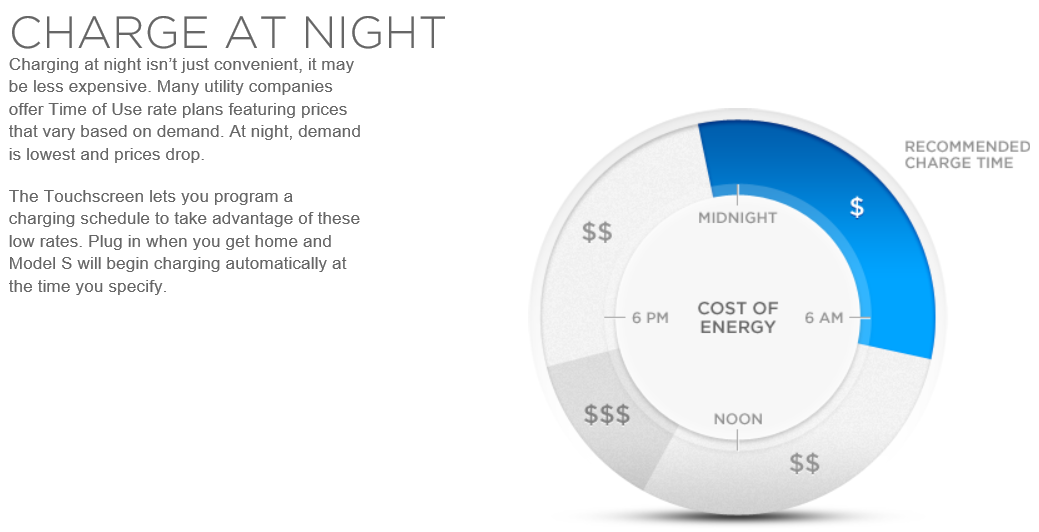
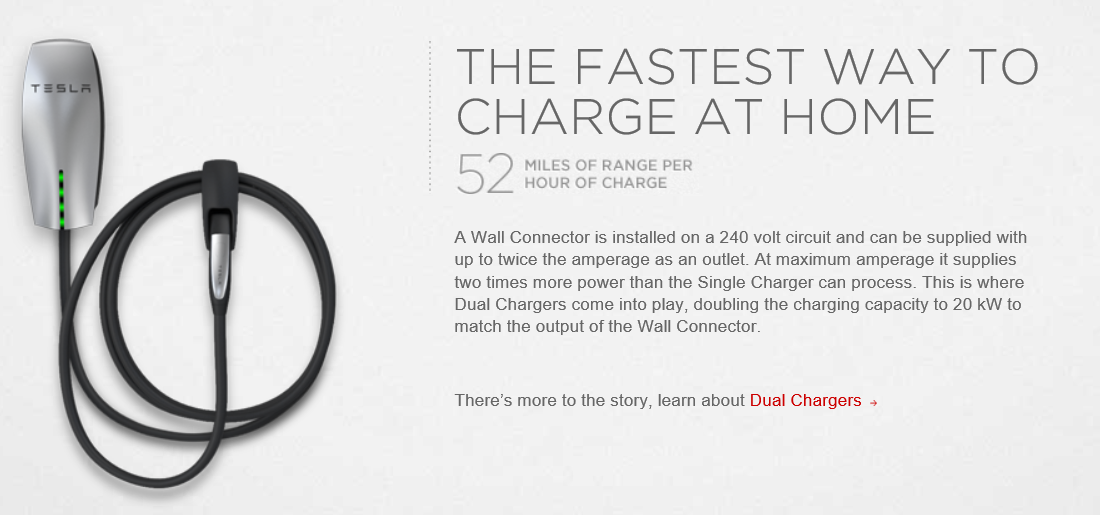
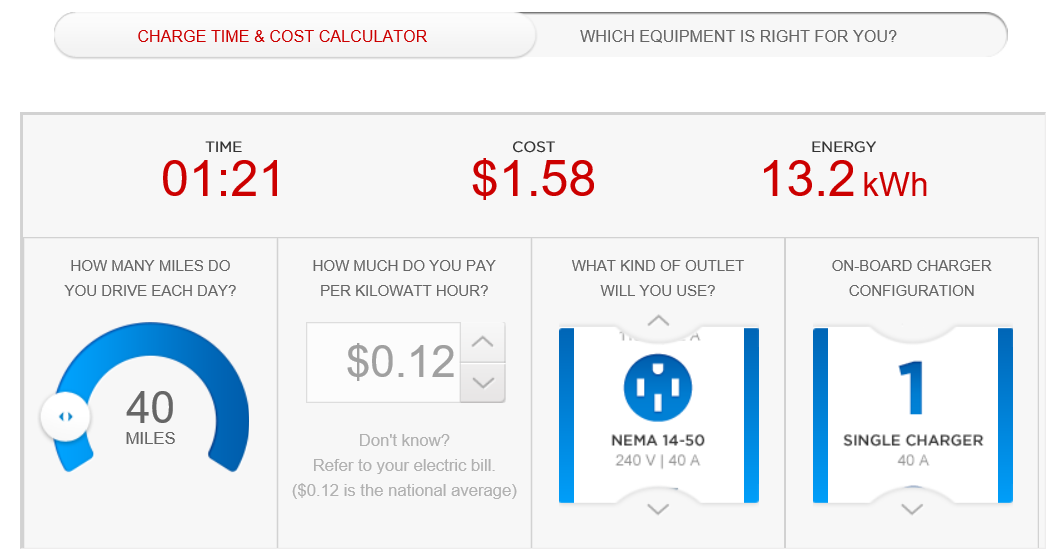
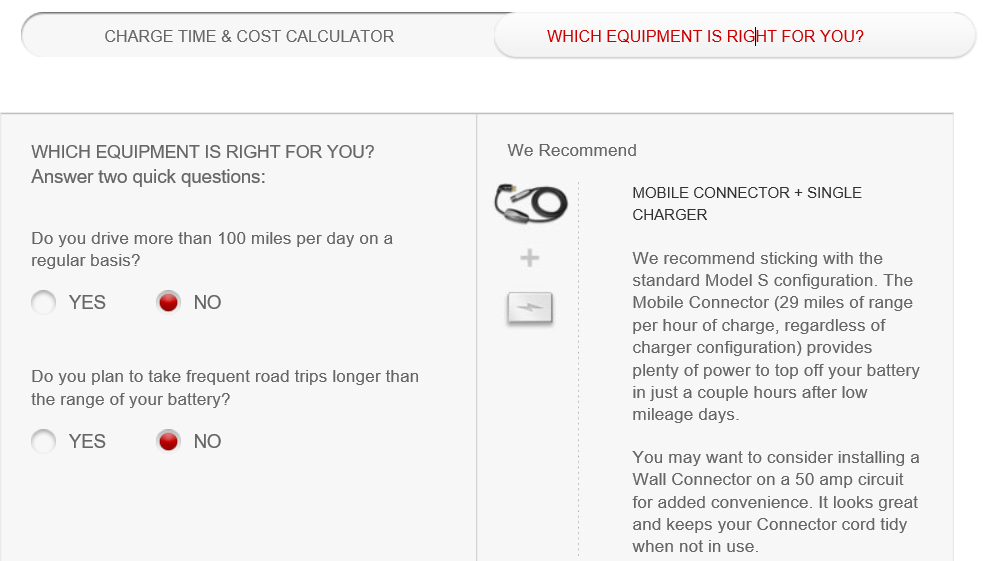
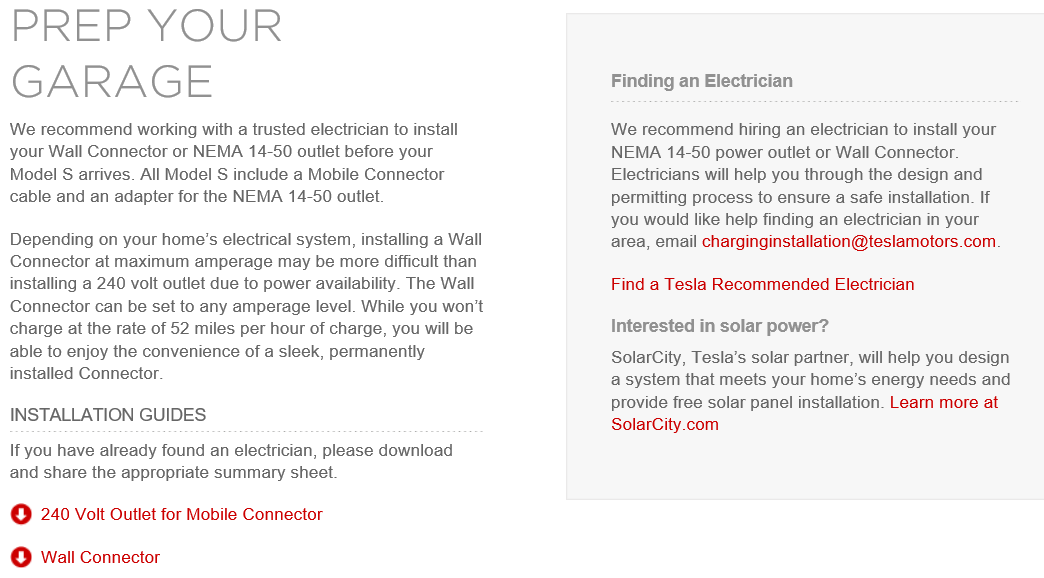
FlatSix911 Here is the primer on Tesla Charging | Tesla Motors
The answer is out there ... if you search
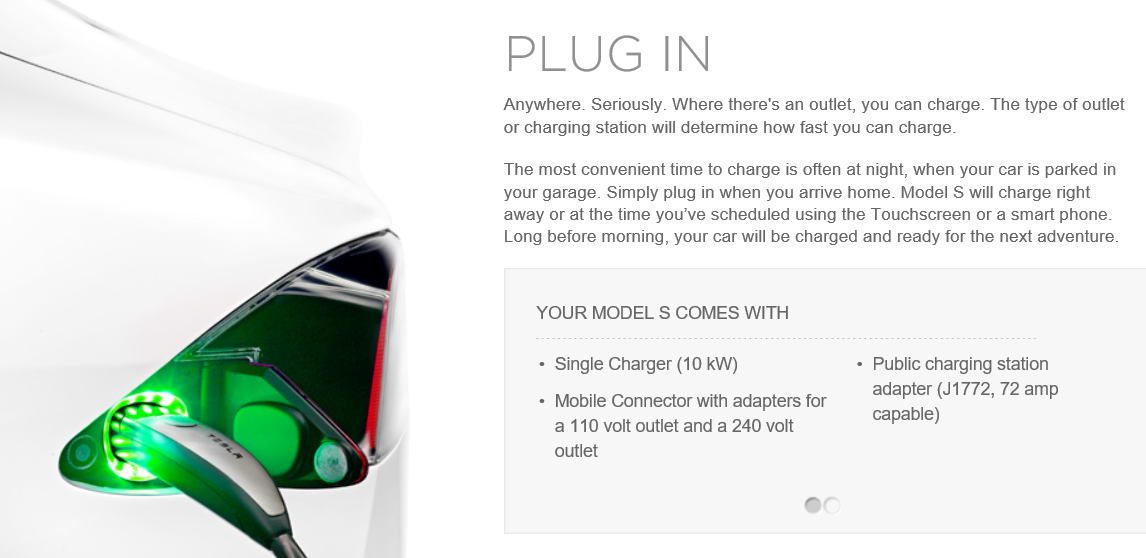
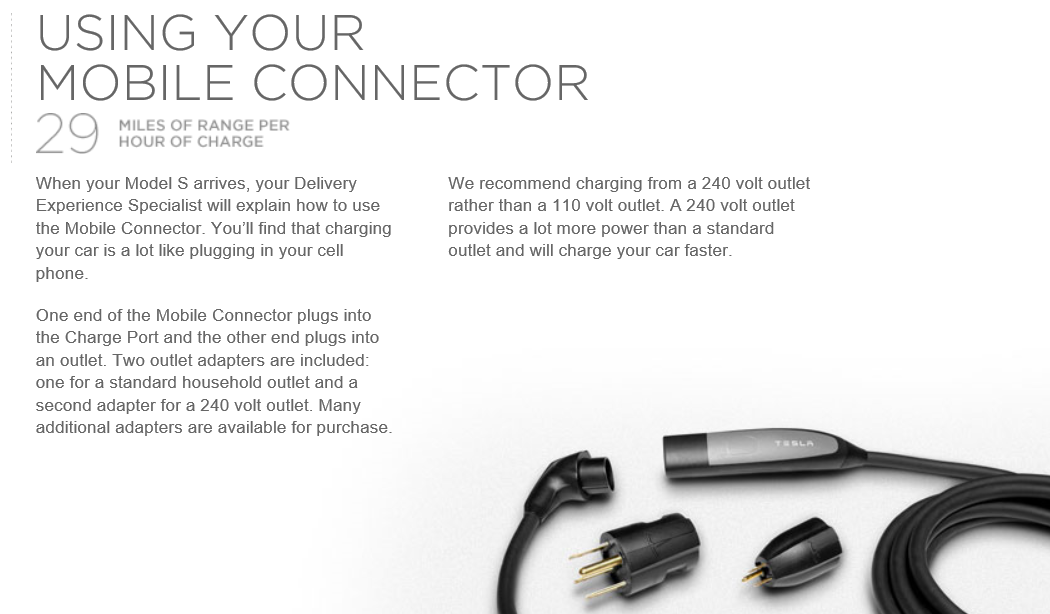
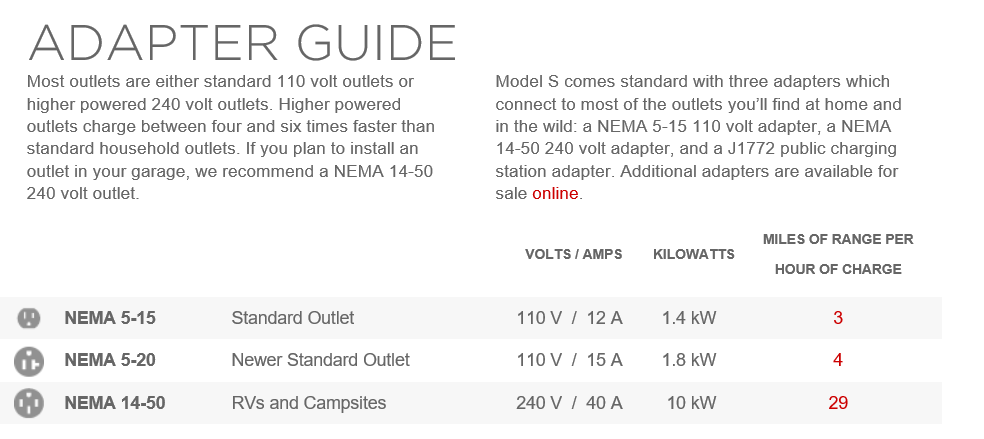
 �
�
May 12, 2016
jerry33 Just plug it in, set the slider to 50% or 60% and that's it. There's no need to do anything else.�
May 12, 2016
jerry33 Ideally use the HD 110 cord just because a plugged-in Tesla is a happy Tesla, but for a few days it won't matter even in cold weather. Note that the manual indicates that you don't allow it to sit in below -32 temperatures for over 24 hours. I doubt this is a problem where you live.�
May 12, 2016
jkk_ Local owners have asked about this statement from local Tesla store, apparently that means only if the car is unplugged. If it's plugged in, there should be no issues.�
May 12, 2016
Gwgan My car needed a new 12-volt battery after being left unplugged in a garage for the better part of a week while doors were opened and closed a few times a day.�
May 12, 2016
jerry33 I'd be happier if that was stated in the manual (or at least a post by Elon) because Stores and Service Centres have been known to give conflicting information depending upon which Store or Service Centre is contacted.�
May 12, 2016
jkk_ No arguments here, that'd be more reasonable in any case and I hope they do that change with regards to model 3 manual. But in any case, the BMS on Tesla's should keep the batteries in good shape even in cold, as long as there is power�
May 12, 2016
eisbock Otherwise they leave it plugged in at home?�
May 12, 2016
eisbock Excellent information. I see now that the UMC not only acts as an adapter, but provides an extra layer of security and protection to regulate what's coming from the wall to the car. Makes complete sense!�
May 12, 2016
eisbock I happen to work at a power distribution molding company that specializes in making heavy duty extension cords for the Navy. We're talking anywhere from 15A to 110A or greater, so I know a thing or two about heavy duty extension cords!
Before I started working there, they were actually working with Tesla on EV charging cables. Now that I see these pictures, I think I actually have an old UMC lying around! Was this from the Roadster? Model S UMCs look way more snazzy and futuristic.
![[?IMG]](https://lh3.googleusercontent.com/blogger_img_proxy/AEn0k_sg4MZtp7hbPSnD_eRQQvrGqzCog9UXPP14O8l72ydEzCxCLyIAaIqrtrPGwzgC2WKpbNFxWO26M0h6UDQEcW1yVw=s0-d)
So, let's say I park on the street or need to charge farther away from an outlet than the UMC allows. What are my options?
From the looks of it, it appears you need an extension cord capable of handling the current which is then plugged into your wall outlet. Then you run the extension cord to your car, plug in the UMC to the extension cord (adapter if necessary), then finally plug the other end of the UMC into your car?
It looks like the car-end of the UMC is the plug designed for the car, so I'm guessing there's no way to plug in the UMC first, then run an extension cord? This would not make sense too, since the UMC can no longer regulate the electricity entering the car.
My concern is that if I am parking on the street, or at least not in a locked garage or otherwise private space, there is a risk that somebody could walk away with my UMC. Does it lock in the car? I know the superchargers do. Not sure how effective that would be and if somebody might end up damaging my car trying to get it out. Also, the UMC is just lying around, which could be prone to damage like people walking on it, weather, etc. Even if nothing happens, just the thought of it happening could be very stressful since it'll be exposed for half the day.
If all goes according to plan, I'll be living happily with a garage by the time my 3 arrives, but I'm just trying to prepare for the worst case scenario. Although if worse comes to worst, I'm sure I could convince my employer to pop in a charging station!�
May 12, 2016
jandkw After 3 years of driving my Model S, my first EV, I learn a few things. I'm also interested to get the Model 3..
1. I plug in often but maintain the charge to 60-70% range. I charge it at night during the off peak hours using my 14-50 (240v) in my garage. To be honest, I'm a low mileage driver so my 115v outlet is just fine. To maintain your EV to the maximum range, do 2 things: 1. lower your battery to 30-40 miles frequently and go back to the 60-70% range on the daily basis; 2. charge your battery to the max. at times even though you're not traveling.
2. I use Metlife, very good rate. Since most insurance companies learned to rate EVs for the past few years and there is no premium add on anymore.
3. I have the air suspension but if I do it again, I would eliminate that option since I don't have steep driveway and all. There is very little difference riding wise, with and without the air suspension option. I doubt the Model 3 will have this option.
4. I do have the premium sound system which is important to me. The premium sound system after I purchased my MS improves and got even better (per my loaner car). If you enjoy good sound, I strongly suggest you get that.
5. I purchased the 4-year service plan which costs a little less. Tesla recommends service every 12K miles. My MS is very reliable and have little issues even I have the early adopter car. There are not a lot to fix other than tires and brakes. Tesla service is second to none and if I purchase the M3, I will not buy the service plan. I even 50% less for my annual car inspection, not a lot to inspect, my mechanic said.
6. Tesla Service owned by Tesla and not a third party outfit so I doubt they service the M3 customers any different than the MS customers. Based on my 3 years with Tesla services, I have high confidence on their service.
7. There are not a lot of useful apps at this time even with my iOS on my MS.
8. Therefore are adapters come with the MS for 115v, 220v and of course the supercharger station will automatically plug into the MS. I do have the Camco 50amp extension cord (30') which I keep in my MS for travel purpose. You do not want to use the standard extension cord..
http://www.amazon.com/Camco-55195-Extension-PowerGrip-Handle/dp/B0024ECIP0?ie=UTF8&psc=1&redirect=true&ref_=oh_aui_search_detailpage an extension cord
9. Cold weather package includes rear heated seats and heated steering wheel. I live in NC so there is no need.
10. I'm not sure I answer your question here. Tesla uses slacker internet radio and rumor to switch to AT&T. My MS has USB port which I put "my music" into. There is no charge to use the slacker radio (for now anyway) although my early MS only has 3G vs the latest has 4G LTE. No SIM on my MS and not sure why we need it?
Have fun with your future M3�
May 12, 2016
jerry33 Yes. Mine stays plugged in at home unless I'm on a trip or getting service (Tesla likes to test the UMC during the annual inspection).�
May 12, 2016
jerry33 Here is one solution.
Some people put a lock box with the UMC and the GFI section in it so that only the cable sticks out. (or the extension cord wall plug end)
The UMC locks just as the Supercharger does.�
May 12, 2016
proven Yes. We leave our cable plugged in the garage and it's hanging from the ceiling.�
May 12, 2016
GoTslaGo Same here. Leave it plugged in the garage, hanging from the wall. We have a second UMC cable in the car in case of emergencies or what not.�
May 12, 2016
Genshi I feel bad even asking this, but is there anything securing the adapter to the car or charger that would prevent someone from walking up to your car, grabbing the adapter, and walking away with it? At $450 for a CHAdeMO adapter, I'd actually have concerns about that...
Edited to add: Nevermind... just saw the comment above about the charger locking to the car, leading me to believe an adapter would do the same thing. Reading comprehension for the win.�
May 15, 2016
mzairboy It is likely that the car will be parked outside most of the time when it is being charged. Is the UMC unit built for outdoor use and will it stand up to being in the sun, snow, and rain?�
May 15, 2016
wdolson I don't know if the HPWC is rated for outdoor use, but the Tesla destination charger they are getting hotels and such to install looks a lot like an HPWC and many of those are outside.�

Không có nhận xét nào:
Đăng nhận xét