Jun 9, 2014
yobigd20 well I called it. the hints that he dropped at the shareholder meeting for "something radical" regarding patents -> speaking at the UK launch of the Tesla Model S yesterday, Elon Musk said that he specifically wants to open up the designs for his Supercharger system in order to create a standard technical specification that other electric car makers can adopt.
Tesla will open up its Supercharger patents to boost electric car adoption�
Jun 9, 2014
StephenM Good call :wink:
I'm a shareholder, however, I still like this decision. There is a huge revenue stream that Elon is omitting here, but there's also a huge potential upside for making charging stations ubiquitous. If only the other manufacturers will take up the offer....�
Jun 9, 2014
Bardlebee What I find ironic about this, is they would have to make a car that would take advantage of it, and I doubt they will. And part of the underlining genius of this is they would need to go AT LEAST 200 miles at this point to utilize the stations! So the car companies would have to A) Make a LONG RANGE vehicle and B) at least make it compelling due to the natural higher cost of a large range vehicle.
He has created more possibility for competition by doing this. I wonder if Tesla will gain royalties from using the actual tech though.�
Jun 9, 2014
gnelson Building an EV with a 200 mi range is of no value without a fast charging infrastructure. If a fast charging infrastructue existed, people would buy a 200 mi EV. A 100 mi EV is good for local use and people buy them solely for that purpose.�
Jun 9, 2014
techmaven I wonder if this is where Tesla pushes their Supercharger connector/protocol as a replacement for SAE J1772-DC CCS. They can make the argument that there are so few CCS chargers and vehicles, that it would make sense to just switch to Tesla's. That means contributing to a standards essential patent pool.�
Jun 9, 2014
WarpedOne I don't see what is new here: he was alwayes "we are open to other manufacturers using SC. No one approached us"
Why would they approach now?�
Jun 9, 2014
Zythryn My understanding is that before they would be willing to sell licenses. This sounds much more open, although Tesla would still expect manufacturers that take advantage of this to help out with costs of the network.�
Jun 9, 2014
Jackl1956 I can only imagine that GM is considering making strong strategic moves. Mary is a new CEO. Can she lead?�
Jun 9, 2014
AudubonB MY early morning bleary-eyed first thoughts are these:
To the extent there is take-up on this offer,
1. Short-term, TM benefits less than it would were it to have kept the SpC protocol in-house;
2. Long-term, TM benefits more as it is well positioned as a vehicle manufacturing corp to rise with the tide that lifts all EVs;
3. TM is and likely will remain rather uninterested in extending the SpC grid deep into Canada....and on throughout Alaska. ANYTHING that brings Superchargers here is something that gets my personal vote, even if my shares don't rise as much (short-term) as they otherwise would.�
Jun 9, 2014
Merrill They would have to install 1000's of SC, I think Tesla will have a hard time just keeping up with it own production. You would defeat the purpose of having superchargers if other manufactures could use them.�
Jun 9, 2014
AudubonB But Merrill, of course part of the tit-for-tat would be that others assist in the build-out.�
Jun 9, 2014
Merrill Yes, and I think overall it would help get over the hump of getting people off gasoline. But, would this be a separate build out for other than Tesla's. I know I'm a bit selfish about overcrowding at the superchargers and still wonder as the amount of Tesla's increase that there will be enough stations to accommodate everyone.�
Jun 9, 2014
Krugerrand If the public quotes I've read are any indication, Ms. Barra is old school to the bone, raised on fossil fuel fumes, and has no desire to get into the EV business. Besides, she's sort of got her hands full right now with other matters.�
Jun 9, 2014
vgrinshpun And pay 2,000 per car to gain lifetime free access to the supercharger network. To me this is brilliant, and should be welcomed by all shareholders. Not only this grows the EV "pie", this is also analogous to selling cheap printers and then making money selling ink. Brilliant.�
Jun 9, 2014
Larry Chanin Yes, the engadget article merely speculates about Elton's hint at the shareholders meeting, it doesn't provide any new information. We of course can speculate as well, but the fact remains that Elon has only hinted at perhaps a relaxation of access to Tesla technology, he hasn't actually stated what the requirements for access might be.
Larry�
Jun 9, 2014
AlMc I agree. Not only will it be good for stockholders but it does satisfy TM's, and Elon's personal, mission statement to accelerate EVs. I was actually relieved to hear this is the 'sharing' he was referring to at the stockholder's meeting. I was worried that they were going to share the 'secret sauce' behind their battery pack construction.�
Jun 9, 2014
vgrinshpun "Relieved" is exactly the word to describe how I felt as well. We just need sometimes remind ourselves not to loose trust in Elon's intentions and capabilities.
TM is indeed "purpose driven" company. The profit, however, is not neglected - there will be no achieving the purpose without healthy profit...�
Jun 9, 2014
ecarfan Tesla will open up its Supercharger patents to boost electric car adoption
It's another genius move from Elon.
It is in line with the Tesla Motors mission statement and makes the company look good.
It gives a real incentive to other manufacturers to make real long range EVs since the Superchargers are only useful to 200 mile plus range EVs.
It eliminates the chicken/egg problem of "no point in making an EV for road trips because there is no truly fast charging and...no point in building a fast charging network because there are no long range EVs".
It can drive the industry towards standardizing on the Tesla charging system. All other chargers are too slow for long distance travel and are only really useful for charging all day at work or overnight at home. But that isn't enough for full EV adoption, the naysayers love to use the argument that charging is "too slow to be useful". The Tesla system disproves that, but then they say "well but Teslas are just for rich people". Imagine if "city/commuter" EVs with small batteries could Supercharge they could charge to 90% in 10 minutes. Then city dwellers without a home parking space and plug outlet could charge on their way to work or way home.
There is one major problem this move by Elon doesn't solve: even if other manufacturers want to build long range EVs where are they going to get the batteries? Even Tesla is somewhat battery constrained this year. According to Elon at the recent shareholders meeting, Tesla recently turned down a high volume battery supply request from Toyota because Tesla has no spare battery capacity.
I think Mercedes and Toyota want to build long range EVs using the Tesla drivetrain but Tesla is unable to supply them with batteries and they have no other sources to go to for high volume battery supply. So they are staying with compliance EVs for now, or in the case of Toyota, fool cells.
Of course Tesla is building the Gigafactory to alleviate battery supply constraints especially for Gen III production. I fully expect Gigafactory #2 to start construction (not just groundbreaking) before #1 is fully ramped up.�
Jun 9, 2014
Larry Chanin I think that you have touched on Elon's motivation for hinting at this relaxation. If Tesla is successful in their production targets they will be increasing the number of Teslas competing for Superchargers by more than an order of magnitude. Can Tesla increase the installation of Supercharger stations by more than an order of magnitude without help?
Larry�
Jun 9, 2014
viperboy Think about if someone like Shell picked this up. Understanding that electricity will become at least some part of US transportation, installing one supercharger at every gas station. You wouldn't need to plan around spc but simply look for a shell (or whatever). I assume they would charge for the charge (pun intended) but it's still 10 bucks to fill up, not 60+.�
Jun 9, 2014
AudubonB Hold on a minute. My read of this was that, while the SpC fee was indeed to be paid up front, it would be going to the GM or Mercedes or VW company, who then would be using those assets to fund their share of SpCs - I did not come to believe it would be going to TMC. Would be ecstatic to learn elsewise.�
Jun 9, 2014
SebastianR I think Shell (or any other gas station company) may not be the target audience here: I think for the time to come, a gas pump with good traffic will be more profitable than a supercharger, even if electricity is "free" and you charge $10 - the problem is that you still need to wait 30mins for the refueling.
I think however, that now all the restaurants should move in: "Why not come and charge for free* at our restaurant? *Free charging provided with any SuperSizeXXL Menu" - think about it: it is a reason for wealthy customers to stop at YOUR place, you need parking anyways and supercharging people are "gone after 30 minutes" i.e. this is the perfect timing for a high turn-over restaurant.�
Jun 9, 2014
ecarfan Yes Tesla can scale up Supercharger production easily because every Supercharger-capable car order Tesla receives, months before having to deliver the car, pays for that cars part of the Supercharger network. It's a self-funding capital expense. Elon has said repeatedly, and did so again just yesterday in London, that the cost of building the Supercharger network is relatively small and that is in part why the stations Tesla builds do not include a per-use payment system: it's not worth bothering with as it's much easier to factor in that cost into the price of every Supercharger-enabled car sold.
Tesla now has the inhouse know-how, and the experienced outside contractors (in North America, Europe, and starting in China) to relatively easily build new Supercharger locations.�
Jun 9, 2014
dsm363 Starbucks should do this. Great marketing and right audience.�
Jun 9, 2014
jkliu47 Actually I think his proposal is simpler than this.
There is no rule that the Superchargers HAVE to be 100 miles apart. Any other EV manufacturer (or EV centric business) can install SC's closer - and thus give access to the shorter range EV's.
And this means all the more SC's available for our Teslas. And most probably solve the problem for city folk and apt dwellers.
- - - Updated - - -
Plus - the SC's be as ubiquitous as Starbucks!
Minus - have you tried parking near a Starbucks and grabbing a quick caffeine fix?
I think a better business model would be that of installing SC's in existing gas stations with mini-marts or by fast food joints.�
Jun 9, 2014
Doug_G You'd think... have you ever tried posting that idea on mystarbucksidea.com? There are some trolls on there who vote down anything like that!�
Jun 9, 2014
SebastianR Agree that this would be a good idea. However, I don't know if Starbucks wants people to stick around for 20-40 mins. I think the likes of Outback Steakhouse, Olive Garden and other fast food places disguised as "restaurants" are probably an even better fit.�
Jun 9, 2014
dsm363 Starbucks parking would be an issue at some locations. The next to highway locations usually have plenty of parking but downtown in cities is different.�
Jun 9, 2014
Papafox My biggest question is how does this proposed policy affect charging in big cities? I see the proposal making sense if third-party providers are allowed to sell supercharger charges within large population areas. Tesla still makes some free charging stations available, but it'll be more convenient for most city dwellers to recharge at a nearby third-party supercharger, and it won't cost an arm and a leg because the presence of free superchargers in the city will keep prices moderate.
I would rather pay $6 for a quick supercharger fill up than drive 15 minutes to and 15 minutes from a free location. I see third party supercharging as the long-term answer to Tesla buyers who live in large cities but lack the charging infrastructure in their home parking areas. Why would Tesla shoulder unlimited charging for life in big cities such as Beijing, London, and New York when they're only charging $2,000 for the option up front? A limited number of free stations in big cities makes sense, but a huge deployment of free-forever superchargers in big cities does not offer sustainable economics. Let Tesla and the other companies offer free supercharging alongside highways, but let the third-party providers take up the brunt of the charging within cities, as is currently being done through slower charge methods.�
Jun 9, 2014
Seattle It will take the car companies a few years to figure out how to build better evs, plus they aren't advanced enough to handle the battery format that tesla uses, requiring cooling and heating. By the time that happens, Tesla can sell them batteries from the giga factory. And Tesla must own lots of patents about cooling, heating, and care of separated battery system.
- - - Updated - - -
Just as movie theater chains all say they make most of the money off concessions, could it be that in the future gas stations will make more money off selling you a coke or something? That would be another reason to put a supercharger at stations between cities.�
Jun 9, 2014
xhawk101 Already there. ...gas stations don't make much on fuel sales at all. It's the concessions. Actually the supercharger concession makes tons of sense! The roof can include solar provided of course by solarcity
The gas pumps can gradually be replaced by superchargers. Open source to boot. That's a huge opportunity.�
Jun 9, 2014
ecarfan Today's gas stations already operate that way. At least in the US, all of the newer stations are more junk food store than gasoline dispenser.
I think that for the foreseeable future Tesla will continue to expand the Supercharger network following the existing "free" model (charging cost built into the cost of the car), and if any other companies decide to participate they will have to follow that model.�
Jun 9, 2014
dsm363 Tesla will open up its Supercharger patents to boost electric car adoption
I would still argue not many people want to hang out at a gas station for 30-60 minutes rather somewhere to grab coffee or a sandwich would be much better.�
Jun 9, 2014
constraint While I agree opening up the protocol benefits everyone, the caveats Elon describe means that hardly anyone is going to take them up on the offer.
1. To take advantage of 120-135k kw charging requires minimum 60 kwh packs (2C charging) which at this point does anybody have over 30 besides the Tesla (Toyota) Rav 4?
2. Manufactures would rather have a cheaper plug on the car and not be in the business of managing/maintaining a charging infrastructure.
3. If Ford charged 2k for a plug and gave Tesla half of that to pay for the infrastructure/electricity, that means Tesla is still calling all the shots and getting most of the recognition out of it.
What I would like to see is Tesla keep going with their 150 mile distance infrastructure (for free) then let other companies purchase SC ranging in 50kw to 135kw configurations to fill in the gaps (using the tesla plug). At these locations of course you will be charged a fee, but I would much rather pay 30 bucks in these cases to fill up for the 5 times a year. Additionally if 3rd parties were purchasing SC's (and in lower configurations) then there is a good chance that lightly traveled areas could get at least some DC3 charging as well.�
Jun 9, 2014
AlMc Agreed. Until the charging time can be reduced to 1/2 battery in 5-10 minutes then I doubt the gasoline/convenience store model will work.�
Jun 9, 2014
vgrinshpun So it seems that you think that TM will release supercharger specifications so that other manufacturers can produce and install the superchargers -this is the only scenario which would include $2,000 going to them instead of TM.
I do not see superchargers ever produced and installed by other manufacturers. TM will continue manufacture the superchargers, install them and monitor the network usage, adding bays to existing or new locations so that the network develops to match the demand. The payment model (sharing the cost as Elon put it during the shareholders meeting) will be the same as it stands currently - $2,000 per car. The release of IP will cover all patents that make a battery pack able to work in tandem with the Superchargers.
There are several reasons why this arrangement will be preferred by both TM and the manufacturers buying into the system.
Other manufacturers are not moving into the developing and manufacturing of "200 miles+" EVs because it requires very significant R&D expense and team of engineers they simply currently do not have. To top it off in their analysis this massive expenditure of capital has very high risk due to uncertainties of wide scale adoption of EV. As a result these manufacturers fall even further behind, and task of shifting to developing and manufacturing a compelling EV becomes even more daunting as time passes by. In this situation, if any of these manufacturers would be drawn in by Elon's offer of opening the charging protocol and allowing them to use TM Supercharger network, they will be happy to reduce risk by "outsourcing" and leaving the build-out and management of the supercharger network to TM.
From the TM perspective, it will be some time before other manufacturers can develop and start manufacturing the "200+" EVs. At that time the US supercharging network built by Tesla will be quite mature and undoubtedly cover all US, with probably more than 300-500 locations. Allowing other manufacturers access to these 300-500 TM Superchargers while Tesla car owners will in return gain access to the few that these manufacturers would build just does not represent a fair deal and will require some kind of monetary compensation to TM.
So I think that TM will open source all IP that is required for design of the supercharger compatible battery packs by other manufacturers and then allow them to buy into the already existing Supercharger network at $2,000 per car.�
Jun 9, 2014
markwj Yep. That is the approach that makes sense to me.�
Jun 10, 2014
Ampster I agree with most of what you said except the guote about Tesla being unable to supply Mercedes and Toyota with batteries. Mercedes now has a joint venure making their own batteries for the Smart EV and a B class vehicle in Europe. Within a year of launching the RAV4EV as a compliance vehicle Toyota declared their commitment to fool cells. The RAV4EV deal was always a 2600 car compliance vehicle for California only. Some if us that bought the RAV4EV hoped that it would become more popular, but that didn't happen.�
Jun 10, 2014
Ampster Or as started by Gillette, 100 years ago by giving away the handle and selling them blades for life.
But wait, are we going to see cheap EV's and pay as you go proprietary charging stations? I think the cat is out of that bag, so that is not likely.�
Jun 10, 2014
AudubonB Yes, I believe that is a reasonable interpretation of what I think he said. I shouldn't have given the impression that I thought the idea was for other manufacturers to be the actual diggers and builders of more SpCs.
I do, however, fervently hope that the current "end 2014/2015" SpC map is a very small fraction of what the North American network will look like....very quickly. Far too many great, great roads and routes are utterly inaccessible by that grid.�
Jun 10, 2014
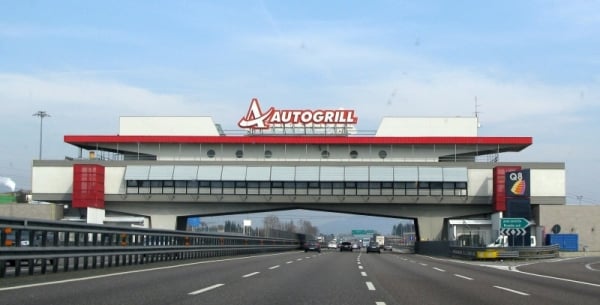
BriansTesla It seems to me that the some of the rest stops in Europe are what future charging stops might look like.
 �
�
Jun 10, 2014
Todd Burch Why? Superchargers support *up to* 135 kw. They can always ramp down, which means a car with an an appropriate connector could have any sized battery and charge at any rate <=135 kW.
The distance between chargers is irrelevant too. If a large car company wants in on this deal for their 100 mile EV, fine...they'll just have to support putting the charging stations 50-60 miles apart. More choices for charging for us!�
Jun 10, 2014
markwj Do we know whether the car controls the charge rate (as with normal AC EVSE protocols) or the supercharger?
The issue is that if a car charges at, for example, 25kW, then it is going to block the charging station for much longer than one at 135kW. Similar case for the distance between stations (a car needing 50% charge gets away in significantly less than half the time of one needing 100% charge). Of course, offset that against smaller vehicle batteries requiring less kWh put into them.
The core design goal of the superchargers seemed to me that they were ideally spaced about 1/2 to 2/3 a 85kWh pack apart - that is not just to have a buffer for range, but because a 50% top-up charge is significantly quicker than a full 100% charge (due to current tapering at the high end of the pack).�
Jun 10, 2014
constraint Todd
The ramping down is due to the infrastructure cost needed for a 135kw grid pull can be pricey. For instance currently there are 0 DC3 chargers in MN (so maybe this is a bad example). I take an ice fishing trip once per year in Baudette MN. The last hour of that trip is pretty sparce, although Baudette is a decent sized town. Considering the size of the town, who is going to invest in a 150k charger? The current price of the Chademo is somewhere in the 10-15k price range. Granted 135kw is a lot more practical for the customer, but the Chadamo is a lot easier to make economic sense for the charging company.�
Jun 10, 2014
TonyWilliams The car ALWAYS controls the charge on modern electric vehicles. The only limit of the charger is the volts (100-500 volt DC) and how many DC amps it can deliver (over 300 on Supercharger)
A 25kW car may not block a Supercharger longer than an 85kWh one, if the former has only a 25kWh battery.
They both charge "in about an hour".�
Jun 10, 2014
Zythryn Bemidji, 100 miles away is slotted to get a supercharger in 2015.
Unless you are Ice Fishing from the Tesla, plugging it in at your destination shouldn't be an issue.
Smaller battery packs slowing down access to others is a concern. However, I believe it can be minimized in a number of ways.
For example, the most straight forward is to build more SC stations as other cars are allowed access.
Second, they could set one half of each pair of SC (e.g. 1B, 2B, etc) to be the designated 'slow' charger.
The 85kWh parks in the A slot while the 35kWh generic EV gets the B slot.
The B car gets 35kW while the 85kWh gets the balance.
The numbers may change, but you get the general idea.�
Jun 10, 2014
stopcrazypp However, the 25kWh car probably can't make it to that supercharger anyways. And the actual mph charging speed is still low, so the supercharger is still underutilized (much better for that car to charge at a CHAdeMO or CCS charger). I think Tesla's power requirement is designed to keep the station density similar to what it is now and just scale by number of slots. This would make it less practical for local users from using it for daily charging (something that can easily make superchargers a money losing business just from the electricity alone).�
Jun 10, 2014
ItsNotAboutTheMoney It won't block a station more, but the problem is that it would block more stations.�
Jun 10, 2014
markwj I agree that is the way it should work, but we don't know for sure how it actually works with the Tesla SuperChargers. The reverse engineering efforts have made some headway, but not to that level of detail, and Tesla haven't released the details yet. We don't know how tightly coupled the SuperChargers are to Tesla vehicles. The SuperCharger protocol certainly doesn't seem to have been designed as an industry standard (unlike the signalling we see even on early Roadsters and compatibility with the later J1772 standard).
If 2 cars have to put a given kWh (equate to number of miles/kilometers range added) into their batteries, one does it at 25kWh, and the other at 135kWh, the first one will occupy the stall for comparably longer than the other. A 25kWh charger is going to block that stall for 4 times as long as a 100kWh charger. Put it another way - if two SuperChargers were spaced 50 miles apart, a car charging at 25kWh would have to charge for 4 times as long as one charging at 100kWh, to add those 50 miles of range.
When talking about vehicles with different battery sizes and charge rate limits, the correct way to think about this is not SOC% (and in particular not 0% -> 100% SOC), but in miles/kilometers of added range per minute at the charger.�
Jun 11, 2014
scaesare Actually, enough has been completed that we do know this is the way it works.�
Jun 11, 2014
WarpedOne Link please!
(or it didn't happen)�
Jun 11, 2014
Chickenlittle No whether it happened or not does not depend on link. That's like saying I saw it on the internet so it must be true
My own experience was seeing a signature car at Delaware supercharger over a year ago. I talked to the driver who had computer equipment hooked up to it. I congratulated the driver on his purchase but he told me BMW owned the car. It was taken up there on flatbed to measure how tesla superchargers worked. He also told me how BMW had been reverse engineering the car. He told me the car had to be fixed by tesla a couple of times because of those efforts and tesla was aware of their efforts. Yes did report it�
Jun 11, 2014
stopcrazypp I think he means a link to show how the supercharger works (to the point where it proves it's the car that controls the charging, not the charger). That an automaker has done a large amount of reverse engineering is irrelevant to this given we don't have access to that data, so the question is still unanswered for us.�
Jun 11, 2014
scaesare Not everything is necessarily published online, but you can read the start of efforts such as this one : Supercharger protocol for diy CHAdeMO adapter�
Jun 11, 2014
Krugerrand Sometimes the joke sails over people's heads. :wink:�
Jun 11, 2014
Todd Burch A few points.
I'm virtually certain that the car controls the charge rate, not the Supercharger. I'll eat my hat and yours if I'm wrong. So any car can request whatever power level it wants, up to the max. Not sure if this is proven, but it makes so much more sense, and if not--what's the difference? The point is, the car that's charging (it won't always be a Model S in the future) must communicate with the station. The charger must somehow determine how much power to put out...the source of that information is the car.
About charger use:
On the one hand, unless the pack is REALLY big (in which the max power output of the Supercharger is far less than the pack can handle), battery size doesn't matter. Whether a pack is huge or small, charging at, say 1C takes the same time for both packs. And EV charge rate is capped by the C rate, because that's what impacts battery life.
On the other hand, markwj is correct in that, in general, smaller packs tend to have lower mph charge rates. Yes, smaller packs usually come on smaller cars, so their Wh/mi is typically less, but not enough to make up for the lower capacity of the pack. So, smaller packs would mean lower capacity charging not longer at a time, but more frequently.
I think, however, that any EV participating in this would probably have a range of ~100 or more miles. I think the increased demand for chargers if you add a lot of 100 mi range EVs into the mix would be properly balanced by an increased number of supercharger stations.�
Jun 11, 2014
agileone Elon just twitted this about 30 min ago :
Some news about Tesla patents tmrw at 10am�
Jun 12, 2014
Tasdevil Yeah interested too see how many patents are involved.�
Jun 12, 2014
rogbmw Am I the only one that might not like this? As both a Model S owner, Model X reservation holder, and Tesla stock owner, the last thing I want to find if I am on a long trip and pull into a SC station on a trip is find a line of Non-Tesla cars waiting to use the SC? If they do this, then I feel that as a Tesla owner, there should be some way that we would receive priority.�
Jun 12, 2014
Zythryn Why would you assume they would not build to service the number of SC capable cars?
As a two Model S household and Model X reservation holder and stockholder I am incredibly excited about this. Think of how much faster the network can grow with contributions from other car brands.
Other brands will want SC closer to each other than 130-150 miles so those of us with more range will have more choices.
This will also speed the adoption of EVs in general, and Teslas in particular.
Of course, this is assuming any other manufacturers jump on board. And I don't think they will. The gift has been offered, but I suspect they are to stubborn to accept it.�
Jun 12, 2014
Ampster I believe you are correct. Ohms law, says that the resistance of the device in the circuit determines the current flow. For example, you can plug in a 1 Watt bulb on a 20 amp circuit, but if you put a 3000 Watt device on that same circuit the 20 amp breaker will trip.�
Jun 12, 2014
Todd Burch The Supercharger and car must handshake before charging begins. Something like:
Model S: "Hey, someone plugged into me. Who plugged into me?
Supercharger: "Hi Tessie, it's me. Glen Allen, 3A. What's up?"
Model S: "Nuttin' much."
Supercharger: "Say Tessie, how much go-go-juice do you want right now?"
Model S: "Hmm. Let's start at 112 kW. I'll let you know when I need to ease back to 90 kW. I'm a little sore."
Supercharger: "Whatever you say, Tessie!"
With other manufacturer's cars, the conversation might be:
Nissan Leaf, v4.0: "Hey, someone plugged into me. Who plugged into me?
Supercharger: "Hi Leafy, it's me. Glen Allen, 3A. What's up?"
Nissan Leaf, v4.0: "Nuttin' much."
Supercharger: "Say Leafy, how much go-go-juice do you want right now?"
Nissan Leaf, v4.0: "Hmm. Let's start at 33 kW. I'll let you know when I need to ease back to 15 kW. I'm a little sore."
Supercharger: "Whatever you say, Leafy!"
- - - Updated - - -
I'm beginning to think this will be the case too. Too much "pride" out there. Nissan might accept, MAYBE Mercedes, but I don't see others accepting at this point. We'll see I guess.�
Jun 12, 2014
capt601 Great idea but very few people are mentioning the already very long waits on weekends at some chargers. This will make it even worse. Currently a 2 hour+ wait in Barstow on weekends. That is already unacceptable, and this will make that worse. This will have the reverse effect on EV's. People will be laughing at others waiting in line to charge.
Look at all of the city chargers taken up by volts. Even if hybrid cars like that use them for 15-30 minutes, that is time a tesla will not be able. Do they limit it to pure EV's? Hybrids like volt, ELR,? Battery size, range? Etc...
Building more stations will not necessarily help, as they need many more stations to make it convenient for all.�
Jun 12, 2014
Tommy Getting other manufacturers to help with the SC build out is all well and good, however my thinking is if Tesla could entice government entities to participate in installing SC's, doing so would accomplish two objectives: adoption of a fast charging standard and rapid expansion of the SC network.
That enticement is making the SC patents "free source"; available to all that want to use it. This allows Tesla to make the argument to government entities that installing SC's are a public benefit and not Tesla's. No proprietary stumbling block to prevent the government from participating.
Here on the west coast the infrastructure for hydrogen fueling stations and CHAdeMO charging is being taken up by state governments and the result is (will be) rapid deployment of these networks. Tesla needs to expand as rapidly as possible and it is a difficult task without a partner willing to commit with money. As we all know, government tends to have deep pockets. I expect to see Tesla approach the various states (especially west coast ones) to help fund the SC network.�
Jun 12, 2014
Jaff True, two hours is unacceptable, but I think the number off available Superchargers (and level II charge stations) will scale correctly over time...remember, this is all brand new, and outside of Norway, no country is "fully covered" by Superchargers...
�
Jun 12, 2014
Zythryn This is not, by any means, an absolute.
I was staying at the hotel at Barstow Memorial Day weekend (Sunday afternoon through Tuesday morning).
I took a look at the SC frequently and never, saw a single car waiting. In the morning, up until lunch on Memorial Day there was zero or one cars there when I looked. Late afternoon there were two or three. Only once did I see all 4 slots filled, and never anyone waiting.
I'm not saying it doesn't happen, just that it is infrequent.
And if more SCs doesn't help, what would?
If demand is high, raising supply will help alleviate crowding. The trick is to grow supply as fast as demand increases.
Of the 30 supercharger stops we had on our vacation we needed to wait zero times for an open slot.
Yes, they need to continually improve the network, but no, it isn't as bad as you state.�
Jun 12, 2014
ckessel It's a bit vague what Elon means about meeting the Supercharger capability. From the article:
Tesla's own Model S cars don't universally meet that power level. Mine only handles 90kW.�
Jun 12, 2014
ecarfan Elon has stated several times that other car companies will only be allowed access to the Supercharger network if they contribute to the cost of building out and operating the network.
It would be against Tesla's own interest to have the scenario you describe occur. I'm not worried about it. The more the merrier...�
Jun 12, 2014
ckessel I have to think this is a strong validation of Tesla's Superchargers, that demand at existing SCs is outstripping supply. There was a point where some media smirked at the idea of covering the US, that'd it'd be a bunch of empty SC's sitting as a monument to wasted money. Obviously though, SCs are in high demand in the areas where Tesla has had good market penetration.
Wait times are obviously not a good thing, but I can understand why Tesla is continuing to focus on the coverage build out rather than increasing capacity at existing locations. I'd certainly think Tesla plans to start ramping up capacity in heavily used areas. I wonder if they're at all restricted on how much juice they can get into existing locations? Somewhat damned no matter where they allocate resources as somewhere else is starving for them.�
Jun 12, 2014
Merrill I'm with you, do not see how they can build out enough sc even with the help of other manufactures. Do not want to pull up to a Tesla supercharger and find lines of other EV's waiting. I think it will be difficult enough to keep up with the demand as Tesla ramps up production with the x and gen3.�
Jun 12, 2014
tigerade All Our Patent Are Belong To You | Blog | Tesla Motors
Wow, are they releasing ALL their patents?�
Jun 12, 2014
WarpedOne So he says.
The sky is falling, tesla is doomed, big auto Will now make a tesla killer! Not.
Unfortunately, not a single competitive car will come bacause of this.
Absence of patent protection doesn't make up for absence of will.�
Jun 12, 2014
ggies07 word.�
Jun 12, 2014
yobigd20 tesla better get those gigafactories up and running soon �
�
Jun 12, 2014
tamtam10 Why is there a horrific typo in the blog title?�
Jun 12, 2014
yobigd20 LOL
well I bet he needs other companies to start mass producing lithium ion EVs to help drive down the costs for the lithium ion batteries for Gen III.�
Jun 12, 2014
NuclearPowered
There is no typo, it's a play on "All your base are belong to us" popculture line.�
Jun 12, 2014
RubberToe Elon's blog post has already made it to the "All your base are belong to us" Wiki page:
All your base are belong to us - Wikipedia, the free encyclopedia
That sure didn't take long :smile:�
Jun 12, 2014
Johan I can't fully understand the meaning of this move but I think it's probably smart. Why? Because Elon thinks so and he is smarter than me (I?) when it comes to visionary leadership and disrupting old business.�
Jun 12, 2014
WarpedOne This move will have mainly political effects:
- "Old manufacturers" will have one less exucuse why they can't make a real EV
- Even more firmly establishes Tesla Motors as a leader in EV tech. Who can open its knowhow to others? Only one who knows what others don't.
But 200 mile EV will still come from Tesla first. Maybe in 10 year time ...�
Jun 12, 2014
Ludus Glad somebody posted the Tesla blog link. The focus of this thread on Superchargers was puzzling. The core Tesla patents are about the modifications to the 18650 cells that simplify them removing thermal safety features and how the pack then manages them and eliminates the need for the cell features. Nobody else does it that way and so far it's the only proven way to achieve the sort of performance Tesla gets with model S. That approach also leads to the flat battery packs that lower center of gravity and are amenable to rapid swaps.
I'm curious if this is really an invitation to major competitors to go ahead and reverse engineer and build clones. If they did of course they would still be years behind and run into the same limits on batteries that Tesla is struggling with now.
It's another one of those surprising moves that will take awhile to really appreciate.
Does it also apply to other potential users of Tesla style batteries/packs? Rec vehicles? Lawnmowers?
The Tesla official future is one with hundreds of gigafactories all over the world. I suspect open sourcing the fundamental tech is a step toward making that more plausible. Despite the astonishing success of model S nobody is seriously working to emulate it. BMW i8 is more a Fisker done competently, it's a hybrid with a powerful IC engine and a small electric motor. It may prove fairly hard to get them to take up Tesla's offer until the model is a proven success with gen3 and the gigafactory working, but knowing that Tesla's approach is open source will change the discussion at competitors as that gets closer.�
Jun 12, 2014
Doug_G I have renamed the thread in light of the fact that Tesla is opening ALL its patents. -mod�
Jun 12, 2014
SebastianR I think that's a brilliant move - let's examine for a second why:
1) The key danger to Tesla early on was that traditional car companies find a way to squash Tesla by copying the technology, flooding the market for a few years and then stopping EVs all together (similar to some of the EV1 strategies employed by GM). This danger is clearly over.
2) Tesla hoped that manufacturing a viable electric car could be threat enough to compel other established car companies to follow suit. This clearly didn't happen yet. One little Tesla (with 40k cars a year) is not enough to move the GMs, VWs and Toyotas of this world. The scale is just not there.
3) So what is better than one Tesla? Right, two, three, four Tesla Motors: I clearly see this move geared towards the Samsungs, Tatas etc. of this world that could move in now and apply pressure to the established players.
Just consider: a significant portion of the global car market will be dominated by what happens in China. This move makes it more likely for Tesla to be a de-facto standard in China and jump-starting the domestic e-car production there. If the first Tesla-based car comes out of Chine GM, Volkswagen etc. are surely moving as fast as they can: that's where the money is made, that's where the smog is horrendous and this is where local government authorities are very keen on establishing domestic players.�
Jun 12, 2014
Trev Page +1 on that. Just because TM releases their patents unencumbered doesn't mean we will see EVs with the same technology tomorrow. It takes several years to develop a new car, Tesla is certainly not immune to that fact either as we all know.�
Jun 12, 2014
qwk Spot on. The existing automakers will go Bankrupt far before they make a car competitive to what Tesla puts out. This is pretty much guaranteed.�
Jun 12, 2014
aznt1217 I don't think it's a coincidence that this came out shortly after the BMW i3 release. I can totally see it happening... Elon probably saw an i3 recently and was like wow... after 7 years this is the junk you come out with? a 40kwh Model S is infinitely better.�
Jun 12, 2014
qwk In one of the interviews Elon, and JB were asked what they thought of the i3. They laughed.....�
Jun 12, 2014
RadicalIgnorant Hi
I find one importand argument on this thread with which I have to agree. Even if patents are free it will take some decent amount of time for other players to change it into design and then to prepare production line. That's worth to remember. They probably could invent something themselves in not much different time-frame. But that will help others, like Chineese, who don't have so much R&D power.
But there is other thing, which first came to my mind after reading tesla blog. What's needed to make best cars? Best engineers! For who will wan't work most briliant? For company which want only to make profit or for company which want to "save the world"?! By such a policy Elon can be sure that most of the best superstar designers and inventors will apply for job at Tesla. So then they will have great enough advantage to win some part of the market. Is it better to have better team (future designs) or protected past designs (patents)?
I'm not sure if that was the reasoning behind this decision but I'm very sure that great part of all Musks successes is due to his goals which attract most talented people. Rocket science or car making are not lonely wolf games, so you need a large team, but they aren't also fast-food bussiness - you won't build advantage by having bigger team, you need better team. And, to say the last, Elon (and his team) has plenty of ideas, so no matter what if they will get best people they will do something amazing (VTOL electrical jet? bussiness energy storage systems? hyperloops? ...) And for sure, to his great advantage, he is not short time visioner.
Cheers�
Jun 12, 2014
Liz G I think this is brilliant.
If the automakers do nothing as is likely to happen. Tesla looks good and automakers don't have a leg to stand on.
If the automakers do take this opportunity to build viable EV's, then Tesla will be uniquely positioned to supply batteries from the Gigafactory, giving yet another revenue stream.
Somebody wins either way�
Jun 12, 2014
TonyWilliams Here is one way it is brilliant... name recognition around the world. I'm here in London watch a news blurb on BBC.
I'm going to guess that a foreign car maker like Tesla doesn't normally make the news here and since Tesla doesn't advertise, this is just one of many ways to get the word out.�
Jun 12, 2014
gameon Is it a desperate move to make EV acceptance at higher level? It looks like other car manufacturers are not adopting EV or taking it seriously. Hyundai rolled out first Fuel-cell car in CA (also installing more stations). I am in between waiting for something cheaper and reliable for long run.�
Jun 12, 2014
dmckinstry I suspect it's partly his way of telling the other automakers to put up or shut up.
They will probably do neither, but the world will see that they're mostly hot air with their feeble attempts at making good EVs.
OTOH if they do accept his challenge he will have accomplished what he wants.�
Jun 13, 2014
Tasdevil The world is still limited by batteries.
Nothing changes.
Also I think tesla have more up their sleeve and any company that copies another companies car that is already out on the road is 10years behind.�
Jun 13, 2014
Chickenlittle No it's not a desperate move, it's a supremely confident move that points out how comfortable they are in their abilities.�
Jun 13, 2014
yngwie_2012 First reaction on the patent move by BMW!
http://www.reuters.com/article/2014/06/13/bmw-tesla-motors-idUSWEB00OCX20140613�
Jun 13, 2014
constraint Tesla success formula is pretty simple. Put a big battery in the car and liquid cool it. With a big battery you have the potential for a lot of power so put a big inverter/motor in it. Now you have range acceleration and better battery life. Granted the S is a good car for other reasons but on the EV front thats the just of it.
Now there may be some particular patents about how Tesla specifically does it. But at the heart of the success its bigger battery packs and upgrades to the car to make people think the increased price tag is commensurate with somewhat higher quality vehicle. Other manufactures today are already building EV's without Tesla's patent on how to better manage thermal runaway in the pack. Unfortunately every other EV today is an 80 mile (sub) compact car and most of those cars are sold only in Carb states. The leaf imho is actually trying to sell cars, but they are stuck with their 24kwh pack formula for the time being. BMW is trying a higher quality interior and relatively decent 0-60 times to lure customers to the "ultimate driving machine" brand but is still limited to 80 miles in a $40,000 sub compact.
If Ford were to take say an MKZ/Fusion and put 50kwh pack at the base of the car and put some actual muscle behind selling the car it would be a relative success. It would have close to 200 ev miles, be cheaper then a Tesla and be a comfortable car that a 30-80 year old would be comfortable driving. Ford doesn't need a Tesla patent to accomplish this, merely the will and desire which it doesnt have.�
Jun 13, 2014
WarpedOne Beside all that it'd also need a good source of batteries.
I don't see a single battery factory standing idle waiting for customers to come shopping cells.
It is one thing to make a thousand 20kWh cars per year. 20kWh x 1k = 2 MWh of batteries
It is a whole another ball game producing 50 thousand 50kWh cars per year. 50kWh x 50k = 2,5 GWh of batteries
Even tesla was and probably still is battery supply limited. They ramp up their production as fast as panasonic can ramp up cell production and deliver them to fremont.�
Jun 14, 2014
Tasdevil Why Elon Musk Just Opened Up All of Tesla's Patents : The New Yorker�
Jun 14, 2014
SebastianR Interesting article, but I feel it is missing the point: I'm not sure if established car makers are the key target for this move ("helping Ford making better batteries"). The established car makers didn't react to Tesla eating their lunch in the luxury segment and lack of will can't be compensated by open patents.
I see the university crew, that wants to start-up a new battery venture, the independent company that wants to create replacement battery packs for Roadsters and of course the Samsungs, Panasonics, Tatas etc. of this world as the ones that could jump on this: The ICE problem is bigger than just GM, Toyota and VW: it is the whole ICE infrastructure. And if by giving up patents, you allow the infrastructure to enter into the market.
I think we will quickly see that Tesla will not fight the dealership fight alone any longer: If you have SME be part of the industry, the currently lopsided distribution of state-level voices in support for / against electric cars will be rectified soon.�
Jun 14, 2014
malcolm Amazing few days. And while the BMW talks are encouraging I agree with some earlier posts that real developments are likely to come from companies outside the traditional auto industries. Conglomerates such as General Electric for example. This move from Tesla really opens up the field.�
Jun 14, 2014
xhawk101 MB would be smart to leverage the fact that they saved Tesla financially- although they no longer have any legal claim to first right of refusal I don't believe -to any sort of stronger partnership. However, it will be their loss if they do not capitalize on this.
(Toyota has proven itself to be living in the dark ages witness fool cell squandering. How is it at a company that set the example for innovation in industrial productivity has become so stagnant?)
How could BMW be the only one talking with them right now very intensively? Agree on opportunity for some other independent company. What an amazing time!
Surely this will mark the point in history when the economic/industrial floodgates open to better innovation for sustainable transportation.�
Jun 14, 2014
AudubonB I can't tell if your comment is rhetorical, but do remember that lack of evidence isn't evidence of lack: that we haven't heard of others meeting with TMC doesn't mean it hasn't happened; also, remember: this news is all of what - four days ago?!!!! Google (again), GE, Siemens, perhaps a Korean chaebol - Daewoo, eg., or a deep=-pocketed Japanese like C.Itoh or Mitsui; ABB, UK's General Electric Co (that's a different firm)...maybe I should even open up Denali Highway Development Authority to TMC�
Jun 14, 2014
xhawk101 Sorry for being too vague yes it was rhetorical question! I am sure that they have been having discussions and it just happens to be the BMW that was mentioned so far.�
Jun 14, 2014
jerry33 They have a business model that electric cars threaten. They will do anything to stem the tide of electric cars. I don't think they will be successful in the long run.�
Jun 14, 2014
aznt1217 I wouldn't go that far. Right now Toyota is spreading their investments out to see what wil catch. Elon also said they wanted a higher volume deal but Tesla couldn't support it by the numbers. Also, Toyota owns part of Tesla as does Daimler�
Jun 14, 2014
jerry33 Given that Toyota has joined GM, Chrysler, and Ford in every lobby to kill the electric car incentive under CARB and has stopped production of electric cars as soon as possible after they were forced to produce them, I'm not sure Toyota's higher volume deal was made in good faith. (e.g. They knew that Tesla couldn't supply a large quantity so they made the offer just so they would look good if/when it ever came out.)�
Jun 15, 2014
omgwtfbyobbq It may not have been a bad faith offer. Many manufacturers are reluctant to mass produce vehicles unless they have sufficient IP and don't need to negotiate potentially profit killing supply contracts. IMO, having nearly half of all hybrid patents is why Toyota has led in hybrid sales, and also why other manufacturers have been unable to keep up.
Toyota may seriously be interested in a higher volume deal if Tesla can supply it, especially if they can use some of Tesla's IP at little/no cost. Otoh, I doubt they would willingly invest in a lower volume deal because they would be SOL is their supply ran out and they couldn't secure additional resources.
Edit- In terms of the topic, I think it's a very smart move. Sooner or later other companies with catch up with Tesla in terms of batteries, and other patents, but if they and Panasonic can grow their battery business there's a lot of money to be made. Hell, with PV panel prices where they are, if they can get battery storage systems down to ~$100-$150/kWh, the grid would have legitimate competition.�
Jun 16, 2014
CapitalistOppressor Very much my thought as well. The legacy automakers have no core expertise or interest in batteries, which is the core enabling technology for EV's. In contrast, I could totally see major battery manufacturers signing on to this because Tesla just dramatically lowered the barriers to entry for them.
Another strong possibility would be major U.S. companies like Apple or Google, who might not like the idea of acquiring Tesla for ~$25b, but might like the idea of building a competitive $35k car using Tesla's GenIII tech off the shelf.�
May 27, 2015
Lump Ford Opens Portfolio of Patented Technologies to Competitors to Accelerate Industry-Wide Electrified Vehicle Development - Yahoo Finance
- Ford is opening its portfolio of electrified vehicle technology patents to competitive automakers to accelerate industry-wide research and development of electrified vehicles
- In 2014, Ford filed for 400-plus electrified vehicle patents � more than 20 percent of the total patents the company applied for last year
- Ford is set to hire an additional 200 electrified vehicle engineers this year as the team moves into a newly dedicated facility � Ford Engineering Laboratories � home to Henry Ford�s first laboratories
�

Không có nhận xét nào:
Đăng nhận xét