Sep 26, 2012
efusco Engadget posts opinion blurb critical of Tesla's 'incompatible' Supercharger.
I usually respect Engadget, but this little piece is inflammatory, uninformed and outright hostile.
They imply that Tesla chose to build the supercharger so that it would not be compatible with other EVs and plug-in vehicles when the fact is that other EVs and plug-ins were never built to be compatible with ANY direct DC charging.
Tesla's Supercharger not compatible with competitor's EVs, keeps electricity within the family -- Engadget
�
Sep 26, 2012
AnOutsider Wait... you, respect Engadget? I say that a little tongue-in-cheek, but it's really nothing but a collection of bloggers that bang out stories as fast as they can without doing much background. As I said to someone the other day, I skim it for highlights, and if something interests me, I go to the comments or the source link to get the FULL story.�
Sep 26, 2012
efusco LOL! OK, "respect" might be a little much...but still, generally their articles have some interesting information and facts. This thing just plain pisses me off, and if you read the comments it's really infuriating to see the amount of ignorance about charging.�
Sep 26, 2012
AnOutsider I hear ya. I've been skipping over Engadget articles on Tesla for a while now. Even when the story is positive, the facts are wrong and I have to resist the urge to correct them (or other ignorant commenters) in the comment section.�
Sep 26, 2012
pguerra Evan are you a pilot? Your comment in Engadget makes me think yes. Yes/no?�
Sep 26, 2012
efusco I am a pilot, but never flown anything using Jet A.�
Sep 26, 2012
TEG What about Nissan LEAF? My LEAF has a CHAdeMO port for high speed DC charging.
Currently it seems incompatible with the Tesla Supercharger.
i-MiEV can also have CHAdeMO DC QC port.
Rumor has it that Tesla may provide an adapter for Model S to use CHAdeMO stations, but no such adapter for LEAFs (and i-MiEVs) to use the Superchargers.
So, there is some truth to that article but they shouldn't have mentioned Chevy Volt in the list with i-MiEV and LEAF...�
Sep 26, 2012
widodh A 20kWh converter? Right, that made the point. If you want to criticize, then get to know your terms and facts.�
Sep 26, 2012
Todd Burch +1...totally agree Trnsl8r.�
Sep 26, 2012
doug The supercharger doesn't even use the 20kW onboard charger, if that's what they were referring to.
It's true that Tesla has chosen to have their own connector, but that's their perrogative.�
Sep 26, 2012
TEG At some point you can question fairness and reciprocity. Right now a Model S can pull into a Nissan dealer and charge at their J1772 EVSE, but a LEAF can't charge at any Tesla charging stations (although Tesla might internally have RAV4EV adapters that could do this, they aren't offered for general sale.)
If Tesla provides the ability for a Model S to do a DC quick charge at a CHAdeMO station will that oblige them to provide a way for CHAdeMO cars to charge at Superchargers? J1772 (and now CHAdeMO) are "open standards". Tesla HPC/UMC and Supercharger are (currently) proprietary.�
Sep 26, 2012
RDoc My understanding is that CHAdeMO and Tesla Superchargers are quite incompatible. It would require a smart connector and some electronics as well as the mechanical adapters. The two systems use different signalling requiring a smart translator. I do agree though on reciprocal J1772 connectors.
What may change the whole ballgame is widespread adaptation of the new SAE connector. I believe Tesla's signalling is pretty compatible with it, only requiring a mechanical adapter. At that point Tesla really should provide SAE connectors to get more companies on board so different cars could use each others' facilities.�
Sep 26, 2012
TEG Tesla provided an adapter for Roadster to charge from J1772 but no inverse.
Tesla gives a J1772 adapter so that Model S can charge from J1772 stations, but no inverse.
That is why I would suspect they might consider providing a way for Model to to charge from CHAdeMO, but not for non-Tesla cars to charge from Superchargers.
But, based on the Supercharger plans recently revealed, perhaps they just stick only with their own branded DC charging and don't worry about cross compatibility with any other systems?
I wonder what plans they have for Japan (which already has CHAdeMO saturation) and Europe?
So far, we are just seeing the plans for North America...
Given the costs and effort involved to secure & install a high speed DC charging location it is a shame if we end up with competing standards.�
Sep 26, 2012
ToddRLockwood Has there been any suggestion from Tesla that they might license other EV manufacturers to use the Supercharger standard? Tesla has developed a charging standard based on its being the best solution from a technical point of view. (This is beginning to sound a lot like Apple.) If Tesla licensed other EV manufacturers to share this standard, it would only strengthen their position. Participating manufacturers could share in the cost of the Supercharger network, allowing it to become much more extensive than originally planned. Owning the patents on the standard used by everyone would have some serious side-benefits for Tesla, and it would be good for consumers, too.�
Sep 26, 2012
TEG Taking a small step to have it on a partner non-Tesla branded vehicle might go a long way to establish them as well.
For instance if we saw a Toyota or Daimler product with a Supercharging capable Tesla socket instead of J1772.
So far, I haven't heard any indications that anyone else is considering use of Tesla's plug or Supercharging technology.�
Sep 26, 2012
ToddRLockwood Tesla could include this Supercharger compatibility on vehicles using Tesla's drive systems. In fact the brand name "Tesla Drive" makes a lot of sense. That would take care of the branding confusion at the Superchargers.�
Sep 26, 2012
strider Obliged? No. Could they do it and charge non-Tesla's? Yes. Will they? Doubtful. I'm assuming there's a bunch of proprietary signaling between the car and supercharger that other cars won't support. Could they license their signaling tech to others to allow them to use superchargers? Yes. I also seriously doubt Tesla will allow the use of Chademo - they have said repeatedly that they don't trust anyone else to charge their battery packs and I don't see them changing their tune.�
Sep 26, 2012
ElSupreme Well I can see Tesla putting out HPC/HPWC at these locations. No need for J1772. As your Model S needs an adapter to use J1772, they can get an adapter for the LEAF (or whatever) to use Tesla HPC/HPWC.
Granted J1772 is a open standard and Tesla is not. But I have a feeling that Tesla may become a de facto standard. And I think Tesla should encourage that. As they can help push 70A chargers instead of 30A chargers and make sure they actually work with Teslas.�
Sep 26, 2012
TEG Yes, even before considering CHAdeMO <-> Supercharger, is there are place I can buy an adapter so that a J1772 vehicle (like LEAF, Volt, PiP, iMiEV, etc.) can plug into a Tesla HPC? I have seen prototypes so that new RAV4EV could plug into HPCs, but nothing offered for sale.
- - - Updated - - -
Some people think they heard otherwise...
Thread:Likelihood of a CHAdeMO adapter for the Model S
Also, related other thread:
DC Quick Charge vs Supercharge
�
Sep 26, 2012
ElSupreme Bonnie mentioned one in her blog post (about halfway down) but I don't know where you would get one.�
Sep 26, 2012
doug You can plug your iPod into a USB port. Can you plug your non-Apple device into an iPod dock?�
Sep 26, 2012
mknox Supercharger Thoughts
I'm super excited about the Supercharger stations, and look forward to rollouts in Canada and (hopefully) in the Toronto to Chicago corridor so I can visit my daughter by car.
I am, however, curious about the proprietary nature of the system. Musk has always said Tesla's goal is to promote EVs in general, and is on record as saying that even if Tesla fails, but EV adoption goes up, it's a success.
So, does it make sense to have charging stations that only work with one brand of car? Why would Tesla not support something like the CHAdeMO fast charging standard? They could still provide free charging to their customers as an incentive, but at the same time be providing an infrastructure that supports Musk's vision, and maybe even make a little money by charging non-Tesla owners for use.�
Sep 26, 2012
jerry33 I'd ask the question the other way. If you have an 85 kWh Model S, is any other charger really usable for trips? My guess is that if there were other cars with large capacity batteries, then either there would already be a standard or Elon would have made them to work with those cars as well.�
Sep 26, 2012
CroDriver I have tried to reach out to Tesla regarding the supercharger some time ago. We at Rimac Automobili would rather use this than some other protocols but no luck yet (no response)... I know they are busy so I fully understand (we have a hard time keeping up with the incoming requests too).
However, if someone from Tesla is reading this and thinks we could make it happen - let us know
Disclaimer: IMO - Rimac is not competing with Tesla. We believe that our competitors are Bugatti, Pagani and Koenigsegg.�
Sep 26, 2012
AnOutsider I would bet they also did t want to let anyone else in on their plans before the reveal. If they allowed you to use the SC, then you'd be using their whole charging setup as well right? People can buy hpwcs to use with your car.�
Sep 26, 2012
ItsNotAboutTheMoney It seems pretty simple to me. They don't let others charge so it's free (both beer and seat) to Tesla owners.
If it allowed shorter range charging Tesla owners could end up getting PEVed. Charging speed depends on the battery size and consequently other vehicles would be there more and for longer each time.�
Sep 26, 2012
sp4rk Is it really ignorance? Or petroleum industry trolls being paid to confuse the "public"?�
Sep 26, 2012
ToddRLockwood I think the Supercharger runs the risk of becoming another "Betamax" if they keep it a closed system. It will simply give a larger player, like GM or Ford, the incentive to create their own high voltage standard. The Beta/VHS lesson is an important one. Sony shortsightedly tried to create a revenue stream from the Beta video cassette standard, while JVC allowed cassette manufacturers to use the VHS standard for free. The rest is history. The money in VHS was made in hardware licenses. Tesla could do the same thing, while getting the participating companies to help pay for the network.
Ironically, Beta was a technically superior standard, like the Supercharger is.�
Sep 26, 2012
doug I hardly think Engadget (a tech blog) writers are in the pocket of the oil industry. You give them too much credit. If anything their opinion is shaped by the kind of thing Todd mentions above.�
Sep 26, 2012
bonnie Yep, Jack @ The Berry Patch in Orland swore that a Leaf was charging off the Tesla HPC with an adaptor. He said he had a pic, but didn't have it handy. I should try contacting him and seeing if I can get him to email the pic to me.�
Sep 26, 2012
ChadS CHAdeMO only goes to 65kW; and in fact many installed chargers are well under that, like 48kW. There are other aesthetic, technical and usability downsides to CHAdeMO, but the main reason (IMO) Tesla didn't go with CHAdeMO is that it's not fast enough. That was a deal-breaker.
CHAdeMO (at least in the US) is only used by Nissan and Mitsubishi. And there are no other standards--the SAE keeps threatening to create one, but they are representing automakers that don't have any fast-charge-capable cars near market, so they are in no hurry. I would really, really, really love to see all the automakers get together and do the right thing for their customers and pick a single standard, but Tesla really didn't have a choice here. They had to create their own system, and they created a great one.
I suspect Tesla would be open to licensing their charging system; in addition to a per-car fee, other automakers would have to agree to build out the Supercharger network in relation to their EV sales. I would love to see that; it would work out great for owners, and help grow the market. Other automakers are probably not excited about paying/working with/encouraging Tesla though, and will probably use something else. Sigh.�
Sep 26, 2012
qwk I would agree here, except no other automaker besides Nissan is interested in Ev's. By the time they they realize EV's are the future, it will be too late.�
Sep 26, 2012
ToddRLockwood The other companies might not recognize it right away, but when Tesla releases its Gen III sedan, I think they'll begin to see the light. Mercedes and Toyota are already incorporating Tesla technology into their new EVs. I guess the big question for Tesla is whether they want to license their battery technology.�
Sep 26, 2012
Tommy Remember, Tesla's goal is to provide fossil free produced electricity for trips driven in the S. That won't be possible if Tesla allowed other manufacturers EV's to charge at these spots as they would be in use almost constantly (a net grid negative instead of positive). That means much larger solar array's on site and probably many more off site, a large expense for Tesla.. Tesla is taking the right approach to limit charging to the S; they can truly state one of the arguments against EV's (long tail pipe) has been eliminated, at least using their brand. It's a compelling argument and one other manufacturers will emulate to stay competitive.�
Sep 26, 2012
ToddRLockwood That's true, but if Tesla gets other manufacturers to help pay for the Supercharger Network, they could build many more locations and reduce the possibility of a competing high voltage standard. Imagine if there were 500 of them! It would be like finding the nearest Starbucks.�
Sep 26, 2012
W.Petefish Henry is working on that.�
Sep 27, 2012
Brian H Tesla was in on the SAE standards development, but had its proposals and requirements rejected. As Elon said (shareholders' mtg. Q&A ?) the SAE standards "sucked", so TM went its own way.
As far as "sharing", the SCs put out 100A at 440V, and would crisp Leafs and Volts like moths in a bonfire. Their problem. The CHaDMo power levels are about � the SCs. So access to them is not much better than using a Dual Charger.
- - - Updated - - -
Zero $$. That's all Solar City. They install the arrays and sell the power from them back to the utilities, and pay for the grid power that drives the chargers. They install more than enough arrays (overall) to match demand, and so earn a profit.
TM just gives Solar City the "franchise" and doesn't pay a cent for the arrays or the power.�
Sep 27, 2012
jkirkebo No, they don't. They put out 360V (Model S nominal battery voltage) at ~250A. It's not as much "high voltage" as it is "high amperage".
True, the voltage will rise above battery nominal, for a max of about 390V or so, but nowhere near 440V or 480V. Maybe in a future car they will choose a higher battery voltage.�
Sep 27, 2012
mnx That would be great if Tesla let Rimac use their charging design! It would be pretty awesome to pull up to a supercharger and see a Rimac in one of the "charging bays". (that way I could probably get a ride in one)
�
Sep 27, 2012
RDoc It's my understanding that Tesla is on the SAE standards board, and at least one of their engineers has said that SC and SAE are compatible electrically and control protocol-wise. That means and SAE to Tesla adapter would be like the J1772, very dumb and mostly mechanical.
As far as the SC frying a Leaf or vice-versa, that's what the charging command protocol makes sure doesn't happen. In all the protocols, the car and charger negotiate things like the maximum voltage the car can handle. Then, in real time, the car tells the controller exactly how much current to supply, and the voltage varies to supply the commanded current. If the car and charger speak the same protocol, nothing is going to get fried.
However, the command protocol is the main problem with CHAdeMO to Tesla or SAE. The protocols are not only logically different, they use different technologies, so they can't even hear each other much less understand what is being said. To build an adapter, it would have to have a protocol translator, which is certainly not impossible, but would increase the cost.
It looks like a lot of public stations will be installed with both CHAdeMO and SAE plugs as the incremental cost of doing so is very small. If that's happens, Tesla is going to be under a lot of pressure to produce an SAE adapter and adjust the cars' software to speak SAE. The SC stations may stay Tesla only, but Tesla owners are going to insist on being able to plug into public SAE chargers since there likely be many more of them. If Tesla were going to make the SC stations generally available, I'd think they'd use SAE plugs.�
Sep 27, 2012
mnx I think this guy speaks CHAdeMO, and I'm sure he could learn Tesla.
C3P0 | Flickr - Photo Sharing!�
Sep 27, 2012
TEG With the right adapter :wink:
DockBoss+: Plug Android phones into iPhone docks | Android Atlas - CNET Reviews�
Sep 27, 2012
Robert.Boston This is the way to go. It's one of the requirements placed on NRG by its settlement agreement with California, so helpful that will help set the standard.�
Sep 27, 2012
TEG I think all of the DC QCs can do variable-voltage / variable-current based on the requests of the vehicle.
Not sure if the range of voltages overlap appropriately, but I suspect that a Tesla supercharger is able to turn down the charge rate to something below 50kW when requested.
Also, just because the alternatives are not "optimal" (CHAdeMO being slower than Supercharger), doesn't mean it isn't useful. If a Model S is conveniently near a CHAdeMO, but not near a Supercharger nor a HPC, they could want to use it. Also, CHAdeMO could fill in gaps between Superchargers especially before the Supercharger build-out is done. Cars like the LEAF (with rather limited range) are even more eager to find more fast charging opportunities to make longer trips possible. Being able to use a mix of CHAdeMO & Supercharging could open up more possible routes.
Also, sometimes you just want a "bio-break" on a drive at a particular time, not when you make it to the next pin on your preferred charging location map. So if there happened to be another brand of charging station at the restaurant / bathroom you saw when the need arose it would be nice to be able to use whatever charging facilities happened to be there.�
Sep 27, 2012
doug That was my point, actually. Don't expect Apple/Tesla to make or endorse that adapter.�
Sep 27, 2012
TEG Well, I get your point, but I think Apple does encourage 3rd party peripheral devices, and lets their charging doc pinout / spec be known...
Apple iPod, iPhone (2g, 3g), iPad Dock connector pinout and wiring @ pinouts.ru
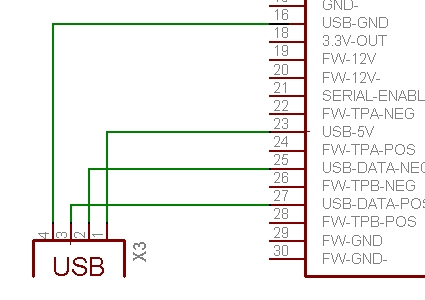
iPodLinux :: Dock Connector - iPodLinux
Apple iPod, iPad and iPhone dock - AllPinouts
I wonder how Tesla would/will respond if someone "reverse engineers" their Supercharger protocol and shows up trying to charge a non Tesla vehicle there?
I know some "home brew" EV conversion people are working on CHAdeMO interfaces so they can charge their EVs at CHAdeMO stations...�
Oct 2, 2012
VolkerP The supercharger device as revealed contains 12 on board chargers and is capable of 120kW total output. A supercharger can serve 2 vehicles at a time, balancing power requirements between them. Supercharging use cases are
one Model S-85 charging at 90kW (30kW SC idle)
two Model S-85 charging, one at 90kW, the other tapering off after 70% SOC were reached
two Model S-85 charging at 60kW each (reducing charging speed from 150miles/h to 100miles/h)
two Model S-60 charging at 60kW each (assuming Tesla sticks with a maximum 1C charge rate)
one future Model X-120 charging at 120kW (speculative!)
My conclusion: Any vehicle not capable of swallowing 60kW wastes a supercharger plug. As a consequence, Tesla excluded the Model S-40kWh as well as Toyota RAV4-EV and all other brands of EVs from using superchargers.�
Oct 2, 2012
sublimaze1 Home Brew:
iPod versus Tesla. So I see the upside - iPod can mate to different peripherals (or in EV sense, other autos can rapid charge). Downside, the iPod gets fried or semi-permanently disabled (or in EV sense, you burn down a charging station).�
Oct 2, 2012
wycolo > risk of becoming another "Betamax" [ ToddRLockwood]
But digital has by now completely replaced analog recording, both VHS & BetaMax, so the end of that era. SCing EVs will continue well beyond the foreseeable future. If Tesla's efforts provoke Big Auto to actually *do something useful* along these lines, then hurray! But they cannot offer a better deal than the Tesla SC; they can only hope to match it.
--�
Oct 2, 2012
wycolo > At some point you can question fairness and reciprocity. Right now a Model S can pull into a Nissan dealer and charge at their J1772 EVSE, but a LEAF can't charge at any Tesla charging stations [TEG]
Unfair compare. If today a Leaf hooks up to the Tesla charger at a TESLA STORE using a 'reverse CAN' no one will complain. They might very well come out & applaud & post photos on TMC.
--�
Oct 2, 2012
Doug_G This also points out an interesting fact - if you arrive at a six slot supercharger and one slot is occupied, don't park beside the other car! The supercharger slots are in pairs, and you'll share current with the car beside you.�
Oct 2, 2012
arg Assuming they are actually wired up that way. Looking at the photos of the Folsom site under construction, it looks like they've wired parking bays #1 and #3, with signs of digging to lay conduit (but no posts for the actual above-ground pillar) to parking bays #2 and #4. This would suggest that #1 and #3 are the first charger, and when another one is added later it will be #2 and #4. But this isn't conclusive....
http://www.teslamotorsclub.com/showthread.php/10286-Confirmed-supercharger-location-in-Folsom-CA�
Oct 2, 2012
TEG Fair compare... Where is this "reverse can" ? A Model S comes with a J1772 so any of them can drive right up to a Nissan dealer plug into the J1772s.
I have yet to find a source for an adapter to plug my LEAF into any Tesla HPCs (Roadster or Model S style.)�
Oct 2, 2012
dsm363 None of the Nissan Dealerships I contacted in Texas would allow me to charge there though. I had faster charging at RV parks anyway.�
Oct 2, 2012
Robert.Boston FYI, there's a thread on Charging at Nissan Dealerships.�
Oct 2, 2012
vfx
I would go straight to JB Straubel. Engineer to Engineer. Though we Tesla owners have noticed that many of the new Tesla stores don't have 2.0 Tesla plugs yet so there may be a shortage now.
And while today's Roadster is near sold out in EU it may not be competing with you but the next gen Roadster will probably be direct competition to today's Rimac. Elon has his sites on Bugatti for that one.�
Oct 15, 2012
wycolo > I have yet to find a source for an adapter to plug my LEAF into any Tesla HPCs (Roadster or Model S style.) [TEG]
But if you had one today you could drive right up to any TStore/TShop (dealership) and charge your Leaf with their blessing. Just making the thought parallel. Both dealerships, TM & Nissan, are generous, traffic permitting. 3rd parties are working on reverse CANs, etc keeping futures bright.
--�
Jul 28, 2015
snort It seems to me that Tesla would do itself a service if they promote compatibility with other vehicles and their charging system. A Leaf, i3 or Soul should be able to plug in at an HPWC, or supercharger. They already have a J1772 => model S adapter and a CHAdeMO => model S. If I understand the protocols, a model S to J1772 should be straightforward: the wires just pass through. Henry Sharpe already has all the pieces for his roadster adapters. It's just a mechanical thing. I haven't been able to find one. One complication is that the the receptacle side of this adapter has to be able to figure out that it's been plugged into a supercharger and do the right thing, which is either to refuse to connect or charge the J1772 side. If the supercharger itself were doing this detection, it could provide appropriate J1772 AC fairly straightforwardly, but doing this would tend to monopolize the supercharger in a way that resembles ICEing. Many SCs already have a 1772, often free.
The supercharger is more interesting. Tesla is factoring the cost into all the vehicles it's selling, front-loading this cost. This is not a viable business model for a company going for the low end of the market, as Nissan, Chevy and Kia are. So a Leaf owner who wants to use a supercharger would need to buy an adapter AND a license from Tesla. The $2500 cost of the supercharger upgrade suggests what this license fee would need to be. The adapter would accept Supercharger protocols and transmit CHAdeMO protocols and voltages to the car. An important part of this is throttling the flow of current to CHAdeMO limits, of course.
Opening up the supercharger to other cars in this way would expand the popularity of SCs in general. I think Tesla is making a mistake by requiring all cars that wish to use the supercharge to front load the cost. This is an acceptable policy for a high end car, but it kills the market for the low enders. I don't know if the hardware is in place, but it should be a simple matter for the supercharger to figure out the identity of the car when it plugs in (possibly using a separate RFID card like chargepoint or blink) and send the bill to the appropriate place...which is /dev/null for cars that have already paid their supercharger license.
- Snortybartfast�
Jul 28, 2015
mknox I'd be very interested in the reverse of this... a Tesla to J1772 adapter for Level 2 charging. Seems like it should be incredibly simple.�
Jul 28, 2015
Oba I read in another thread that just such an adapter is being designed, possibly available by Xmas.�
Jul 28, 2015
snort there are a lot of threads. do you remember a little context, please? I went searching for such a thing and this thread was the best I found.
The electrical part of a Tesla=>J1772 may be dead simple...just a pass through, like the existing J1772=>Tesla adapter. Even if it's not, it can't be any more complicated than making an EVSE controller that pretends its a level2 limited Tesla to the receptacle side.... )�
Jul 28, 2015
jbcarioca Tesla hs long said they'll be happy to accomodate other manufacturers that will build a proportionate number of facilities and give tesla access. Nobody else so far has built such a network. Nissan builds chargers to the CHAdeMO standard but they just sell them, not provide a network for owners. Their dealers can be cooperative, but... I do wish cooperation were possible but so far they cannot even agree on standard, much less provision, pricing and access rules. That seems to be true pretty much worldwide. Governments do step in...�
Jul 28, 2015
Saghost Why in the world would Tesla want to encourage other people do slow charge at 3.3 kW AC (or even 6.6 kW AC) on Tesla's dime while blocking the 120 kW chargers they spent a lot of money building into a network to attract customers to buy their cars???? As far as I can see, it gains Tesla nothing, while costing them both cash and network availability.
I could possibly see an argument for the HPWCs and destination charging - where it would be a trivial dumb adapter (since it's all J1772 and AC) and is being paid for by the business that's hosting the HPWC.
Walter�
Jul 28, 2015
AMPd Pay per use will complicate things.
Much better the way it is now�
Jul 28, 2015
snort perhaps I wasn't clear. I think ChaDeMo and CCS vehicles ought to have an adapter that will plug into a supercharger. Tesla would bill for it, a fee similar to what 60kwh Teslas pay for supercharging. Working correctly, such a car/adapter would be fully charged in half an hour or less at superchargers, because of their smaller battery.
but my primary suggestion was that there should also be an adapter for J1772 cars to plug into a UMC or HPWC. because of the physical compatibility between Tesla's Supercharger plug and its Level 1/2 plug, I was wondering what should happen if you plugged such an adapter into a supercharger. what does a non-supercharger enabled Tesla do? does it charge at J1772 rates or refuse to charge at all?�
Jul 29, 2015
deonb Refuses to charge at all (on a S40 at least). I think the SuperChargers aren't capable of outputting 208V/240V AC.
Smaller batteries don't really charge any faster than big batteries. Apart from a small fraction of time at very low SOC levels where a Model S is gated by SuperCharger speed rather than battery capability, any Lithium battery with capacity between 1kWh and 90kWh will take approximately the same time to charge, give or take 5 minutes. Fundamentally everybody is charging individual 4.2V Lithium cells underneath the covers, and an individual cell needs that amount of time to charge safely.�
Jul 29, 2015
snort No. Charge and discharge rate is a function of several properties: electrode geometry, chemistry, cooling and more. Handled correctly, you can charge just shy of the point that you melt an electrode or boil an electrolyte.
I suspect what you're thinking of is putting stacks of LiIon cells naively in series. In series, each cell has to provide appropriate voltage to its neighbors (between 3.7 and 4.2V, depending on chemistry and desired charge rate). NiCd and NiMH cells are relatively tolerant of overvoltage. LiIon are not, and early LiIon battery builders naively used familiar battery topologies for charging. tiny irregularities in the cells accumulate, and once in a while, one cell gets too much and overheats and has occasionally caught on fire. Preventing this requires either going more slowly or using a smarter charging topology, possibly involving cooling. The same is true during discharge too, of course.
In any case, CHAdeMo chargers are able to charge the 24 kwh LEAF battery at 40 to 62.5kw in less than half an hour. why wouldn't an adapter that implements the same protocol but is powered by the more than twice as powerful supercharger somehow be unable to do it?�
Jul 29, 2015
deonb The 30 minutes figure on a Leaf is not a full charge as far as I understand - it's a 80% charge. You can also charge a 85kWh Model S in ~30 minutes if you have a powerful enough Supercharger.
I agree that charge/discharge rate is a function of several properties.
However, all things being equal, if you build a battery at some size, and another battery at a fraction or multiple of that size using the same underlying cells, they will all take the same amount of time to charge for the same safety level (provided your charger can handle that rate).
Just pointing out the fallacy of the commonly used argument that "Tesla should ship a Model S with a 50kWh battery because even though the range is less, it would take so much faster to charge at SuperChargers".�
Jul 29, 2015
Saghost Hmm. It's a little off topic here, but that's an interesting thought, actually. There are chemistries out there which are perfectly happy with 3C or 4C charge rates - like the Lithium Titanate series one BYD uses for buses.
However, they are more expensive and weigh more for the same energy.
However, since everything beyond the first hundred miles or so of range is pretty much for road trips, I could see an argument that a 50 kWh fast charging car (able to accept 135 kW until over 90% full, for argument's sake) might be more useful for most people than a 90 kWh car in a world where Superchargers are abundant.
Walter�
Jul 29, 2015
WarpedOne No charging will always be faster than charging.�
Jul 29, 2015
FlasherZ Then you lose the "around town" flexibility and Supercharger density becomes far more important for those mid-day errand trips (at least for me, where I live in a rural area 45 miles from the city). Right now it's a balance between charging sufficiently at home to make nearly any "day trip" possible, with the time necessary for road trips. In my 2,600 mile trip with the family to Florida, I found the Superchargers to be "just right" - 3x a day we were doing the restroom break plus meals, which exceeded the required SC time to the next hop; so really, no waiting for charging at all. The other 1-2 times, post-bathroom-break, we waited maybe 10 minutes or so.
I really didn't find myself frustrated with charging, and with 4 boys aged 15/9/7/2.5, you learn patience testing points pretty quickly.
Of course, if you're a "pump-and-p#%s" type of road driver where meals consist of packaged sandwiches and snacks, then you'll be frustrated with anything that isn't instantaneous.�
Jul 29, 2015
Saghost True. However, if the majority of drivers adopt the "stop every 100-150 miles for 15 minutes" approach, then faster charging would be more useful than any range beyond the 150 miles (in adverse conditions and with altitude.)�
Jul 29, 2015
mknox Yeah, that's not me. I like to stop, stretch my legs, get a sit-down meal and such. The only complaint I got from my wife was that she didn't like having to stop and eat when the car was hungry. I think having more Supercharger choices will alleviate that concern.�
Jul 29, 2015
snort That's what I was driving at. I doubt any of the 24kwh batteries or ChaDeMo adapters will be able to take 135kw. but to a 24kwh battery, 50kw is enough to get it into the "stop for toilet and tea" range.
my goal is to have superchargers and other 50kw or faster chargers be available as universally as gas stations are. my goal is to get people understanding that electric, most of the time, is significantly more convenient than gasoline, and to make it so for the exceptions, the long trips, it's not materially worse. universal compatibility will help this. Tesla has a better protocol, but the others are not enough worse that I want them deprecated. front loading the price of supercharging is a barrier to entry for low cost cars. As a high end car, Tesla model S and X can get away with it, but it will be adding $2K or more to the cost of a Model 3 or any other low cost adopter. I think I have a straightforward, convenient technological solution to all of this.
(on the subject of paying as you go: systems like ChargePoint and Blink have an RFID in a card that you swipe. the same technology could be applied easily to the car adapter in a way that the Supercharger detects a real Tesla, it charges as normal, but if it detects a pay as you go adapter, it sends the bill to the adapter's owner. apart from plugging in the adapter and paying the bill at the end of the month, the process is identical. I think this could even be set up so that a convenience store near the SC could rent the adapter to customers for an appropriate cost, and they'd pay the bill at the end of the month.)�
Jul 29, 2015
Skotty Why are other companies building EVs that are incompatible with Tesla's Supercharger? Shame on them.�
Jul 29, 2015
mknox Just like all those smartphone companies that don't use Apple's Lightning connector :wink:�
Jul 29, 2015
Johan Please no cars with poorer max charge rates and poorer taper curves than an S60 at the Superchargers. That would diminish the quality of the network.
Think of it like dress code at a nice nightclub; doesn't matter if you bring a wad of cash if you look like a bum.�
Jul 29, 2015
snort I'm sorry, but this is extremely offensive.
These are car chargers, not a dating club. I agree with your notion of making sure that the superchargers are not monopolized for a long time, but it should be about how long it takes, period, not about some secondary characteristic, like how big the battery is or how the car looks. If somebody takes a Tesla charging system and puts it into something that looks like a 50 year old VW microbus with a bad paint job and peace symbols and flowers all over it, why should I care? As long as it conforms to the mechanical and electrical specs and doesn't monopolize the charger, more power to 'em.
(actually, as an aging hippie/high-tech geek, the tesla-electric microbus has a certain appeal�
Jul 29, 2015
Johan Look, if you only have a 30-40 kWh battery you're even more likely to going to want to charge to close to 100% SOC, for obvious reasons. And as the physics and general battery technology has it this will inevitably take a lot of time due maximum C charging rates and the need for taper.
Think of it this way: is the car very likely to need to charge above 90% to get to where it is going next (or the next SC)? Is the car not able to charge at least 150 EPA miles per 30 minutes in the 0-80% SOC band? If the answer is yes to any of these two questions then this type of car should not have access to the Superchargers as it will degrade the quality of the network by hogging chargers.
The Model S and X are premium cars, whether you like it or not, and pre paid supercharging should be as premium an experience as possible. That means I don't want a small battery EV blocking my charger, either charging along at 40 kW or squeezing in those last few kWhs at a measly 5 kW.�
Jul 29, 2015
snort you are technically mistaken. a 62.5kw ChaDeMo can theoretically charge a 24kwh battery from zero to full, not factoring in "taper", in 23 minutes. adding taper, and the non zero SOC that you're likely to have on arrival, and not adding the 90% charge limit that most of us use, should comfortably fit inside of 30 minutes, just as ChaDeMo marketing claims. to do the same thing to an 85kw battery with a supercharger takes an hour. that's not what we tesla owners do, but the reality of tesla supercharging is pretty close to that same half hour.
my priority is to have more places to fast charge. if the "low class" vehicles are charging three times as often and there are twice as many of them, that means there would be 6 times as many charger spots demanded. But it also means that tesla, or whoever is building the fast charge stations, is getting funded to build them by that extra demand. How would you like having them 50 km apart instead of the present 200, and on all the back roads you can't get to now without using 10kw or slower charger?
My observation is that at most superchargers, there are a lot more berths than there are teslas wanting to use them. since teslas are still pretty uncommon, this imbalance is necessary. but it leads to ICE drivers thinking that it's appropriate to use them as parking spaces. as the number of vehicles and chargers get larger, the bursty nature of tesla arrival times will smooth out (mathematicians call this "the law of large numbers") and a higher fraction of berths will be used, and the ICEs will learn to stay away. but this only works out if the number of superchargers matches the number of cars needing them.
I do see your point--we've paid for a premium experience, which includes not having to wait for a supercharger berth. but I think my model is a way to make that better.�
Jul 29, 2015
jerry33 As far as I know there are really only two ways to improve charging speed:
1. Different battery chemistry.
2. Larger battery. A charge means enough to get to the next charger with some extra so that you have a good cushion to combat the unforeseen (or perhaps the foreseen in winter). If batteries are going to have a long life, they have to taper as the SOC gets closer to the maximum allowed. So if there was a 150 kWh battery (as an example) charging to 200 miles would be very fast, perhaps approaching an ICE fill. The only time it would take longer is when going "off network". During our previous two weeks' trip (5300+ miles) to the Seattle area, most of the stops had the "enough energy to continue" displayed when we got back to the car. (Of course, we waited a bit longer until there was a bit more cushion than the Nav system gives.)�
Jul 29, 2015
Johan 20-odd kWh in 30 mins is slow. Forget kW and kWhs. Think range charged per unit of time: this is what matters. (For example miles/30 mins).
In theory you're right: partnering with a big manufacurer(s) could multiply the network by x5 or x10 and thereby overcoming both the hogging issue as well as increasing the total utility of the network, to Tesla owners also (yes, I'd like a SC every 50 km). Problem is this too is pure theory: No one manufacturer is nearly as committed as Tesla. Nissan, VAG, GM, Ford, Mitsubishi or any one other of the potential other EV collaborators won't commit, they can't keep up with Tesla's tempo, they'll never lay down the investment needed.
All the others want to be sure EVs sell well and are the future before they commit to investing in a fast charging network. Tesla is already 100% committed to EVs and is doing it the other way around: they deploy a lot of capital in a fast charging network before they've sold a lot of cars, to make the cars that much more attractive and let the SC network be a major driver of demand. I promise that anyone else joining in at this point would only drag Tesla down.�
Jul 29, 2015
mknox I've never seen my poor old A-pack even hit 90 kW. I guess I'm now a Supercharger hog.�
Jul 29, 2015
Johan Not at all! You're still, on average, charging more miles/minute than a 60 or 70 pack
There's a reason they 40 kWh Model S was discontinued and there's a reason the 40s couldn't/can't supercharge.�
Jul 29, 2015
snort Exactly my point. as long as they aren't preventing you from being able to charge, why should you care?
I don't see how this drags Tesla down. Since Tesla is committed, only if there's bankruptcy or some sort of hostile takeover can we lose ground. If others start following Tesla's lead, my first choice would be for them to adopt Tesla's standard, and I want to lower barriers for doing that. Tesla front-loads the cost, which is a non-starter for low priced cars. But it's technically easy to implement pay as you go at superchargers. If (say) Toyota decided to jump into the market with a (say) 300km range EV, they have three options: 1: stick with ChaDeMo or CCS, which would mean staying on the charger for well over an hour...not really a fast charge 2: devise some new protocol with spec extremely similar to the supercharger, or 3: adopt Tesla's protocol. If this happens, Tesla owners win big and owners of the Toyota EV enter the new world with a running start. (Because of Toyota and Tesla's past relationship and the price reductions that should be made possible through the gigafactory, I think this is actually fairly plausible)
You're right that a move like this would be a big thing for one of these companies. But many of them have already started down the path with ChaDeMo and CCS. We can move them partway into the Tesla family with an adapter like I suggest, and it's possible to front load the cost, Tesla style. the easier it is for all EVs to charge, the more places to charge there will be. the more they see it, the more they will want our superior protocol.�
Jul 29, 2015
Johan They put Chademo or CCS on their cars yes, but they expected someone else to build the chargers (OK, Nissan did deploy some Chademo chargers here and there).
Look, the technology part of it is 2%, the other 98% has to do with attitude. And in this respect no one is even close to Tesla, which is why there is no one for them to partner with.
If Elon said "We're going to have a SC with at least 4 stalls every 50 miles of every interstate in the whole continental US in 3 years time" do you think the CEO of _______ (insert any possible partner) will go "Yes, let's do it!"
No, they'll say: "Slow down. Sounds hard. Sounds risky. Sounds expensive."
No, partnering with anyone now will only drag Tesla down. I say keep the massive first mover advantage and run with it for a few more years. Make them come begging when Model 3 hits.�
Jul 29, 2015
snort the attitude change requires potential customers seeing it and management understanding that they like it. If those customers are seeing those hoity-toity, gated community, standoffish tesla owners, they're not going to get it.
There certainly are plenty of executives that would act like this. there are plenty of others who would say "cool! let's steal a march on our competitors! by partnering with tesla, we can get a big headstart!"
The central problem with adopting a new technology is that a lot of people are skeptical. Tesla has proved that it works.
On the scale of a big car company, superchargers are not that expensive. It looks like they cost about $150K to build. 1000 of them, double the number that there are now in the world, thus costs $150M. It costs the majors between one and six $billion to develop a new car. not quite trivial in comparison, but definitely not a deal breaker when you're working on that scale.
you're going to have to explain how you think this dragging down works. partners building compatible stations makes more of them for everybody.�
Jul 29, 2015
jerry33 While the big headstart is true, I doubt there are many (or any) executives that feel that way.
The central problem is that existing car manufacturers don't want to build electric cars. The most proactive of the lot (Nissan) made a car that's really only useful as a second car so that it wouldn't compete with the cars they want to sell. It's hard to be interested in Superchargers when your car goes less than 100 miles.�
Jul 29, 2015
Johan Thanks for putting it bluntly Jerry.
Snort, you're of course correct but again only in theory. As strange as it may sound there aren't "many" leaders of other car makers who think this way. In fact there isn't a single one! How do I know? Well, if there was Tesla would have a partner already! My guess is Tesla haven't been approached at all, or if they have it's been by someone unwilling to commit (looking to just piggy back with some kind of pay-per-use or some other arrangement that would ruin the network). That's what I meant by "dragging down". The only company worth partnering with would be someone as committed to EVs as Tesla, and as of today this company just doesn't exist at all.�
Jul 30, 2015
Rocky_H I have thought for a while that whichever car company will be the first to partner on the Supercharger network would be able to get a big advantage over all of the others in the coming EV revolution. However, they all have this common attitude that prevents them from doing it.
It�s mainly pride. They do not want to humble themselves to admit that Tesla has something that they need, because that would legitimize them, which is something they want to avoid.�
Jul 30, 2015
snort A big part of it is the patent system and the belief that through having exclusivity, there are big profits to be had. A business as big as a car company, even a small one like Tesla, is a mass of very powerful political forces, pulling in a lot of different directions at once. An example:
In 1980, IBM came up with what came to be called the Industry Standard Architecture. They wanted it to be proprietary, but Bill Gates convinced IBM exec Don Estridge that it would be even better if they set a standard and encouraged other manufacturers to build parts for it, clones of it and write software for it. Estridge had had a few wins within IBM and was on the way up politically, and was able to convince his bosses that Gates might be on to something. It was not an easy decision for them: IBM had built itself a huge monopoly, and by being a little bit incompatible, they had been doing a good job of keeping it, for decades. They were many times as powerful and wealthy as ALL the rest of the computer business at the time. But Gates proved to be right and as a consequence, IBM made much more money from the IBMPC than they had ever imagined and Estridge became the heir apparent for all of IBM. The way Gates described it is that he'd rather have 25 cents from each of a million machines than all the income from a thousand machines that generate $250 each. even though it's the same amount of money the million machine market has a much bigger growth opportunity.
Estridge was killed in a plane crash in 1985, and amazingly quickly, the old monopolist forces within IBM rose to prominence. They decided that they must have proprietary rights to the next generation of personal computer. The product they came up with was the "media channel architecture", MCA. This was superior to ISA in a lot of ways, but it was designed to be difficult to clone or build components for without expensive cooperation from IBM. It was not really a failure, but it separated IBM from the rapid advances going on in the world of personal computers and it took IBM from being completely dominant in an industry the way few companies have ever been, to being an also-ran.
Being a monopoly is a good way to make a lot of money, because you can control the market to some degree and you are insulated from the consequences of many of your mistakes. Pretty much the only way to beat a monopoly is to have an advantage that is so big that the monopoly can't adapt fast enough. So conservative executives try to get a monopoly, and having a proprietary interface is one of the tools they use. Smart executives like Gates and Estridge understand that this is a trap. They still do it if they can, but they have the mental flexibility to take the big leap to the new paradigm when the need arises. There are plenty of these people out there--you don't get to be a top executive in a big company without being very, very smart--but there are a lot of big company executives who inherited their positions and are smart politically, but don't have the farsight of someone like Bill Gates.
So: it may feel like pride from the outside, but to the people doing it, it's what they think is hard-nosed business. I am sure are people within all of the car companies who are watching what Tesla is doing and trying to convince their management to follow it. But Elon Musk has made it a little more difficult, by insisting that they use his front-loaded pricing model for the superchargers. This, unfortunately, is a little bit of the same proprietaryness that's holding back the big boys.
--Snortybartfast�
Jul 30, 2015
Johan Snorty: I respectfully disagree
Front-loading the cost for the SC network is a strategic move that is very easy to mimic if you want. Nothing proprietary about it. Also likely pretty easy to partner in on if you want. But to suggest Tesla should abandon this model, which obviously works great, in order to accommodate others is akin to harakiri.
Also when discussing the SC network, the technicalities of it and the financing/business model don't forget one big thing: The SC would be worthless if it wasn't symbiotically integrated with great cars (S/soon X) and the cars would be far less great without the network.�
Jul 30, 2015
snort It's not the front loading that's the proprietary problem. Tesla has a mature supercharger design which is patented, can be seen to be working well, and is significantly superior to anything else out there. They have offered to open it, but conditional on following tesla's front-loaded sales model. This is a non-starter for someone selling even a medium cost car. They are in effect, holding their patents hostage for the chimera of free charging. Its not free. The SCs need to be built and powered somehow. Tesla is trying to force other manufacturers to adopt his sales model before they can play, which will cost them, it looks like, about $2000 per car.
My example with the IBMPC illustrates how much faster open architectures expand than proprietary ones. Elon Musk has said over and over that his goal is to get as many people as possible driving electric, even if a lot of them are driving the cars of other manufacturers. That was Bill Gates goal too: to get a computer on every desk. He knew that if he helped make that happen, he'd make a lot of money and make a better world, even if a lot of other people made a lot of money off of his own hard work.
my idea is a technological solution to this. Adapters for other cars, which are paid for through the same front-loaded scheme. But once they are a commodity, they can be rented, which turns front loading into a pay as you go scheme. and chops $2000 off the sales price of any car doing it (but not, obviously, the long term price). as long as the users are paying for the maintenance and expansion of the network, why should I care who they are?�
Jul 30, 2015
Johan @Snort: But again we're back to the same issue, that seems hard for you to grasp: a lower priced car is very unlikely to have a large enough and well-managed enough battery to be able to take full advantage of the technology of the Supercharger network which means these cars will choke it, block it and degrade its value.
Also if you read up on it you'd know that the $2000 figure is bloated. Teslas actual cost per car is lower, and in fact can't really be calculated due to the fact that the network can be seen as,for all practical purposes, an extension of the individual physical vehicles. Lime I said above: without cars capable of utilizing the network it would have exactly zero value, and without the network the Tesla cars would have much lower utility value and appeal.
Also, money invested in the SC network is an important and very effective promotion/marketing expense. So that much of the cost is likely recouped several times over.
But we're not going to agree on this, I can tell. It will be interesting to see how it plays out.�
Jul 30, 2015
ecarfan I disagree with the assumption you are predicating your argument on. Lower priced EVs could be capable of using the Supercharger network effectively and efficiently. Costs come down as volume goes up. The future may surprise you...�
Jul 30, 2015
snort Why? you keep insisting upon mysterious market and technological forces for which you provide zero explanation or even evidence of existence. A lower priced car with a supercharger interface would be able to use the network, and if the chargers are close enough to wherever they need charge, they will be used, irrespective of the size of the battery. you seem to think that a small battery car is inherently a junker, whose very existence in a supercharger site will somehow spread the contagion of junkieness to everybody else. I know several Leaf owners and a Kia Soul EV owner. A few of them are very serious car enthusiasts (especially the Soul owner) and a couple of them take immaculate care of their cars. Some of them are professional engineers and know a lot about battery management. One of them is a multimillionaire and also has a Tesla. Your premise @Johan, is not just wrong, but offensively, obscenely wrong.
The US national average price per KWH is about 12.5 cents. for an EV that goes 10,000 miles per year, this works out to about $400 a year for electricity. let's say the average US tesla gets 1/3d of its power from the superchargers and we cost this out over 5 years: 50,000*400*.33*5 = 33M. the superchargers themselves seem to cost about $150-250K to install. let's just grant the low end, which should be favorable to your position. 200 superchargers thus costs $30M. 63M/50,000 = $1260 per car, purely for infrastructure. the superchargers take some maintenance and taxes, and the equipment in the car itself is not free. No, I think $2000 is a pretty fair price. It'll get better over time as sales grow, but Tesla is very much sticking their neck out here, by building out the superchargers faster than there is demand to pay for them. In Europe, the electricity costs about twice as much (.208 euro per kwh) and there are fewer cars, so the cost equation gets even worse per car there.�
Jul 30, 2015
Johan I'm of course talking about today, not in 3-5 years where things will be very different. By then the Model 3 will be out and it will be intriguing to see how Tesla approach the issue of Model 3 and supercharging, both technically as well as financially. But until 2017-2018 the only Teslas using the network will be S and X car, with minimum 60 kWh liquid cooled batteries. If "less capable" cars (I hope I'm not being offensive again) were to start accessing the network in 2015, 2016 or 2017 I argue that these cars will actually put a bigger strain on the network per charging instance since these cars will inarguably always be charging fewer miles per minute than Model S/X. My premise is that the main limiting factor of the network is how many cars each location can serve per hour/day. Electrical costs are negligible. By this logic such a "lesser car" should actually be paying relatively more than a Tesla for access to the network, regardless of if we're talking about a one-time unlimited access fee or some kind of pay-per-use model (which I would also argue will complicate things and end up costing just as much to administer as people might think they'd "save" on such an option as opposed to pre-paid unlimited access).
It has nothing to do with snobbery on my part. Before I bought my Tesla I drove a MiEV and most days I ride my electric bicycle to work.�
Jul 31, 2015
snort Electrical costs over 5 years, according to my calculation shown above, are approximately the same as the construction cost of the station. they are almost double the cost of the station in Europe. I don't have numbers on taxes and maintenance, but I'm sure they are not trivial.
I think (and I suspect Elon does too), that there should be enough spare SC bays that waiting is a very rare event. If there are enough SC bays for the demand on it, then it shouldn't matter if they are big or small battery vehicles. irrespective of the demand balance. you are certainly correct that small battery vehicles need to charge more frequently. but small battery vehicles are used almost exclusively for short trips like commuting to work and going to the grocery store, and will almost never be in the inter-city gaps that are the main province of supercharger. About 2/3rds of the miles I put on my own car each year are commuting and short trips. The nearest supercharger is about 100km, so I don't use them except on long trips. I suspect this is pretty typical.
presently, very few superchargers are close to big population centers and Tesla has tried to discourage locals from using those few for commuter charging. This is exactly the crowding out problem that you are concerned about, with only Teslas being eligible. So if we provide access to small battery vehicles, we haven't changed anything at all, except for opening up the network to a wider range of vehicles, and more of those vehicles will be helping fund the buildout of the Supercharger. Most small battery EVs have little use for inter-city charging. But many of those that do will be happy to pay the front loaded cost and some more will be happy to pay the rent. If Tesla and its drivers can avoid blocking them, we will get a lot more superchargers on smaller routes. trip planning will become just as easy as it is for ICE cars. You know there will be a high speed charger close whenever you need one.
in engineering and business planning, there is no now. There's only a before and an after. what's before is done; you can't change it. I'm concerned with it only for what it can teach me, which is a lot. there's very little opportunity to change what's coming soon. Even if Tesla start designing this adapter today, and give it their full blessing, it's not going to be ready for public consumption any earlier than November or December, more likely longer--unless they've been working on it for a while without telling anybody. That's the reality of engineering, and more importantly, manufacturing. Talking about this thing as though it's coming very soon is an exercise in irrelevant.
-Snortybartfast.�
Aug 1, 2015
andydoty So, what if Tesla were to collect a percentage of money from each car manufacturer that would like to utilize the charging stations? In the case of Nissan, they could charge a modest sum to Nissan to unlock the Leafs ability (via an adapter) to utilize the SC network?
@snort,
Not being critical, however, I believe MCA was Micro Channel Architecture not Media Channel.
I owned a PS/2 with MCA and boards were exorbitantly expensive. It did work very well however.�
Aug 1, 2015
FlasherZ This is correct. IBM used MicroChannel adapters on both PS/2 and RS/6000 (both POWER and PPC processor arch), until PCI took over. The cards were incredibly expensive, as noted. However, MCA did bring us many desirable features that were pulled into PCI. If anyone remembers the craziness of device discovery, "base address" and manual IRQ's - that was the pain of ISA and VMbus architectures. EISA helped slightly with its configuration parameters, but it was MCA that brought standard system-driven configurable parameters to expansion cards.
(Full disclosure: a big fan of IBM's architecture, especially RS/6000, even if they didn't execute it well...)�
Aug 1, 2015
andydoty Sorry FlasherZ, I was a mainframe guy at the time!�
Aug 1, 2015
FlasherZ I did my tour of duty with S/34 and S/36. At UIUC I did print queue maintenance and toyed with BITNET Relay on their bigger brothers, but no further than that. But now we're headed too far off topic.�
Aug 1, 2015
rxlawdude Oh, do I remember pricy and hard to find MCA peripherals. Fortunately, the PS/2 reign was rather limited.�
Aug 2, 2015
snort functionally, that's just what Musk is proposing. I think he'd prefer help on the buildout of compatible superchargers with other manufacturers names on them; this would be a clear message of support for the technology. but money to help build them would be good, and in effect advertising for Tesla. The politics of this is dicey.
Trouble is, the other manufacturers are trying to compete at the low end. On the scale of a company like Nissan, $15 or 30M to build 100 superchargers is small potatoes, but if it succeeds, there's an implicit commitment to build more at a rate commensurate with their production rate. there is presently about 1 supercharger for every 250 model S's in the US. If they sell 10M cars, which is entirely plausible, they'd have to build 40,000 to maintain that level...that's $6B and is real money. to do that, they'd have to add at least $1K to the cost of every vehicle just for construction. Maintenance and the cost of electricity would add more. If Elon continues to insist that other players front load the cost, I don't see how anybody but Ferrari and Aston Martin and Jaguar and their ilk can step up. I don't think small battery EVs use DCFC at the rate that big battery EVs do but it's still a lot to add to the cost of a cheap car. thus my enthusiasm for adapters and pay as you go.
you are exactly right, my bad. I had a different conversation and a different M on my mind..
I used both 286 and 486 based PS/2s. What they did, they did very well and they did a good job of flying the IBM banner. (unlike the PCjr and some others.)�
Aug 2, 2015
jerry33 Many SCs are located in low population density areas to facilitate travel. There won't be the requirement to have the same SC density for 10 M cars.�
Aug 2, 2015
snort why is that?
Small battery EVs won't be doing as many long trips on average as the average Tesla, but if the Gigafactory works, there will be a lot more big battery vehicles, not all of them Teslas. I can't think of any reason they would not do the same number of long trips on average. I'm still new to this but I've never yet been alone in a supercharger station. If my small sample is representative (is it?), tripling the demand per station would have me waiting more than half the time. that would reduce the per-vehicle construction cost overhead by that much, but not the power or maintenance bills.
there are about 1100 car per gas station in america. that's a much poorer ratio than we have for SCs and most Teslas use home or destination charging for the majority of fillups. Most of the time when filling up in urban or suburban areas, I had to wait in line; almost never in rural areas. I think I'd be P.O.ed if I had to wait for as many cars at a SC as I almost always did at Costco....�
Aug 3, 2015
arg Queuing theory.
The conventional way to plan this sort of thing is to say what service level you aim to provide (expressed as the probability that someone turns up at a location and finds it busy). With customers arriving at random you can then calculate how much traffic a given number of channels (supercharger stalls) can take.
For sites with lots of stalls, double the number of stalls gives you double the capacity. But for small numbers of stalls it doesn't work like that - two stalls gives about 15 times the capacity of a single stall, and 4 stalls gives about 6 times the capacity of 2 stalls (assuming 1% acceptable chance of waiting, and assuming all the stalls are equal - actual superchargers are more complex to calculate but the principle is the same).
So, for sites with not much traffic Tesla has already had to provide quite a lot of superchargers in relation to the actual traffic - and doubling up on what they have now will give them more than double today's capacity, while doubling the sites in already dense areas merely gives double the capacity.�
Aug 3, 2015
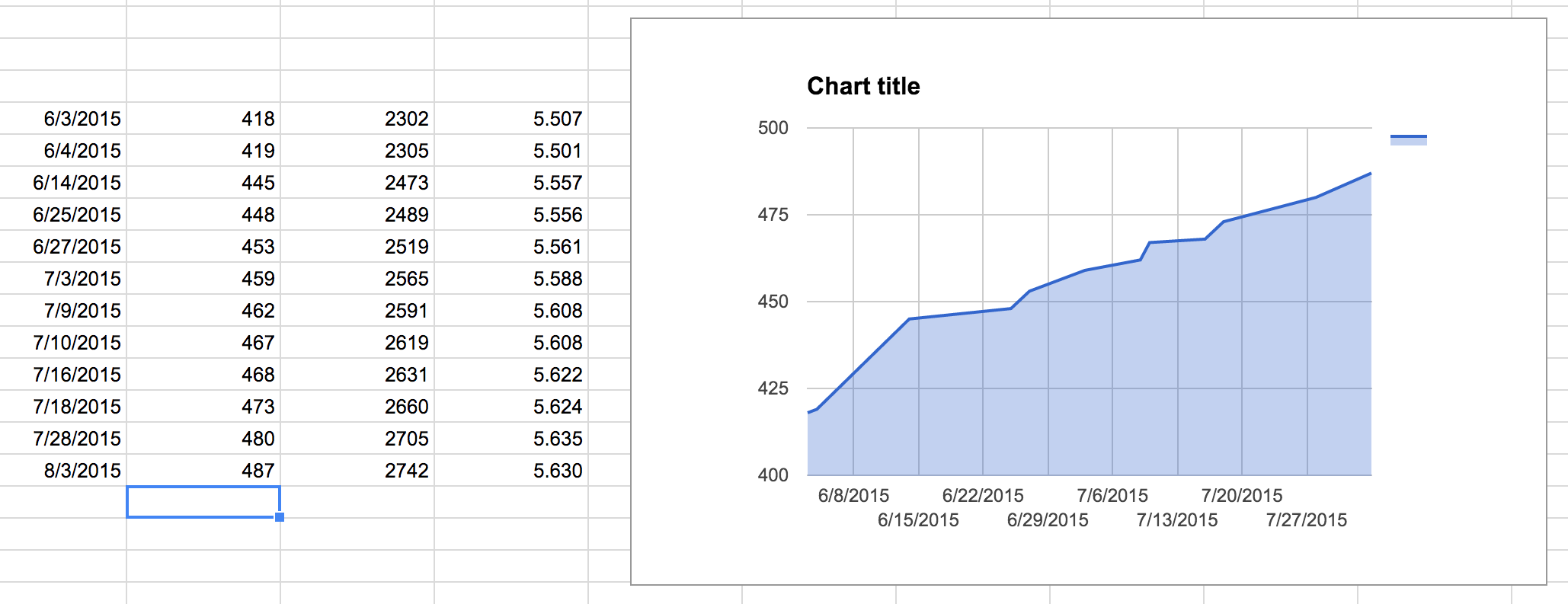
vitaliy Good news off-topic: # of stalls per supercharger is increasing.
 �
�
Aug 3, 2015
Zythryn No, your experience is not typical of the entire network. You are in a fairly high density of Teslas.
My experience is also not typical of the entire network, but in my case, I rarely have any company and have never seen more than one other Tesla at a SC except on our trip to California. And that only happened in California.
Superchargers needed to be placed in less Tesla dense areas to allow interstate travel. Many of these have not yet become saturated.
Yes, supercharger density in these areas will also need to increase eventually. But not as much as those areas that are at, or near saturation.�
Aug 4, 2015
efusco This is right. Focus should be on interstate travel first.�
Aug 4, 2015
paco3791 Not to mention that Tesla could make their SCer protocol just a little bit smarter and greatly increase the capacity of the over all system. They know where every car is already, they know how many cars are using any particular SCer and what their SOC is already, they could easily throw up a rerouting suggestion to take you to a less congested SCer. Even better, if everyone is more or less using the on board trip routing software the system can optimize the routes so everyone gets a spot when they need one. It's not a problem yet, but if/when it is just building more SCers won't be the only part of the solution.�
Aug 4, 2015
snort This is true if there are enough superchargers around that alternates are available. Here in the Pacific Northwet, they're still about 150 miles apart. Skipping one is not an option. I'm looking forward to the day that they're as convenient to get to as gas stations. (and I totally agree: do intercity first, before they build out where a lot of people will use home charging)
Lest there be any question that Tesla knows exactly who is using what supercharger and could trivially change to a pay as you go billing model for some users if they chose to:
--Snortybartfast
- - - Updated - - -
On the subject of queueing theory: increasing the number of berths increases the odds of not having to wait mostly if the number of berths is small, given a constant average demand. I think it's O(ln(n))... the second berth quadruples availability. the third a little more than doubles (9/4). the difference between 7 and 8 is relatively small.
the point is that demand with a small number of vehicles is inherently very bursty. with larger numbers, the flow will be higher and less bursty. it'll be easier to match the number of berths to demand but we'll be running a lot closer to capacity. my hope is that Tesla and whoever else is building SCs at that point thinks that almost always having a berth available is of high enough value to make it happen. The risk that they won't resembles the crowding out fear that Johan expresses.
--Snortybartfast�
Aug 4, 2015
jerry33 It was unusual for us to see no other Teslas at the SCs on our trip. And this included OK, KS, WY, and MT. I don't believe any of those states have a particularly high Telsa density.�

Không có nhận xét nào:
Đăng nhận xét