Jan 5, 2011
tomsax Update January 20, 2014
As documented below, it is possible to convert a Roadster to J1772 so that it can be charged directly from a standard J1772 charging station. Cathy and I developed a solution that is J1772 compliant (supports the proximity switch), is professionally manufactured, and supports full 70A charging.
Unfortunately, there are a number of pending issues that have caused us to halt work on the project.
So, we've made a lot of progress, have assembled the parts required, have designed and validated a circuit board for handing the proximity switch, and have a cable company that can produce quality cables capable of handing the sustained high current. This project can be re-activated if there's enough interest in the community to make it viable at some point in the future.
- When I asked for owners interested in doing the conversion in September, 2012, I got very few responses.
- Henry Sharp has the compact CAN adapter which can be locked to the car. It's so much better than the Tesla adapter that the conversion has less appeal.
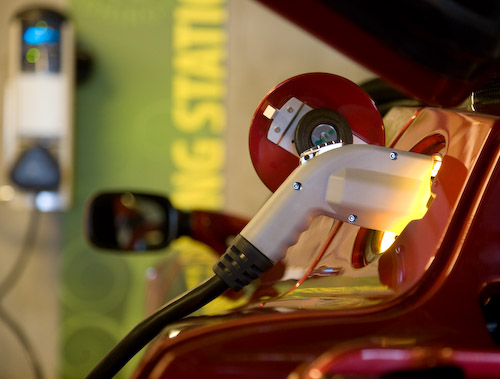
- Because of the stupid "gas nozzle" shape recommended for J1772 connectors, it's hard to get a connection because of interference with the body panel below the port. With a lot of hacking on the mounting plate and cutting away part of the inlet wall, it kind of works with the ITT Canon 80A connector, but other J1772 connectors don't work as well.
- The idea of switching public HPCs to standard J1772 stations so they are accessible to all EVs seems great, but I worry about the stations being taken by more prevalent 3.3/6.6 kW cars. Keeping the Tesla Roadster HPCs with the Roadster connector limits access to the few vehicles that can charge at 70A or more (Roadster and Model S). Obviously the equation may change if those HPCs go away and we start getting more public high amperage J1772 stations.
- We haven't made any progress on a conversion cable for v2.x Roadsters. Although we thought the v2.x case would be easier than the v1.5 because of the much simpler connection to the PEM, sourcing a cable that matches the original Tesla cable (so that no PEM modification is needed) has proven difficult.
- There's a little more work left to be done on the v1.5 cable. The folks at the cable company have been great, but the low expected volume is a barrier to getting it finished and into production.
Original Post
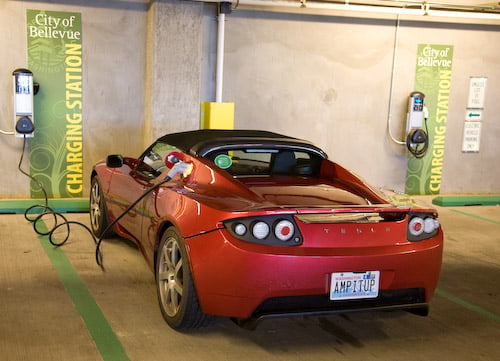
Cathy and I, with help from Dave Denhart and many others in the Tesla and broader EV communities, have demonstrated a conversion method for our 2008 Roadster and Tesla High Power Wall Connector to use the new industry standard J1772 inlet and plug. This will allow us to charge without an adapter at the tens of thousands of Level 2 charging stations that will be installed in the US by the end of 2011.
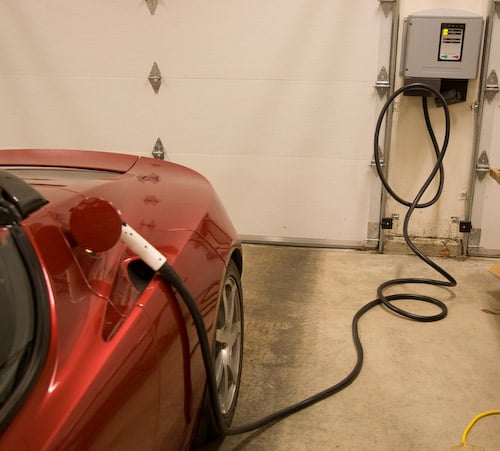
What we have is functional and completely reversible, but not ideal; we view this as a version 0.9 conversion. As there are very few J1772 charging stations currently installed, and the numbers probably won't take off until late spring or early summer, we have time to develop a better solution before it actually becomes compelling for Tesla owners to convert in significant numbers.
I'm sure Tesla Motors could do a much better job of creating an integrated solution and I would prefer that to having the owner community develop a conversion solution.
Our next steps are:
1) Hope that Tesla Motors provides an official conversion solution before it matters to most owners, thus saving us the remaining steps.
2) Design a circuit to monitor the proximity pin and disconnect the pilot signal when the J1772 plug is unlocked.
3) Test with other J1772 plugs and possibly work on a better solution for cable clearance over the body panel.
4) The 2010 and later Roadsters have the inlet cable assembly connecting to the PEM in a different location. There may also be other differences. We haven't looked into it yet and don't know if it will be more or less difficult to convert than the 2008 Roadsters.
5) Before recommending an unofficial conversion to other owners, we'll need to find out how this will impact our warranty. Tesla Motors has been cooperative with our efforts: they sold our group an inlet cable assembly so that we could do the conversion reversibly. We hope they will continue to be supportive rather than forcing us to wait until our warranties expire before being able to effortlessly access standard J1772 public charging stations.
For more details on our project and what still needs to be done before we can recommend that other owners do the same, see my blog.�
Jan 5, 2011
TEG Nice!
Can you still charge at full HPWC/HPC current levels through your converted 'solution'?
Seems likely based on this part of your blog:
�
Jan 5, 2011
tomsax Yes, that's why we waited for the 75A ITT Canon hardware.�
Jan 5, 2011
dsm363 That's amazing Tom. Thanks for doing all of that work. Did you remove the Tesla plug somehow and install the J1772 plug (it's fixed in place)? That would be great if Tesla provided an officially supported solution but I'm glad people like you are looking into a solution as well. Thanks again.�
Jan 5, 2011
vfx Really cool Tom. I don't know how you could keep it secret!
In 1.0 can you tilt the socket back a bit so the cable does not rest on the car?�
Jan 5, 2011
ChargeIt! FANTASTIC !
Or how about rotating the inlet about 30 degree CCW (but not too far where the cable would interfere with the trunk open/close).�
Jan 5, 2011
TEG I don't know if it makes sense to merge, but here is the "precursor" thread talking about J1772 charging using adapters:
http://www.teslamotorsclub.com/showthread.php/4478-J1772-Charging-for-the-Tesla-Roadster�
Jan 5, 2011
tomsax We had to tilt it back to get the ITT Canon plug to almost clear. There's more detail, and an image of the bracket on my blog.
Actually, with the way the body flares out toward the back, I think it would be more effective to rotate it 20 or 30 degrees clockwise. Unfortunately, the mounting points (bosses) on the back of the cup interfere with being able to do that. Most significantly, the boss that supports the bottom center screw is where the bottom corner of the base wants to be when you rotate it.�
Jan 5, 2011
tomsax I get a little tired of trying to find the interesting bits in a thread that goes on forever, and I thought the conversion was a sufficiently big update to warrant a new thread. But I'm open to merging if that's the preferred way to handle this sort of thing.�
Jan 6, 2011
dpeilow I think we'll leave the threads as they are this time. I agree, it's big enough to warrant its own topic.�
Jan 6, 2011
mpt If 30 degrees is a problem for mounting, how about 45 clock-wise?�
Jan 6, 2011
Jaff Thanks Tom & Cathy!...you two are such an asset to this forum! :biggrin:�
Jan 6, 2011
ChargeIt! I think that would interfere with the drivers door opening/closing or maybe even with the chargeport door.�
Jan 6, 2011
tomsax I don't think interference with the charge port door or the driver's door is a problem. The problem is mounting it to the rear of the cup in a rotated orientation. It's a lot easier to see in person, but that requires taking your car apart, so I'll try to do it in photos.
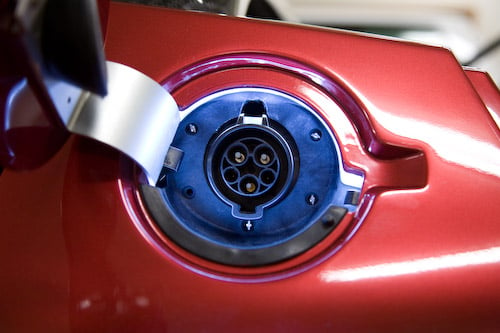
If you open the charge port door you can see five screws that hold the inlet in place. There are two on each side and one at the bottom center:
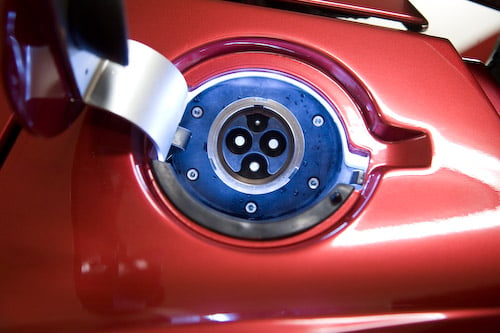
On the back of the cup, there's a raised mounting spot (a boss) for each screw. The Tesla inlet port and cable is attached to a plate with four screws (not shown). The plate is attached to the back of the cup on the bosses with the five screws.
The J1772 inlet has a square base and, much like the Tesla inlet, it is sized to nestle in between the bosses.
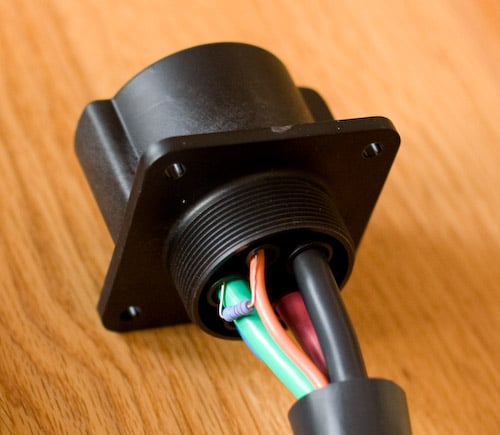
At first we thought we could just cut out a plate flat plate to mount the J1772 inlet, but then we had to angle the top of the inlet back to gain cable clearance, so Cathy designed an adapter in CAD and printed it out on a 3D printer. It's the blue piece in the photo below. You can also see two of the bosses corresponding to the two screws nearest the camera and the raised rib that runs between them.
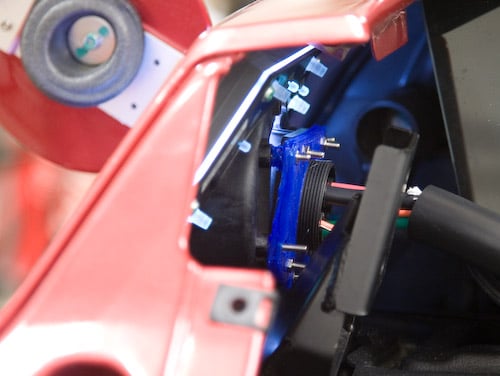
The bottom of the inlet base is flush with the top of the bottom center boss and pressed against the back of the cup to get the inlet as low and outward as possible for clearance. If you rotate the inlet, the edge and corner of the inlet base is obstructed by the bottom boss. If you were to mount the inlet rotated with the bottom corner behind the bottom center boss, it would be too far into the body to attach the cable and would make the cable clearance problem even worse. To mount it flush, you'd have to remove the bottom boss (or the bottom corner of the inlet base) and also remove the vertical ribs that join the two pairs of bosses on the sides.
Now we get to the real problem: the inlet cup is glued to the body panel. It's not only difficult to remove, it's really difficult to glue a new one to the panel. So replacing the cup with something designed for the J1772 inlet would be difficult. Also, if you do something dramatic like removing the bottom center boss, you've removed the ability to easily restore the charge port to factory condition.�
Jan 7, 2011
csummers Awesome! All of us are smarter than one of us. This will be great feedback to TM for Roadster 3.0 and 'S' 1.0.�
Jan 7, 2011
jaanton I guess converting the HPC was trivial. I would want to convert my UMC since it is very useful for many locations outside of metropolitan areas and for friends homes when I visit them.�
Jan 7, 2011
dsm363 Tesla said in an email reply that they're working on an adapter to UMC for next quarter.�
Jan 7, 2011
tomsax Obviously, the more invested you are in the Tesla plug the less interested you'll be in switching to J1772. I know some owners have multiple HPCs and mobile connectors. For those people, the conversion won't make sense as soon as it will for others, if ever.
I haven't examined a UMC, so I don't have any idea how easy it would be to swap the cable. The UMC packaging is pretty neat and compact, maybe not so easy to modify. At the very least, you could cut off the Tesla plug and splice in J1772 cable instead. Of course modifying the UMC will void the UL approval, just as it will for the HPC.
You could use the Tesla inlet to build a Tesla-to-J1772 adapter so you maintain access to any EVSE with a Tesla plug.
I'll bet with all the Leafs and Volts hitting the road, there will soon be a market for the J1772 equivalent of the UMC which will get satisfied by multiple vendors. It will be awesome to benefit from the economies of scale applied to hundreds of thousands or millions of EVs instead of being stuck in a 1,000 car niche.�
Jan 7, 2011
tomsax I thought they were working on a stand-alone adapter, not related to the UMC. Is this a second adapter strategy, or have they decided to require the UMC to use their adapter?
The whole point of the UMC is to take power from a dumb outlet and generate the appropriate pilot signal. Since a J1772 charger generates the proper pilot signal, it seems wacky to run it through the UMC box.
It sure would be awesome if they'd just announce their plan for J1772 support, even the time frame and pricing can't be set in stone immediately. It's frustrating that they are so hush-hush about something as basic addressing a obvious need on the minds of many current and potential owners.�
Jan 7, 2011
TEG It is nice to see you thinking in terms of the plan for other Roadster owners. You personally have solved the 'problem' on your own for yourself at least!�
Jan 7, 2011
dsm363 Sorry, I think I threw in UMC myself. They said they were working on 'an adapter' for J1772 and I assumed it was a pigtail for the UMC. Maybe it's just and adapter for the J1772 like you said.�
Jan 12, 2011
kgb When I was reading about your clearance problem, I was going to suggest installing the connector in the charge port up-side down (180 deg rotation). I realize that it would look very silly, but that would surely take care of clearance problem. Tom, I see that you explained how the connection is done, and sorry, my eyes glazed over. But most outlets can be installed up-side down. Have you tried that?�
Jan 12, 2011
tomsax Yeah, we did try that. The problem is it leaves the cable pointing straight up, so it's got to fall down somewhere. In the case of the ITT Canon cable, it falls toward the car and seemed far worse than just leaving it resting on the car. I'm also not convinced the locking mechanism is really meant to work upside down as the torque pulling the cable out of the socket is pulling on the non-locking bottom piece and pushing in (instead of pulling out) on the top locking piece.�
Jan 15, 2011
tomsax We took our car in for service on Monday, so to make the whole J1772 conversion seemless for Carl, I replaced the Tesla plug/cable on our RFMC with J1772 parts. Voila, the RFMC-J!

The Seattle Tesla store has a NEMA 14-50 in the shop (presumably so they can use/test the MC240 and UMC), so the J-version mobile connector did the job. When I picked the car up, they had charged it up in standard mode.
Since this could also charge a Leaf/Volt/i-MiEV, it seems like this could be a pretty useful product. I'm guessing we'll soon have a choice in Level 2 J1772 mobile connectors. Hopefully, we'll get something that supports 40A charging and is cheaper than Tesla's low-production UMC.
On Thursday, the local Tesla owners group showed up in force to support the grand opening of charging stations in two Redmond locations. We had five Roadsters and two RAV4-EVs from our group, plus a beautiful Geo Metro conversion, an electric Ford Ranger, and a plug-in Prius from the local EV community. The grand opening at city hall was hectic, and I ended up presenting the charging demo because ours was the only J1772-compatible EV there, so I didn't get any good photos of the city hall chargers, but I did get one while testing the charger at the second Redmond location.
 �
�
Jan 16, 2011
AndrewBissell Nice upgrade. I also feel there will be a reasonable market for portable many-to-J EVSEs, as there are likely to be adventurous souls amongst the drivers of all brands of EV.
In Europe there will also be demand for many-to-Mennekes as well, plus J-to-M and M-to-J.
It feela like we'll still be roadtripping with a trunk full of connectors for a while more!�
Jan 16, 2011
dpeilow I have already come across Roadster / J1772 / Mennekes incompatibility on my road trip. I've seen all 3 of those plugs and a CHAdeMO. Unbelievable!�
Jan 22, 2011
aminorjourney Insane!
David, do let me know where you saw all these because I'd like to know.
I'm also really interested in the cable: does this mean I could get something similar knocked up for my LEAf, I wonder?
Of course, that would require spoofing the EVSE...�
Jan 23, 2011
AndrewBissell What do you mean by spoof the EVSE?
If it's an RFMC with a J1772 connector, then the RFMC is the EVSE.�
Jan 25, 2011
aminorjourney Andrew,
What I mean is - will the Tesla RFMC-J work with a Nissan LEAF to charge it at 16A? : )
I know Tom says it SHOULD - but has anyone tested it?
Perhaps Tom or someone else could check?
If so, I want one.......
Nikki.�
Jan 25, 2011
tomsax It definitely won't charge the Leaf at 240V/16A, the Leaf's on board charger is limited to 3.3 kW which is only 14A at 240V.
The other issue is that the RFMC (Martin Eberhard's creation, not a Tesla Motors product) doesn't have a relay so it always passes the high voltage through. I don't know if the Leaf will cope with that. I'm also not sure Cathy would let me test it on our (eventual) Leaf. �
�
Jan 26, 2011
PaulM Not to pick nits but the Leaf does actually charge at 16A. (208/16A=3.3 kw) On the mynissanleaf forum, someone measured the current draw at close to 3.8 kw on 240v.
http://www.mynissanleaf.com/viewtopic.php?f=26&t=2284&hilit=110+240�
Feb 10, 2011
tomsax You're right, Paul, I had a brain short circuit there. I don't know what I was thinking nitpicking about 14A vs. 16A.�
Feb 10, 2011
tomsax We had a little Roadster owner gathering recently and had a chance to check out a 2010 Roadster. The inlet cable assembly just ends up bolted onto a terminal strip instead of using a $200 Amphenol connector to connect to the PEM. The photo below shows the 2010 PEM with the access cover removed.

The inlet cable is the lower of the three cables that come in on the right hand side of the PEM (not shown). The cable ends are bolted down to terminal lugs in the bottom of the box toward the top of the photo. You can see one of the two big white inlet input fuses in the center of the photo.
So, unless there's something else going on that isn't obvious, it seems like it would be even easier and cheaper to convert a 2010 than to a 2008.�
Feb 10, 2011
qwk Would you happen to have a picture of the 2008 connections? I'm curious of the difference.�
Feb 10, 2011
tomsax Here's a photo of the 2008 inlet cable assembly:
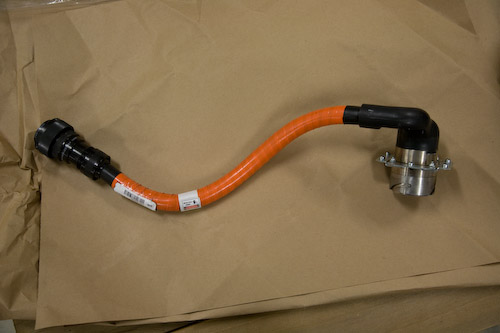
The PEM end is a complex Amphenol connector which plugs into a matching connector on the driver side of the 2008 PEM. Both the connector on the cable and the one on the PEM are expensive, in the $200 range for each, which is probably why Tesla switched to a much simpler connection scheme for the 2010s.�
Apr 9, 2011
clea not sure if this has been posted before but i ran across a youtube video purportedly showing a Tesla Service Manager demonstrating a J1772-to-Tesla adapter.
http://www.youtube.com/watch?v=i_SPFRkXRB8�
Apr 9, 2011
felixtb great news. now we just need another for Mennekes!�
Apr 9, 2011
DaveD Yes, that is Carl Medlock, Tesla Seattle Store Service Manager. TomSax is the one who took and posted the video. I was also standing there watching Carl do it, at a charging station dedciation ceremony at Bellevue Square Mall in Bellevue, WA.�
Apr 10, 2011
jkirkebo As a stop-gap measure you can plug a standard J1772-Mennekes cable into the Tesla-J1772 adapter...�
Apr 10, 2011
AndrewBissell And ... You can also use the J1772 chargers that are also appearing in Europe.�
Apr 10, 2011
widodh Indeed, the cable mentioned here: Conversion Tesla Adapter to Mennekes socket
Offtopic: Shoudn't this topic be moved to the Tecnical discussion? This way the Mennekes and J1772 discussion are in the same forum.�
Apr 18, 2011
tomsax I haven't said much about this lately as there hasn't been much going on. I keep thinking Tesla will announce their adapter, which will probably have an influence on how many owners want to convert.
I wasn't happy with the J1772 inlet cable assembly I built to demo the conversion and want to do a better version, one that doesn't have a splice in the middle. I also needed to use one of the few public HPCs in the Northwest, so I converted back until I can build a better cable and a Tesla-to-J1772 adapter.
I've been having a difficult time nailing down the right part of the connector on the PEM side. My favorite Amphenol supplier is out of inventory on the connector pins until June, and I'm not 100% certain I have the right part number. I'm not that big on $200 experiments. I've got a couple of efforts underway to get that figured out.
I asked Tesla for info on the part they use on the PEM side of that cable. They said they needed to protect their intellectual property in view of the increased competition from other EV makers. This for an apparently standard Amphenol part, that they stopped using at the end of the 2008 Roadster production. So, apparently, they don't want any competitors catching up with them by using a part they replaced with something that costs about 1% of the original.
I'd really like to be able to charge at the public charging stations to raise awareness about EVs and remind people that there's more on the market than the LEAF and Volt. Tesla apparently doesn't see any value in that, or in giving their owners more choices in how to use the emerging EV charging infrastructure.�
Apr 18, 2011
SByer Ok, so I've been (too) silent until now. I want the socket conversion. Badly. There are already more J1772 charging stations on Google campus that I can use than there are public HPCs in the state of California. I hate having an outdated socket on my car, and I didn't buy an HPC precisely because I knew it had an outdated connector - I'm not planning on our garage only having one EV in it forever. I've sent email to Tesla, and I'm pretty sure there are other owners out there who just aren't as outgoing as Tom.
Why the heck should the most advanced shipping EV in the world (for at least the next year) have a legacy (eew) socket?�
Apr 19, 2011
Sparrow I certainly would prefer to have my Roadster converted to J1772 since I will have a Model S and probably a Nissan Leaf in my garage in the next year and a half.�
Apr 19, 2011
dsm363 Got an e-mail from Tesla. Looks like they're finally talking about the J1772 adapter and said it should be out next month.�
Apr 19, 2011
bonnie I'm betting by the end of next week.�
Apr 19, 2011
dsm363 Did you hear something different from Tesla? That's great news. My customer rep told me sometime next month which I guess could by then. I wonder if the adapter will support the full 75A that the ClipperCreek CS-100 can provide (granted, all of the public chargers are at the lower 30A though). Oh, great choice in color combo too.�
Apr 19, 2011
bonnie I was told that while Elon has his black Roadster in LA, he now has the arctic white with CF accents parked in Palo Altos. Great minds... you, me, Jaff, Elon.
Regarding the adapter - when I was in Menlo Park last weekend, I did talk to a couple of people about the status of the adapter. a It might be next month, but based on what little had to be done (barring any unforeseen problems), it sounds reasonable that it might be before next month. (I couldn't get anyone to give me a range on cost, however. And I tried!) Fingers crossed.�
Apr 19, 2011
dsm363 I hope it's cheap. It's something that could easily get stolen while it is on a public charger (unless you stay with your car I guess) so I'm hoping less than $200 but I realize it's probably going to be many times that amount.�
Apr 19, 2011
TEG And SILVER too? : AutoTech Video: We Drive Elon Musks Personal Tesla Roadster Sport
And Burgundy/Twilight-RED too:
13Nov2010 | Tesla | Elon Musk offers Toyotas boss a Roadster 2.5 | TechnologicVehicles.com showroom of electric and hybrid cars green vehicles and green transportation news
www.capital.gr - DowJones Newswires
�
Apr 20, 2011
mpt I'm hearing the same message on timeframe and why the delay? Availability of 75A capable parts. That makes sense to me, there would be no simple way to ship a 30A cable, how would you prevent someone plugging it into an 80A J1772 and melting the cable? Well, not without having to install inline electronics to modify the pilot signal - too much.
I don't think we'll see a car conversion though, too many regulatory hurdles to re-certify the car. Tom; time to fire up and 'productise' your adapter! I'd be a customer and I'd love to hear TM's opinion on our altering the adapter and its impact on warranty and support.
So price?�
Apr 20, 2011
bonnie I saw that, TEG. But the staff in Menlo Park told me Arctic White. Sooner or later we'll see photos of him in the car & then will know.�
Apr 20, 2011
bonnie I believe (but don't know for a fact) that the issue was more around the interface with the Coulomb ChargePoint network. They were working out a final bug with the interface regarding showing a station as occupied or not. (Not related to charging efficacy.) Again, conversation, and not with the person actually working on the technical details (things do get lost in translation).
Not surprisingly, the adapters are mechanically assembled at the rate of a few a day. I believe they are building up the stock while working out one last detail with Coulomb.
Everyone was mum on the price, wouldn't even play the game of 'is it in this range? ... or in this range?'.�
Apr 20, 2011
doug What regulatory hurdles exactly? Seems there were more changes when they went to Roadster 2.0 than this would be.�
Apr 20, 2011
mpt Don't know for sure, only heard the company line, I imagine the changes to 2.0 where well worth the regulations work but a change in the inlet might not be worth the effort. At the end of the day I can see fire safety, electrical safety being required for a change in inlet. Questions like, does the new inlet manage water ingress ok? Is there enough ventilation around the inlet to handle heat? Is it ok to ignore the proximity signal? I'm guessing on the details but I'll bet there's a phone book thick set of regs to go through. Tesla probably thought, that's a lot of work, the pigtail is cheaper, simpler and requires less disruption for the most of the drivers who charge at home.
I'd go through the disruption though, it'd be cleaner to have the J1772 on the side. I'd like to see a retrofit option or at the minimum an aftermarket option that Tesla, whist not having to bless, acknowledges as not voiding the warranty. That said, what if there's a fire that originates around the PEM? Tesla problem or my converted inlet?�
Apr 20, 2011
mpt I've charged from the ChargePoint Network. I did have an issue, initially it wouldn't start until I unplugged my J1772 pigtail (part #TM/MPThack1) and reassembled it in the correct order (see instructions with pigtail). But, once it started it was fine.
J1772 Charging for the Tesla Roadster�
Apr 20, 2011
dpeilow Pretty sure if they changed the component, they would be going through the CE process again. Not sure with regards to how it works with UL.�
Apr 20, 2011
mpt What I do know is that the MINI E charger on the wall at home can't have it's cord changed to J1772 (By BMW) as that would invalidate its UL certification; it couldn't even be re-certified after the conversion, it has to be designed, certified, built and shipped sealed. BMW have opted to abandon them.�
Apr 20, 2011
bonnie Not surprising. For UL to be willing to certify, they have to inspect the process somewhere along the food chain. BMW could technically do the work in their facility, with documented process, trained people, & UL could certify the rework.
But my guess is that BMW doesn't want to go thru that (huge PITA), so is just saying 'can't be done'. However, nothing is stopping an end user from doing it at home IF they have enough knowledge on how to do it. To the best of my knowledge (handy phrase, that), UL doesn't get to poke their noses into private homes. But yes, certification would be gone.�
Apr 20, 2011
mpt Oh, I have the cable waiting and I'm counting down the days! Thing is, I'd like to convert it to J1772 and plug it into the ActiveE or Tesla. J1772 everywhere. Hurrah for the Utopia of standards!�
Apr 20, 2011
dpeilow Convert the charger? CC will sell you a J1772 cable, you just need to sign a waiver.
Maybe collect some of those abandoned ones, I could put them to use...�
Apr 20, 2011
mpt Ah, that's good to know; I was thinking of aftermarket. The unit I have is 48A but I understand that they can be flashed to 70A.�
Apr 20, 2011
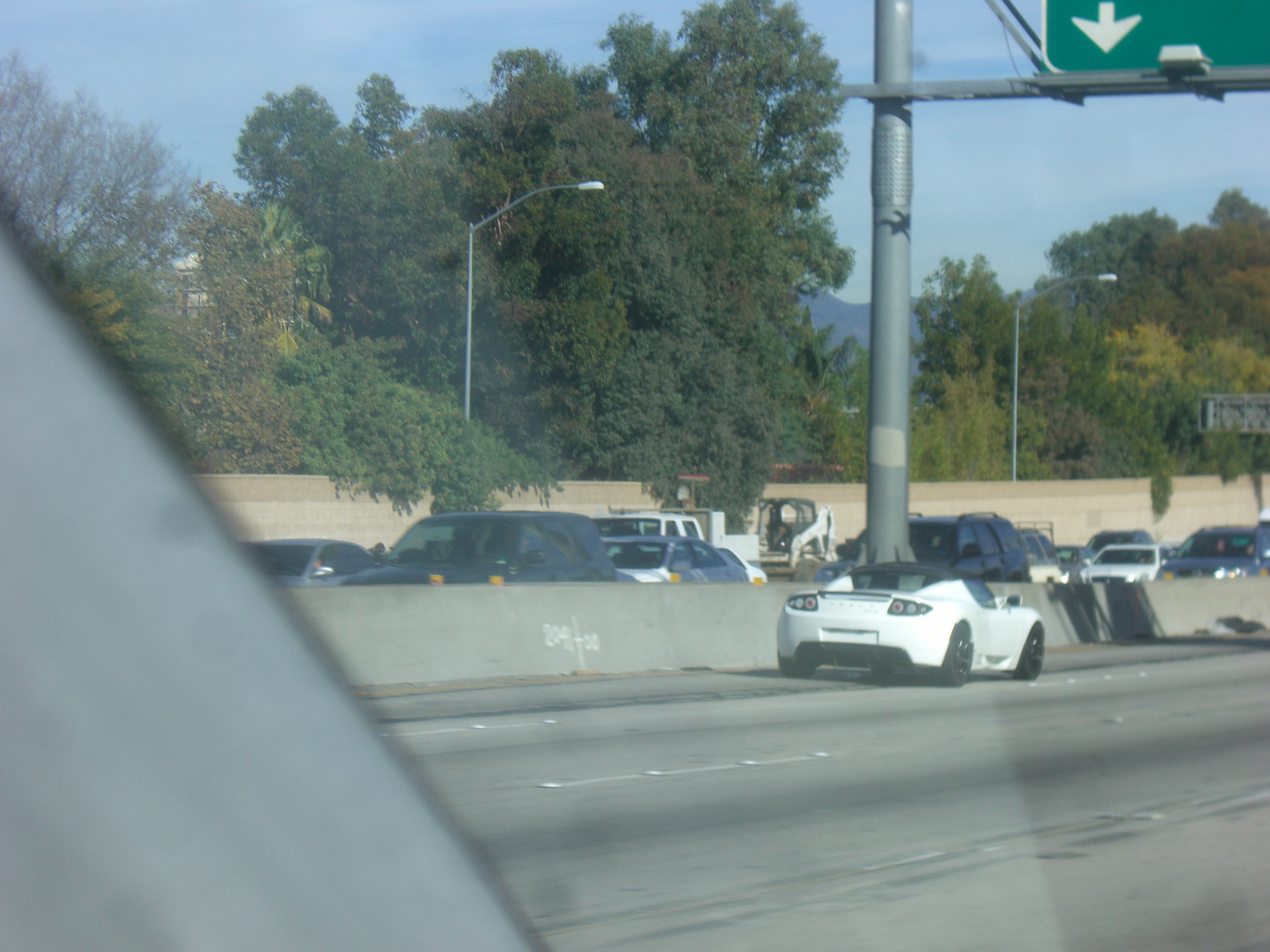
vfx TEG you forgot the picture i took of Elon on the freeway in a white car.
 �
�
Apr 21, 2011
samcarney I emailed my Tesla rep asking about the J1772-Tesla adapter. This was the response.
"We�re very close to launching the adapter, just a few weeks out at this point. There will also be a corresponding firmware update that allows you to utilize the full range of new connectors out there. "
�
Apr 21, 2011
bonnie Which fits with what I heard regarding the interface with Coulomb. I'm still betting on by end of next week.�
Apr 21, 2011
samcarney I like your optimism. I hope you're right.�
Apr 21, 2011
TEG I didn't forget. Bonnie1194 mentioned WHITE and black, and I added a couple others reported to be his too.
By the way, your picture was in So-cal, and she mentioned Palo Alto. I wonder if it moved up north.
(Moderators might want to move related postings to a "how many Roadsters does he have" thread, since we went off topic in here.)�
Apr 21, 2011
tomsax This is what they have been telling us since last September: next month, always next month.
I'd like to know what the Coulomb compatability issue is. I've charged from several Coulomb stations in our 2008 Roadster with our homebrew adapter and our inlet conversion and have never had a problem. They must have broken something with the 2010's.
The proximity signal is for the car, not the EVSE. It's not even really a signal, it's just a resister to ground with a switch in the handle. When the user lifts the latch on the J1772 handle, the switch is opened telling the car that unplugging is imminent and it should stop drawing current right now.
The EV only has to do two things for the EVSE: put a diode plus either of two resister values between ground and the pilot pin (one to ask for the current limit waveform and one to turn on the power), and then honor the current limit sent by the EVSE. My only guess would be that they aren't honoring the current limit when it's not one of the standard Tesla HPC values.�
Apr 21, 2011
bonnie I think the charging works - if I understood things correctly (based on conversation with someone not actually in the weeds on this), it had to do with the interface to Coulomb's system that shows what chargers are available and what ones are not. That would fit with someone else being told there would be a firmware update to go with this.�
Apr 21, 2011
tomsax I don't see how that's possible. If charging is working, then the car is doing what's required to ask the EVSE for power. There's no other signal or communication. If the EVSE is sending power, then it knows it's in use. There's no way for the EVSE to know if it's connected to a LEAF, a Volt, a Tesla, or a box that just has the resister and diode to send the power to a NEMA 14-50.�
Apr 21, 2011
jaanton I've had lots of problems with Colomb's. GFCI's almost always trigger for me. I've been using a J1772 to 14-50 adaptor from currentevtech.com and the UMC. But even the 120 volt cable often GFCI's for me. Maybe my car has some problem, but I only have these problems with the columb's not the UMC nor the HPC's which have been converted to J1772 nor home style GFCI'ed 120 volt outlets. I've had a couple firmware updates to my car in the middle of all this already. I've also had problems with Columb's which fail to release their J1772 plug. They're currently high on my "piece of sh*t" list.�
Apr 21, 2011
Lloyd This is good to know for those of us that are considering installing charging stations at our places of business. Clipper Creek is producing units that provide increased Amps, up to 75 for level II J1772. Point of sale units are due out soon.�
Apr 21, 2011
TEG Consider the possibility that the vehicle could send "I am charging at GPS location X" data through GPRS back to manufacturer home base which could then upload it to the Coulomb database...�
Apr 22, 2011
ChargeIt! I also heard it's a GFI issue, mostly on 2.0+ roadsters. Working on "better" firmware and compatibility testing with larger variety of EVSE manufacturers.�
Apr 27, 2011
tomsax Tesla's J1772 Adapter Announced
Tesla's adapter is finally announced. It's what we expected from the Bellevue demo last month: 70A capable, it leaves the J1772 plug on the resting on the ground, and ignores the proximity signal. The cost is $750.
I suppose now I need to get busy on a conversion plan for owners who want another choice. I'm actually making some progress, but I'm not going to make any promises I can't keep.�
Apr 27, 2011
samcarney You were correct. I ordered my J1772 adapter today. I won't doubt your post ever again.�
Apr 27, 2011
bonnie Whew. I've already ordered mine, too.
FTR, I've been known to be wrong! But I'll wallow in the moment anyway. These moments don't happen nearly enough�
Apr 27, 2011
ChargeIt! And 1.5 Roadsters need to get firmware updated to have this adapter work with AeroVironment EVSEs (as installed at Nissan dealers), but the availability of that firmware update is as yet not announced AFAIK ... may be just a couple of weeks out.�
Apr 29, 2011
PaulM
I know this is what was expected but I still think it's a very bad idea. And $750!!!! That's the price of a (30A) J1772 EVSE! This looks like a home made adapter not something offered by a reputable manufacturer. BIG MISTAKE!!!! Yes people will buy it since there is no other option. The only hope now is that someone smarter than Tesla can come up with a REAL solution (you go Tom!).
How embarrassing for Tesla if Tom is able to come up with a relatively simple and economical ($750 or less) upgrade to J1772 for the Roadster. It sorta makes me wonder... if they can't figure out how to upgrade the Roadster to J1772, how the heck can they build the Model S from the ground-up???�
Apr 30, 2011
bobw It's not the engineering, though the people don't work cheap and are probably kinda busy right now. It's the recertification processes(s). The Roadster production run is limited. It's just not cost effective. The adapter is much cheaper.�
Apr 30, 2011
Doug_G I'm not convinced. It's not like they have to crash test the cars after changing the plug.
The last time I had UL/CSA testing done on a piece of electrical equipment, it cost $10,000. Given that it's already passed certification with a different plug, there isn't much risk involved; it should pass on the first try.�
Apr 30, 2011
bobw I'm not an automotive engineer. I don't play one on TV. My last encounter with UL was 30 years ago. I don't know what regulatory hoops Tesla would have to jump through.
I do think people easily underestimate the trouble other people have to go through.�
Apr 30, 2011
dpeilow They'd have to certify the adapter though, surely?�
Apr 30, 2011
Doug_G Sure, but as an engineer with some experience in the area of electrical certification, I sincerely doubt this is terribly daunting. I wouldn't be surprised to find that the real problem is getting an off-the-shelf J1772 plug to fit.�
Apr 30, 2011
Lloyd Perhaps when a retrofit is available, it will incorporate DC fast charging as well. Wouldn't that be nice!!�
Apr 30, 2011
Doug_G That would require a new PEM. Unlikely. Expensive.�
Apr 30, 2011
Lloyd Just thinking "upgrade"!�
Apr 30, 2011
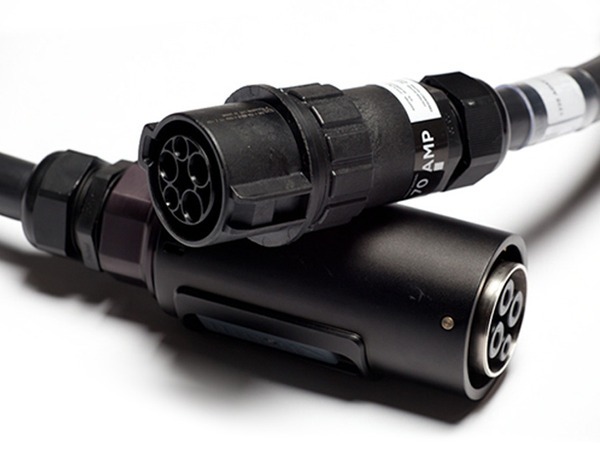
tdelta1000 TM has made it available:
tesla-j1772-mobile-connector-standardizes-roadster-costs-750/
 �
�
May 1, 2011
Jaff I'm sure that TM could off load some of the cost on Roadster owners to help with the cost...I'd rather pay a premium for a more preferred, convenient solution...
�
May 1, 2011
slcasner I ordered the adapter, but didn't get to it until later in the day. Result: Backordered (no prediction how long).
The announcement mentioned the firmware update for VIN > 500. Where was the information about a firmware update for 1.5 Roadsters to work with the Aerovironment EVSE?
At the opening of the Santana Row store, I had a chance to talk with Elon and I urged him to develop a J1772 conversion for the Roadster. That is clearly the right solution.�
May 1, 2011
ChargeIt! The FW update for 1.5 Roadsters was mentioned by a Tesla employee in a private conversation I had after reporting no-op with AV EVSEs.�
May 1, 2011
SByer As owners, we need to keep poking Tesla on this one. In my email, I mentioned my 'no-brainer' and 'think-about' price targets and theft concerns with public charging stations.�
May 4, 2011
dhrivnak J1772 is here
My J1772 Adapter was delivered today and it looks like it will do the job nicely. I plan to give it a high powered test in 10 days.�
May 11, 2011
slcasner I received my backordered J1772 adapter yesterday. Now I need to find a charger to test on.�
May 12, 2011
benji4 Would it be possible embed the new Tesla J1772 adapter right into the car to get the same effect Tomsax has with the one he built for his car?
1) Take the current Roadster charge receptical off the charge port and move it to somewhere back into the empty space above the wheel.
2) Connect it at its new location to the J1772 adapter
3) Mount the J1772 receptical where the current Roadster charge receptical used to be. The 4 foot cable of course also needs to be pushed back up into the space above the wheel and secured.
Crazy idea maybe.....�
May 12, 2011
vfx ^^^
I have heard that one (essentially) before...�
May 12, 2011
mpt What's interesting about that approach is that if we create our own pigtail and locate it to the left of the PEM on the 2.x cars, we've not fiddled with the TM wiring & if needs be, TM can unplug the pigtail and access the original inlet during service, etc.
Another location might be the huge space where the subwoofer goes.�
May 12, 2011
zack Speaking of, where is that space?�
May 12, 2011
mpt If you look down the slot where the left hand lift strut goes, you'll see an open space. TM use that to locate the sub-woofer.�
May 16, 2011
augkuo I have a 2.0 Roadster being delivered to me and I just want to make sure that I have everything I need to charge the car. There is a Coulomb tech tall boy near my office that has a J1772 plug - so basically if I want to use it, I need to purchase a converter AND get a firmware update?
thanks�
May 16, 2011
tomsax If you want to get a converter, you should check out the thread on Tesla's adapter. This thread is about converting Roadsters to use the J1772 inlet natively, without an adapter.�
May 16, 2011
mpt Congrats & yes though, your car will more than likely have the latest firmware on at delivery. If not, firmware updates are 15 minute things & free.�
May 16, 2011
benji4 Exactly, it changes nothing at all about the car and still allows charging via the original inlet. Simply open the trunk, unplug the J1772 adapter from the original inlet and you can then still charge for a Tesla HPC, for example if needed.�
May 17, 2011
augkuo Thanks - looks like the converter's out of stock so I guess there's no hurry ;(�
Jun 10, 2011
tomsax I tested charging a 2008/1.5 Roadster from a public ECOtality Blink charger at a press conference opening four Blink stations at Qwest Field. I used the adapter Cathy and I built last September, which is equivalent to Tesla's adapter. It worked great.
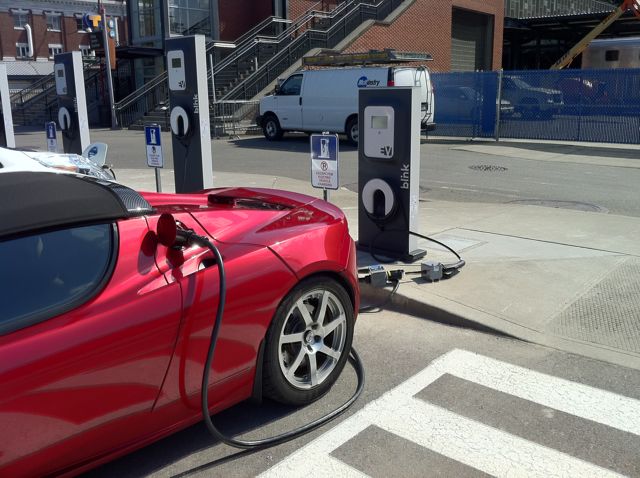
Yep, that's right, our Roadster is on the Blink. :biggrin:
The ECOtality guys there said I was the first Roadster to try one of their public Blink units. I still need to try one of the home Blink units that people in The EV Project get. I'm also interested to hear if a 2.x Roadster will work with both types of Blinks.
It pains me to be using the clunky adapter, but we're back to having the Tesla inlet on the car while we're working on a better cable for the conversion.�
Jun 12, 2011
TEG Isn't Coulomb a different company from Blink?
(Coulomb does the ChargePoints, right?)
From your pic, those public units look like they might be the same as the home units.
I offered to let DWegmull try his Tesla<->J adapter on my home Blink if he wants...�
Jun 13, 2011
tomsax Yes indeed. Thanks for catching that mistake. I edited my post to correct it.
I'm sure it runs a lot of the same hardware, but the packaging and feature set are different. I did try charging from a Blink home unit over the weekend. It went through a couple of start/stop cycles when I first plugged in, but then it charged (30A) just fine.
I wonder if their data collection will notice the charge at a home install that doesn't have a LEAF yet. :smile:�
Jun 13, 2011
TEG I got the Blink before the Leaf arrived too.
I was able to charge the old Ford RangerEV using a J to Avcon adapter cable.
It didn't seem to cause any issues. No one called me, and the Blink is now serving both the new Leaf and the old RangerEV. (One at a time of course.)�
Jun 22, 2011
tomsax Progress on the conversion effort...
We've made some progress on a more robust Roadster J1772 conversion. As part of the conversion, we want a circuit that monitors the J1772 proximity pin and cuts the pilot signal when the latch on the connector is released. With such a circuit, a Roadster will behave as a proper J1772-compatible EV and stop the current flow when the J connector's latch is opened, thus preventing any damage to the connector pins which can occur when pulling out the plug while charging.
Cathy and I worked up the basic idea together and got a bunch of help from the EV community. Cathy put in a ton of work selecting components, soliciting feedback, iterating the design, and designing the circuit board. Our solution works without drawing any power from the car, it just uses a tiny bit of power from the incoming line voltage during charging.

We just got the first set of boards back, put one together, and tested it. It works beautifully, performing even better than I had hoped. The response time from when the switch on the connector is pressed until the pilot signal is cut is about 2.2 milliseconds. When hooked up during a charge, there's no perceptible delay between when the J1772 latch is pressed and when the Roadster stops charging.
Even more geeky information is available on Cathy's page of cool details.
In other news, the cable vendor that said they could produce the replacement inlet assembly cable for us took six weeks of excuses and delays to finally say they don't want to do it. So, we're back to the drawing board on that.�
Jun 22, 2011
dsm363 That's awesome Tom. You and Cathy are doing some amazing work. Thanks.�
Jun 23, 2011
mpt Great news, the circuit looks very neat. Shame about the cable guy; I do hope that you can find someone to step up to the challenge.�
Jun 23, 2011
mpt One question: Does the Tesla pigtail include this? I haven't heard that it does. It could be susceptible to the damage that you mention.
When you disconnect the J1772, don't the pilot and proximity pins disconnect before the power pins do due to them being shorter? Or, does damage to the power pins occur as you slide them out?�
Jun 23, 2011
strider IIRC, Tesla recommends that you disconnect the Tesla connector from the car (to stop charging) before you separate the J1772 plug from the adapter.�
Jun 23, 2011
tomsax To be clear, I don't know that arcing is going to be a big problem with Tesla's J1772 adapter. It seems to me that it could be a problem, and since it's so easy to fix, we're going to do it when we permanently convert our Roadster. We're also willing to share our fix with any owner who wants to do the same.
Tesla's J1772 adapter does not include this protection. I discussed this with Tesla and got this response:
I see two differences from the UMC scenario: 1) we don't generally charge with a UMC at a mall where other EV drivers expect to be able to charge and may choose to unplug the UMC, and 2) if unplugging the 14-50 causes arcing, it's going to damage a $10 outlet and a $100 pigtail, not a $300 J1772 connector and a $750 J1772-to-Tesla adapter.
I've heard that before, but I don't see it in the J1772-2010 spec. Section 8.7.5 "Contact Sequencing" says only that the ground pins have to be the first to connect and the last to disconnect.
I notice that Tesla told me arcing can occur, not that arcing can't occur because of the J1772 plug design.
Even if the pin disconnection sequence is required, or done in practice on most connectors, I'm not so confident the car will stop pulling current in the fraction of a second between when the pilot pin disconnects and when the power pins separate. (The EVSE is allowed multiple seconds to disconnect power after losing the pilot signal connection to the car.) Once the plug is being removed, it's not going to take much time to cover some small difference between pin lengths.
Yes, that's true. But they aren't doing anything to educate LEAF and Volt owners about how to safely operate Tesla's J1772 adapter rather than just unplugging the connector they want to plug into their car.�
Jun 23, 2011
strider I think your idea is excellent and glad you're adding the fail-safe - Tesla should have added that to their adapter cable. I was simply answering mpt's question.
But, do other EV owners seriously unplug other people's cars? I'm not ok w/ that.�
Jun 24, 2011
Norbert I suppose anyone should press "Stop" on the J1772 EVSE even if there is a proximity sensor, and even before unplugging the car plug, if the car is still charging.�
Jun 24, 2011
TEG The bigger problem is random curious people, usually kids/teens, unplugging it without asking.
But some owners do give permission for others to unplug their cable when the charge is done.
I have seen paper "will return" style clocks on the dashboard of some EVs changed to say "Fell free to unplug me after HH:MM"...
Kind-of like this, but relabeled:
 �
�
Jun 24, 2011
drees Until there are more charging stations than EVs (and in many cases this is a real issue), many people will download the EV Charging Protocol document and indicate when it's OK to unplug and/or how to contact the owner of the vehicle.
EV Charging Protocol�
Jun 24, 2011
vfx http://www.eanet.com/ev1-club/chargers/chgprot/index.htm
 �
�
Aug 23, 2011
tomsax Just so everyone knows, I'm still working on the J conversion. I've found a cable vendor that I think will be able to build the J version of the inlet assembly cable with the quality we want. Things are slow, but hopefully I'll have some news soon.�

Không có nhận xét nào:
Đăng nhận xét