Sep 17, 2015
pnaecker Sitting on the side of the road, waiting for a tire service truck to bring me a replacement tire and wheel. So I have plenty of time to post this. :wink:
I understand offering "full service" instead of a spare is nice for some people. But most of us can change our own damn tire. If we had a spare. In less time than it took for the Roadside Assistance to answer my call, much less for the service truck to get here.
To me, this design flaw is part of the same arrogance that gave us poor cup holders (under my elbow? really?), poor sun visors, no storage, no grab handles, and all the other annoyances that have been written about so much. The designers valued their "look" so much that they sacrificed the consumer's convenience. Silly. Rude, really.
Obviously, I could buy a spare wheel and tire. Has anyone done that? Since there is no tire well in the car, did you just throw the spare in the back or the frunk? And buy a jack? And a tire cover?
I have purchased a tire re-inflation kit (with sealant gunk) for true emergencies, when I really, really don't want to be stuck on the side of the road. But I am a bit hesitant to use that in "normal" situations. I would like to hear expert opinions on that subject as well.
Sigh.
P�
Sep 17, 2015
efusco There's a temporary repair kit that can get you back on the road to have it changed later.
If it's a huge issue an inflated 19" wheel/tire will fit in the frunk (rear wheel drive only).
While I understand your frustration, I think the trend in the industry will be away from carrying around a heavy spare for year upon year that may only be needed once or twice in the lifetime of the vehicle.�
Sep 17, 2015
Todd Burch Lots of cars nowadays don't have spare tires anymore. It's not about arrogance. It really makes sense to not have a spare. I have driven about 400,000 miles in my life. The number of flat tires I've had during that time? One.
Obviously, some will have more (especially if your wheels have tiny sidewalls), others less. But the point is, it's an infrequent-enough occurrence that carrying a 50 pound inflated wheel/tire and a jack around with you everywhere you go is just silly. It wastes a ton of energy (that's a lot of extra weight), and a lot of space. And yes, manufacturers are going this way as fuel efficiency standards go up. But it's the right thing to do.
A patch kit will do the trick instead with far less weight and space consumed.�
Sep 17, 2015
Max* Did you puncture it with a nail? Why not carry plier, a tire patcher, and a tire inflator. You could fix the tire in 10minutes, without ever taking it off the car.�
Sep 17, 2015
SabrToothSqrl In over 200,000 miles combined across several vehicles in my life time. Never had a flat.�
Sep 17, 2015
glhs272 I purchased a spare (BMW X5 spare tire) that fits in the front trunk just fine, along with my charging kit. It is mostly for when I am on road trips where dealing with a flat would not be very convenient. For daily driving to work and back, it's optional but I usually just leave it in there because the Model S has so much storage space, I don't need to use the front trunk much. Unfortunately I have had a few flat tires a few times (but not in my model S yet). My parking lot at work also has a bunch of nails and screws hidden about (used to be a pro-build home construction facility before it became Racine Railroad Products).�
Sep 17, 2015
mknox That's my biggest worry. I seem to average a flat at the side of the road every two years, and usually during a winter snowstorm. Last time it happened, I just pushed my OnStar button and a service truck had swapped out my full-size spare and I was on my way to work. Arrived maybe an hour late. Hasn't happened with my Model S yet, and sure Tesla Roadside will come, but with no spare I'd bet anything I'd lose more than an hour out of my work day having it flat-bedded off and dealt with. From what I understand, in my neck of the woods they don't bring you a wheel, they flat-bed you away.
I have winter tires and rims. I am toying of the idea of putting one extra wheel in the frunk (apparently, it will fit) but not necessarily any tools or jack. That way I could call Tesla or the auto club and they could come out and mount it for me and I could be on my way, then deal with tire repairs after work at my leisure.�
Sep 17, 2015
FlatSix911 I just carry a can of Fix-a-flat that is sized for SUVs and safe for TPMS. Problem solved.�
Sep 17, 2015
mknox Perfect for when you get that little nail in your tire:
 �
�
Sep 17, 2015
jgs I bought the Tesla-branded repair kit when I bought the car, for this reason, although it obviously doesn't cover the flat mknox just posted (wow). After carrying around a full-service spare with my last car for 15 years and not using it even once, I'm not too bent out of shape about it, though as they say, past performance does not guarantee future results.
One other problem with carrying a spare that hasn't been mentioned here yet is that you need a pretty hefty jack for the Model S. The weedy little emergency jack I had on my first car just wouldn't cut it.�
Sep 17, 2015
jaguar36 Would you rather pay for a spare tire, jack and wrench, as well as lose the space they take up and pay the energy cost to lug them around everywhere? Most people say no, and thats the way most cars are going. If you disagree there is plenty of space for a spare in the S, and you can get one, with a jack for $300 or so. You could also switch to runflats (which I think is a worse idea).
I bought a spare since neither of my cars have one and I'll throw it in the car if I think it might be useful. Most of the time it stays home though.�
Sep 17, 2015
nishy1 I thought it was legally mandatory for cars to have a spare or run flats�
Sep 17, 2015
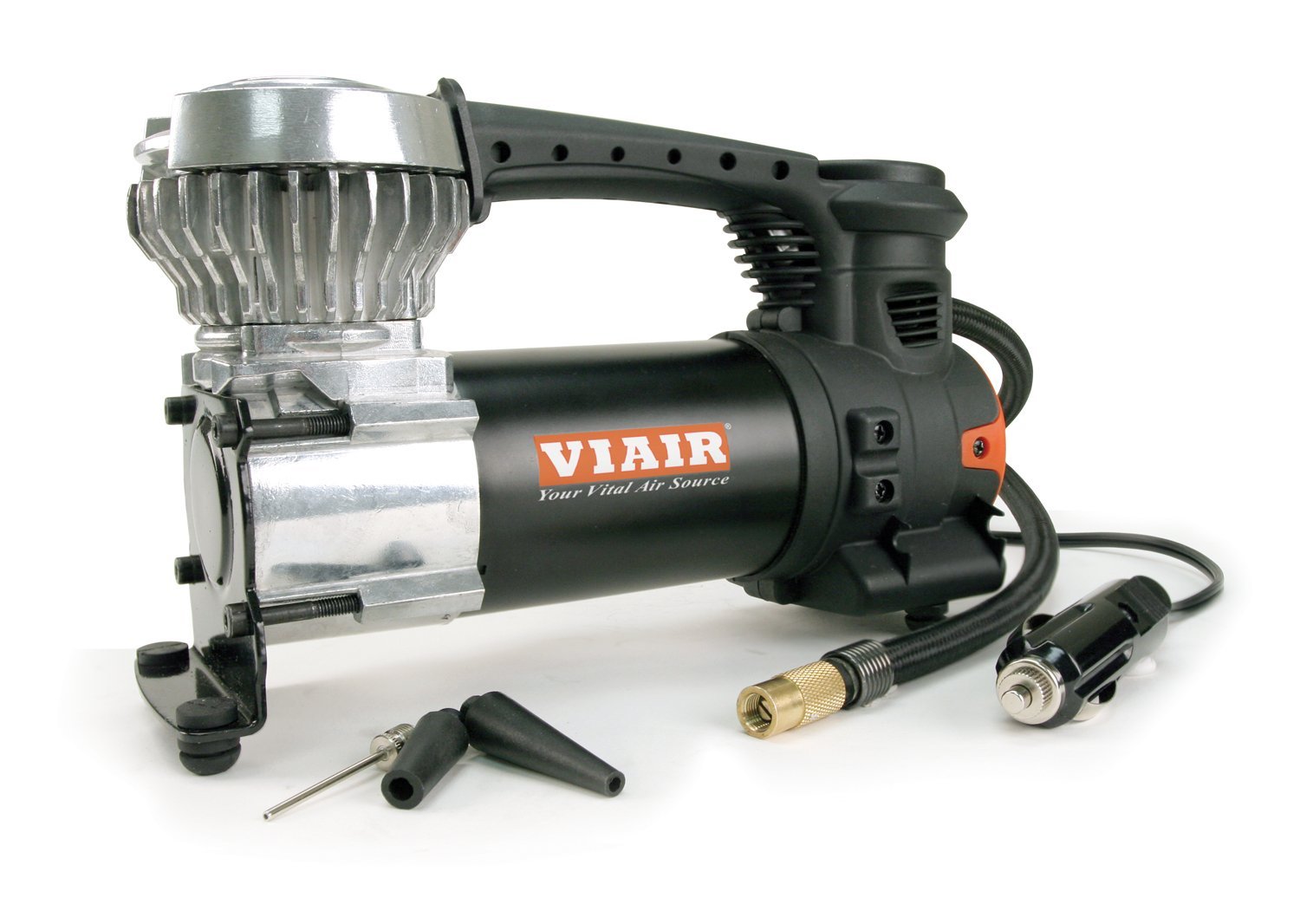
SamT I carry one of these portable air compressors and a repair kit in my car, it take a lot less time than changing a spare or waiting for a tow track.
 �
�
Sep 17, 2015
jaguar36 Nope,
here is a list from last year of cars that consumer reports has recently tested without them. Most came with an inflator though.
Acura RLX
Audi TT
Buick LaCrosse
Cadillac CTS
Cadillac SRX
Cadillac XTS
Chevrolet Camaro
Chevrolet Malibu
Chevrolet Spark
Chevrolet Volt
Dodge Caliber
Dodge Dart
Fiat 500
Ford C-Max
Ford Focus
Ford Fusion
Ford Mustang
Honda Accord
Hyundai Accent
Hyundai Elantra
Hyundai Sonata
Hyundai Veloster
Infiniti G
Kia Forte
Kia Rio
Kia Soul
Land Rover Range Rover Sport
Mazda MX-5 Miata
Mitsubishi i-MiEV
Nissan Leaf
Porsche 911
Porsche Boxster
Porsche Panamera
Scion iQ
Smart ForTwo
Toyota Prius
Volvo C70
Volvo S60�
Sep 17, 2015
mikeash The question with buying your own spare is always, where do you put it? You touch on this, since it's an obvious question.
The thing is, if Tesla included their own spare, that question doesn't just go away. They'd have to find a spot too. And since the rest of the car is taken, their location would necessarily intrude on cargo space somewhere. It could be done a little nicer, but the end effect will be much the same.
Personally, I'd rather have the extra cargo space.�
Sep 17, 2015
jtpassat that will buff right out.
- - - Updated - - -
another point that hasn't been made yet is that, it's safer to stay in your car and wait for the tow truck driver than to be outside and be exposed to get hit by other cars when you're trying to change your tire.
with the way people drive distracted these days, it's something to be on the safe side on.�
Sep 17, 2015
ecarfan In the USA there is no such requirement.
I have driven hundreds of thousands of miles in my life and do not recall ever having a flat that prevented me from driving. I have had a few slow leaks.�
Sep 17, 2015
mknox FWIW, my Cadillac CTS (on your list) came with a full-size spare and there was no extra cost for it. The owners manual did talk about a compressor kit for cars "in jurisdictions with no spare tire". At the time, I thought that meant Canada required a spare, but my Model S doesn't have one, so who knows?�
Sep 17, 2015
Gizmotoy It can happen at any time. I had a flat on the evening of July 4th on a Model S with something like 5k miles on it. My previous car also got a flat at a young age. It happens.
A lot of cars are coming without spares because it can be a safety issue. Changing a tire on the side of the road is an inherently unsafe situation. This is worsened by the extreme weight of the Model S, which only amplifies the risk of jack failure. I'll say that while I haven't personally witnessed such a failure, I have seen the aftermath of a failure on a coworker and it was not pretty.
Then you're carrying the weight of a spare you'll rarely if ever use, plus the space considerations other have mentioned. It's not a coincidence that spare tires are becoming less common every year.
In the RWD Model S you could fit a spare in the frunk, but AWD owners are out of luck in that department. I just take the compressor/goop and know that if the flat is really bad I'll have to call someone.�
Sep 17, 2015
green1 What is the cost to lug around all that weight everywhere you go for the life of the vehicle? And that doesn't mention that you paid for it as part of the purchase price, they didn't throw it in of their own goodwill. Plus you lose all the storage space it takes up.
In all my years of driving I have never changed a tire on my car, and I drive around for work all day every day. I have had flat tires, but I've been able to patch them and be on my way faster than I could have changed a tire, and the patches last the life of the tires (never had a patch fail)
A spare tire makes sense if you're going on safari hundreds of miles from the nearest service, there are some things a patch kit just won't fix. But the rest of the time, carrying a spare tire is a waste of energy, space, and cost, for the extremely unlikely event you'll ever need it. A patch kit and compressor on the other hand are smaller, lighter, and cheaper than a spare tire, and can fix 90% or more of flats without having to jack up the car or take the wheel off, and as an added bonus, they're permanent so you don't need to go to a tire place afterwards.�
Sep 17, 2015
tomp I have the same air inflator as SamT above, along with flat repair kit. I used to carry a full-size spare in the frunk, but took it out to use for a stroller and never put it back.�
Sep 17, 2015
mkjayakumar Leaf does not have a spare tier either, but it sure does have cup holders, storage space and grab handles that I use often to hang my coat and laundry�
Sep 17, 2015
Khatsalano I have no interest in carrying a spare thing that is heavy and bulky in the minimal chance that it may be needed. I can make a phone call instead and the problem is fixed!
- K�
Sep 17, 2015
mknox You are, of course, correct in your analysis of likelihood vs. severity of situation. I mentioned that I probably average a flat once every 2 years (not counting slow leaks which can be dealt with usually at one's leisure). But I have had "catastrophic" flats by things like wire bands taking an 8" slice through the sidewall and such. In that sense, it is silly carrying a spare all the time. But what if I was on a vacation road trip and had a flat? With a spare (mounted either by me or roadside assistance) I could be on my way in an hour and deal with getting the flat fixed later. With no spare, that could be a day gone out of my trip.
I think my compromise would be to carry a spare on situations like my road trip example, but not at other times. Haven't actually done so yet... just thinking out loud.
EDIT: I'm not sure my Cadillac dealer threw in the spare as a "goodwill" gesture. The owners manual sure seemed to suggest they put them in where they had to, and put compressor kits in where they didn't. The confusion is why Cadillac thought they were required here and Tesla didn't.�
Sep 17, 2015
dgpcolorado I'm leaning toward that plan. I had a flat tire on my ICEV on a long trip in May and the tire was destroyed because I was at freeway speed. I was very glad to have a full size spare so I could change the tire and continue my trip (I got way off the freeway to be safe). In that case a plug kit wouldn't have helped and I was in a remote area of eastern Oregon. And what happens if it is a Sunday and all the repair shops are closed? So, a plug kit, pliers, and a small compressor for easy flats in local driving and a spare tire to carry on long trips seems like a good solution.
For those who have said that they have never had a flat tire, all I can say is "lucky you". I've changed numerous flat tires over the years; it happens. And if you don't live near a big city, just calling for a tow or roadside service isn't all that practical.
- - - Updated - - -
While I've haven't used my plug kit yet, my understanding is that one should take the tire to a repair place to have a patch put on the inside over the plug to make the repair more robust.�
Sep 17, 2015
Cyclone My 9 year old 4Runner (bought new) has a full size spare tire. In 86k miles, I've had to use it zero times. My previous 4Runner was 9 years old (but bought when it was 3) when it was replaced by the one I just replaced. It also had a full size spare and I think I also had near 90k on it when I sold it. While it had the OEM Firestone tires, I used the spare maybe 4-5 times in two years. When I replaced those OEMs with Michelins, I used the spare a total of once when Hurricane Wilma through sharp debris at my car and blew out one tire. That said, it wouldn't have mattered. The downed trees in the road meant I wasn't going anywhere.�
Sep 17, 2015
eloder I've never driven a car with a spare, nor do I intend to. I haven't needed one, and given that I'll never drive someplace without cell service, I'm not worried about being stranded.
Now I could be totally wrong on this, but I imagine that the money spent in keeping a well-conditioned spare around costs a lot more than if you, in a very rare situation like that, would instead just rent a car while it's being repaired or the tire changed out.
I find it similar to the whole "why an EV, you can't drive it in every situation!" argument with my econo-EV. In the rare times I need to go further, I'll just rent a car. Every month that goes by pays for a good 1-2 days of renting a vehicle if needed. I still have not needed to rent a vehicle, though.�
Sep 17, 2015
Canuck I'm not ticket off since I knew it didn't have one when I bought it.
Since I bought a Tahoe Hybrid in 2008 I've also driven without a spare for 7 years now. But unlike you, I drive both my Tahoe and S out of cell phone coverage, and on remote gravel backroads (mostly this one):
Google Maps
I think my luck must be wearing thin but I'm knocking wood here.�
Sep 18, 2015
jerry33 Renting an unfamiliar vehicle that has been questionably maintained for a long trip is not my idea of warm and fuzzy.�
Sep 18, 2015
GreenT To me the spare tire was a con from day one ... manufacturer thought, "ok, we have 50 million tires on the road, how do we up that by 20%? Right! Add a spare."
After all, all cars have spare engines, gas tanks, radiators, etc.
I've driven without for 3 years and have had one flat ... luckily in my garage. And yes, I drive around with the Tesla issued motor and gunk.�
Sep 18, 2015
wcfinvader We've had one flat and from now on we carry a full size spare in the frunk. It fits perfectly there. We drive a lot in rural areas where it can take a long time to get a tow truck to us. It's worth it to us. We only used the frunk minimally anyhow and you can easily make up the increased energy consumption by going 1-2mph slower. In our case we wouldn't leave home without the spare.�
Sep 18, 2015
yobigd20 over 400k miles and I've had about 5 or 6 flats in 17 yrs of driving. and that's with *regular* tires (not low profile). all of which I changed myself on the side of the road with a spare. one of the times was with the MS and the tire repair kit helped me get back to a tire shop.�
Sep 18, 2015
Max* I've had a flat, and realized that I've never used the spare in the car, jack up the car, replace the wheel with the slim spare, throw the regular wheel in the trunk, start driving maybe 20 feet, and realize that something is wrong, come out and turns out the spare was flat too... lol, that was fun.�
Sep 18, 2015
jgs Clearly not a TMo customer, then.�
Sep 18, 2015
MorrisonHiker I've driven close to 250,000 miles and never had a flat myself. I was a passenger in a rental car that did get a flat when we were dodging potholes and chickens on the top of an old volcano in Hawaii. That's the only time I've ever had to help change a tire and luckily there was no traffic. There were lots of mother hens and baby chicks which came by to supervise the tire change. �
�
Sep 18, 2015
brkaus I had a major sidewall blowout on my BMW (inside wear that I didn't realize - so this was all my fault). Found out I didn't have a lug wrench. Called AAA, but a highway patrol stopped by first. Borrowed his lug wrench and completed the tire change... Only to find the spare was flat.
10pm at night. On the side of an interstate. Kids screaming in the car asking if we were going to be ok the whole time.
Memories!�
Sep 18, 2015
jgs Not from day one. In the very bad old days (before my time, mind) of inner tubes, pre-radial, tires were vastly less reliable. You could almost count on needing to change at least one flat if you took a road trip. Times have changed, but once people get used to having something "for safety" it's hard to get them un-used to it, even if the reason for the thing no longer exists. So if I had to guess, I guess this was less of a manufacturer con and more consumer inertia, or simply a case of nobody questioning "what everybody knows".�
Sep 18, 2015
MorrisonHiker From pictures I've seen, a lot of old cars came with two spare tires!�
Sep 18, 2015
jaguar36 For a long time (and maybe still) having a full size spare was considered a premium feature, and so people got it in their minds that a better car should have one. Thats the kind of thing that is extremely difficult to change peoples mind about. I remeber in my last BMW it had a full size spare and being extremely irritated that I paid to have a ~$400 wheel and a ~$200 tire take up a huge amount of space in my trunk.�
Sep 18, 2015
mknox My recollection is somewhat different. I remember when all cars came with full-size spares, and when those compact units came out it was perceived as the manufacturers being "cheap". Maybe we're saying the same thing, but from a different perspective.
And storage space has never really been a concern for me. Our past mini-vans and SUVs always had them on the "outside", either under the rear end or on the tailgate, and our sedans have had them in a seemingly well thought out cavity below the trunk floor board. Sure, I suppose that little cavity could have been used to store something else, but having adequate cargo/storage space was never even remotely a concern.
Funny/true story: When I cleaned out my old car before trading it in, I had a number of items in the door storage pockets, center console and seatback pockets. Since the Model S has almost no interior storage, those items are in a tupperware box under the trunk floor where a spare tire might have been. So, yes I'm using the space a spare tire may have gone, but only because items now can't be stored in the cabin like they were before.�
Sep 18, 2015
jaguar36 That's pretty much what I was saying.
Sounds like you're used to having bigger cars than I. In a 3-series BMW back when they still had spares, the empty space where the full size spare went was about half the size of the whole trunk.�
Sep 18, 2015
Gizmotoy That's the case for a lot of cars. My other vehicle has active AWD and so it has to have a full-size spare. If I remove the spare and surrounding supports from the trunk, the trunk floor lowers about six inches over its entire area. Then there's additional room where the wheel is also recessed several more inches into the floor. All of that could have been reclaimed if there wasn't a spare, and it would have been a huge space upgrade.
In basic summary, saying "the space the spare tire takes up doesn't matter because it has a nice cover over it and I can't see it" isn't a terribly good way of looking at it. Same deal when the manufacturer reduces trunk space or fuel capacity in order to put it under the vehicle.
In particular regard to the Model S, consider what a spare would have meant: no rear-facing seats (or, at the very least, non-folding rear-facing seats) and probably a redesign of the rear suspension/motor/reduction-gear configuration, which currently lives in between the rear wheels laterally and between the charger(s) under the back seats and the trunk's rear-facing seat footwell longitudinally. It'd be a pretty big sacrifice, I think.
Personally, I'm really happy with the decision they made regarding the spare.�
Sep 18, 2015
LightHarmonic I have a first year BMW Z4. I bought the car not knowing that it came with run flat tires and no spare. At the time, I the idea of no spare tire would have frightened me away from buying the car. Having lived with it for 12 years now, I don't mind not having a spare even though I've switched over to regular performance tires. A AAA membership is all I need to feel good that I won't be in the lurch if a tire goes flat.
I'm with Gizmotoy. No spare = more space for other goodies. I'm happy with the decision.�
Sep 18, 2015
eloder Yea, but even TMO customers could buy a $30 prepaid Verizon phone and some minutes before a long trip without a rental for a spare.
Now of course there are areas without Verizon/AT&T coverage out there, but those two tend to completely cover at least all major thoroughfares and routes in remote locations. I was riding through a back road route through the Appalachians last year with my family, and even then I had a steady voice signal at the very least while their phones spent three straight hours with no signal
The tire repair kits are pretty awesome too. Never used one, but my smart car had one stashed inside the passenger footwell (obviously, can't put a spare in that car!).�
Sep 18, 2015
dgpcolorado You certainly live in a different world than my place here in the remote mountain west. Even when there is cell service the distance between towns with towing service and tire shops can be considerable. It is easy to change a tire and be on one's way. It is a nuisance to have wait for rescue and then decide how to get the tire repaired � because there is no spare � if it can't be plugged in the field, so that one can be on one's way. I'd rather be self-reliant, to the extent that I can.�
Sep 18, 2015
green1 Do you carry spares for every other critical piece of the vehicle? What makes the tires so special?
I spend a LOT of time outside of cell coverage in the mountains, often on gravel back roads. Still never needed a spare tire in my life, I've patched a few, but never changed one. I don't plan on lugging around that much extra weight, and taking up that much extra space, all for something that I've never needed in my entire driving career. I've been stranded by more dead batteries in my life than flat tires, and I never carried a spare one of those.�
Sep 18, 2015
AmpedRealtor Would you mind sharing what flat repair kit you have? I'd love to get this combo. I have the Tesla branded tire inflator/kit and it feels like a piece of junk.�
Sep 18, 2015
green1 The gunk isn't really a great option, I recommend a plug kit, the kind that comes with a few threads of tar covered string and a reaming tool and insertion tool, they're under $25 at most automotive stores. Then you just need a cheap compressor to fill the tire back up.
The gunk might work in a pinch, but it requires follow up at a tire shop almost immediately, the plugs are permanent (even though they say they aren't, I've driven on them for years afterwards with no loss of pressure at all)�
Sep 18, 2015
Gizmotoy Yeah, but by that definition of permanent, tire goop is also permanent. It seals and dries. You can drive a long ways, but you shouldn't. Temporary fixes can last a long time, but that doesn't really mean you should trust them (or suggest that they're permanent because of a few instances of good luck). In either case, the tire really needs to be plugged and then patched from the inside. And even then the tire technically loses its speed rating (then limited to highway speeds only). One plus for the plugs, though, is that the goop makes a hell of a mess.
It definitely isn't very nice quality. For the compressor I have this little guy, and it's fantastic: Amazon.com: VIAIR 85P Portable Air Compressor: Automotive
For the repair kit, either get some tire goop/slime, or a plug kit that looks like this: Amazon.com: Slime 2040-A Tire Plug Kit: Automotive
If you go with the plug kit, make sure you watch some videos online about how to use it before you need to use it. It's pretty easy, but you don't want to be fumbling with it on the side of the road.
Honestly, though, the Tesla version is probably all you need since you already have it. They'll clean up the goop if you need to use it and replace the canister. Add a plug kit to it if you'd rather that, then you have both options.�
Sep 18, 2015
AmpedRealtor thank you!�
Sep 18, 2015
eloder Very curious about that as well
I don't even mean to be sarcastic about it. I grew up my entire life with cell phones--what makes travelling without a tire different than travelling without a spare injector plug, a spare battery, or how is it different from travelling back before cell phones existed or had such great coverage? I've experienced more breakdowns due to engine trouble in the past 20 years (riding in vehicles on family trips in multiple vehicles, driving on my own across multiple different vehicles) than due to tires.�
Sep 18, 2015
Gizmotoy It is funny, but realistically, the difference is that a tire problem is easy for any driver to diagnose ("Hey, my tire is flat/missing!") and the solution is pretty straightforward (raise vehicle, remove bolts, replace tire, replace bolts, lower vehicle) and the replacement part doesn't quickly expire.
Contrast that with things like batteries ("Did my car die because the battery failed just now? Or was it the Alternator? Maybe the drive belt driving the alternator?"), which may also become dead itself if left in the trunk of a cold car all winter without charging, and it makes sense the tires are the exception.
Essentially, manufacturers trust you to change a wheel/tire and that's about it. And even then, I'd say a good percentage of the time that trust is misplaced.�
Sep 18, 2015
JST Of course, comfort levels and risk tolerances vary.
Knock wood, I haven't had a flat yet in the MS (and haven't had that many flats, period). But I remember coming down to the parking garage late one night and finding the tire on my BMW flat. It was a relatively straightforward puncture, but the tire wouldn't hold enough air to drive on. Since I had bought a spare for it, I was changed and on my way in about 10 minutes.
With no spare? I'd have had to call a flatbed. Wait for the flatbed. Ride in the flatbed to the nearest (closed) BMW dealer or tire store. Call a cab. Ride home.
How much is your time worth? At 10 pm, when I am just trying to get home, my time is worth A LOT.
Or, I could have used goop that would have ruined both the tire and the TPMS sender inside. Then, instead of a $30 patch the next day, I would have been looking at a $500-1000 bill for one or two new tires (depending on wear) and a TPMS sender.
So I decided to carry a spare, since it has a negligible effect on cargo capacity in the RWD Model S. I can see the logic of others making a different decision.�
Sep 18, 2015
Gizmotoy As a note, the goop Tesla sells doesn't damage the TPMS senders. Or at least it didn't... I know we're on our second TPMS sensor revision now and I have first-gen. It might not ruin the tire, either. Most tire places can now successfully clean/patch a tire that had previously been gooped. Tesla doesn't patch tires, though, so you'd need to go to a third-party place for that.�
Sep 18, 2015
green1 But in your BMW example. I can almost guarantee patching it would have been faster, easier, and more permanent than changing it was, and as an added bonus, the patch kit is smaller, cheaper, and lighter than the tire was.�
Sep 18, 2015
JST
How would I have dismounted the tire to patch it?�
Sep 18, 2015
green1 Why would you dismount it? I've never done that in any tire I've patched.
Patch it on the car, that's what makes this fix so much faster than changing a tire.�
Sep 18, 2015
Canuck Got a Flat, Here's a "how to"�
Sep 18, 2015
jerry33 You can't patch a tire without demounting it. What folks here are referring to is inserting a plug in the tire. A plug can work fine, but at your earliest convenience you should get the tire demounted and inspected for interior damage--it's more common than most people realize.�
Sep 18, 2015
CHG-ON I'm sure I will be pissed when I get a flat. But I did get the "goop". I also bought a tire repair kit with plugs (only works on tread punctures and I always seem to get sidewall ones), a compact jack and wheel chucks just in case.
- - - Updated - - -
Did that nail go right through the wheel itself?!? Yikes!!!
�
Sep 18, 2015
dgpcolorado For you and the others who asked this, it's pretty simple: if I maintain my car well it shouldn't die on me while on the road. Dead batteries? While they do die one usually gets some warning and in cases where my battery was weak I just carried jumper cables and it was trivial to get going again. I've even roll-started a car and also have driven a car with a broken clutch cable (yes, you can shift without the clutch). But breakdowns are rare, especially with modern cars, and I can't remember the last one that wasn't a collision with a deer; at least two decades ago?
By contrast, flats happen. Unexpectedly and sometimes at inconvenient moments. And it has nothing to do with maintenance or prevention. I've had a number of them over the years and there's nothing I can do about it save for carrying a spare, plugging it if it is a simple tread puncture, or calling for help and canceling plans for awhile. If I have a spare I can continue with my trip and get the tire fixed or replaced at my convenience, which is what I did in May in Oregon 800 miles from home. Again, for those who've never had a flat or blown tire: "lucky you".�
Sep 18, 2015
Ingineer This model is also well rated from the same company, but goes to a higher pressure (100psi vs 60psi) and comes with the carrying case as well as a longer cord for only a buck more: Amazon.com: Viair 00073 70P Heavy Duty Portable Compressor: Automotive
Here's the plug kit I got, mainly because it has a nice case with it: Amazon.com: Slime 20133 Tire Repair Kit Tackle 9 Piece: Automotive�
Sep 18, 2015
Speedbird Having no spare was a considerable negative for me when considering Model S.
I decided to take the chance however, although do have the Tesla inflators and repair kit if needed.
In my previous vehicle, a 2007 Nissan xTerra, I had about 5 flats over 7 years. Most I think were in our back alleyway, where I think there was lots of construction debris, but one was on the freeway, and another on a road trip. I prefer pulling off the road to a quiet area and changing the wheel myself, as I can be done inside 20 minutes and on my way. The convenience argument for roadside to me is a fallacy, as it's not just a "quick call and then it's fixed", it's a quick call and then an hour waiting for roadside, a mission transferring kid seats to the rescue vehicle if needed for kids, some time in transit to the shop, and then it'll probably be Sunday night or July 4th!
I might look into the plug kit for our next road trip. On the xTerra the spare was stored under the vehicle, so no impact to storage space, no such clearance on the Tesla!
Still, it's a cool car though, loving it!�
Sep 18, 2015
Ingineer For the last 20 years, I've always carried a compressor and a plug kit regardless of whether my vehicle had a spare. I find unless the tire is not plugable, it's much faster, easier, cleaner and less work to plug it on the vehicle. I'd say in those 20 years, I've plugged 10 tires, and had 1 fail in a way it couldn't be plugged. In all 10 cases with the plugs, they held without any additional work needed for the life of the tire. I did have one that took 2 plugs. (different punctures)
I'm completely content to go w/o a spare on my Model S. If I was driving somewhere remote on a regular basis, I might see that differently. For instance, I don't think I'd hit the Dalton highway in AK w/o 4wd, a spare and a winch. (and definitely not in an EV at this point!)�
Sep 19, 2015
supratachophobia Nope, not ticked. I keep a patch kit and compressor in the frunk.�
Sep 19, 2015
StaceyS Here's what my solution is, and it works out for me:
I have a set of snow tires on rims. Normally the car is wearing one set of tires or the other set. Around town, its just the car and 4 wheels, figuring that if I get a flat, I'm close enough to be easily rescued. However, when I go on a long distance trip, I'll toss a wheel/tire from the opposite set in the frunk, just in case. It won't match the rest of the tires, and the TMPS will probably freak out, but it will get me down the road and however long I need to go before getting the flat tire fixed.
Of course, this only works if you have a RWD car, and you live in an area where you might actually need snow tires...�
Sep 19, 2015
Lyon I have this: http://www.amazon.com/Slime-70005-Safety-7-Minute-Repair/dp/B001DZFZPG/ref=sr_1_12?ie=UTF8&qid=1442727342&sr=8-12&keywords=tire+slime
I've never needed it.�
Sep 19, 2015
Canuck You're right on the cup holders but I'd call it a poor design rather than arrogance. On all other issues, including the lack of a spare, I disagree that that customer's convenience was sacrificed. A friend of mine came over with his new Porsche Cayenne and I couldn't believe how much they packed into that vehicle. There's storage, handles, buttons and knobs galore. He said it was like the cockpit of a plane and he liked it but to each their own. I've learned that I don't need all the junk I packed into my last vehicle and the best thing that happened was the center console wait because by the time I was told I could order one (six month after getting the car) I decided it would ruin the wide open design and being 6' tall my knee often takes up that place. I put the GM cupholders in and it solved that problem. For me, there's no better design than the clean, buttonless, open design of the Tesla. I find that other vehicles exude arrogance. Tesla exudes minimalism. Of course, that doesn't appeal to everyone but it sure appeals to me.�
Sep 19, 2015
bwa My snap reaction is that that road is a clean one, therefore your statistics make sense to me. (To me clean means not only free of nails, pointy rocks, debri, etc., but also no potholes, sharp weird turns, geological formations in the roadway itself, other vehicles, other people in other vehicles likely to make it unclean and/or unpredictable, etc.)
Compare that to San Jose where I drive all the time: there are at least an average of two major potholes I hit every day, because Santa Clara County never fixes them at all. I've chewed through 10 rims in 2 years, and had a dozen flats. Also, the "road diet" communists in city and county hall are installing road-colored concrete curbs everywhere, in the middle of lanes, on every side of lanes, that you have to drive around constantly, and are completely invisible. These types of "road diet" obstacles have killed many people who have been hit by other people who crash into them after losing control after hitting one of these invisible road diets. Of course, they cause all sorts of vehicle damage, not the least of which is seriously damaged wheels. Sometimes, you get out of a brush with them with a very lucky simple flat tire (of a type a patch kit will never repair). I've avoided most of these myself using a "high-beam-only" policy whenever I encounter those types of obstacles at night, and immediately and always divert to another road that doesn't have them, and go back to highbeams only when there are no other vehicles. But it's yet another source of flats. Also in urban areas, there's lots of garbage that isn't innocent on tires. And finally, on my last long distance trip, I had to avoid 3 debri spills that could have taken out car parts including a tire (one was listed on Waze and two were not); I had both the following distance and reaction time capability to avoid all of them safely and calmly, but it is just one of those reminders that sometimes these things come up, and what if someone did zip around and cut me off and blind me to the hazards before I hit them?
So, I think your beautiful dirt road is a lot fancier than you imply it is.
- - - Updated - - -
Second post from a rural Canadian who says they rarely get serious flats. I suspect my initial gut reaction extends to even more of Canada: your rural roads are relatively clean and good quality!
EDIT: And now I've seen a lot of USA urban drivers post, saying they get numerous flats, which leads me to believe that many urban areas have a lot of ghetto-garbage and ghetto-potholes causing flats. I've also seen many urban drivers post saying they don't get flats. I kind of recognize the urban areas that are worse at flats have more ghettos than the places people post from that aren't getting the flats. If you live your whole life in a city with nice roads and no messy people, you'll never get a flat, whereas if you live anyplace with potholes and nails, you'll get them all the time. I see this also happening to some people who are in the rural areas in USA, which leads me to believe that rural areas in USA are given to poor road maintenance and cleanliness, compared to our neighbor to the north. All this means is that people's different experiences all make sense.�
Sep 19, 2015
jerry33 Canadian roads are, in general, pretty clean. During the years I spent there, it was about one flat per two sets of tires (about 150K miles). Here in Texas I've had up to nine flats in three months. So far the Model S (19" tires) has done pretty well. Three flats in 57K miles.�
Sep 19, 2015
EarlyAdopter Things people weren't doing with their spare tires:
1. Inflating them. Hidden away, spare tires get no attention and are very likely to come up flat when you need them.
2. Replacing them every 6 years. Oxidation (dry rot) necessitates replacement, but again, out of sight out of mind, few people did.
3. Using them. Studies found the majority of cars when going to the crusher at their end of life still had their original spare tire, unused.
So we got rid of them.
Sources:
Rubber Oxidation And Tire Aging - A Review
NHTSA Tire Aging Test Development Project: Phase 1�
Sep 20, 2015
AWDtsla TPMS actually solve this. Most tires end up being destroyed and needing a spare because they get run on low/no pressure after a puncture. At which point you discover that your spare tire has no air pressure in it. Awesome.
Secondarily, cell phones also make spare tires obsolete. Why carry around another 50 lbs of dead weight when that once-in-15-years event of a totally destroyed tire/wheel happens?�
Sep 20, 2015
blanche I can't imagine how dangerous it is to put a donut on a Tesla while trying to jack this 2.5 ton car up on a collapsible jack. I have staggered wheels, so the I'd be carrying around the dead weight of a donut, losing cargo space and trying to kill myself while trying to change tires without a hydraulic jack. That's a bad idea times three.
Much prefer the alternative off calling a 800 number and having someone come out with a flatbed. I've owned a number of german sports cars with staggered wheels and I'm quite familiar with having flats by the side of the road. In fact, I haven't had a single car in the last 10 years that even came with a flat tire.�
Sep 20, 2015
dgpcolorado Hmm.
1. I'm aware of this problem so I have always carried a pump in my car. The last couple of decades it has been an easy-to-use compressor. Wouldn't be without it.
2. Oxidation is much less of a problem where I live since there is no air pollution (ozone is hard on rubber), the tire is out of the sun (I believe that UV is hard on rubber), and the climate is cool. So, tires last much longer than they do in a hot, polluted city. I understand that this isn't true for many others here. And when I buy new tires the best of the old ones becomes the new spare (on a car with a full size spare).
3. Having used the spares in every car I've ever owned that had one, usually several times, I guess it depends on where one lives.
I'd like the option of a spare (and jack). Those who don't need one can have it your way too. And those of us who spend a lot of time out in the boondocks would be able to self-rescue and continue with our trips without a major change in plans. Win-win.�
Sep 20, 2015
jgs You have that option. Buy a spare and a jack, and put them in your trunk (or frunk, if you have a RWD car).�
Sep 20, 2015
ecarfan So clearly your for your situation you should have a spare and a jack in your Model S. So you should certainly carry those items. Search online for someone who is selling a wheel, order a tire and have it mounted, and buy a suitable jack.
I think it is also clear that the majority of owners do not feel the need to carry a spare and a jack, and there is no compelling reason for Tesla to offer this items as an option since they are not difficult to purchase privately.
Win-win...�
Sep 20, 2015
jerry33 It's more like there isn't any reasonably priced, reasonably sized, reasonably light weight, and reasonably safe jack, plus the tires are so large they take up a whopping amount of room, and they are very heavy. I also don't want to give up the front suitcase for a space saver spare. So I have been trusting to luck that I won't have a flat that a plug kit can't fix and that it won't be raining when it occurs--but I'm not happy about it.�
Sep 20, 2015
green1 Tesla supplying it wouldn't decrease the weight, wouldn't make it take less space, and wouldn't likely make it much cheaper.�
Sep 20, 2015
jerry33 Correct, but if Tesla suppled a space saver spare it would be integrated somewhere that would make it less of an elephant in a closet. (What I didn't want was to give up the frunk that I use as a suitcase when I travel).�
Sep 20, 2015
FlatSix911 Glad to hear this!�
Sep 20, 2015
green1 And by integrating it, they have to take the space from somewhere, do you want a smaller frunk? or a smaller trunk? or less battery? or fewer seats? where do you want them to take the space from?
Personally, I don't want them to take that much space out of anywhere.�
Sep 20, 2015
eloder
I imagine finding a third party solution is pretty easy. I've even seen a smart car carrying a spare around. Can't imagine the MS with something like 7x the cubic volume available for storage has an issue if you need it.
I'm really amazed by some of the flat frequencies here though. I've driven probably something like 50-60k miles in my lifetime so far, but probably have easily ridden 200k+ miles in vehicles and not a single one has seen a flat.�
Sep 20, 2015
Canuck Compact Space Saver Tire/Wheel Solution�
Sep 21, 2015
jcaspar I can't speak for Aptos, but in my area, it has nothing to do with ghettos (are there more nails in ghettos?) but construction. Areas with more prosperity generally have more home remodeling and larger home remodeling projects which leads to more nails, the number one source of flats that I have had�
Sep 21, 2015
pnaecker Thanks to everyone for all the helpful feedback, and for the pointers to other posts on the subject (especially the one referenced by Canuck, above). I can summarize much of it with the following:
1. Forum members have a wide range of experience with frequency of flats, due not only to the differences in typical driving distances but also differences in road conditions. Some people have only experienced "easily patched" flats and thus put significant faith in patch kits and "tire gunk", while others have experienced unpatchable flats (including one very impressive encounter with a railroad spike). There is a also a wide range in personal preference for "do it yourself" vs "call for help". The result is a wider range than I expected in willingness to trade off storage space for the ability to have a spare handy.
2. The fact that many people never use their spare was one of many good reasons given for why many car manufacturers (not just Tesla) have jettisoned the spare. What's missing is the difference between "most people never use a spare" and "some people really, really want to have the added security of a spare".
3. Once the Tesla team decided not to include a spare, the design process cleanly eliminated all the annoyances that a spare creates in space design, like asymmetry in storage space. So we now have a design with no good place to store a spare.
4. A number of forum members have created their own spare solution. With careful choices, one can even find a compact solution that doesn't freak out the stability control and other safety features of the car. The remaining bits (jack, lug wrench) can go into the trunk or frunk.
Thanks for all the feedback.
A more nuanced form of my original complaint would be this: While Tesla can reasonably decide not to provide a spare as standard equipment, what I really want is for them to provide a place for me to safely store a spare. Some forum members store a spare in the frunk, but it seems that this many significantly reduce the crumple zone. Others store the tire in the rear, but the problem here is that there is no structurally secure mounting point to prevent the tire from becoming a lethal flying object in an accident. Similarly, I would be worried about no firm mounting for a heavy jack - just putting it in the trunk well won't cut it, IMHO.
And so I reduce my original rant to a suggestion: In future cars, Telsa should provide two or three structural tie-down points with appropriate adapters that could be used to secure a spare and a jack. (If someone is aware of such tie-downs, I'd like to know about it). If their crash test data says this would work in the frunk, then that would be even better. Let users make their own space-vs-convenience trade-off by providing a safe way to implement our own after-market solution.�
Sep 21, 2015
Vitold Have you also considered that by putting spare tire in the frunk you may be defeating crumple zones that make Tesla S such a safe car?�
Sep 21, 2015
mknox I carry a compressor and "gunk" plus a tire plug kit with me. Problem is, I've had flats were that wouldn't have helped. (i.e. a piece of steel band sliced my sidewall). I heard someone mention that Tesla Roadside in certain areas will actually bring you a spare tire so you can get on your way. I like that idea, but in my neck of the woods, Tesla does not have very good contracts set up for Roadside and I don't believe they bring spares. The wait times here can be horrendous, and my SC staff admitted that it was a problem and that they would like to see Tesla engage with more towing firms. I have CAA/AAA membership and they have always been very quick and reliable. My biggest issue with no spare is the lost time I would suffer waiting for a flatbed and arranging for a tire repair/replacement. It does happen infrequently, so maybe I just have to balance the high potential severity of the situation with the low probability and deal with it that way.�
Sep 21, 2015
jgs (And so on�)
I haven't gone back and checked the manual, but it was my understanding that both the trunk and the frunk were explicitly intended for carrying loads, and that the car was supposed to be acceptably safe even when carrying loads in those spaces. If the car becomes unsafe if the frunk isn't left empty, Tesla should probably put out a bulletin to that effect.
No, seriously, I understand that the fewer objects in the car, the less that can go wrong in the event of a crash. But do you apply this same reasoning to other loads carried in the spaces? Is there something special about the tire and associated bric-a-brac that makes it substantially more of a concern than the, say, a bike, or some suitcases, or similar? Or do you always drive with your cargo^H^H^H^H crumple spaces empty? Don't get me wrong, I wouldn't object to some tiedowns, but I think escalating this to the level of a big safety concern verges on hyperbole.�
Sep 21, 2015
Vitold
Consider that Tesla's argument for increased safety is lack of engine in front. When you put a tire in the frunk you're effectively negating portion of that advantage (it's not only tire, suitcase also but rim is much more rigid than a suitcase).�
Sep 21, 2015
jgs It's also considerably lighter and less rigid than an enormous block of aluminum and iron. I continue to think this is a red herring.�
Sep 21, 2015
jaguar36 A suitcase isn't going to make any difference in a crash. It is not nearly strong enough to do anything that would matter.
I would also be surprised if a spare tire had any significant negative effects being in the frunk. You're comparing a 300-500lb engine block to a 20lb-30lb wheel. The tire itself might actually prove beneficial in absorbing crash energy. In addition the wheel will be centered in the car mostly in between the two front occupants.�
Sep 21, 2015
dgpcolorado Fair point and that is, indeed, my plan. It would be nice to have a Tesla engineered option, however.
What do they do for countries that require spares? My understanding is that Australia requires spares (I presume that a flat in the Outback is a serious issue). Perhaps someone from Down Under can comment on that.
- - - Updated - - -
I don't drive all that much, less than 10k miles per year on average. But that means that my driving experience is around 450k miles (plus another 58k miles bicycle commuting). So, more miles and years to accumulate flat tires than some others here.
This has been my experience as well. Since the housing bust in 2008, construction has been pretty dead around here (no housing recovery here yet). And I haven't had a flat in my local area since. Fewer nails and screws on the roads.
Local flats are a nuisance. Road trip flats are a PITA. I'd only carry the spare on long trips and rely on a plug kit for local driving.�
Sep 21, 2015
Vitold I do not know what effect wheel in a frunk may have during collision but I think you'd agree that it's large and rigid enough that it will affect car's crumple zones. It may be beneficial in some crashes (old RAV4 used spare wheel as part of crash protection) and detrimental in others (higher impact).�
Sep 21, 2015
FlatSix911 The Porsche 911 was specifically designed to carry a spare in the Frunk and it was engineered to improve frontal impact safety.
I remember reading that Porsche did not recommend removing the spare tire as it would put the safety feature at risk.�
Sep 21, 2015
Canuck Well if they recommend that you don't remove it, then it's not of much use if you have a flat...�
Sep 21, 2015
nishy1 Mine never had a spare in the front�
Sep 21, 2015
FlatSix911 Touch�, I should have said that Porsche did not recommend permanent removal (to save weight)
The newer water cooled cars have the slime/air pump combo. All of the pre-1999 Air-cooled have the spare.�
Sep 21, 2015
roblab If you want a spare, buy one. Most of us don't want / need / use one anyway. No. I'm not ticked off.
Haven't had a flat in years. My Tesla tells me if I've run over a nail or screw, I fix the slow leak with a plug (no I don't remove the tire, gasp!), and drive until I buy new tires. That's happened twice in the last ten years. The last half-dozen cars I've had, we sold the car with the original spare.
I can certainly understand Tesla's decision to not include a near worthless twenty pounds of used storage. But if you want one, buy one. No one is stopping you.�
Sep 21, 2015
Electricfan No, I'm too old and my back won't put up with changing a tire right now, so I don't need a spare in my Model S.
(This is pro-Tesla post. I've been accused of liking to criticize Tesla, but its not true. I just call 'em like I see 'em)�
Sep 21, 2015
EarlyAdopter Wheels are mostly air, and the metal parts are designed to crumple before a heavy blow can damage suspension components. Putting a wheel in the frunk will affect the crash worthiness of the Model S precisely 0.�
Sep 26, 2015
johnnyS So in 2 1/2 years of driving a model S, I have had 2 flats plus replaced a tire with a nail. Both of the flats resulted in having a flatbed take the car to a service center. The air compressor and slime were not enough. I am going to purchase a spare. Can I use a 19" wheel for a spare with my 21" wheels?
I am thinking about not getting stranded on a road trip. The 21" continentals will not be easily available in some small town miles from a service center.�
Sep 26, 2015
jerry33 The 19" and 21" have the same RPMs so they will be fine that way. I'd take it very easy though. Both take up a whole lot of room as a spare. If I had 21" wheels, I'd consider getting a set of 19" wheels for trips. My guess would be that you'll like them a lot more anyway.
I've had four flats and zero tows on 19" tires and 57K miles. I carry a jumpstart kit with inflator and a plug kit. The plug kit will repair far more items than slime and won't make so much of a mess either.�
Sep 27, 2015
EnglishManInNY On my current BMW 750 in 2.5years I had 14 new tires due to potholes here in NY. My previous 750 had 11 tires if I remember correctly. Thank god for tire insurance. The new generation 750 as a spare tire option.
I would love a space saver option on my future 85D order.�
Sep 27, 2015
CarlK No. I'm used to that. My Porsche for years does not have a spare tire either. This is the industry trend (see the link below) since TPM became popular/mandated. The chance that you'll wait for a tow truck because you can't drive to a repair shop or using the emergency airpump/sealant kit is way less than other types of car break down or having an accident on the road. The chance is so small that taking up valueable space for a spare is not a good option anymore.
Your Next Car May Not Have a Spare Tire - Consumer Reports News�
Sep 27, 2015
DillyBop not me..�
Sep 27, 2015
AWDtsla
Poor people don't have money for nails, much less to throw their nails all over the road.
And I've never seen any relationship between the financial status of people in a neighborhood and the quality of it's roads. Boston for example, has some of the worst roads in the nation, immediately beside one of the busiest international airports in the US.
You must live in a gated community. Try and get out more.�
Sep 27, 2015
randompersonx Add me to the list that says "I am already used to not having a Spare". I haven't had a spare in any of the cars I have owned my whole life.�
Sep 28, 2015
dvroegop When we took our roadtrip a week ago (10 Tesla's driving something like 3500 miles in a week) we made sure we had some spares with us. That way in case of a puncture there would always be a spare wheel available.
In normal use however, I don't have one. If something happens I'll call road assists. I do realize that the situation here in The Netherlands is a bit different than most parts of the world. Here, you're never that far away from a helpful garage....�
Sep 28, 2015
mknox Ugh. I knew I would jinx myself by participating in this thread! Flat tire this morning on the way to work... and of course I'm dressed for work and it's raining after a week of perfect weather. I got the "Low Tire Pressure" warning and pulled over at the next interchange. Found the 4th tire I checked (should have gone the other way around the car) still partially inflated but really low. Slow leak, it seems. I filled it to about 50 PSI and it held (no warnings) for the 20 minutes or so to get the rest of the way to work. Guess I'll have to find a tire shop today sometime.�
Sep 28, 2015
green1 I'm sorry to hear that, I've never maintained that flat tires didn't happen, only that needing a spare is extremely rare. Your post continues to prove that point, you were able to inflate and continue.�
Sep 28, 2015
SteveW25561 I've been scared about the lack of spare and lucky so far. I have 21" tires so I've been scared of punctures since they are not only more expensive but sometimes emergency tire shops don't have the size in stock.
I put a tire sealant inside the tires last spring, as a form of insurance against punctures. The sealant is like the green slime and other sealants you can put in at the time of a puncture but it is formulated to stay in the tire at all times, awaiting a puncture. I used a product called Ride On (ride-on.com). It claims to be TPMS safe (I had no TPMS issues after install) and water soluble in case you need to remove it for any reason. The tire is still patchable by shops since the stuff can be washed out once the tire is unmounted. It's chemically inert to your tire and doesn't stick to it. Basically the force of air and pressure leaving the tire makes the polymers cross link and form a plug.
Here's a video of it which I thought was compelling:
Ride-On Motorcycle Puncture Demonstration - YouTube
It takes a while to do all 4 tires since you have to squeeze the thick stuff through your tire valve if you're doing it home, and the first hour or so the wheels felt a little imbalanced, but once it gets distributed inside the tire it isn't noticeable (in fact the stuff is sold as a wheel balancer as well).
I've not (yet, hopefully won't) experienced a puncture with it but I thought some would find this an interesting option. Theoretically you wouldn't even know you had a puncture unless you see the orange stuff as a little head on the surface of your tire since it sells the leak immediately -- TPMS wouldn't even detect the puncture.
FYI the 21" tires need 17 oz each but I added an extra 25% or so as they said you can for "extreme" cases. Each bottle of ride-on is, unfortunately, 16 oz so it's a bit of a pain to measure out the extra couple oz since the stuff is really thick but not sticky, and indeed water washable.�
Sep 28, 2015
mknox Yep, in this situation I was able to get by without a spare. And a very positive Kal Tire story as well: Over my lunch hour, I pumped it up and drove over to a Kal Tire shop near my office (not the one I purchased my tires from). They took me straight in, found the nail, plugged and patched the tire all at no cost under their warranty plan, and I was even able to hit the McDonald's drive-thru and get back to my office in under an hour.�
Sep 28, 2015
msp85+ I had a flat tire in Lake Tahoe the other day, I did the same as @mknox, I just pumped it up and drove to Stones in Truckee and they fixed it instantly.�

Không có nhận xét nào:
Đăng nhận xét