Jun 18, 2013
InsanityWolf It's capital intensive to build the stations, money better used on more super-chargers, development of gen 3, development of better chargers or batteries, marketing, anything!
- Range is not THAT big of an issue. We already know what we're getting into when we buy an EV. The supercharges already deal with most of these range issues and I have a second car. I can also go rent an ICE for long distance trips if need be.
- The battery is not a commodity to me. I do not want someone else's batteries if I am taking good care of mine. The whole process of exchanging a third of my car for each 250 mile trip seems backwards, a hassle, unnecessary, and risky. I would really just wait the extra 30 minutes.
- Seriously, very few people are going to use this and it sounds very expensive to implement. Whats worse is, introducing a better place method of battery swap makes me think Tesla is really out-of-touch with its customers.
- I was really hoping for a lithium air battery add on pack that can be put into the frunk or trunk, and had a range of 200 to 300 miles. At least, that's workable.
�
Jun 18, 2013
deonb Rest assured, it's not just Better Place:
Elon: "Shai actually got the idea from a visit to Tesla. The idea is obvious (many things allow battery swap), but the technology is not".
If it's just the Better Place model, the technology would be obvious.�
Jun 18, 2013
DaveT Elon Musk ?tweeted earlier today:
@zatulsky Shai actually got the idea from a visit to Tesla. The idea is obvious (many things allow battery swap), but the technology is not.
(in response to "@elonmusk Shai Agassi was right in his vision of switchable battery!!! Drive-Switch-Go")
I take this as Tesla will not be using the same battery swap technology as Better Place (which was pricey). If they release battery swap it will be much better technology and something that makes economic sense.�
Jun 18, 2013
Palpatine Thank you, well said. This idea is brain dead. We can only hope that this is a "gee whiz" demo so that stupid people who don't know any better think that this solves some sort of problem. Anyone who actually has an EV knows that there is just about zero demand for this type of solution.
Why on earth would anyone spend money for battery swaps if they own a Model S?
4.3% of car trips are over 100 miles
0.1% of car trips are over 200 miles�
Jun 18, 2013
aaron0k I have two EV's. I want swap ability.
The people who have no place to plugin at home. A whole new market/demographic.�
Jun 18, 2013
Todd Burch Please don't start ANOTHER battery swap thread criticizing an idea you haven't even heard yet.
Remember all those people that said Tesla was dead on arrival, that EVs would never sell, that what Tesla was doing was impossible? You remind me of them.�
Jun 18, 2013
Elshout 100% agree with all you have said. I too would not trade my well cared for battery for one of unknown provenance.�
Jun 18, 2013
Chris1howell I don't think Teslas model will be the same...
I think swap could provide a benefit especially for those with a 60kw car, if Tesla would rent a larger pack when you need it... Swap 60kw for 85kw at a service center and then supercharge or swap on the road. Maybe one day 85kw cars could rent a 125kw pack.
Here is how I think it will work... Tesla seems to like to us common parts for several applications. For example the supercharger uses 12 or the same charging modules found in the Model S charger. We already know from the last Shareholder meeting that at least 2 Supercharger sites have a Energy Storage system. What if tesla used 6 - 12 85kw batteries for the Energy Storage System giving the supercharger .5 to 1 Mw of capacity. Those same batteries could be used to swap... Always keep the top battery charged for the next swap.
I think Tesla would charge monthly rental fees if you upgrade size and a per use fee, lets say half of what a tank of gas would cost...The cost would be enough to encourage most to use Superchargers.
During the week the solar panels will feed the ESS... During peak usage times on the grid Tesla would back feed power to the Utility earning Tesla $$$$. During night Tesla would slowly recharge the batteries to a certain level at very low cost. On the weekend the ESS will supplement Supercharging to significantly reduce demand charges saving Tesla a lot of $$$$. I think ESS/Solar/swap will not be at every supercharge station but on core routes...�
Jun 18, 2013
ChadS I'm happy with Superchargers; they are fast enough for me for occasional road trips. And I'm fully prepared for Tesla's demo to be just that - "see, we can swap packs if we want." I don't feel a burning desire to have swapping available, and I'd also rather not see Tesla spend a lot of capital building out a network if it doesn't work out financially for them.
But I can definitely think of ways for swapping to be useful; and there have been numbers showing it might not be a money-loser (though it sure doesn't seem like a profit center! We really don't know enough to say for sure how the finances will go) if combined with grid storage et al. Some swapping scenarios have been pointed out in other threads. Off the top of my head:
1. If the pack you get is much bigger than the pack you already own, I see a lot of value to swapping in a big pack before (or during, depending on the nearest swap location) a trip, and getting yours back at the end. Enough for the owner to pay for it, even though Superchargers are free. With a 500-mile pack you could skip Superchargers and cumulative saved time could be significant. More important, you could go more places where there aren't Superchargers. For example, in WA and OR there are many trips I will never be able to take with a 300-mile pack and the planned Supercharger stations (at least, not without charging for many hours at 30A) - but I could with a 500-mile pack. Having the ability to take this type of trip is really important to current and prospective owners. In my state and a few others, Tesla could provide it with a CHAdeMO adapter. But the ability to swap in a 500-mile pack could be even better (assuming the swap locations are convenient). I'd be willing to pay a fair bit for a CHAdeMO adapter, so if this plan is flexible enough I'd be willing to pay for it instead.
2. If 85kWh packs are swapped, several people have focused on trading in "their" pack and possibly getting a worse one back. Of course they could always save yours. But even if they don't, why not focus on getting a better one back? As long as the packs in circulation meet a minimum criteria, what you get is not a big deal. And in fact it turns in to a big plus if it's, say, an 8-year subscription program and you can swap as many times as you like during the subscription - and get a brand-new one at the end (even if you only get that by swapping repeatedly until you get a "good" one). And perhaps the one you get at the end is also bigger than what you have now - whatever size they are selling with cars then - all included in the subscription price. Of course price matters, but if swapping for for road trips any time I like plus getting a new, larger pack in 8 years is part of the deal, I would probably pay a $12k fee. If Tesla can cover swapping prices now with grid fees (which seems really tough, but not impossible), and spends less than $12k building me a pack 8 years from now and has had my money all along, they could come out ahead.
3. As aaron0k just pointed out, this could enable a lot of people without a good charging garage to go EV.
4. Fleets. (Not that I think they're going to do that...just pointing out an area where swapping can make sense).
5. Part of whether adding a swap network to the Supercharger network is "worth it" or not depends on Tesla's mission. If they are just trying to make money selling their own cars, it does seem like right now they are selling all they can build and that swapping is not necessary - at least not yet. But what if Tesla is serious about their mission being to speed the transition to electric propulsion? As Citizen-T pointed out in another thread, while Model S owners may be happy with Supercharging, there are millions of ICE drivers that are thrilled with the idea of pack swapping. The fact that charging is slower than getting gas is the only real downside to EVs - what if the only real objection was removed? It could get them to finally consider EVs and demand them from other automakers. In fact, those automakers, in a hurry to come out with something, could license Tesla's drivetrain as well as the Supercharging and swapping systems. Tesla can probably scale up faster providing those than they can just by selling their own cars.
It all depends on details, and we're missing enough information that we can't guess the details. It's entirely possible that none of the above will work out. But they are possible, so I'm happy to see what Tesla announces before I insist that it makes no sense.�
Jun 18, 2013
Palpatine Tesla Motors is our best chance to have a company really do successful EVs.
If you want EVs to be successful and common, then we need to have a financially stable and strong company doing this.
Battery swaps are certainly not a profit center and they are likely a huge money loser. Elon needs to be a better manager of money and avoid white elephant projects like this lame idea.
- - - Updated - - -
What are you willing to pay for it?�
Jun 18, 2013
deonb I've jotted down the battery swap parts of today's Reuters interview on:
http://www.teslamotorsclub.com/showt...uncement/page9
Post #90.
It does go into a fair amount of detail.�
Jun 18, 2013
PhilBa I doubt battery swapping will be the common mode. However, I love the idea of being able replace the battery quickly and easily. This will allow us to upgrade to the next battery capacity point when it becomes available rather than having to sell the car and buy a new one. Make the decision to by an MS all the more acceptable. Hopefully, we will get a goodly amount of credit for the old battery. That's far more significant to me than avoiding a 30 minute supercharge.�
Jun 18, 2013
NigelM Everyone knows I'm a fan of Tesla but I gotta say this......I think Tesla has come a long way in the last 9 months, but they really still need to get much better at logistics management before they even consider attempting nationwide battery swapping.�
Jun 18, 2013
aaron0k Agreed.
Some risk is required to do anything great. In order for EV's to be successful and "common" they need to reach mass market appeal and attract "common" people. Enthusiasts (us) who most likely own homes and garages and install NEMA 14-50 outlets to charge at >30mph... are not mass market or common.
$30 per swap; or the cost equivalent to a 'full tank' of gas.�
Jun 18, 2013
Banahogg Good point - they'll probably ship all of them to AnOutsider ;-)�
Jun 18, 2013
spatterso911 @aaron0k the BIG problem with presuming that this will satisfy the masses is that the location of the battery swappers will not even come close to comparing to the convenience of a local gas station. Imagine this...Perhaps I live about 45 miles from a swap station, but my work is about 20 miles in the opposite direction. I have no charging capabilities at work or at home because I live in an apartment complex (not really, but lets presume I am a "common" person as you put it). Now, when my battery gets low, do I drive 90-110 miles round trip to do the swap? Who has time for that? How is that normal or even convenient for the owner? at $10/swap it's a dumb idea IMHO. At $30/swap it's a dumb idea IMHO. In order for this to become convenient, I need to have access to a swap station about every 5-10 miles where I can get to it when my battery starts going low. It has to be comparable in distance to where we would expect a gas station to be located. I don't need to be required to drive some significant distance away from my usual or planned route to get to it either. That's already a major issue with the superchargers, but at least they can be added quickly and cheaply and at a greater density to fix that problem.�
Jun 18, 2013
Palpatine So more than $30 per swap and you would stick with a free Supercharger?
At what price per swap would you say, "this isn't worth it, I will wait the 10-20 minutes and just use a Supercharger at the same location."
If Tesla said, "Pay $100 per month, commit to a contract for 8 years, now and you get 100 battery swaps over the next 8 years" would you pay it?
So you would be paying about $100 per month and have the ability to swap about once per month.
Or would you just use the free Supercharger at the same location?
Most people have discussed how someone would pay for the use of a battery on a temporary basis. It is not just about the energy refill cost. Using a battery pack has an expense. And let's face it, on a borrowed battery pack in the swap, people are going to abuse them more. Charging in range mode will be more common, etc. All of that has to be captured in the battery swap subscription fees.
Batteries in the swap network are going to be the most abused around. Recharged to max 100% will be common, deep discharge cycles, etc.�
Jun 18, 2013
stopcrazypp Elon's plan for this (so far) is not the "cityswapper" idea which would solve the problem for people living in apartments. At this point, swapping is intended for long range travel, not daily driving. It's going to be enough to convince enough people to make the Gen III viable (without it, I'm not sure if supercharging is enough). There would be no excuses left not to consider an EV as the last weak point is gone. The stations don't have to be fully there yet (just like the supercharging network isn't quite there yet).�
Jun 18, 2013
deonb I would think that on Thursday they're going to announce a few SuperSwappers (less than 10) - most likely at the CA locations that today have SuperChargers.
Then they'll evaluate it for a year or two at different price points and see if/when people prefer swapping over charging.
They will also have to commit to these swappers for a decade or so in order to evaluate how the availability of them impacts sales.�
Jun 18, 2013
InsanityWolf I've been supporting Tesla since $24. I'm a fan of Tesla but I'm not blind. They do make mistakes like how they marketed their lease program.
http://i.imgur.com/1W50ULh.jpg
I just don't think the battery swap is a good idea. Our superchargers are becoming faster with each technological improvement. What will be the use of creating a capital-intensive network of swap stations when supercharger (faster charging times) or battery tech (more miles per charge) becomes good enough that we won't need to swap batteries. Or is Tesla throwing in the towel and saying that this tech has reached it limit, now we need to rely on the swap-the-battery method?
The only benefit is possibly if you live in an apartment that doesnt have charging stations. Then you have to treat these batteries like commodities every time you swap. If they ID each persons battery to return to their original owner each time, I don't get how the logistics is going to work and you have to return to the same station each week? Would you have to buy two batteries to swap back and forth each time? Many owners that baby their batteries are not going to want someone else batteries if they've been using it on the track.
Even if the tech can swap the battery in a second, the entire model is just seems so backwards, expensive, and risky. Why not put the millions towards more super chargers?�
Jun 18, 2013
stopcrazypp We discussed all different kinds of payment schemes in the "how it will be accomplished" thread:
-Pay per swap and end up with a different battery at end of trip
-Monthly battery lease and a reduced vehicle price (like Better Place)
-Battery rental fee and get your own battery back at the end of a trip
-One time swap fee during car purchase (similar to supercharging)
-$12k replacement battery option gives you free swaps
They are not necessarily mutually exclusive (Tesla can do all at the same time). If that thread have not been derailed we may have made some progress toward figuring out which one is best, but I think we are out to time now (only 2 days left).
- - - Updated - - -
Tesla has not reached the tech limit for charging. 240kW is about the limit for a cable based connection. Above that, Tesla will need an automated under-the-car power connection (at which point it's very similar to battery swapping, since you need robotics). And batteries still have plenty of room to grow in capacity.
But the problem is 240kW chargers and large capacity batteries are not likely going to come before Gen III. Swapping gives another option to bridge that gap. If consumers don't like the idea, then so be it, but it's another option that will expand the EV market. And I think from mainstream media comments, the general public does like the swap idea. The challenge is an attractive economic model and expanding the network gradually based on demand (not like BP).�
Jun 18, 2013
aaron0k Agreed. However, everything has to start somewhere (even bowser stations at one time). Swap stations in dense metro areas and along major travel corridors first. What if Toyota, Mercedes and others join the "party" (spec)?
Even though this announcement is nothing "new"... I believe it will be a significant and historical event, and not only for Tesla Motors.�
Jun 18, 2013
Palpatine Reuters Insider
I just listened to the interview. Based on his comments, it is obvious that there is NOT a swap network planned. He referred to it as something they will only do if there is customer demand. Then he said that IF they did it then it would be $50 million to $100 million.
So thankfully he has some common sense and is not planning to just piss away $100 million without any evidence that anyone would use this concept.�
Jun 18, 2013
Citizen-T Guys do we really need ANOTHER thread for this? We've talked about absolutely everything in this thread already elsewhere.
Sent from my Nexus 7 using Tapatalk HD�
Jun 18, 2013
bollar In several threads actually...�
Jun 18, 2013
mitch672 Yep, that was a very worthwhile 52 minutes.
I think the other issue is, Teslas real plan to "monetize the replacement of the ICE" (you don't think Elon and company have no plan, do you?), the real plan was layed out in an article in Seeking Alpha in March... It basically goes like this:
Tesla has plans to license their technology (battery pack, drivetrain, charging etc) to major auto manufacturers, once Teslas technological superiority is demonstrated ("copy us or join us"), once Tesla licenses their technology to other companies, they need to plan on how to charge potentially millions of road tripping EVs, and the SuperSwapper is one way to minimize the real estate, and actually lower the cost for very busy sites, because they won't have to deploy as many SuperChargers. Tesla and Elon are usually several steps ahead of their "stated" goals, and this is one of them. They'll probably only deploy these at the 2 sites in CA with the on site energy storage, and see how it goes. A nationwide rollout is probably years away, but since they are deploying lots of SuperChargers very soon, they are probably planning where the SuperSwapper will be located at each new SuperCharger site. Since this will be visible to everyone, he has to release the long term plans now, even if the future SuperSwapper is several years away from being deployed at that particular location. Btw, the analysis on Seeking Alpha had Tesla bringing in twice as much money from their licensing model, as building several hundred thousand cars per year, in other words, it's more profitable to let others build cars and charge a one time licensing fee for their technology and lifetime SuperCharger access.
In case you have not read Randy Carlsons SA article: SuperCharging Tesla - Seeking Alpha�
Jun 18, 2013
ItsNotAboutTheMoney How long are you willing to wait to charge at a Supercharger?�
Jun 18, 2013
InsanityWolf Daily commute, won't need a super charger.
Long distance, I have a second ICE car and can rent one if need be.
If for some reason I end up requiring a super charger, I wouldn't mind waiting 30 minutes while I go take a bite.
But I will not swap my 15k/20k battery which I have been taking care of from day 1 for some other persons used one. This option will only be attractive to me if I had been careless with my battery (max charging each time, improper care). This alone creates a moral hazard issue. Why take special care of it if I can just swap it out a week later?�
Jun 18, 2013
richkae Do you have a source for that? That is extremely useful data.
- - - Updated - - -
I don't want to wait ever. I want the car to automatically reserve a spot at the supercharger while I am on route. If all the spots are busy I want the software in the car to find an alternative without me having to do anything. I want the superchargers to cost money so people don't block them when I need one.�
Jun 18, 2013
anthony I believe I read that for every vehicle sold, Tesla receives a green energy credit, and there were certain criteria the vehicles had to meet in order to qualify for the largest possible credit. One of those qualifications that the MS hasn't been able to meet is the ability to refuel in the same amount of time it takes to fill up an ICE's tank.
Anyone else come across that?�
Jun 18, 2013
richkae Don't buy an EV. Or move. Or get your apartment complex to put in outlets. Do not solve this problem with battery swapping - that is stupid.�
Jun 18, 2013
Palpatine I was wrong using 4.3% for trips over 100 miles. It is way less than that.
About 2% of all trips are more than 50 miles.
About 1% of all trips are more than 70 miles.
So the number of trips that are over 200 miles? That is a tiny fraction of 1%.
http://www.greencarreports.com/news/1071688_95-of-all-trips-could-be-made-in-electric-cars-says-study
The number of trips over 200 miles is even smaller. It was a tiny fraction of 1%.
I am sure there is someone who can cite an anecdotal example of a person "who they know" who regularly commutes some amazing distance on a regular basis where they MUST HAVE a battery swap in less than 2 minutes.
But seriously, do we really need to be designing a white elephant system for hundreds of millions of dollars for the 0.1% type of scenario of a trip over 200 miles? And at the same time there is a supercharger that is free that has already solved the issue?
I am just in absolute disbelief that most of the battery swap proponents think that this is financially viable for such a rare scenario.�
Jun 18, 2013
spatterso911 Precisely. Granted, there needs to be a real solution to include this population, it won't come with swapping batteries at remote locations along major highways. It would only work if people had access to them quickly and within short distance of their origin or destination.
I'm all in for making electric cars accessible to everyone, but there needs to be buy-in from major stakeholders like gas station owners (I HIGHLY DOUBT that BP, XOM, et al... will contribute to this) and businesses that will allow charging, more widespread adoption of PV installation (which is a potential windfall for SCTY and others), and municipal, county, and state-wide support of protecting the charging sites so that it becomes less palatable to use ICE cars.�
Jun 18, 2013
cwerdna I believe you're referring to California ZEV credits. See ZEV credits�
Jun 18, 2013
CapitalistOppressor So lets see, using your numbers, one out of every thousand trips (0.1%) is over 200 miles (and thus might use a battery swap). Since there were (according to the NHTS) only ~233,849,360,000 individual vehicle trips in 2009 that works out to only ~233,849,360 trips of greater than 200 miles.
At the height of the worst economy we have seen in most of our lives, where travel slacked off so much that gas prices cratered to levels we'll probably never see again.
I agree that trips of this sort are fairly rare at the individual level, but Tesla is only talking about building a few hundred sites at most. Once Tesla gets a noticeable market share (say 5%), 100 stations could start to see really decent daily volumes, and might even be overwhelmed on busy days if there aren't enough swappers.�
Jun 18, 2013
wraithnot Here is my 2 cents on the battery swap issue:
1. The battery swap idea doesn't seem very compelling for owners with an 85 kWh Model S- superchargers seem like a much more cost effective road trip solution
2. Elon's main goal is to have a successful mass market EV (a.k.a. Gen III) so the battery swap idea probably has more to do with GenIII than with the Model S
3. Excluding a breakthrough in battery technology, the easiest way to hit the $30,000 price point for the base model GenIII will be to include a battery that's much smaller than the 60 kWh Model S base battery
4. People who buy the base model GenIII can then go to the swap station for road trips and rent a large battery for the trip and then swap it back for something equivalent to their original battery on the way home�
Jun 18, 2013
addicted Tesla isn't Better Place. Battery swap isn't likely to be a range extending solution, IMO. Battery swap will be the answer to the question "What happens if I am miles away from a charger of any kind and run out of juice".
In other words, I think battery swap is a Tesla enhancement to their ranger service. You run out of batteries on your way to Vegas from LA, call their Ranger service, and in a short while you see a Tesla can arrive which instead of spending a bunch of hours trying to charge your battery, simply swaps it for a new one.�
Jun 18, 2013
stopcrazypp Doesn't it matter more the percentage of miles over 200 miles? A quick hop to the grocery store can count as a trip too.
From the data, 1,658.09 million trips out of 233,849.36 million were more than 100 miles, which works out to 0.7% of trips.
However, 357,366.43 million miles out of 2,245,111.45 million miles were more than 100 miles, so 15.9% of miles.
http://nhts.ornl.gov/det/Extraction3.aspx
Over a typical 12k miles per year, that's 1900 miles per year. That's good for about 10 swaps per year.�
Jun 18, 2013
addicted Also, as mentioned before, battery swap sounds like an excellent solution for fleets.�
Jun 18, 2013
Palpatine So you are using numbers for total trips assuming that 100% of cars on the road are EVs? And this justifies Tesla doing a battery swap network anytime soon.... like this decade?
Instead, let's use the numbers of Teslas that might be on the road by the end of 2014 that could possibly use a battery swap. Let's just say 15,000 for 2013 and 15,000 for 2014. The others are outside of the USA.
So 30,000 Model S cars on the road at the end of 2014. `
1 in 1,000 car trips are more than 200 miles.
So there will be about 30 cars per day that might need a battery swap at that time... FOR THE ENTIRE COUNTRY.
If there were a network of 200 battery swap stations, only roughly 1 in 6 would have a single customer for the day. The rest would likely be empty or near empty for the entire day.
And that is only if they choose to pay for battery swaps instead of using the free Supercharger that is at the same location (while they use the bathroom, get a drink, etc)
Obviously a large number of owners would skip the expensive battery swaps and would stick with a free Supercharger, because realistically most people are pulling into that area with over 50% still on their battery pack and they are only topping off to 80% - 90% before continuing with their trip.
So let's project that out even further with a few more years of Model S, Model X sales and even Gen III, the numbers still don't even remotely produce the demand needed to justify the swap network.�
Jun 18, 2013
Darko
Love it! I've been in the doubter camp of a primary battery swap ever since the idea was floated, but I have to say this is the first conceptualization of it that seems to make any real sense to me beyond mere symbolism - it's the equivalent of AAA for EVs. Show me the techiest Go Go Gadget battery swap roadside assistance truck and I'm all for it.�
Jun 18, 2013
richkae No its not. Its maybe 5 swaps per year. If 1900 miles was 10 trips of 190 miles, that would be zero swaps. If its 5 trips of 380 miles then its 5 swaps.�
Jun 18, 2013
moollar I think this thread is superfluous until what is ACTUALLY going to happen is announced. At this point, it's all just speculation. There could be something totally from left field regarding what Tesla has in mind to implement as a battery swap solution (Tesla and Elon are good at that).
All we really know at this point is that the Model S has battery swapping capability and that Thursday will bring a demo of how Tesla will do the swap. The only way we can have a proper discussion is when we know all the facts (including HOW a battery swap SOLUTION would be implemented by Tesla, not just the mechanics of performing a battery swap). Just saying "battery swap is stupid" without knowing these facts is almost like saying "electric cars is stupid" (note - bad grammar used on purpose....).�
Jun 18, 2013
mitch672 You know Palpatine, I'm glad you are not responsable for innovation & future planning for Tesla.
You might want to read the thread about Teslas CES business, and how utilities will be required to have grid storage starting in a few years. Tesla needs energy storage at the SuperCharger locations, so having spare battery packs availble, they have a business use for them, and they'll likely get paid handsomely for that grid storage business. The SuperSwapper will likely only be deployed in the CARB states for now (where it qualifies for an additional ZEV credit). Tesla is not just in the business of making cars, they seem to be setting up many "shadow" business's in the process, they are going to disrupt a lot more than just the automotive manufacturers, from the looks of it. The SuperSwapper also decreases the SuperCharger rollout cost in very busy locations, as they need much less Capex for 1 SuperSwapper than several SuperChargers (ignoring the battery pack cost which they need anyway for grid buffering/demand charge avoidance and their shadow energy storage business)
complain all you want, I'm going to wait to see what the man has to say.�
Jun 18, 2013
richkae The real solution to this problem are outlets at curbsides and in parking garages of apartment buildings and condos. Most of these structures have electricity within a few feet. A breaker and an outlet and some conduit are a few dollars. I am sure there are many places where 100+ feet of conduit or tearing up concrete would be required - do those last. When Tesla is making 200,000 EVs per year it will still take 100 years to replace the ICE fleet. People who live where it is difficult to add outlets will have to wait.
- - - Updated - - -
I hope someone just as tenacious is at Tesla every day playing devils advocate for everything they do. If it can't withstand debate and detailed scrutiny its a bad idea. They have access to better data than we do and can make more informed decisions. If they don't use the data available to make good decisions they won't last.
Besides - this debate is fun and good exercise.�
Jun 18, 2013
InsanityWolf Let's say battery swapping does take off and in 4 years, they have the entire country covered.
But you guys do realize the current super-chargers charge at a rate of 200 miles for a 20 minute charge. This is down from a previous time of around 35 to 40 minutes.
Whats to say in 4 years, that time won't be cut down to 10 to 15 minutes, as battery or supercharger technology gets better? Then possibly cut down to 5 to 10 minutes in another 4 years? Then there won't be a need to swap batteries and you'll have wasted millions of dollars that could have went to make more supercharging stations.
Every person that lives in an apartment can just go to a super charging station, as they would a gas station each time they need a fill up. I have no problems waiting 5 to 10 minutes for free gas. You'll need a lot of these stations to cover demand.
Invest money on the future, not an expensive short-term solution.�
Jun 18, 2013
Palpatine I think part of the problem at Tesla is that Elon Musk is a bit out of touch. Let's face it, the guy has been a millionaire/billionaire for about 15 years or so. So his understanding of someone else's willingness to pay $100 bucks for a battery swap is probably a bit out of touch with reality. And most of those people he talks too on a regular basis also might be either 1) Yes men afraid to challenge Elon in a silly waste of money or 2) also wealthy and out of touch with reality on daily costs.
- - - Updated - - -
That is a good point. When the Model X or Gen III come out, the battery technology will likely be further optimized to the point that a 240 kw (or higher) Supercharger is the standard. The refresh of the Model S in a few years would likely also be updated with that battery technology.
So then who is the market for this white elephant network of battery swap stations? Only the people who bought the Model S during the 2012-2014 time frame? 45,000 users of which only 1 in 1,000 on a daily basis travel over 200 miles? So 45 battery swaps per day for the ENTIRE network of stations?�
Jun 18, 2013
Citizen-T Elon has said now that the system will cost $100M at most to roll out to the entire country. That means about $500,000 per station (assume 200 stations to cover the US). Even if we assume that number is completely additive to a Supercharger that already has solar and grid storage, we come to the conclusion that the cost to roll this out to the 50 busiest Supercharger stations (25% of the network) over the next 3 years is $25M (less than $10M a year). That IS pocket change. Write it off as a marketing cost if you like. It is worth at least that much to alleviate some more range anxiety.
If the $12k battery replacement fee is in fact the cost to use the swap network, that means that only some 2,100 owners need to take this option to offset the capital expense for the stations. Conveniently, that is 1 in 10 owners from 2013 alone. If production looks more like 30k units in 2014 and 2015, that's closer to 1 in 40 takers needed.
I think concerns that this is a capital intensive endeavor that is somehow going to hinder progress on the Supercharger network or Gen III are way overblown. Cash is not the limiting factor in either of these programs, the swap network isn't going to require much cash, and Tesla has plenty of cash anyway.
Swapping gets more interesting with Model X and Gen III. Model X has more limited range due to its heavier weight and less favorable coefficient of drag. Gen III will likely have a smaller battery which may not be able to handle Supercharging at the rates that the Model S and X can take it (remember 40kWh Model S wasn't going to be able to Supercharge). It makes sense to start establishing the network now ahead of those offerings. Wouldn't it have been great if the Supercharger network was rolled out ahead of Model S? There was a chicken and egg problem there, not so much with Model X and Gen III.�
Jun 18, 2013
mitch672 Could be, or how about the SuperSwaper actually increases the density of a SuperCharger location, by requiring fewer SuperChargers to be deployed at the site? It also lowers the instantaneous energy demand because the packs being swapped in have already have been charged, and they are not "charging at the same time". Tesla needs the energy storage buffer at busy SuperCharger locations, so I'm not even counting the packs as a cost, they are going to be their either way. If Tesla manages to capture another ZEV credit per Model S manufactured because they have the swappers in CA (and possibly some of the other CARB states), they might get quite a bit of the cost paid for.
I think they've probably analyzed this in much more detail than we can speculate about, and Elon saying he hasn't done any focus groups might be true, but they are certainly aware of all of the CARB and utility grid storage mandates. All I'm saying is its quite possible they need to do this, it could benefit the company in the long run.�
Jun 18, 2013
DaveT Thats a good point. The focus of Tesla is mass market with Gen III. If battery swap can increase the appeal of Tesla cars then it could help expand Gen III's reach. Before Gen III's release the Supercharger network will be fully deployed which will be a huge boost to sales. And if battery swap is successful it could be also fully deployed before Gen III's release, increasing its appeal even more.�
Jun 18, 2013
brianman Source? Oh right, we're just making up numbers still.
Tesla has a history of doing things that are unexpected:
�
Jun 18, 2013
Palpatine Uh... that $12,000 is the replacement cost of a battery. If you are going to snag that money and spend it instead on real estate, buildings, contractors, or CAPEX, then what do they do when it comes times to actually provide that battery to the car owner?
The financial math you keep using is a fantasy. Batteries do actually cost something over and above the CAPEX of building a battery swap network.�
Jun 18, 2013
Citizen-T I did note that that was just for CAPEX and I was trying to show just how few people you would need to get the initial CAPEX out of the way. Obviously you would need more than that to break even on operating the thing.
And we've been through this before, but you love to gloss over it. $12k is far far far too much for a battery 8 years from now. See the thread on cost of batteries that I keep pointing you to and you keep ignoring.�
Jun 18, 2013
Palpatine Supercharging does have a fee. It is $2,000 for the life of the car. Or it is included in the cost of the 85 kwh battery pack.
Either way, Tesla is roughly charging everyone $2,000 for access to the Supercharger network or $2,500 if enabled later.
So knowing that you have already paid for one solution, how many people would pay more for a second solution of access to a battery swap also?
Most of us know that after driving an EV for a few weeks, you quickly realize how rarely you utilize either option. It will be interesting if Tesla really gives owners the option to opt out 100% of battery swap subsidies for the low information consumer.
Let's just go with the 60 kwh car where the Supercharger is a real stand alone option. Hopefully the Battery Swap network is also a stand alone option so customers can make a real choice on preference.
I wonder how many people that purchase a 60 kwh battery pack will choose Supercharger vs Battery Swap, assuming they are each has different prices and that an owner can pick one or both or neither.�
Jun 18, 2013
brianman Please read more carefully. You are arguing against something different than what I said in my faux quote, because apparently you missed two very important words.
A similar example:
Both quotes are true.�
Jun 18, 2013
moollar It looks to me like this thread has degenerated into arguments over stuff WE DON'T HAVE ANSWERS TO until after Thursday. I vote that it dies until we have some more answers from Tesla.�
Jun 18, 2013
Palpatine Feel free to stop reading. If we want to debate this, we will debate it. You can move along. Nothing to see here.�
Jun 18, 2013
InsanityWolf Thank you, exactly! And its not just about the cost Citizen-T/ brianman, swap-stations will only work if people are willing to exchange their battery for one that has been in the swap network. I just can't picture paying 75k on a car, taking great care of it, then giving my battery to someone else who uses it on a track in exchange for his worn out one. It promotes moral hazard in regards to caring for the batteries longevity.�
Jun 18, 2013
brianman Not sure where you got the impression I gave an formed opinion about super-swapping, or how cost came into the equation.
The point in my recent faux quotes was that "per use" is a deterrent for some of us for a great many things. Often it makes no financial sense...
- Would you prefer to pay $10/month or $4800 once?
- $4800.
- But that's like 40 years worth.
- So?
�
Jun 18, 2013
Citizen-T I think it is exactly the opposite.
Assume that Tesla pulls packs from circulation after they have degraded to a certain point. This is just obvious to me, they'll need to maintain some minimum level of quality in the network's packs, otherwise they won't know for sure that you can make it to the next station. If you run with that assumption you realize that those that participate in the battery swap program put a floor under how bad their battery can get. No matter how much you baby your battery, you cannot put a floor under how bad it gets. Age will eat away at it no matter what you do.
Look at two individuals. One does not swap and babies their battery in every way they can, trying to squeeze as much performance out of it for as long as possible (probably a TMC member). The other participates in swapping and doesn't know anything at all about batteries and doesn't care (like almost everyone not on TMC). During the first year of ownership, the guy babying his battery is probably doing better. The swapper probably traded his pack for one that was a bit older and maybe even used a bit harder.
As we follow these two through the years we'll find that eventually the tables turn. See, worst case, our swapper has a pack that is as bad as the worst pack in the swapping network. Remember, Tesla is keeping that inventory relatively fresh, so that's not all that bad for a 5, 8, or 10 year old car. But, what about the guy that still has his original battery? Well, he's got a 5, 8, or 10 year old battery.
The point is that at some point. Maybe it is 2 years, maybe it is at 85% capacity, the guy that is taking painstaking care of his pack can assume that any other Joe driving around with a swapped pack, no matter how badly he abuses it, has a better battery than he has. Oh, and he doesn't need to take as long to recharge on long trips either.
Now, the real question is how much does it cost to not have to worry about your battery and to get the super-fast recharge? And, does the value proposition justify that cost? It won't for everyone. Probably not for a lot of people here on these forums. But, for the 99.9% of future customers that don't want to have to worry about how to properly care for their battery? It might be worth it to them.�
Jun 18, 2013
stopcrazypp Too much hand waving of the supercharging numbers. In 20 minutes, 120kW gives 40kWh of charge assuming 100% charge efficiency and no tapering. 40kWh is 160 ideal miles for the 60kWh Model S. The real numbers are that we went from 150 ideal miles in 30 minutes to 200 ideal miles in 30 minutes:
http://www.teslamotorsclub.com/showthread.php/17465-How-Tesla-increased-charging-speed-beyond-the-simple-power-increase
Again, the practical limit of cable based charging is around the 240 kW mark (200 miles ideal range in 15 minutes) and connectors will need an upgrade to reach that point (and superchargers too). Beyond that you will need an automated connector (see battery electric buses) that will cost a lot more.
In contrast, the battery swap tech at this point, assuming the 6 minute time guessed before already has 850kW speed (85kWh in 6 minutes). And this scales with the battery tech (equipment doesn't have to be changed, only batteries).
As I said before, it's unlikely Tesla will be pushing 240kW charging before Gen III (given the roll out schedule).
- - - Updated - - -
This concern would be handled by the rental scheme suggested in the other thread (and also by Elon before).�
Jun 18, 2013
moollar Okaaaay. I'll drop back in on Thursday (it'll actually be Friday for me) when we have some more concrete info that can actually be debated. Go on ahead and have a debate without substance if you like, I can't stop you.
(Looks like you've missed my point.....oh well)�
Jun 19, 2013
Martini This. Todd sums it up perfectly, but I have to add that even if current EV owners don't want or need more range (really?), there is a larger group of people called "car owners" for whom this is a big issue. Tesla will have to reach those people eventually.
Swapping explains why Tesla was so insistent about a generous battery warranty. No matter what, battery care should not be a concern for the owner.�
Jun 19, 2013
Palpatine really? You don't understand the negatives? English as a second language? this isn't free. It costs a bunch of money. Money that would be a lot more useful if the same amount of money was spent making a wider supercharger network which has long term potential. Just imagine if that $100 million was spent instead on 400 additional supercharger locations above and beyond the current map. That adds real value to customers. Battery swaps are a gimmick.�
Jun 19, 2013
WarpedOne Tesla could use those 100M to lower the price of one year production for $5.000 per car. See how much swapping costs?
Tesla could use those 100M to build additional 500 Superchargers across the world that wont happen because of 200 BS stations in USA. This is a shot in their own foot.
And there still is no Chademo adapter even though it would help Model S owners magnitudes more than BS stations could ever help them.�
Jun 19, 2013
NigelM I'd just like to reiterate that a lot of this thread is arguing ("debating" is not necessarily the right word) about stuff that hasn't been announced yet. If beating others into submission for no good reason is really motivating then I found an interesting forum for you...�
Jun 19, 2013
djplong What if the swapping stations DO solve a problem?
The problem that people in APARTMENTS have. The people that don't own their houses and have to park on the street and have NO place for an overnight recharge while sleeping!
This could be more about expanding the prospective customer base than anything else.�
Jun 19, 2013
WarpedOne People who live in apartments cannot afford to pay the swapping price.�
Jun 19, 2013
Palpatine I don't think anyone is suggesting that Battery Swaps be a possible solution as the ONLY recharge method for someone. If you don't have a recharge option at home, EVs just don't make sense for you.
For someone to rely upon battery swaps 100% would require that swap stations be as common as gas stations. If you have to drive 20 miles out of your path to get a battery swap, you have already defeated the purpose. It seems obvious from Elon's comments that he is not aiming this at apartment dwellers. In the Reuters interview he described this as something between cities in the same locations as Superchargers.
If you live in an apartment and want an EV, you need to have some common sense about this and get an outlet. Plenty of people have convinced their buildings to install an outlet or charging station.�
Jun 19, 2013
TD1 Especially in European cities its quite rare to have an own garage, so If Tesla can show a PopUp-Superswapper that could close that marketgap, and be a good solution for the time periode (next 10-15) years where the public charging infrastructure is weak.
Also a Popup Solution (as big as a Ship Container but only as long as a Parkingspace, where a Sidedoor folds and is used as a ramp) would be:
- Cost effective to build
- Easy to install, Unload it, no Construction work
- Easy to deinstall (areas where the the swapping declines due to a very good public charging infrastructure)
- Only occupies 2 parking spaces.
Due to the fact that this solution is so easy portable these stations could be used very strategically and change the location over time.
- - - Updated - - -
there is this thing, they call it a "city"
Especially looking at the GenIII�
Jun 19, 2013
efusco Do you think the battery swapping might be targeted more toward fleet vehicles and taxis? Perhaps not initially, but once the Gen III comes forward there may be many municipalities considering this sort of vehicle for fleets and taxis as the look at lifetime cost of ownership, and the availability of rapid recharging/battery swapping for taxis would be ideal.�
Jun 19, 2013
NigelM That's a little provocative statement and more than a little unrealistic. I know plenty of apartment dwellers who can afford plenty; besides which nobody knows what the swapping price is, if indeed there is any at all.
- - - Updated - - -
Maybe we could lay off the provocation for a while?�
Jun 19, 2013
DavidM I'll reserve final judgement for after the demonstration. But my initial thoughts are:
1. Battery swap is a whole different business model. It could potentially work in situations where you purchase the car and lease the battery. Allowing the owner of a $40K EV to purchase it for $20K and lease the battery forever.
2. It seems horribly labor and capital intensive to build the infrastructure. How much would someone be willing to pay for a swap?
3. I suspect a swapping infrastructure would become obsolete before it's finished.
4. If Model S owners drive less than 200 miles/day 98% of the time, then the entire battery swapping argument only addresses 2% of an EV owner's travels. Pretty big investment for 2%. Particularly when superchargers are an option.
Hmmm . .�
Jun 19, 2013
Palpatine I have noticed that POV often among the EV community. It seems very similar to the early days of the internet when everyone thought that it should all be free. No advertising, no money, etc.
There seems to be this utopian attitude that everything related to EVs be free. And at the end of the day, that just won't be possible. We have to recognize that stuff costs money. All of those batteries are not free. The real estate is not free. The buildings are not free. The electricity is not free. The employees are not working for free. One way or another, if we want Tesla Motors to survive and thrive in the future, then the EV community will have to recognize that stuff costs money.
Telsa Motors (TSLA) is a public company. They cannot provide a free unicorn to every owner.�
Jun 19, 2013
NigelM I wasn't advocating or arguing for anything to be free, just pointing out that statements about unaffordability are irrelevant until we know what Tesla aims to charge, or not. Seeing as battery swaps are to be made without the driver exiting the car, perhaps they could put up a big screen and force us to watch ads while the swap takes place and the ad income could subsidize the facility costs.�
Jun 19, 2013
Electric700 I'm with others here who would like to first see the Supercharger network expanded across the US, and a Gen III+ car developed. Perhaps the research into the demand/capital investment for battery swapping can be made afterward?�
Jun 19, 2013
bollar To me, this is the question -- how important is that 2% and is that travel ("the" family vacation, perhaps?) important enough that people will choose an ICE for the family car over a Tesla if they have to wait 20-40 minutes at each stop?
These are questions that most people will have to answer. Those people for whom flying to the destination, or renting an ICE occasionally isn't an option.�
Jun 19, 2013
Palpatine There was no procation in the comments you quoted. That person seems to think that owning an EV is possible without having an outlet.
Seriously? You think me pointing out how that doesn't make sense is "provocation"? Nigel, you are not the thought police, get over yourself.�
Jun 19, 2013
Norbert Given that many of those who aren't already convinced of EVs mention the charging time as a show-stopper-like argument (and seem to be honest about it), there is certainly some level of subjective importance, even if some of it can be overcome through actual experience.
It appears that battery swap stations make sense at least for fleets and taxi-like services (perhaps car-sharing in a city with the Gen III). The question is whether they make sense for long trips. If it is possible to cover the costs with a fee (where there is sufficient traffic), then this choice can be left to actual customer demand.
If a swap station could have a max throughput of 1 car/minute, it would have a throughput of maybe 30 Supercharger outlets. So it might be cost-effective at not-so-high rates. An additional advantage is that it can be placed further than walking distance from restaurants. The disadvantage would be that it may be cost-effective only in places with high (Tesla-) traffic. However, a cost-covering fee would allow it to be placed in cities, without fear of abuse by locals, as that would be "good" use then. The time-saving would be an additional attraction, valuable for business areas to attract customers (without the ugliness of a gas station).�
Jun 19, 2013
Palpatine You displayed a disconnect with the financial reality, which is common in the EV community, by posting that battery swaps might be free.
Watching ads while getting a battery swap is going to cover this? And you can likely get an Elon designed unicorn also with your Model X. Keep dreaming.�
Jun 19, 2013
deonb Does having the service bring in 10'000 new orders? If so, it's paid for, even if it's free.
There are many ways to skin a cat.
I don't think it will be free personally, but it doesn't mean that a capital crime needs to be committed against "financial reality" in order for it to be free.�
Jun 19, 2013
rabar10 Pulling this all the way from page 1 -- thanks Chris for the thoughts! (I corrected the units here from the original post btw)
I appreciate the modular approach, similar to the Supercharger building blocks. The one part that wouldn't work out great is that the use of both Supercharging and swapping will be highly condensed on the weekends (specifically Fridays and Sundays, per Tesla's own admission). For the cars that choose to swap, those batteries could have been charged either from solar or at least from off-peak grid power, so the energy charges for those will be minimized. But "live" grid power would still most likely be needed for cars that are Supercharging -- since at least a few of the "ESS" packs would need to be full so that they are ready for swapping during these high-demand periods.
Still, it makes for a compelling plan. Tesla has a core competency in manufacturing battery packs with high capacity and energy/power density, so use those packs as energy-storage for the Supercharging stations (smaller physical footprint and better power density than Pb-acid for example) AND add the mechanical bits to enable swapping those packs in/out at the same time.
This would also mean that a temporarily-swapped pack would get some additional cycles of use while at that site (i.e. not just 80% recharged and placed on a shelf waiting the owner's return, for example).�
Jun 19, 2013
Palpatine Great, then we all just subsidized the entire swap network in the form of higher prices by $5,000 per car for something that the typical Tesla owner will never use.
It sounds like a tax now.
Tesla (TSLA) is public company. They have to show a profit eventually. They need to figure out how to keep the costs affordable, not lard up the ecosystem with unsustainable or obsolete legacy assets.�
Jun 19, 2013
bonnie This kind of response is really not necessary. Since most people here own Roadsters and/or Model S, likely most are not disconnected from financial reality. And to then continue by using a sweeping generalization such as '...disconnect with the financial reality, which is common in the EV community', one might be tempted to say you're trolling, hoping to start an argument. Instead of arguing with you, I'll just point out that you're being a bit overly-dramatic.
Disagreements are fine. Making it personal is not.�
Jun 19, 2013
Dan5 The swapping idea is actually a good idea, but you have to impel customers to actually use it. It's difficult to have the vast majority of people pay for a service that they barely use.
I think they should handle it has a benefit and chalk it up to marketing. As a consumer, it makes you happy and we all know word of mouth is the best form of advertising.
For example, a TV commercial does nothing for you if you already bought the car, and how many people actually buy a car based on a commercial, BUT if you spend 20-50 million on swap stations, set up the infrastructure and offer it as a free service to your customers, it will bring in more customers and snowball, even though the stations rarely get used.
If also offers differentiation, and that's really what the automobile business is all about�
Jun 19, 2013
Palpatine Bonnie, after reading some of the schemes proposed on TMC to finance battery swaps, the only conclusion possible is that there is a total disconnect from financial reality. Just my opinion, as always, you are welcome to it.�
Jun 19, 2013
NigelM As far as I can understand the only point that you're trying to make is that I'm stupid. Well maybe I am, but I'm not going to engage.�
Jun 19, 2013
deonb
So can you unequivocally say with absolute certainty that there are zero people on the planet that are on the fence about EV's, not really sure how they feel about a 20 minute to hour recharge, but can be persuaded to purchase once they have a 2 minute battery swap option available?�
Jun 19, 2013
bonnie I just put you on my 'never invite to a brain-storming session' list.
While I recognize your need to correct others, it isn't misinformation, it is supposition as to how it might be accomplished. Had you seen posts before Superchargers were announced to be free, you might have said anyone was nuts to think that the service would be no cost. Tesla has proven over and over that they do things differently ... which is why people tend to look through a different lens than 'how it's always done'.
 �
�
Jun 19, 2013
Palpatine Superchargers are not free. They cost $2,000 per car owner or $2,500 if you activate later. For 85 kwh car owners, it is just buried in the $10,000 upgrade cost for the extra 25 kwh of battery capacity.
So there is definitely going to be a cost associated with battery swaps. It is just a question of whether they make it an option you can buy or if they tax all owners by raising the price for everyone.�
Jun 19, 2013
TD1 Palpatine, I think you are the one here that has a disconnection from reality.
"There is no such thing as a free lunch" (yea google it)
Batteryswaping could be "free" in the same manner as Supercharging is "free"
In the Tesla world "free" means that you paid all the costs upfront and get the service for "free" so you can swap/supercharge as much as you want.
That eliminates complicated billing procedures etc.�
Jun 19, 2013
TokyoRush TANSTAAFL (actual quote is "There ain't no such thing as a free lunch" - from The Moon is a Harsh Mistress) to you too. Not sure why this is a concern one way or another to those of us who are investors or owners (I'm both). At the end of the day, if the incremental costs are too high (not sure why they would be), then it won't come to fruition. If the costs are not high, then it could be a great opportunity to provide a value added service at service centers or SC stations, perhaps.
Palpatine - when you get old, your most loyal servant will turn on you and kill you. In the meantime - why are you speculating that this will be such a disaster (#'s please and with sources)?
Personally, if I'm heading cross country, I don't mind waiting the 30 minutes every 3 hours for a charge at an SC. Can't see much of a use foe swapping. But more options are good if they don't mess with the overall financial model.�
Jun 19, 2013
Doug_G Speaking as section moderator, could we please keep things civil? Some of the posts here are bordering on being banished to the "snippiness" thread. Personal attacks are not tolerated here.
Thanks.�
Jun 19, 2013
Stoneymonster You don't know that this wasn't part of the plan from the beginning, and thus already accounted for in the hidden/explicit cost burden (hidden for 85kwh, $2000 for $60kwh) Tesla is using for supercharging.�
Jun 19, 2013
Palpatine We will see. Looking at their 10Q SEC filings makes that seem unlikely. Read a few of them.
http://finance.yahoo.com/q/sec?s=TSLA+SEC+Filings�
Jun 19, 2013
jerry33 Given that I'm going to stop about every 150 to 200 miles for 15 minutes minimum (even with a 600 mile range Prius) the extra 15-20 minutes for a Supercharge isn't even remotely inconvenient. The only reasons to swap batteries is if yours is looking like it's about EOL and chances are good that you'll get a better one during the swap or if there is a ten car lineup at the Supercharger.�
Jun 19, 2013
Norbert Along the high traffic route I-5, at least once Gen III production starts, between SF and LA, a battery swap station might even be more cost effective than the corresponding number of additional SuperCharger stations. I don't think the real question is cost, but how many will prefer (or at least be OK with) battery swapping, such that it will get used sufficiently and reduce the load on the SuperCharger stations.
Especially for the Gen III, I could imagine that many (*optionally*) would prefer to buy the car without battery, and instead pay a monthly fee for battery sharing (without even the financial commitment of a lease). Of course this monthly fee needs to be lower than the average gasoline expense of an ICE. This would lower the initial threshold of ownership substantially, and make it even easier to compare the true cost of an EV.
For those buying a car including a battery, it may depend on whether it is possible to have your "own" battery returned after a trip. If not, many might want to keep their fresh new battery with its maximum range, but perhaps be willing to enter sharing once the battery is more average quality. They would get a credit based on the capacity of the battery. Or, once shared batteries with a higher capacity than 85 kWh become available. The monthly fee might be influenced by the capacity of the battery you receive/choose.�
Jun 19, 2013
aronth5 My two cents
 �
�
Jun 20, 2013
VolkerP +1
Back to the thread title: IMO TM is not going Better Place. Battery swapping was an essential part of the BP business model. It is not and probably will never be for TM. In the Reuters interview, Elon mentioned to start with a few demonstration swap stations between LA/SF and on the east coast.
I see it as a move along TM's mission to "demolish every obstacle that stands in the way of the electric car" (Consumer Reports), thus opening the idea of personal electric transportation to the broader masses.
My predictions:
- Tesla will monitor closely the demand / usage for battery swapping in the Model S fleet. The big advantage here is, the owners know what an EV already can do without swapping.
- If swapping is a big hit, Tesla will expand the swap station network to full country coverage when Gen III hits the market. "copy us or join us" for the other manufacturers applies here, too.
- If not, Tesla will lobby to remove the "quick swap" request from the ZEV credit and save development costs in future models.
�
Jun 20, 2013
jeff_adams I was not a swap advocate, but after Elon's tweet of a 45 second swap, I think I see where he's going with this.
Two analogies.
In California we have some busy freeways with "fast track" lanes that allow drivers to buy a pass to bypass rush hour traffic. There are those that will sit in traffic and those willing to pay to avoid it. For a segment of the population, time is money.
Second one.
When I would need to buy a gallon of milk and a box of cereal, I'd go to the corner market instead of a closer grocery store. Why? It costs more money at the corner market. I did it because I wanted to avoid standing in line behind 3 people with full shopping carts. The groceries figured this out and added "express lanes" for those of us with fewer items. Options. They did one better, they added "self checkout". Now I have 3 options and can chose the one that works best for my situation.
Imagine a few years from now. Tesla has licensed the charger and swap technology. Several different cars are able to use them (plus Xs, MS and Genlll). You pull up to a site and need to charge your pack. All 12 supercharger bays have cars in them. You see 4 more cars parked nearby, obviously waiting their turn. While you are sitting there trying to decide if you should wait around for an open bay or eat first, you notice 3-4 cars roll up on the swapper and get a fully charged up battery. You are contemplating a situation that could easily take over an hour to be charged up with the supercharger. Those cars are headed to the freeway on ramp in minutes. Hmmmm........�
Jun 20, 2013
NigelM Same here. But I'm thinking power swap and not physical battery swap.�
Jun 20, 2013
jdevo2004 Nigel to charge 85KW of power in 45 seconds would require a charge of over 6MW. That is over 6 million watts. A charge of that magnitude would probably literally blow up the lithium batteries and the entire swap station with it.
Honestly, I really do have to wonder at the imagination of the arm chair engineers that frequent TMC.�
Jun 20, 2013
bonnie Only rivaled by Elon, himself.�
Jun 20, 2013
Miggs EXACTLY. People with different pocketbooks and different needs will be able to take advantage of the array of services available.
Get ready for battery swapping to cost some serious dough... I don't mean five bucks. Don't be surprised if they say there'll be a suggested retail price of twenty bucks per swap. This may rise or fall depending on the cost of gasoline. It may fall or rise depending on the capacity of the battery you're going to get. You could choose from 3 sizes that are underground inside the mechanism - just like when you choose "regular," "deluxe" or "premium" when you're at the automated car wash. It will make standing around for 20min while your car gets half-a-charge-up at no cost seem quite reasonable... both processes will have commensurate end-user costs.�
Jun 20, 2013
fastcars http://www.bloomberg.com/news/2013-06-20/nissan-to-offer-battery-upgrade-option-for-leaf.html?cmpid=yhoo
Nissan is charging $100 for battery upgrade options.. looks like in different ways�
Jun 20, 2013
Royal TS(LA) Couldn't have said it better (><) .�
Jun 20, 2013
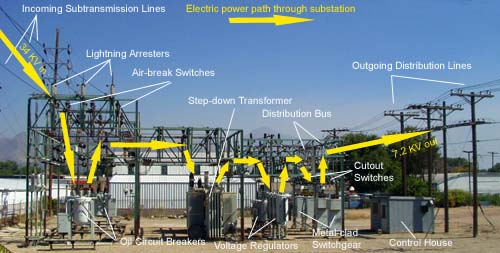
Bubba If the swap station were also located next to a substation, it could work.
 �
�
Jun 20, 2013
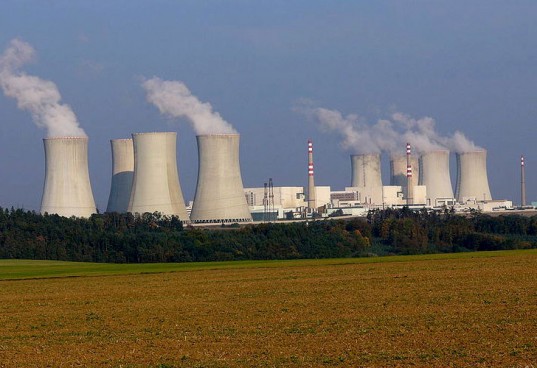
jdevo2004 With that logic you could charge a Tesla beside one of these in 50 milliseconds.
 �
�
Jun 20, 2013
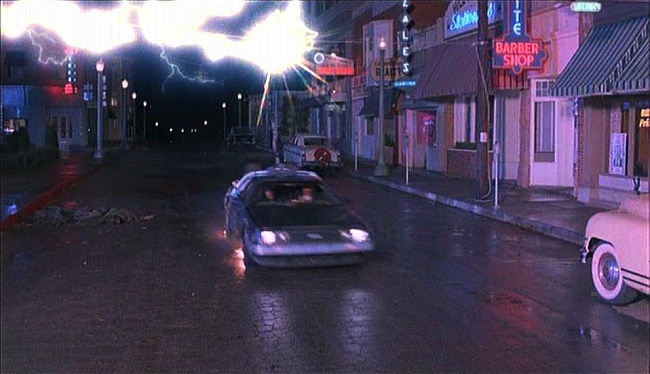
Bubba Can't Tesla just do this for recharging while we drive? 1.21 gigawatts !!!
 �
�
Jun 20, 2013
slavi Kilovolts != Megawatts. It does mean it can travel at least a few inches through the air to electrocute you however.�
Jun 20, 2013
Norbert Ah! A new method of wireless charging!�
Jun 20, 2013
jdevo2004 I did some quick calculations and it turns out that you could charge a Tesla in about .000001 seconds (1 microsecond) with a lightning bolt. Why does't Musk just do that??? What a goofball trying to swap batteries when some lightning is all you need.�
Jun 20, 2013
allanb4me yeah.. I think instant charging will be soon upon us...
We will never have to deal with batt replacement...�
Jun 20, 2013
fastcars maybe next generation of wireless charging from tesla (next major announcement which year don't know). It is interesting because it will take away charging adapter and all the EV can take use of it (maybe wrong but cool idea)
http://www.google.com/imgres?imgurl=http://assets.inhabitat.com/wp-content/blogs.dir/1/files/2010/11/HaloIPT_Millbrook1.jpg&imgrefurl=http://inhabitat.com/stanford-develops-wireless-electric-car-charging-system-for-highways/&h=2053&w=2564&sz=696&tbnid=KkVBJfpS07VDhM:&tbnh=90&tbnw=112&zoom=1&usg=__788oa3FNefCdU3vs0iYlyQrNFQk=&docid=wxatfHev6pzyWM&sa=X&ei=yIPDUa6FF8bKiwLbq4CgDQ&ved=0CFcQ9QEwBg&dur=3367�
Jun 20, 2013
deonb Retrofitting the interstate system with coils every few feet sounds like it would be more expensive than building a nationwide Hyperloop.�
Jun 20, 2013
Bubba This technology was available back in 1955.
�
Jun 20, 2013
NigelM Mod Note: we have so many threads speculating on this subject, we would like to keep the post-announcement discussion in one place. For all discussion/comment on the actual announcement please go to the following link...
Charging Standards and Infrastructure/-Tesla-battery-swap-Post-announcement-discussion
Thanks!�

Không có nhận xét nào:
Đăng nhận xét