Dec 17, 2015
Cosmacelf Sharp eyed observers might have noticed that the Tesla on-line store no longer sells the NEMA 10-30 dryer adapter (after dropping the 14-30 adapter in January 2015). I emailed Tesla about this and their response was that they will continue to sell the 10-30 via service centers, but not on-line. They also said they've stopped production of both the 10-30 and 14-30 adapters due to lack of interest.
I find this mildly insane. All the on-line surveys I've conducted over the years (latest being in September 2015) shows that the dryer adapters are used by 1/4 of respondents. That's a lot of interest.
Luckily, there are work arounds (you can make your own or buy adapters at EVSEadapters, or CordDepot), but the work arounds bypass a current limiting feature, and with now thousands of people having to rely on such adapters, human mistakes are going to be made, perhaps resulting in a dangerous situation.
If anyone has contacts within Tesla, could you ask them what the heck they are thinking? The generic help email address folks don't know anything and don't care to escalate the issue. You might also ask them why in the world they brought out a NEMA 6-15 adapter, something no one was asking for and no one uses, again according to my surveys.�
Dec 17, 2015
KJD Not having a 14-30 Tesla adapter is just total BS. The 6-50 outlets are also all over the place.
If Tesla really cared about safety they would be making more adapters and adding new configurations. The NEMA 14-50 is not the only thing out there by a long shot.�
Dec 17, 2015
green1 This news does not surprise me at all. I expect the remaining adapters to vanish from the online store over time as well (I would bet they've already stopped producing all of them) It became apparent a while back when they discontinued some other adapters that Tesla truly believes that people only charge at home, at Tesla destination chargers, and at superchargers. They don't believe anyone needs any other method any more. Of course if there were a few more superchargers that might be the actual case, but until then home made adapters is the only way to go.�
Dec 17, 2015
stopcrazypp I don't remember the exact ones, but I've been under the impression a long while back that they have been cutting adapters from their line. Not a new occurrence.�
Dec 17, 2015
Theshadows I'm not positive but I think if you forgot to adjust the current on a home made adapter the car would automatically do it for you.
It would attempt to pull full current through the 30amp wire and detect a voltage drop that is excessive, it should then derate to 30 amps and still notice that voltage drop is still pretty high, then again lower the current until it sees a voltage drop within parameters.
Once I hack my L6-30 adapter plug to get it to work I will test it and let you know.�
Dec 17, 2015
Cosmacelf Yeah, well, as I said, insane. Or delusional. I'd much rather plug in at my destination than have to make a detour and wait at a supercharger.�
Dec 17, 2015
green1 Tesla's answer: only stop at destinations with Tesla HPWC! (I know, ridiculous)�
Dec 17, 2015
deonb Which would cause the circuit breaker to trip... That can lead to an akward time if you're not the owner of the breaker box.�
Dec 18, 2015
GSP This is mildly insane. Customers should have at least one 30 A charging option with the safety of the proper pilot signal from the UMC to insure the current is always limited to 24 A, regardless of other factors.
GSP�
Dec 18, 2015
fwgmills I guess I can understand them ditching the NEMA 10 adapters if they wanted to push safety concerns. 6-outlets have grounds. 10-outlets don't. 14-outlets have both. So keep making 6 and 14 adapters Tesla.
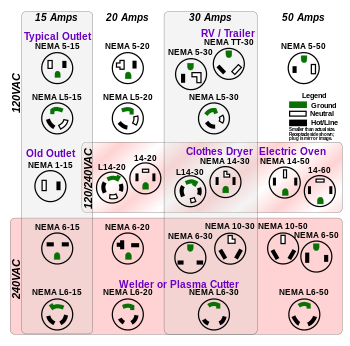 �
�
Dec 18, 2015
mmccord I think this is a sign of Tesla going mainstream. Mainstream users aren't going to bother with huge extension cords and dryer adapters etc. They will supercharge and destination charge, but futzing around with other stuff is for early adopters. I carry two adapters in my car, chademo and a 6-50 to 14-50. I've never used the second one.�
Dec 18, 2015
mknox No the car won't reduce the current rate (unless it sees a significant voltage drop) and this could present a dangerous situation. You should pull no more than 24 amps continuous on a 30 amp breaker yet the car will be trying to pull 40. If all the stars align and the circuit breaker does it's job and trips, that will be that. But if the circuit breaker is defective (happens all the time) you will overload the wire and the receptacle and this will lead to overheating and fire.�
Dec 18, 2015
Max*
This nailed it on the head.
With the prevalence of SpC's, I can understand why they no longer stock them. Most people will SpC and then trickle charge at the destination if they must. So glad I got my 10-30 last week. So so so glad.
First trip to the inlaws, I drove about 30mins each way to the SpC next to my MIL's house to SpC. Second trip to the inlaws, there was a new SpC opened, so I drove 15minutes to SpC. Third trip to the inlaws, I'll have my 10-30 so I can charge in their garage from the dryer outlet.
I'm sure as the SpC network keeps building out, if I didn't get the 10-30 I could drive the 15mins to the SpC and charge up, or they'd open one even closer, and make that a 5-10minute drive, but the 10-30 is more convenient.
I can completely understand why the mainstream buyer would just want to drive the 5-10minutes to the SpC and not hassle with a 10-30 and a specialty extension cord. I don't think the mainstream buyer even knows what a 10-30 is!�
Dec 18, 2015
scaesare I bought the 10-30 and 14-30[1] so I'd be prepared. I consider it pretty cheap insurance when compared with the cost/hassle of being stranded or needing a tow.
I've never used them, but then again I've never used the fire extinguisher in my house either, but having them when I need them is well worse the price to pay for them.
I'm sure they are relatively low volume as compared to sales... and their necessity will become lesser all the time as charging networks grow, but this is one of those things I think Tesla should do out of principle, until we are at the point EV charging is ubiquitous. Especially in areas where a Supercharger may be far off the beaten path... and there are many of those.
I feel similarly about the chargers on the X: reducing power capacity options for the chargers is not a step forward, even if if 95% of folks won't be impacted. The goal is to allow EV's to be a viable option 100% of the time... and we aren't there yet. In the mean time, small things like this help plug those holes.
If we get a good email address to direct our concerns to, I'd be happy to chime in.
[1] Along with all the others[2]
[2] Well, at the time.. I think I still need to grab the new 6-20 now that i think about it[3]
[3] Hopfully there is room in my case:
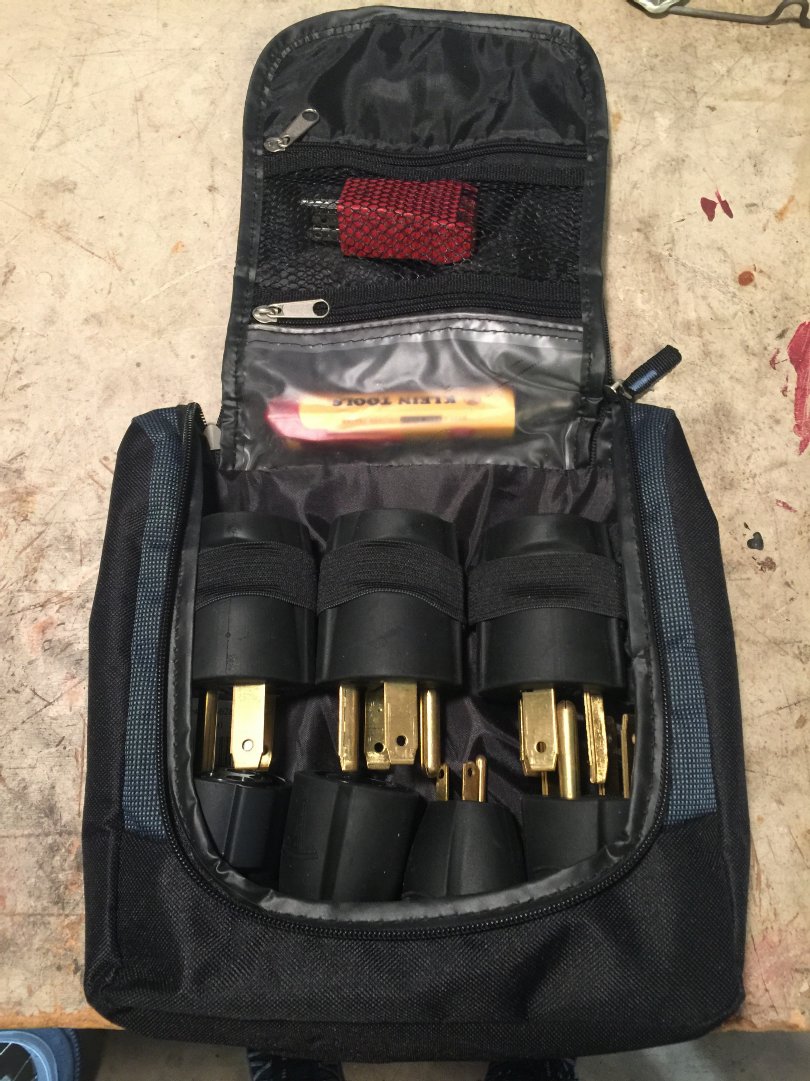
�
Dec 18, 2015
green1 Except that in many places where tesla is selling their cars superchargers are not at all prevalent. I'd much rather drive 5-10 mins to a supercharger then bother with all the adapters, but that's rarely an option unless I'm going one very specific direction. Anywhere else I need all the charging help I can get, and I know of tesla owners who think I have it good here because I actually have a supercharger within my driving range, some still do not.�
Dec 18, 2015
brkaus Wonder if they will shift to a simpler UMC design. No adapters and a 14-50 plug. That would leave out the 120v folks though, so not likely now that I think about it.�
Dec 18, 2015
mikeash I hope this is temporary, maybe clearing out inventory leading up to a new revision of the UMC or something. Otherwise I think it's a bad move. Even if most drivers wouldn't bother with it, it's good to support those who do.
Tesla seems to agree with this. Earlier this year, Tesla posted this article:
Charging North | Tesla Motors
There's an entire section titled, "If there is electricity you can charge." This is repeated on their support page for charging:
Charging | Tesla Motors
"Model S can charge at any Supercharger, Tesla wall connector, public charging station, or anywhere there�s an electrical outlet." (Emphasis mine, naturally.)
I can't imagine these adapters are difficult to produce. I really can't see why Tesla wouldn't make adapters for every single 120-240V NEMA outlet out there (minus the ones with no ground or neutral) and make it so you can truly charge anywhere there's an electrical outlet, without screwing around with homemade adapters. Stock the common ones at service centers, make the weird ones online-only.�
Dec 18, 2015
FlasherZ No. There are two checks - one drops the current by 25%, the next will stop charging and create an error telling you not to use an extension cord. Neither of them is safe to rely upon for an undersized circuit.�
Dec 18, 2015
TexasEV I relate this decision to drop the 14-30 and 10-30 adpaters to the Model X charger fiasco (not having 72A charger, then offering the option only to those who know the password) and even the redesign of the IC to move the battery meter off to the corner. They want to attract mainstream buyers by making the car appear simple. Having various charging options makes the car appear complicated, which is not the message they want to deliver. Unfortunately most of us drive the car in the real world and sometimes need charging options other than supercharger, HPWC, or 14-50 outlet. Not as often as we used to, but it still happens. Once again, the Tesla people really need to get out of California more.�
Dec 18, 2015
PeterK I agree. A lot of new buyers might do the 5-15 min trip to a Supercharger with the mindset of driving to a gas station to fill up. But filling up while you sleep or do other things, even when you're visiting a friend or relative's house, is so much better. I think I'll pick up a dryer plug adapter asap.�
Dec 18, 2015
PeterK Which is more common, 14-30 or 10-30?�
Dec 18, 2015
Bangor Bob Depends on the housing mix in the area. 10-30 in older construction, 14-30 in newer.�
Dec 18, 2015
mmccord I just install 14-50s in all my family's garages. �
�
Dec 18, 2015
Max* I agree, we're not there yet. But we're heading in that direction, and Tesla just thinks they're 10 steps ahead of us
- - - Updated - - -
Not everyone has that luxury.
I thought about doing that at the in-laws, but they have a 100A feed with an electric dryer, electric range, AC and most of their 120V breakers doubled up to make room in the panel...�
Dec 18, 2015
AmpedRealtor I hope this isn't the case because I would hardly ever utilize a Tesla destination charger. Tesla's destination chargers are often located at resorts and hotels that are far too expensive. Also, not everyone's destination is a hotel or resort. I stay with family when I arrive at my long-distance destinations, and they have a 110v outside and an unused dryer plug off the garage. I end up using the dryer plug.
This is the adapter that I use with an extension cord purchased from Amazon: NEMA 14-50R to 14-30P or 14-50P Adapter�
Dec 18, 2015
markb1 Is the Model X shipping with a UMC? I wouldn't be too surprised if this was the next thing to go.�
Dec 18, 2015
AWDtsla IMHO: The long term plan is use superchargers whenever it's necessary to charge away from home. With packs approaching 500 rated miles, this becomes the 99+% of even long trips. Destination chargers exist for convenience, you save time at the supercharger if you happen to find one.
This is several years out though, both in pack capacity and supercharger density.�
Dec 18, 2015
vdiv Of all of the adapters I have used the NEMA 10-30 while at a friend's house. I've also used (unsuccessfully) the NEMA 5-20 adapter at ChargePoint stations that allegedly provide 1.8 kW on the L1 outlet and then cough up with over-current error.
/rant on
The whole push away from AC charging (no adapters, crappy mobile charge cords, and limited on-board charging capabilities on the various plugins) is bad news in my book. It is a sign of monopolizing and monetizing on DC charging (eVgo, looking at you!). 3-phase 64A charging is as fast as any of the existing DCFC stations, the station equipment is at a fraction of the cost, and here in the US we are being cheated out of it with the type 1 receptacles. It's a shame.
/rant off�
Dec 18, 2015
FlasherZ The Model X ships with the same package as the Model S, to include 14-50 and 5-15 adapters and a J1772 adapter.�
Dec 18, 2015
PeterK I think about it a little differently. Yes they will continue to build out Superchargers, but a natural destination charging buildout will also take place as those like @mmccord install plugs (I've triggered and/or paid for at least five 14-50 locations so far) and people like @Max*'s in-laws buy their own EVs and upgrade their electric service accordingly. And condos, workplaces, retailers continue to expand their charging facilities. But a 30A adapter is nice to have in the meantime.�
Dec 18, 2015
Theshadows I agree. I don't think the csr will get there though, this is why I want to test it. I have been at RV parks on a 14-50 and I saw the car derate before it got to 40a.
I'm going to do a controlled test out in my driveway trying to pull 40 amps through 15' of #10 in 3/4" emt with a bonding bushing protected with a 50a breaker (with someone standing next to it to throw it if the car doesn't protect.).
If the car does what I think it will do, then I will repeat the test with #8 and record the results.
If the car burns up the wires then we will know to never forget to lower the current to 24a.
I'll take pics and videos when I do it. Won't be until at least January though.�
Dec 18, 2015
DMC-Orangeville The few times I have used my UMC.....are at my cottage. No supercharger will ever be near enough to a lot of rural areas. I charge with a NEMA 14-30 adapter and the dryer plug, which is just reachable from the driveway. This is my destination charger. I got the *last* 14-30 available for the Mississauga SC in May 2015. I've never used the other adapters.�
Dec 18, 2015
Mark Z All the previous Tesla adapters should be designed and manufactured with the latest safety features of the NEMA 14-50 adapter. We would buy new versions for safety and our charge cable would look elegant during use, rather than an ugly mess of 3rd party plugs, cords and sockets.
If the Model X seats were designed to look like art, shouldn't our portable charge cord feature a superior design quality during its use? Why eliminate artistic perfection when charging an EV?
We are not the only purchasers of the Tesla adapters. Some EV owners are using a modified Tesla Mobile Connector.
JESLA™ is THE 40 amp J1772 portable charging solution!
�
Dec 18, 2015
jerry33 While I've never plugged into a dryer outlet, I can sure see how it would be helpful to many. This is one that Tesla should continue to provide.�
Dec 18, 2015
miimura Oh crap. I'd better go get one of these adapters for my Jesla while I still can. My RAV4 EV can't adjust the current - it's totally dependent on the pilot signal being correct.�
Dec 18, 2015
Khatsalano I wanted to load up on all these adapters when I first got the Tesla.
After 28,000 miles in the last 10 months, there is no point. I only charge at home (HPWC), Superchargers, and rarely, at destination HPWCs or J-plugs such as at hotels. That's it. I've never come close to even feeling the need for a dryer plug. Yes, I live in the SF Bay Area, but I've driven the whole West Coast.
The destination chargers at up-scale resorts are awesome and I do go to those places. I also go to Best Westerns at times for work and they have HPWCs too.
But hey, if you insist on having dryer adapters, buy here: For Tesla Model S
- K�
Dec 18, 2015
StaceyS I managed to get a 10-30 adapter from Tesla this past summer. When we got our car, the 10-30 was what we had our dryer on, otherwise all we had was 5-15 (120v-15a). I was planning to use it as a winter backup charging option if we didn't get a 14-50 installed.
We drove out to remote Utah to a family member's place in October. Despite my sister-in-law having a brand new house and a complete machine shop capable of building construction grade water tank trucks, I discovered no place to plug in except a lowly 5-15 plug. The house had a 14-30 plug, and the shop had 6-50 plugs, and we didn't have the right adapter. I couldn't even find a 5-20.
Over Thanksgiving, I managed to find a 14-30 Tesla adapter in the Bay Area, and while they said they had a 6-50, it turns out they didn't. I bought a 6-50 to 14-50 adapter from EVSEAdatpers.
I've got the 5-15, 14-50 and J plug that came with the car. I also bought the 5-20 (which I've used a lot), 10-30 (haven't used once), and the 14-30 (just bought it). I also bought the ChaDeMo adapter which I've used numerous times, and the 6-50 adapter from EVSEadatpers which I'll probably use over Christmas, since we're headed back out to Utah again.
We drive a lot in rural areas, so for me, its a comfort to have more adapters than fewer. We were fortunate that we were visiting family in Utah and didn't need our car. I've thought of buying the 6-15 (240v, 15a) adapter available now, but I've only seen one outlet in the wild so far (the air conditioner/heater in a motel room). Because we're in areas that are so remote, its better to carry them and not need them than need one you don't have.
I've seen a lot of twist lock outlets too (mostly 208v of various amperages), but just haven't felt motivated to worry about that yet. There's just too many damn plugs...�
Dec 19, 2015
Nosken Great looking holder for your adapters. Where did you source it?
�
Dec 19, 2015
andrewket Funny, I was wondering the same thing. I've got mine in my UMC bag but it's a bit tight.�
Dec 19, 2015
ZBB I bought the 14-30 and 5-20 adapters before our summer 2014 road trip from AZ to BC... Part of that trip was out of Supercharger range, so we wanted to have options.
Here's a summary of destination charging options I've used over nearly 32 months of ownership and 45k miles:
- J1772: used opportunistically when on trips but only while eating/shopping, plus Disneyland's garage and one hotel in Oregon
- HPWC: used at 2 hotels. Also used one at a Service Center near Palm Springs before the Supercharger gap filled in.
- 14-50: used at the Grand Canyon (trailer village), and at a hotel in Tucson
- 5-15: used at my in-laws in BC. We were there for a week and split charging between the only j1772 in town and trickle charging at their house the first and last days we were there, which gave us plenty of range while visiting and to get back to the Supercharger network.
- 5-20: used once at a hotel near Olympia WA to add about 25 miles overnight for extra buffer
I've never used the 14-30, and there are now HPWC options in both places where I used the 14-50.
I may may get the CHAdeMO adapter for another road trip next summer, but only if needed for the route we are planning...�
Dec 19, 2015
Cosmacelf Just to reiterate, when I last ran my survey in September, I found that fully 1/4 of all people had used either a 10-30 or 14-30 dryer plug to charge their car in the last 12 months. They may have only used it once, but they did use it.�
Dec 19, 2015
TexasEV More California centric thinking. The whole west coast, wow. Oregon and Washington too? This just proves my point. There is a lot more country than the west coast and most of it doesn't have near the EV infrastructure that you do. The rest of us need all the charging opportunities that we can get. Tesla engineers and marketing really need to get out more and stop believing their hype about supercharging being the answer to all long distance travel, at least until there are double or triple the number of supercharger locations outside of California than we have now.
- - - Updated - - -
Of course the survey only included people on the forums, which is not the typical mainstream Tesla owner. Early adopters and EV enthusiasts would be more likely to be adventurous about charging than the typical buyer now. Even so, if the percentage dropped to 5 or 10% of all users that would still show significant need.�
Dec 19, 2015
Mark Z All of this discussion makes me wonder what company will create a universal wired adapter. Separate red, black, white and green wires with protective insulated covers to insert into each of the socket holes individually.
It's a scary thought, and no company interested in safety would manufacture such a kit. But, in an emergency situation, it could be very handy.
if the verbal description can't be pictured in your mind, here is a link to a photo to different blade widths: Tesla Motors Club - Enthusiasts & Owners Forum
Now, imagine if each of the correctly sized blades had an excellently designed insulated miniature handle with finger stop. A graphic chart to carefully indicate the correct wiring would allow the user to insert the correct sized blade into any socket. A multimeter or other test equipment should be included to test the voltage levels. Molded plug guides could make the process safer by inserting the blades into a locking device to position all blades before inserting into the socket at the same time.
Dangerous? You bet! Recommended? Absolutely NOT. Don't even think of attempting this.
My suggestion is for Tesla Motors to keep manufacturing and selling one piece adapters for every socket type so no one attempts to break the rules and engineer such a flexible solution.�
Dec 19, 2015
Khatsalano Everything is bigger in Texas. Except your charging network.�
Dec 19, 2015
StaceyS I agree with this sentiment, but disagree as well. The Bay Area has tons of EV charging options, and all along the interstates there's easy charging for EVs. But get off the interstates and you're charging on adapters. This is true on Hwy 101 north of the Bay Area all the way to the Oregon border. From Oregon up to Washington, there's nothing but a sparse sprinkling of ChaDeMo and J plugs here and there (which is nice), but head east over the Cascades and Sierras and you're looking for 50amp RV sites or running extension cords from your motel room.
Statistically, Eastern Oregon, Southern Idaho, and Northern Nevada have the least amount of *roads* per sq mile than anywhere else in the continental US! Forget EV infrastructure, I'm just talking INFRASTRUCTURE! To get from Bend to the Winnemucca Supercharger on I-80, its 352 miles and there are only 2 main ways to do it (and each way has 1 other side road option). To get to the Boise, ID supercharger on I-84, there's 2 ways to do it, and no other options. We've done these by spending the night at hot springs resorts with 50 amp RV plugs, or there's a free 240v 80 amp charger (an old Tesla branded Clipper Creek charger) in Burns on the way to Boise. Pretty much anywhere else we've driven, we've always been able to find a plug of some sort to charge from.
Once you hit the Interstates though, its a bomb run, no problem.
Really, charging the Tesla is actually pretty easy. We've never had issues finding enough charge somewhere, sometimes you just need to get creative (including running an extension cord through your motel room door just to keep the car warm overnight so you don't lose any range!�
Dec 19, 2015
Petra Glad I got my 10-30 adapter last month, then... disappointed that I don't have a 14-30, as I could see some situations where that would be a useful thing to have. 240V dryer outlets are common and are how I charge when I visit relatives. I'm not going to drive out to a Supercharger when there are already 240V outlets at my destinations--it's a waste of time and power. One of the great things about EVs is versatility in charging and taking that away or limiting it is just plain stupid (making end users put together their own adapters which lack the built-in safety features of Tesla's adapters is also stupid).
Additionally, there are a lot of homes in the SF Bay Area (and elsewhere) that were built in the 60's & 70's, already have 240V dryer outlets, but only have 100A panels, 100A service, and are pretty much maxed out. If they can't utilize their 30A dryer circuits, then they're left with a very expensive panel and service upgrade to contend with in order to charge their EVs.
At home, I charge with a home built EVSE using parts from the OpenEVSE project plugged into an L6-30 outlet in my garage. I keep one Tesla J-Plug adapter in the garage for home charging and one Tesla J-Plug adapter in the car just in case we ever need it while we're out and about.�
Dec 19, 2015
StaceyS I've had this same thought, particularly when I showed up at my conservative father-in-law's place in rural Utah and was presented with a 14-30 outlet and a 6-50 outlet with no way to plug into them.
One wish I've had was wishing the UMC wasn't so sensitive to bad grounds or switch poles. We've stayed at some older motels where every plug we tried came up with a bad grounding error on the UMC and we were unable to charge at all. Its really frustrating to have all this electricity around you in your room, but the car is too finicky to drink from it...�
Dec 19, 2015
green1 Thanks for the reminder! I've been meaning to add a plug tester to my kit, and possibly a polarity switcher for plugs wired wrong, and an adapter with ground lug and some wire to add a missing ground.
That said, I agree that it's stupid of Tesla to discontinue any adapters, the charging network just isn't there yet outside of California.�
Dec 19, 2015
Mark Z Time to visit a nearby RV park for a quicker and more reliable charge! My early Model S road trips required RV park stops. Supercharging and destination charging fill the gap today. Encourage those motels to consider a functional EVSE for their guests or to hire an electrician for their grounding problem.
I like green1's suggestion. Could there be any safety issues if running an extra ground wire to a grounded water pipe or other ground would be necessary? Insulated gloves might be smart.�
Dec 19, 2015
scaesare I actually don't have any idea, lol.
I was getting some luggage out of storage for a trip a while back, and one of the suitcases had that tucked in to one of the little carry-on bags that came with it. As soon as I saw the elastic bands I had a light-bulb moment, and went and grabbed my adapters (which I had been keeping in a small nylon velco-close bag), and they all fit in there perfectly.
It's some no-name cheapy luggage brand. I'll see if I can get a name off it and post here.�
Dec 19, 2015
green1 It's not so much an "extra" ground as it is just a ground. the adapters are made to add a ground to old 2-prong outlets, but there's no reason you couldn't use one with a 3 prong outlet that doesn't have a proper working ground. You can find them all over the place, but here's an example: Amazon.com: AXIS 45086 3-Prong to 2-Prong Electrical Adapter - 2 Pack: Electronics the little tab is where a ground wire attaches.
pipe clamps to connect to a water pipe are easy to find, and will work if it's copper all the way back to the service entrance, I've also worked with calmps designed to clip on to the electrical meter box to provide a ground. Otherwise you'd need a ground rod which is much more of a challenge.�
Dec 20, 2015
Mark Z After an new 8 foot ground rod has been hammered into the ground, it couldn't be removed for reuse elsewhere without great effort. If a new ground rod is necessary, IMHO, the owner of that electrical outlet needs to hire an electrician to permanently fix the grounding problem.
The disappearance of the Tesla dryer outlet adapters makes me wonder if Tesla Motors wants new dedicated Wall Connector, EVSE or NEMA 14-50 installs rather than connection to older existing circuits for permanent use at home.�
Dec 20, 2015
ZBB let me share what I use then...
I bought one one of these: Snap-On 870116 21-Inch Trunk Organizer and Tool Carrier - Tool Bags - Amazon.com
its much larger, but has pockets on the back side that perfectly hold my umc adapters. I keep the tool box in the rear seat footwell (I don't have the 3rd row seats...) and keep some other stuff inside it like a tire pump, tire gauge, small toolkit, safety triangle, etc. the box has some velcro on the bottom, so kind of sticks to the carpet to not slide...�
Dec 20, 2015
TexasEV They're not usually used permanently at home, most use of these adapters has been with traveling.�
Dec 20, 2015
jerry33 They are especially handy when staying with friends and family.�
Dec 20, 2015
green1 Hence the "much more of a challenge" part, which was basically my way of saying you couldn't practically do it.
Yes, no matter what issue the vehicle detects that it refuses to charge, the correct answer is for the owner of the outlet to get an electrician to fix it. But if you aren't the owner of the outlet, you don't really have much control over that part, so the remaining question is what other options do you have to get enough electrons moved around to allow you to continue your trip. I'd definitely be willing to try a water pipe ground, a polarity switcher, or a meter box clamp if those would get me to the next charger.�
Dec 20, 2015
Mark Z Absolutely! Those venturing far from civilization would be wise to plan ahead and have the extra supplies handy.
For those not as fortunate to have the technical skills, a visit to a nearby RV park would be an excellent option.�
Dec 20, 2015
FlasherZ Depends on where you connect it. If just to the Tesla's ground prong, you should be fine. Don't connect it to anything else or you may create a path back to the transformer for existing current, which would subject you to a bit of current flow too.�
Dec 22, 2015
thecloud It's already too late to get one now, at least from Tesla.
I stopped by the Sunnyvale service center on my way home tonight, and was told in no uncertain terms:
- the NEMA 14-30 adapter has been "discontinued" and is no longer available for sale
- any stock they have is strictly for warranty replacement
- they would not be able to sell one to me
- no other service center would be able to sell them
Hopefully they will take note of the fact that customers are still requesting these adapters. (I had to explain that this was not for charging at home, but for infrequent charging at a destination where I could not simply install a 14-50 outlet or HPWC.)
The good news is that third-party adapters will fill this void, even if they require manually dialing back the current for that site. More pessimistically, I think the Ontario pilot foreshadows the end of days for the 40A NEMA 14-50 adapter, which could also be "discontinued" in favor of a 32A variety without warning.�
Dec 22, 2015
Max* I'm selling my 10-30 adapter, unused. Let the bidding start at $15,000,000.�
Dec 22, 2015
TexasEV I just don't understand this attitude from the service center. What changed? When the 6-50 adapter was discontinued the service centers that had remaining inventory were happy to sell them. These UMC adapters are safer than the ones from EVSEadapters or corddepot or any homemade solution as they set the correct amps automatically. I sort of understand Tesla's reluctance to promote them as they may appear to make the car "complicated" to a mainstream buyer, but to refuse to sell one to someone who asks for it is just perplexing. And yet they just came out with a 6-15 adapter that hardly anyone would have a use for. I don't get it.�
Dec 22, 2015
dhrivnak Or I will be happy to make a 14-50 to 10-30 adapter for anyone willing to pay $10,000. Seriously one can pick up the parts at any hardware/Lowes/Home Depot and build one for under $25. Not difficult BUT you then MUST dial down the current in the car.�
Dec 22, 2015
TexasEV Which is why the Tesla UMC adapters are safer. Which is why Tesla should have them available even if they don't want to actively promote them to the masses who are being taught to use only supercharger, HPWC, or 14-50.�
Dec 30, 2015
miimura I went to the Palo Alto store and was told the same thing. 30A adapters are discontinued and are no longer available for purchase. I also checked with Quick Charge Power's web site and they have been removed from there too. It looks like the only way to keep my cars (RAV4 EV and e-Golf) from overloading a 30A circuit is to get a 20A adapter and accept 16A charging. Well, either that or sell the Jesla and get a proper adjustable EVSE for traveling. If anyone has a 30A UMC adapter (14-30 or 10-30) that they are willing to part with, please PM me.�
Dec 30, 2015
Aqua Wow, that's disappointing. I had assumed the absence of 10-30s in the online store was just a temporary thing, so I was going to ask about one in-person once I take delivery. I see 10-30 outlets far more frequently than any other 240v outlet.
I'm also happy to buy a 10-30 and/or 14-30 adapter off of anyone who has one to spare. I'll pay 1.5x retail; shoot me a PM.�
Jan 5, 2016
Mark Z I have recent 7.0 (2.9.77) software in Model S. Maybe that's the reason my charge dropped to 30 amps after charging for awhile? It has stayed at 40 amps in the past.
This occurred at a remote location, so I cannot test this again for awhile. Just wanted to post the info so others can compare their use of the NEMA 14-50 adapter.�
Jan 5, 2016
TexasEV When charging drops to 30A it's because the car senses a voltage drop. It's a safety feature when there may be bad wiring to the 14-50 outlet. It has nothing to do with the software version, other than this "feature" started with a version long before 7.0 that I don't remember but a search here could find it if you're interested.�
Jan 5, 2016
GasKilla [email�protected]�
Jan 6, 2016
Cyclone I picked one up at the Charlotte, NC Service Center this morning. They had 7 in stock (well, 6 now�
Jan 6, 2016
Aqua Thanks for the heads-up! I just called the Sunnyvale SC and they had them in stock as well. Heading over to pick one up now.
1.5x retail offer still stands on the 14-30 in case anyone has an unused one lying around.�
Jan 6, 2016
Cyclone I picked up a 14-30 at Dania Beach, Florida back in October.�
Jan 6, 2016
Aqua Success on the 10-30! This thing is massive compared to the others. Getting closer to a full set...
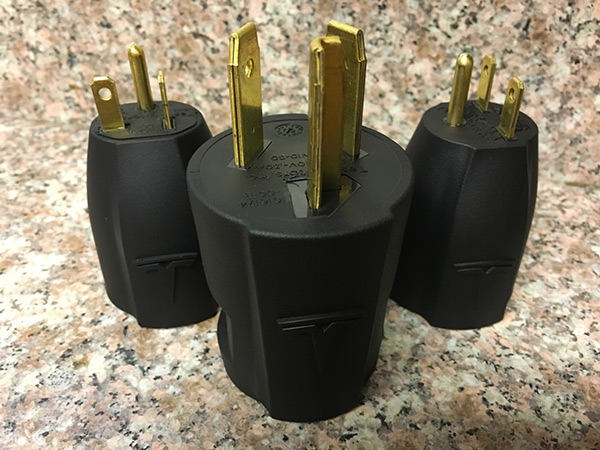 �
�
Jan 6, 2016
thecloud WTF?! When I showed up there in person, the service manager was clear that "discontinued" meant "we can't sell you one." And now they're saying they have them in stock??
I'm actually looking for a 14-30 as well, although it's probably the easiest adapter to make (according to cosmacelf's document). Maybe I'll go ask to be put on a waiting list at the SC in case they have a fresh shipment, or another change of policy.�
Jan 6, 2016
GasKilla A little over a week ago I picked up a 14-30 from the Van Nuys service center, they had just done inventory so they knew exactly what they had in stock. Not sure if service centers will ship to your location but it's worth giving them a call.
While I was there I saw several Model Xs being prepped for delivery, although at that time they said they had yet to deliver one.�
Jan 6, 2016
Aqua Huh, very weird. Try asking for Evan in the parts department. He was super awesome about it and had one from stock waiting for me when I arrived.�
Jan 7, 2016
brucet999 I installed my NEMA 10-30 outlet (extension from an existing 10-30 dryer outlet in my garage) using metal conduit which provides a ground path. What is the point of a ground lug on the UMC plug anyway? There is nothing metallic on it that a user can touch.�
Jan 7, 2016
green1 I'm pretty sure the car is metallic, and I'm pretty sure the user can (and frequently does) touch it.�
Jan 7, 2016
FlasherZ The equipment grounding conductor (EGC, a/k/a "ground") connects through to the car. Imagine what might happen if, due to vibration, one of the "hot" wires from the UMC to the charging inlet to the charger got rubbed enough inside the car that it was shorted to the car's body. By touching the car and standing on the ground, you become a convenient path for current to flow back to the transformer. The EGC is absolutely critical, especially in a high-current circuit, to provide a good path to ground that would trip the circuit breaker in case of a fault.
The UMC provides ground fault protection so that if current does flow this way (30 mA max), it will shut off with a ground fault indication, much like the GFCI receptacles in your bathroom.�
Jan 7, 2016
brucet999 Sounds like an improbable circumstance to put it mildly. If that were to happen and the internal GFCI in the UMC tripped, how could it be reset?�
Jan 7, 2016
FlasherZ Unplug and plug it back in. GFCI's don't all have test/reset buttons.
Such ground faults are not as improbable as you think. There are a lot of ways this can happen. Good news is that the EVSE provides logic to ensure the pilot signal is there, so you get a bit more protection in the car. But imagine you're in a fender bender that shifts the charge port and shears the cable going to the charger, which lands on a metallic part of the car. You go plug in, the pilot signal from the EVSE is good, and the car tells the EVSE to energize. The car now sits at 120V relative to ground.
Ever touch a refrigerator or oven and a stainless steel sink at the same time and end up with a shock from it? Ground fault.�
Jan 7, 2016
Joetnr1 Hey guys, I'm taking a road trip out to a friends house in a few weeks. He has a 240v dryer outlet that I can use but I need to make sure I have the right adapter and correct information. Two questions:
1) Is this the right adapter? Amazon.com: Camco 55185 PowerGrip 30M/50F AMP 18 Dogbone Electrical Adapter with Handles 3750W/125V: Automotive
2) I've read to dial the car in for a 24a charge?
This all look legit?? Thanks in advance.�
Jan 7, 2016
FlasherZ No, that adapter will not work. That's for a TT-30 120V RV plug, and won't work with a Tesla anyway. There are two types of dryer plugs, one with two angled prongs and an "L-shaped" neutral, that's called a 10-30, and was installed in homes typically built prior to 1996. Then there's the 14-30, installed after 1996. It consists of three vertical prongs with an "L-shaped" ground. If you're going to use this for short-term purposes, you can purchase an adapter for the appropriate kind of receptacle from EVSEAdapters.com. Read my FAQ (see my signature below for the link) for more information.�
Jan 7, 2016
KJD That is a TT-30P and that plug is used in RV parks. Not the same as a Dryer outlet.
You might have better luck with this one.
NEMA 14-50R to 10-30P Adapter�
Jan 7, 2016
Cottonwood If you don't know the type of dryer outlet, you probably want to get a 14-50R to 14-30p adapter as well. 14-30 outlets are used in newer or newly remodeled homes as dryer outlets.�
Jan 7, 2016
Joetnr1 Thanks for the info!�
Jan 7, 2016
green1 And by newer, it could be 20 years old... The "new" version has been in service for quite a while now.�
Feb 2, 2016
snort Yet they've replaced the NEMA 10-30 adapter with a NEMA 6-15. Which is grounded, and that's good, but causes the car to implement a 12A charge limit, which in my experience seems to be good for about 8 or 9 mph--in a 12 hour charge session, that's good for about 100 miles. Better than nothing but far from the 24A of the 10-30 or 14-30...or the adapter that matches what the car expects to see, the 6-30.
I may be anomalous, but about half my charging is done through one of two 10-30s. I use 10-30 a lot more often than I use 5-15 and I only use the 14-50 on fairly rare occasions. (the ways I've charged, from most frequent to least, in the 16,000 miles I've driven: 10-30, 80 amp HPWC, supercharger, J1772, 5-15, 14-50, 6-50)
I see the risk of not having a ground, but if that's the case, they should bring back the 14-30 so those of us who have 24 amps can use it. I've realized that abiding by the current limits implied by the NEMA plugs is a safer and more convenient way to go than explicitly dialing down the amps in the car. (e.g., my dad's 10-30r is on a 54 year old Zinsco panel. It seems to be working perfectly but you never know)
(my adapter collection consists of three groups:
a 6-50->14-50, a 10-50->14-50 and a 14-50 extension cord which is gigantic and never carry, and the tesla 14-50 adapter.
a 6-30->L6-30, a 10-30->L6-30, a TT-30 to L6->30, an L6-30 extension cord (very useful, less than half the size of the 14-50), and an L6-30->10-30, which is never far from the tesla 10-30 adapter.
I also have a 14-50->L6-30 from which I've removed the neutral pin. this lets me dial down the amps at the plug (one of the 6-50s I used was on a 30 amp breaker) or plug into a 14-30
a 6-15->5-15, a 6-20->5-20 and a 50 foot 5-20->5-15 extension cord built to 240V standards (the twice I've needed this it was great!). the 5-20 and 5-15 tesla adapters.
I also have an L6-30->5-20 adapter for dialing down, although I've never needed it.
if you study what I've done, you'll see that there's no way to go from a smaller plug to a bigger draw, only from a bigger plug to a matching or smaller. all my missmatched adapters are carefully labeled (comments like "EV charge only" and "no neutral"). I'm trying to figure out how to label the whole thing to indicate that it's part of a set. I think the use of the 14-50 as the "generic" adapter is a really dangerous idea, not to mention that it forces people to carry the absurdly large 14-50 extension cord if they think they're going to need anything bigger than 5-20. they're trying to discourage extension cords. I get why, but this isn't the world we live in and I doubt it'll ever be)
-- Snortybartfast�
Feb 2, 2016
GasKilla I have an extra Tesla 10-30 adapter if anyone is interested in buying it from me, send me a PM�
Feb 2, 2016
DCGOO You can also simply buy a 14-50R receptacle, and install it on the end of a molded 10-30P dryer power cord. Just be sure to dial back the max current to no more than ~24.�
Feb 2, 2016
GasKilla And don't forget to dial down the max amp draw. Or purchase one of the last available Tesla 10-30 adapters from me�
Feb 2, 2016
DCGOO
Good point. Thank you. I added that to my original post.�
Feb 2, 2016
brucet999 Of course, you meant dial back max current to 24A, the maximum safe constant load on a 30A circuit, not 32A. 80% of 30A = 24A .�
Feb 2, 2016
supratachophobia I'm willing to look for these adapters if you want to PM me. I've had moderate success tracking them down.�
Feb 2, 2016
DCGOO
...Duh... Fixed it.�
Feb 3, 2016
snort Has anybody had a UMC or one of the charge adapters sufficiently apart to figure out how to set the current? the J1772 "contact pilot" signal that tells the car how much to draw is to change the duty cycle of the 1000 Hz square wave. if there's a circuit like a 555 in the UMC's EVSE to implement this, this would simply be a different resistor for each current limit.
my thought is to kludge up alternate current limiting adapters by replacing the resistor.
--Snortybartfast�
May 9, 2016
robert-grandpa anybody use a nema 10-40? thanks.�
May 9, 2016
TexasEV According to this chart
NEMA Straight Blade Reference Chart
there is no such thing as a 10-40 outlet.�
May 9, 2016
supratachophobia Oh but there is...... If the tt-30 to 14-30 adapter I just made translates right, you could do a 50 amp breaker with a properly rated outlet of your choosing and wire it to a 14-50 socket for 40amp charging at 110v.�
May 10, 2016
Rocky_H First off, I concur with @TexasEV. There is no 10-40 outlet type listed, so I do not think that is a thing.
Now, I don't even know what to say to all this, you are talking about. TT-30 and 14-30 stuff generally won't fit to plug into a 10-anything. Also, 10 series outlets are 120V/240V, so I'm not sure why you would suggest using 110V, when 240V would be available from a 10 series outlet. Also, if you were referring to adapting to use this mythical 10-40 outlet, you sure as heck should NOT draw 40A from it, as you suggest. That would need to be turned down to 32A or less.�
May 10, 2016
Cyclone I suspect Robert actually meant a 10-50 and got confused. A 14-50 provides 40 amp max of charging and a 10-50 could provide the same. So I can see how someone could mean a 10-50, but mix up and say 10-40 since 40 amp would be all they get from it.
For Tesla applications, a 10-50 and a 14-50 are basically the same as neither actually makes use of a neutral. So an adapter from 14-50 -> 10-50 wired up like a 14-30 -> 10-30 would be fine. That said, we all would recommend Robert provide more information or have a more "failsafe" setup installed to avoid confusion long-term.�
May 10, 2016
supratachophobia Thanks, you explained what I meant. And if you did it that way with an adapter between a 14-50 and a 10-50, you wouldn't have to manually remember to dial down the amps.�
May 10, 2016
Kermit I have a tandem garage -- 2 cars in front, 2 in back. I have a 14-50R on the left side and can usually park there, but due to other drivers in the household, sometimes I have to park on the right. There is an unused 240V/30A receptacle there on the right that I could configure with NEMA 10-30R and use a Tesla 10-30P plug adapter (I got one!) . The only issues I have with this is the ungrounded nature of the 10-30R, and having to ensure that the charge current is locked at 24A. Alternatively, I could just drag the UMC cable across the floor from the left 14-50R and let the other cars drive over it. I suppose they're pretty rugged, but that just seems wrong.
My questions:
- Is the ungrounded NEMA 10-30 okay at 24A with Tesla plug (should be; they sold it to me).
- And is allowing cars to rolling over the UMC cable really dumb?
�
May 10, 2016
supratachophobia 1. NEMA 10-30 is ungrounded by nature/design. I think if I recall correctly, it's because the neutral acts as a ground. So if you have the genuine adapter, you'll be fine and the car will be fine. And the car will automatically dial back the amps to 24 so you don't have to do anything.
2. And yes, letting cars run over your UMC cable is a dumb idea. Don't do that.�
May 10, 2016
Cosmacelf As supratachophobia (um, what phobia is that?) said, using a 10-30 is fine. While it is ungrounded, it has a neutral, which the Tesla adapter uses instead of a ground (this works fine because the neutral and ground are bonded together in your main panel anyways). And because it is a Tesla adapter, it tells the car to draw a maximum of 24A, so no need to fiddle with charge settings.�
May 10, 2016
brucet999 I don't think the UMC uses the neutral as a ground. Rather, its internal circuitry probably uses 120V current, which requires a neutral.�
May 10, 2016
dgpcolorado No, the UMC doesn't need or use the neutral pin on the 14-50 plug; you could cut it off. This makes adapters for 10-30 and 10-50 outlets easy to construct: just hook up ground to ground and skip the neutral connection on the 14-50R. EV adapters of this sort are not suitable for when the neutral is needed, as would be the case with an RV. That's why an EV adapter should be marked as being "For EV use only, no neutral connection", or something like that.�
May 11, 2016
Cosmacelf I never said the UMC uses the neutral as a ground. I said the Tesla 10-30 adapter uses the NEMA 10-30 receptacle's neutral as a ground (and passes it to the UMC as a ground).
As far as your conjecture on the UMC's internal circuitry goes, the UMC only draws power from the two power pins it is given by any Tesla adapter. It does not use the ground pin from the adapters to return current, it uses that only as a safety ground (with the exception that it does a brief test to see if the ground can in fact accept current). To power itself, the UMC no doubt has a power supply that can accept either 240V or 120V from those two power pins.�
May 12, 2016
supratachophobia Relevant, we have a voting pole going to try and gauge interest in the 14-30 adapter in the hopes that Tesla will re-release it.
Hey Tesla, there is a need for that NEMA 14-30 adapter still!�

Không có nhận xét nào:
Đăng nhận xét