Feb 9, 2012
strider I never asked for the government to help me. I'm asking for it to STOP helping itself and the rest of the elites against me. Give everyone a level playing field and see what happens.�
Feb 9, 2012
strider How do you figure? Cap gains can be from stock appreciation (no corp tax paid on that if I buy a stock for $10 and sell if for $20 366 days later), dividends (GE pays a dividend but they pay ZERO corp tax), or carried interest (much of this is written off by the company as management fee and so no corp tax is paid on it).�
Feb 9, 2012
qwk I learned that it's useless arguing with this crowd, as they have no clue when it comes to business accounting. Being a small business owner myself, I know what the tax rates are and they are anything but low. Most tax perks are also being taken away slowly and it's slowly killing small business in this country.�
Feb 9, 2012
qwk Yes, and to add to the fire, many elites like Romney have offshore accounts. Now, if you aren't trying to hide anything and are proud to be an American, why have a Swiss bank account? It doesn't take much sense to put the pieces together.�
Feb 9, 2012
NigelM Math fail. With a 35% deduction followed by a 14% deduction, you would have a net tax rate of 44.1%.�
Feb 9, 2012
NigelM I recognize most American's are allergic to taxes, and it's good like that, but I also just wanted to say that we moved to the U.S. because we can have a great life here and the taxes are so low....
That said, there's little excuse for some of the crazy anomalies that exist in the tax system. I'm nowhere near the 1%/Romney level but I will freely admit that if my taxes went up a point it wouldn't make any difference to our lifestyle or my investment behavior. I am much more concerned about how our government (regardless of political hue) manages to waste so much and be so ineffective, when there's so much that needs to be done.
P.S. Back OT....I've never felt guilty about owning my Roadster (and won't feel guilty about the Model S) and the only thing I discovered was how many friends I have who wanted to go for test drives......�
Feb 9, 2012
woof I'm trying! Really! (Help me out guys, buy some games...and leave some reviews) But there's more to App store success then hacking some code. And if you expect to make a living off it, good luck. The median app grosses $1,100 per year (Results: iOS Game Revenue Survey Streaming Colour Studios). So while it is cheap to get into the app biz, making significant money off it (where significant is enough to live off of--Model S purchases aside), is not so easy.
And to stay on topic, yes I feel a tad guilty. But I'll get over it. �
�
Feb 10, 2012
Lloyd I believe we are better off taxing spending ie VAT. Have a national sales tax. No corporate exemtions. I would be in favor of exempting health care and basic food items to help the poor. Determine the VAT rate by the spending from the previous year to keep the budget balanced. This would be a direct deterrent to the continued spending.�
Feb 10, 2012
Lloyd Strider, the corporation that paid the dividend paid corporate tax first, at a rate of 35% If GE pays zero it is because the government has allowed them other deductions as depreciation on investment in plant and equipment to further job growth. Management fees would be earned income and taxed at the regular rate. I'm not a tax expert, but I don't believe your statement is completely correct.�
Feb 14, 2012
neroden It's absolutely true that the very low tax rates in this country are very specifically designed for rich executives of large corporations, and heirs.
Small business owners get hosed. Well, of course they do -- the policies are written by the people who control *big* businesses, and small businesses constitute competition, so of course big businesses would like to stifle the competition.
Anyway, the capital gains tax rate discounts are obscene. The people who claim that the corporation has paid taxes on this are simply misinformed (or lying), given the nature of capital gains, which can simply be from speculative action (gambling at Vegas, in contrast, is taxed at full rates).
Regarding dividends, there is a real case to be made for allowing companies to deduct dividends from the corporate profits before corporate-level taxes are assessed (this would give companies an incentive to return money to stockholders rather than "reinvesting" it in questionable ventures). There is *no* case for allowing dividends to have a lower *personal* tax rate to the recipient -- none at all. Unless you just want to make sure rich people pay lower tax rates, which is frankly the goal of the people who put these rules in place.
The thing which makes it obvious that the rules are designed solely to help the very rich is this: all of these tax breaks for the rich are designed to lower the top-bracket rate, which matters only to the very rich. They never leave the top bracket rate the same and provide a "discount" for everyone; I believe some European countries have had a something approximating a "first $100 in dividends tax free" rule in the past, which helps the poor with dividends as much as it helps the rich with dividends. But the US tax breaks on capital gains and dividends are designed quite specifically as tax breaks for the rich.�
Feb 14, 2012
neroden Apart from the fact that this simply isn't true (capital gains are not the same as dividends, most capital gains have never been taxed at the corporate level, and Mitt is using the Carried Interest loophole) --
I think it's time to explain why this line of argument is nonsense even for dividends.
When I pay someone to do work on my house, why, that money has already been taxed when I received it! Why should the carpenter pay income taxes on it too? Why should I pay sales tax, too? Isn't this triple taxation?
Does this sound stupid? If so, then you will understand why "double taxation" arguments are stupid. Income tax is a transfer tax -- there is *always* double (triple, quadruple) taxation. Corporations receive a large number of privileges for incorporating (personal immunity from liability for corporate actions is the biggest), and in exchange they have to pay taxes as separate entities. The so-called "double taxation"of dividends is the price the stockholders pay for limited liability (and well worth it too).�
Feb 14, 2012
neroden \
Not sure about qwk, but I've observed that "fees" have proliferated, and state&local property and sales taxes have exploded, to make up for what the federal and state governments *aren''t* collecting in income tax. In the last 40 years, payroll tax is up too (which hurts anyone who employs people). In the federal income tax code, home office deductions got eviscerated, as did deductions for anything with shared personal/business use.
So we have a mass of regressive taxation and rules which hurt startups but don't bother big businesses at all.�
Feb 14, 2012
neroden See, this is where you're wrong. The top rates are interesting only for those who have "already made it". For entrepeneurs, the key question is the rates which apply during the startup phase... and the situation there is a lot tougher than it used to be for various reasons. The crippling cost of private health insurance is actually the worst, probably; this can't be blamed on tax policy alone, but the unwillingness of certain elected officials to do 'Medicare for all', such as is done in the majority of industrialized countries, plays a large part.�
Feb 15, 2012
Trnsl8r I have made similar observations. The cause is probably that raising income tax is equivalent to black death for most politicians, instead they get elected on promises to lower them. But the lack of revenue has to be made up for somehow, so they raise money using fees and other taxes, such as payroll, which work the same but has less visibility. And hit harder on the startups and individuals with low income.
(Since we're so far OT anyway, am I, as a foreigner in this country, the only one surprised with how presidential candidates make lofty promises about laws and tax codes that they're going to change? If I remember correctly, they are vying for job in the executive branch, whose only job is to enforce the laws the legislative branch tells them to. To me it's a bit like a sheriff running for election by promising to raise speed limits...)�
Feb 15, 2012
Trnsl8r Having lived in both types of societies, with public healthcare and without, I can tell you first-hand that public makes more sense for both employers and employees (I could go on, but we're OT as it is). Unfortunately that would hurt the insurance industry, and they won't go down without a fight... and have a lot of money to fight/lobby with.�
Feb 15, 2012
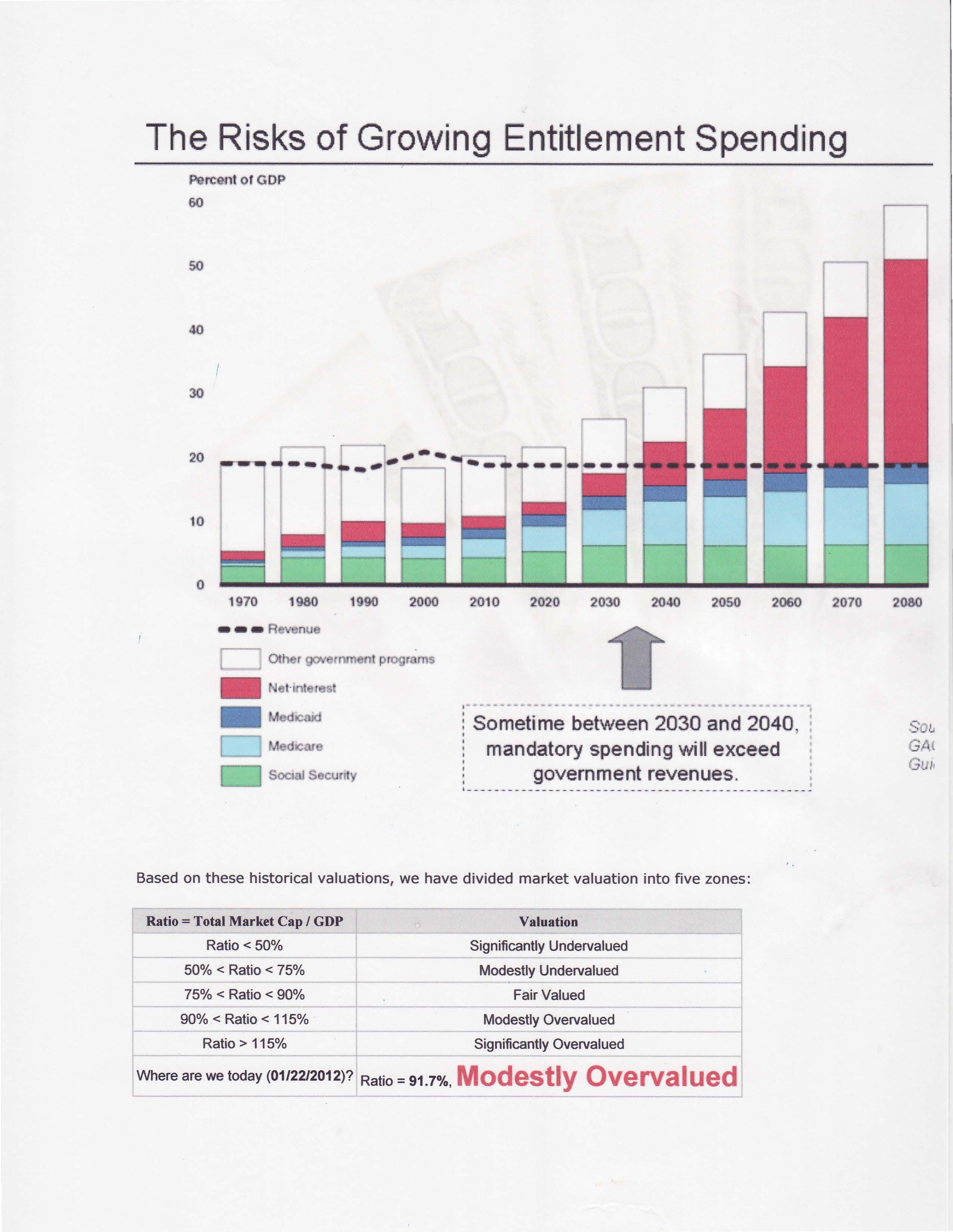
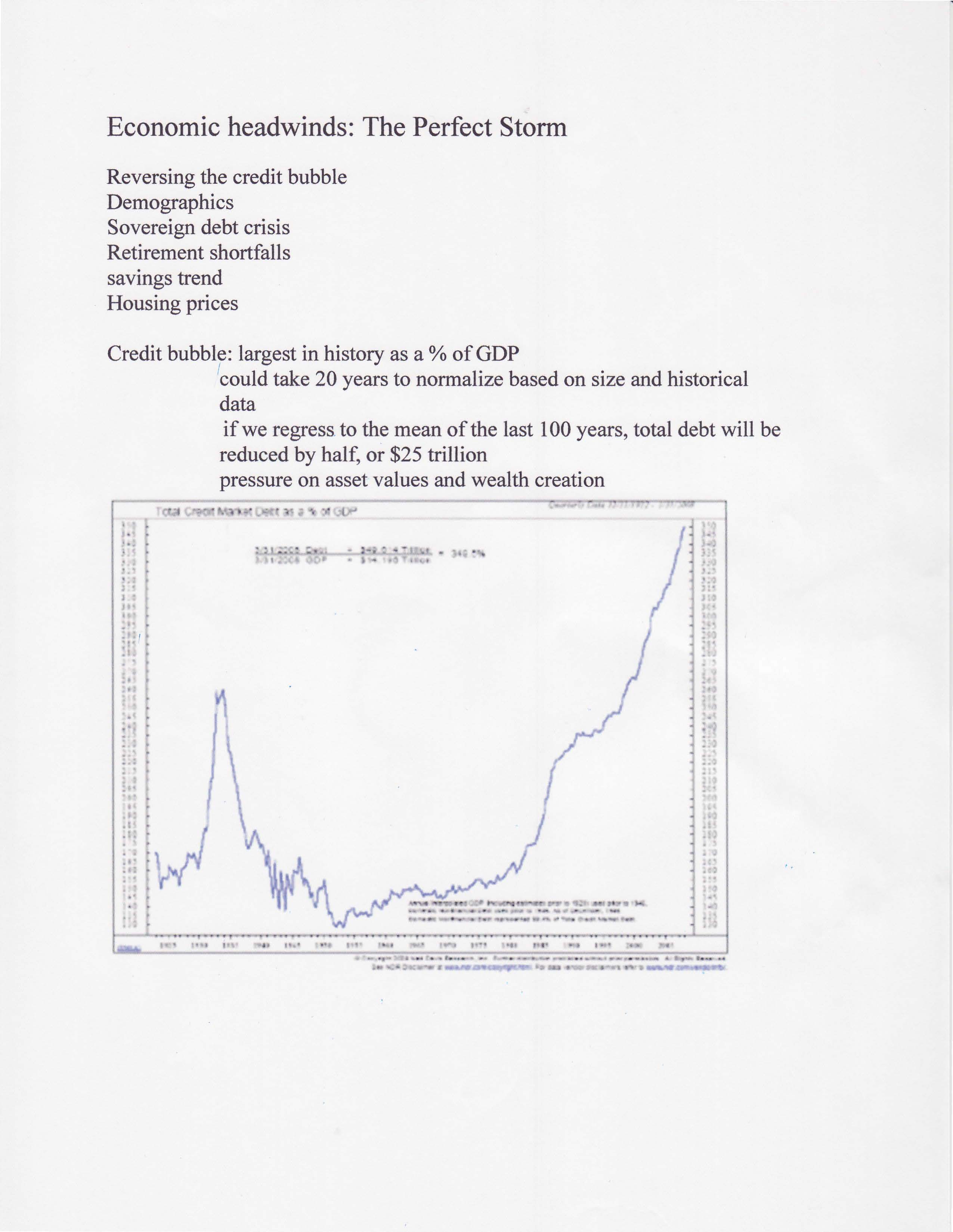
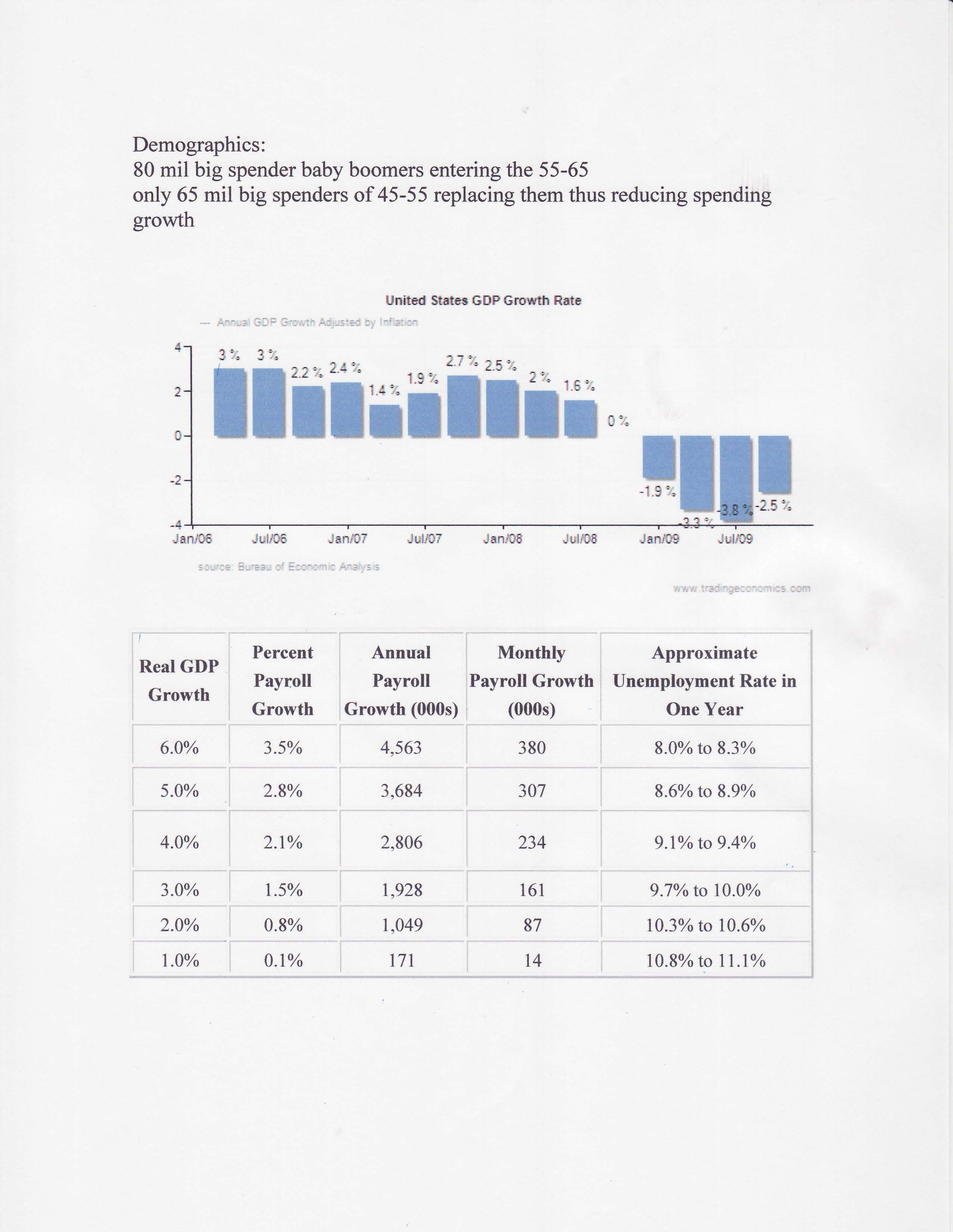
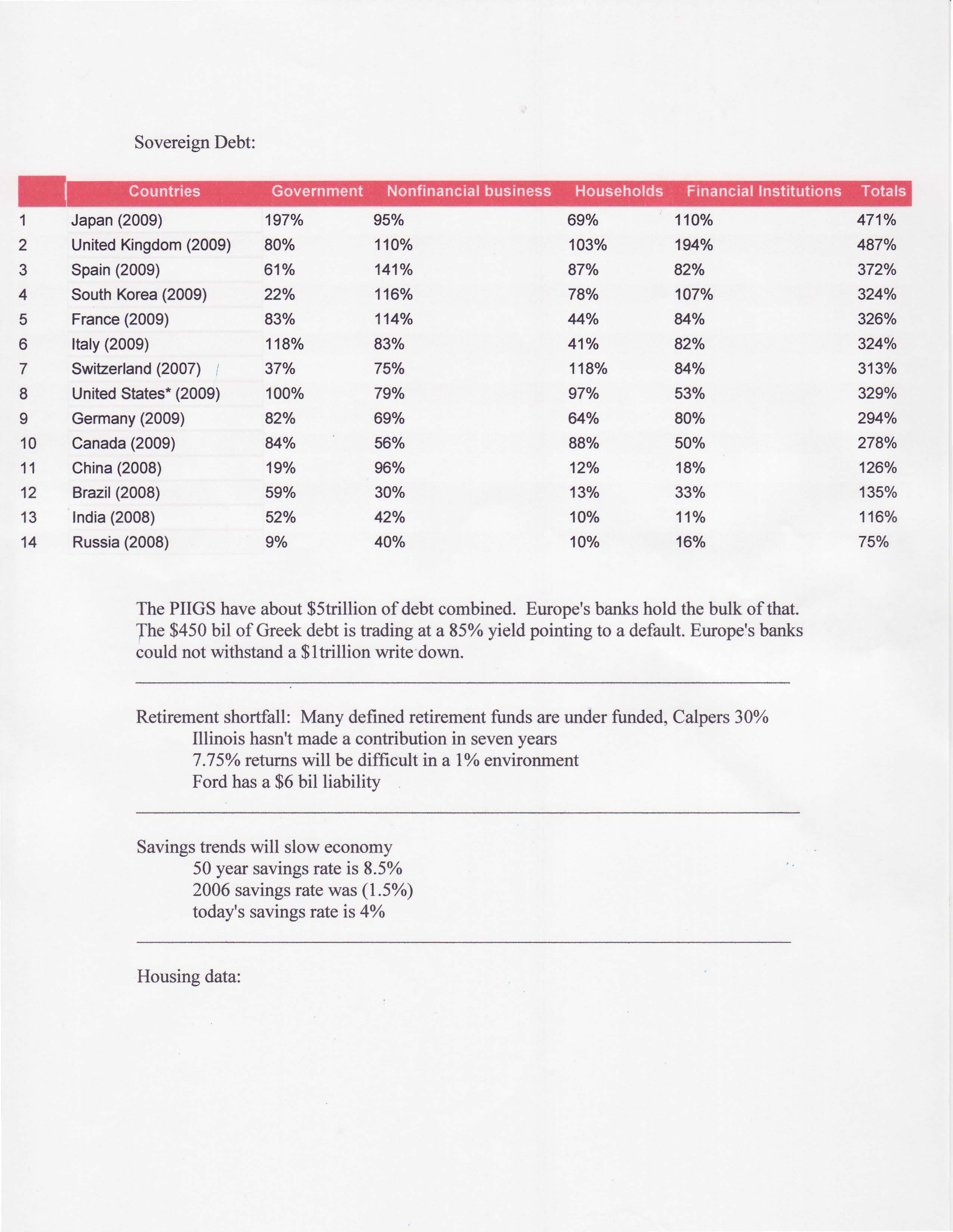
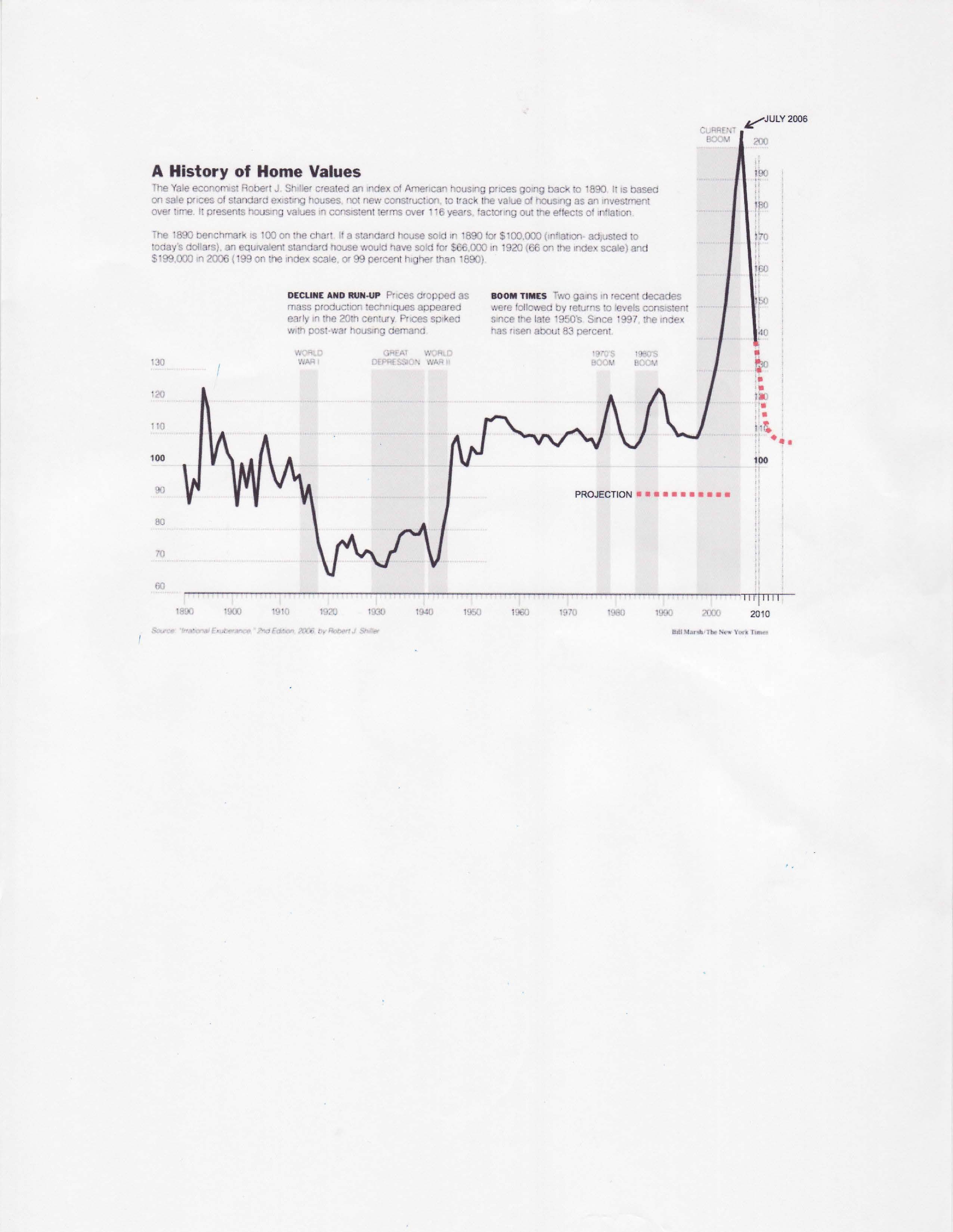
Lloyd Unsustainable expendatures!!
 �
�
Feb 15, 2012
Lloyd Also consider a recent interview with Bernanke:
One Congressman said that he wanted Bernanke to assume hypothetically that the wishes of both parties were allowed to come true. He wanted Bernanke to assume that the increased taxation of the rich took place as proposed by President Obama. He also wanted Bernanke to assume that all the spending cuts being proposed by Republicans also went into law. He then asked Bernanke whether these suggested changes would address the debt problem.
...... His answer was NO! He said that these changes would cause only "slight" or "insignificant" changes in the debt problem. He said that any impact on the coming debt crisis will have to be connected to changes in health care and entitlements! The escalating cost of medical care is the main cause of the crisis.�
Feb 15, 2012
strider Lloyd,
I agree w/ your last posts regarding the state of our finances (and taking us even further off-topc�
Feb 15, 2012
Lloyd Strider,
I applaud you for your fiscal conservatism. Perhaps all parties can come together and protect the future of this country.
I have to ask you however as I have wondered for a long time. What is your avatar? I hope it is not a burned flag!
Sorry Doug for being OT!�
Feb 15, 2012
PV4EV
Looks like a top down photo of a bloke on a motorbike ..�
Feb 15, 2012
Tommy That's what I always saw it as also.�
Feb 15, 2012
Lloyd
If that's true, sorry Strider I could not see that. My bad!!�
Feb 15, 2012
brianman Incorrect. The public hasn't been receptive. The ones that try get publicly roasted for trying to do anything about it. Or ignored. Or both.�
Feb 15, 2012
gg_got_a_tesla Indeed. It's the media that largely attempts to shape (and succeeds to a great extent in shaping) the public debate about such issues; guess who controls the media's purse strings?!�
Feb 16, 2012
strider Yes, it's a photo of me racing my motorcycle at Laguna Seca (Turn 9).
And just to take the topic completely off the rails I am violently anti flag-burning. To me, to burn the flag is to burn the "idea" of America and if you don't like the "idea" of America you should get the hell out. However I'm fully supportive of everyone's right to protest the current "state" of America including burning effigies of politicians, agencies, Congress, the President, themselves, etc.
/me ducks from Doug�
Feb 16, 2012
Lloyd Thanks you have restored my faith.�
Feb 16, 2012
dsm363 I think this thread went a little off topic 10 pages ago:smile:
Should it be moved to the off-topic area and renamed: "Guilt" for being able to buy a Tesla�
Feb 16, 2012
Doug_G Speaking as an outsider, I find it bizarre that many Republicans seem to think it is somehow "conservative" to just cut taxes. It's fiscally conservative to balance the budget! In the current fiscal climate a tax cut is nothing but more spending.�
Feb 16, 2012
AnOutsider Ahem.�
Feb 16, 2012
Doug_G Non-American. Okay?
Edit: no, wait. Canada is part of North America. $@#$!�
Feb 16, 2012
shark2k I think it had more to do with you using his forum handle :biggrin:
-Shark2k�
Feb 16, 2012
Doug_G Uh, yeah. I got that, and responded with a lamer joke. Man, if you have to explain a lame joke, then geez. :tongue:�
Feb 16, 2012
AnOutsider As long as we don't get back into weird loopback jokes�
Feb 16, 2012
NigelM 30% of Americans Think Canada Is Just Another State��
Feb 16, 2012
Majerus Wow the brilliance of the general population amazing.�
Feb 16, 2012
Mycroft Yeah, really. Everybody knows it's about a half-dozen states. British Columbia, Quebec and all those ones in the middle there. Eh?�
Feb 16, 2012
Doug_G This thread is great. Apparently the subject is so vague that nothing is off-topic!�
Feb 16, 2012
Doug_G Actually, ten provinces and three territories. But you knew that, right?
Right?�
Feb 17, 2012
vfx If we have 1 million EVs on the road by 2015, will that solve the air pollution, noise pollution, gridlock, or national security?�
Feb 17, 2012
vfx
Curious when the last time the budget was balanced when the conservatives were in power?�
Feb 17, 2012
gg_got_a_tesla (Continuing to keep this thread that I started firmly off-topic!)
Hey Doug, your politicians seem to be afflicted with some of the nonsense that passes for conservatism on this side of the border as well! :smile:
BBC News - Canadian government is 'muzzling its scientists'�
Feb 17, 2012
NigelM Did you include Florida? At this time of year there are more Canadians than Americans around here....:wink:�
Feb 17, 2012
Doug_G Yeah, I know.
(For the record, my politics would best be described as moderate-libertarian)�
Feb 17, 2012
Doug_G Fort Lauderdale is an honorary part of Quebec, so it's already included.�
Feb 17, 2012
Robert.Boston Eisenhower.
In the past hundred years, a balanced federal budget was a rare thing. Here's when they occurred, working backwards. I attribute the deficit during an inauguration year to the outgoing president (who, after all, proposed and signed the budget for that year):
1999-2001: Clinton (D)
1969: Johnson (D)
1957, '58, '60: Eisenhower (R)
1947-49, '51-52: Truman (D)
1930: Hoover (R)
1924-29: Coolidge (R)
1922-23: Harding (R)
1920-21: Wilson (D)
The Harding/Coolidge administrations were unique during the 20th-21st century in having a budget surplus every year.�
Feb 17, 2012
shark2k Uh, now don't I feel dumb :redface:.
-Shark2k�
Feb 17, 2012
Doug_G Sorry! :redface:�
Feb 17, 2012
Mycroft Group hug! �
�
Feb 18, 2012
neroden Lloyd, your chart shows that the main "unsustainable" problem is interest -- easy enough to eliminate that by raising taxes enough to not have to pay interest. (It's worth noting that Obama is proposing only miniscule increases in taxes on the rich -- a return to Eisenhower-era rates would raise far more money.) Or (and I know this is controversial) interest costs could be eliminated by printing money. Paying interest is strictly an optional choice on the part of a government which issues its own currency.
As for other "unsustainable expenditures", there's the military, which currently spends more than every other nation's militaries combined, which is clearly excessive.
Then there's medical expenditures, which are the only other problem on the spending end. If we had the per-capita expenditures of an average industrialized nation, we could pay for all the medical expenses of EVERYONE in the US with the amount currently spent by the government on Medicare & Medicaid and Tricare and the VA -- which, together, currently handle all the most expensive patients.
Of course, cutting those costs would require allowing the government to negotiate drug prices, which Bushco managed to prohibit. :cursing: Costs could be cut further with a Medicare-for-all system, because then Medicare would have the power to force down inflated medical equipment prices, emergency room costs from uninsured people would be eliminated (and the hidden subsidies to them in the form of inflated hospital costs would disappear), etc.
I've studied this. It's interesting, if maddening.�
Feb 18, 2012
Lloyd Well, your wrong on all fronts. If we taxed 100% of all the income that everyone makes (not practical), and quit spending completely it would not cover our debt for more than three years. Our problem is not from undertaxing as you suggest, it is from OVERSPENDING!
The problem with medical expendatures is the US patients expect the best care. Other countries that provide health care regulate it dramatically. Example: I have a friend who had to bring her mother to the US from Russia for cateract surgery. She could not see at all. After waiting for 9 months for an appointment, they told her that the procedure to remove her cateracts was not necessary. Done here quickly and cost several thousand dollars. The russian government did not want to pay for the procedure.
I am a doctor, and the majority of the costs in ER's are due to government regulation, and CYA for malpractice. Many things that are easily treatable, predictably and inexpensively require very expensive equipment and exams to prove in a cout of law that their diagnosis and treatment was correct should anything be questioned later. Sadly it does not appear that this mode of practicing medicine will change anytime soon!�
Feb 27, 2012
neroden Actually, I'm right on all fronts. Plus I know my grammar.
Not actually true. Actually, just plain false. Have you been listening to right-wing sources? They lie. Try looking up the numbers yourself, from government sources.
No. It's largely from UNDERTAXING, but it's partly just from STUPID -- not overspending but STUPID misallocation of money. I suggest you try studying some economic history, because you clearly haven't. Again, look up what was done under Eisenhower for a start.
No, it's really not. I've actually studied this. You may be a doctor, but you clearly haven't studied it.
The problem is caused substantially by selection bias in our medical payment systems, which are statistical effects which you won't see anecdotally because *you're seeing a biased sample of patients*. Single-payer systems eliminate the selection biases and the money spent on them. I mention one of them below (uninsured patient behavior); another is the money spent by insurance companies to make sure "somebody else" pays for any patients with actual illnesses. Another is the fact that the most expensive populations -- the elderly, veterans, the poor, and the disabled -- are ALL PAID FOR BY THE GOVERNMENT ALREADY. The cost of adding everyone else, the "cheap population", is negligible, but it gives the government pricing power.
One thing you can see: consider your paperwork costs. Don't run your own office? *Find out* how much your paperwork costs are. Compare to other countries. First-world countries. In the US, doctors have huge paperwork departments to deal with multiple insurance companies, and the insurance companies have comparably huge paperwork departments. In "single-payer" countries, this paperwork simply *does not exist*, because there is only one insurance provider which deals with doctors (any other insurer deals directly with patients). Lots of secretaries out of a job, but that's a good thing. This is an example of STUPID spending.
The drug costs are another matter. Drug costs are regulated in every other country in the world. Here, they're both unregulated and supported by government-sponsored private monopolies (patents); and the government is prohibited from negotiating costs. And Americans are prohibited from importing drugs from abroad. As a result, highest drug costs in the world! Some argue that we need to do this to subsidize new drugs, but it would be cheaper just to use direct government grants. This is an example of STUPID spending.
You're comparing to Russia? Seriously, try comparing to Scandanavia, the UK, France, Germany, Switzerland, Japan, Canada, or Australia. Russia fell massively behind during the Brezhnev era, had a total economic collapse which Gorbachev did not manage to avert, and was then looted during the "privatization" period; it is now an underdeveloped country. Yes, the US (often) provides better medical care than Russia. We also provide better medical care than Burma and the Congo. Why compare apples and oranges?
Yes, other countries, even the first-world ones, do have regulations making the most expensive procedures difficult to get. Here, we simply make all procedures difficult to get unless you're rich, make even the most absurd procedures easy to get for the very rich, while spending a massive extra amount of money on paperwork. Predictably, this gives worse results than other prioritization systems.
If you're working poor, you won't be able to get cataract surgery here *either* -- over half the population of this country simply does not have several thousand dollars to spend!
On the other hand, you will be able to in the UK, France, Germany, Switzerland, Japan, Scandanavia, etc....
Not especially -- unless you mean the regulation which requires ERs to take everyone, of course, which is massively increasing ER usage. They've become the only way to get care for uninsured people, which is a nice way of backloading massive costs on hospitals, as uninsured people wait until they're sick enough to be admitted to the ER. There are studies showing how much this adds to the nation's health costs; you can look them up. This is an example of STUPID spending.
Yes. And you have another example of STUPID spending. Countries with single-payer systems do not have the same "courtroom defensive" CYA malpractice attitudes from doctors, because there is a different legal regime, where "This is the standard Medicare/NHS-approved procedure" is good enough for any court!
Incidentally, there is evidence that behavior commonly recommended to doctors by lawyers (never admit wrongdoing, do unnecessary tests) is actually *counterproductive* and gets doctors *sued more* and makes them *lose cases more often* than being forthright and straightforward and humble with their patients, but try to get the lawyers to admit that.
But it could change. The arguing of medical cases in the law courts isn't done much in single-payer systems. Malpractice cases are then reserved for the genuinely abusive and deranged doctors (of which I've seen a couple). "The best" doesn't necessarily mean unnecessary tests (who likes unnecessary tests?) and in countries where the payment system and the legal regime is different, the mode of practicing medicine is different.
Oh, there's other stuff going on too, where the US just "does it stupid". In most first-world countries medical education is very cheap (heavily government-subsidized), so doctors don't feel the need to go into expensive specialties or collect huge salaries -- no school debt to pay off. It turns out this saves the government money in the long run, because rather than paying "medical costs" which include the doctors' interest on their school loans, that interest never gets charged.
I really have studied this... For the same amount of money the government currently spends on medical care, we could be getting universal coverage for all citizens, of a better quality, like Canada, the UK, France, Denmark, Switzerland, Japan, take your pick. This would have the nice side effect of removing the cost of health insurance from businesses and individuals, which would cause an economic boom in other areas, which would incidentally raise government revenue. The fact is that we're not getting our money's worth for our spending and those who have studied it mostly know why.
We don't get our money's worth for military spending either, obviously (or we wouldn't be losing wars repeatedly). More STUPID.
But on top of this, the government is also undertaxing. Well, actually, the Mitt Romneys of the country are undertaxed (15% top rate!) while working people are taxed at really quite high levels; an interesting "soak the poor" system which is really not healthy for the country at all. And all too many of the undertaxed superrich are using their money to attempt to get the government to funnel more money towards them and away from everyone else... and often to encourage STUPID spending, because they often have a hand in the companies which profit from it.�
Feb 27, 2012
ElSupreme .
.
.
+1�
Feb 27, 2012
Trnsl8r I'm about 40, born and raised in Scandinavia, and have spent about a decade of my adult life in the US.
I can back neroden up on everything he said about health care.
(EDIT: Well, I can't claim to have actually studied it, but it corresponds with my impression.)�
Feb 27, 2012
drbradfo yeah, what neroden said.
+1�
Feb 27, 2012
Arnold Panz There was an interesting chart that I saw during the health care debate. Basically, the US health care system provides much worse results at a much higher cost than any other country in the world. It's about as inefficient a system as one could possibly have -- the US is paying many multiples per patient for the same or worse outcomes on life expectancy than any other country. Here is the chart:
National Geographic Health Care Chart
I'd also note, to Neroden's point, it is estimated that paperwork is somewhere between 25-30% of the overall cost of medical care in the US. This is not only the doctor's offices and hospitals that have to deal with multiple different paperwork from each insurance company, but disputes between insurers and providers, insurers and insureds, and providers and patients, all of which cost significant time and money (not to mention heartburn for patients trying to get their bills paid).
Lloyd, I'm not sure I understand your point -- most of the "overspending" in the US currently, and even moreso in the future, is on health care (Medicare and Medicaid), and you think the US's problem is solely one of overspending. The easiest way to cut spending, other than cutting defense, is to cut spending on healthcare, which can only be done through some systematic, fundamental changes to how we provide health care in this country, at least some of which would restrict the amounts paid to doctors, which I can only assume you'd object to.
I'd also note that there's a huge difference between the current tax rates in the US and taxing "100%" of income. The US has, by far, the lowest tax rates of any first world country. See here:
How do US taxes compare internationally?
and here:
List of countries by tax revenue as percentage of GDP - Wikipedia, the free encyclopedia
I don't think anyone likes paying taxes, but we essentially have a country that provides first world benefits at third world prices (tax rates), which is why our deficit is soaring. If we increased our % of GDP that was taxed to the level of other first world countries (not coincidentally, a similar list to those with universal health care), we'd largely solve our long term deficit problem, especially in combination with some reform to our health care system.�
Feb 27, 2012
KenEE Posted by neroden:
"interest costs could be eliminated by printing money. Paying interest is strictly an optional choice on the part of a government which issues its own currency."
"I've studied this. It's interesting, if maddening. "
Based on the first quote I have to agree with the second. I do wonder who you studied under.
True that rampant inflation can decimate the value of existing debt. Of course if a government defaulted on its interest payments as you suggest, the value of its currency would drop like a rock. I guess if that government's debt was tied to its own currency then yes the value of its debt would also drop. A bit short sited IMO and what's the word for it?.... oh yeah lunacy!�
Feb 27, 2012
Lloyd I was told that we would need in the order of 5000% inflation just to be able to take care of our existing obligations, not to mention what would need to be added if inflation existed to that level.
Interesting times.�
Mar 1, 2012
Schlermie I'm buying a production performance model with so many options, I might as well just get the Signature edition since the price difference is minimal; however, I opted to stick with the production model simply because I'm hoping it will blend in with the $50k models. I don't want all the Signature indicators (badging, color, etc) that scream "Look at my $100k car!".
(Sorry. I realize this thread has moved on to some other topic, but I just wanted to make a quick comment on this original topic.)�
Mar 1, 2012
Lyon Neroden, thanks for the post. The only thing that I would add to the topic of how to cut down on the legal costs of medicine is that doctors need to quit buying malpractice insurance by themselves. I only pay about $3000/yr in malpractice insurance to practice law because the Oregon State Bar buys it collectively. Right now doctors get shafted because any single doc has no leverage against the insurance company. If they were to get together, agree to all buy from the same place, and then negotiate the price, they could bring down costs considerably.�

Không có nhận xét nào:
Đăng nhận xét