Dec 26, 2011
Cobos Yes keep in mind Tesla used minutes until full, 45 minutes to full (or 80%). That of course means the 40kWh get's the same C level charging as the 85kWh pack, it just uses less power while doing it since the pack is smaller.
Personally I'd think 1h until 80% full would be more than fast enough for the smaller pack, and would realistically extend the "road-trip" range of the car.
That is only 32kWh charging or a 0,8C charge. That shouldn't put undue stress on the batteries, after all using both internal chargers is 20kW and takes about 1,5h until 80% full, and that is a "normal" charge to use what Tesla says.
Cobos�
Dec 26, 2011
brianman So 2.6x the speed of QC. That's pretty significant in my book.
For comparison, the top non-overclocked CPU you can find is in the 3GHz range. An 8GHz CPU would sell for a fortune.
Or in EV-speak, an 800mi car in 2012 would be significant as well.�
Dec 26, 2011
Cobos Since Tesla is saying there is no QC for the 40kWh but there is availability for the second charger I must assume that 20kW is fast charging but not QC. So the difference from 20kW from internal AC charging and the "promised" QC from Tesla would be a 60% increase or 1.6x the speed. Where do you get 2.6 from ?
I of course assume I can use the 20kW charger every day on the 40kW model otherwise it would seem to be fitting for Tesla to not offer the second charger for the smallest battery if what they are doing to the supercharger is any indication?
Cobos�
Dec 26, 2011
brianman .3 from the definition of QC that I quoted
.8 from your post�
Dec 26, 2011
brianman Where/when did they say that? I saw where they said no SC for the 40; nothing about QC though.�
Dec 26, 2011
Cobos True enough, though they did say no supercharging. And since a 90kW charger for a 85kW battery means about 1C charging they are essentially saying charging the 40kW pack at 1.1C or thereabouts is not possible.
The question then is what is the defination of quickcharging? Since I think we can agree on 0.5C using both internal chargers is not quickcharging, and 1.1C is supercharging then where is QC?
Cobos�
Dec 26, 2011
brianman 1. If Tesla followers learned anything last week, it should have been that "saying X is essentially saying Y" is a mental maneuver to be wary of.
2. I posted one that appears to be from Volt literature. In the absence of a better / more official one, shouldn't we stick with that rather than assume quick charging as a valid description of power charging all the way up to directly nuclear-provided?
3. Again, the quote I posted put QC at 0.3. Yours put SC at 0.8. I don't know what to call 0.5 and 1.1.�
Dec 26, 2011
dpeilow Don't you think you're splitting hairs over arbitrary marketing terms?
If the baby Model S had 40kW charging, don't you think Tesla would have said it?�
Dec 26, 2011
stopcrazypp I don't think it is splitting hairs. The letter of the options page is the only thing we have to go by at this point, which is why we have to take things as literally as possible. There's also many other things that may be subject to interpretation (like what the heck do they mean by "optional" for supercharging on the 60kWh pack; what exact socket is the "dryer socket" included with the car, etc.).
The only definition they have of "supercharger" on that page refers to 160 miles of range in 30 minutes. It makes no mention of the 45 minute charging initially mentioned in the initial advertising (and even back then I don't think Tesla ever explicitly said the 45 minute charging was available on all packs; again TEG got the indication back in 2009 that only the 300 mile pack would have quick charging).
http://www.teslamotorsclub.com/showthread.php/2497-45-Minute-quick-charge
We have already seen how big an impact a potential customer's interpretation of advertising vs. the letter/wording of the text can have. In fact, that's the start of this whole argument (see the start of the thread)!
I think it's best to wait for clarification from Tesla (even though the situation doesn't look optimistic). The side discussion on a CHAdeMO adapter is also significant (may make whole quick charger discussion irrelevant), although personally I don't think it's that likely.
The biggest point for me is if there is any HARDWARE that is required for quick charging that won't be on the 40kWh pack (and is optional on the 60kWh). If this is true, a potentially costly/time consuming upgrade will be needed in the future if Tesla ever changes their mind. If this is not true, all Tesla needs to do to allow quick charging on the 40kWh pack is a policy change and maybe a firmware update (no actual hardware changes).�
Dec 26, 2011
VolkerP To charge with 20kW every day means you have to replenish some 50% of SOC or 80 miles worth of charge on the 40kWh pack. That's 29k miles per year. Your battery warranty (8 years or 100k miles) would expire within 4 years. Thus, even if you use Model S 40kWh as designed, you will halve the battery life. Putting QC/SC/ >1C charging on top of that will make things worse. Apparently Tesla denies that option for they cannot afford to have a Model S on the road that eats up its batteries within 2 years.�
Dec 27, 2011
rabar10 Needed hardware would include the high-current-rated contactors and cabling to connect the battery to the charge plug. Not sure where the contactors would actually reside in the car--maybe next to the chargers, and then re-use the conductors running from there to the plug on the side of the car for both AC and DC?
I'm assuming that the electrical input components of the charger(s) have been built to withstand battery pack DC voltage without issue, to avoid needing a separate set of mechanical contactors there as well.
There would be some cost savings in not including these items on the 40kWh car; but that has to be balanced with needing to upgrade the car if/when a customer chooses a larger battery later. Not including these components on some vehicles also eliminates any DC charging whatsoever (again without hardware upgrades) -- Supercharger, CHAdeMO, J1772-DC; factory-supplied or aftermarket/home-brewed. Further, there may be reasons related to safety and testing that you would want to keep the high-power electrical paths the same in all vehicles.�
Dec 27, 2011
fairlycool Not to harp on this anymore, but if you listen to Elon at the Beta event he says (at 30 seconds into the video) Beta Reveal: Performance (Pt. 2) on Vimeo
that "the basic car will do 0-60 in 5.6 seconds). Obviously after testing it a bit more they realized it won't and now claim 6.5s.
I was hoping for that head pinning surge you get in electric cars but dont think it'll be possible with the 40Kwh model.�
Dec 27, 2011
Zextraterrestrial Basic meaning not signature perhaps?
lots of assumptions�
Dec 27, 2011
markwj Or basic as in "not sport".�
Dec 28, 2011
dpeilow Actually he says, "the basic car can do, sort of, 0 - 60 in 5.6 seconds"�
Dec 28, 2011
GSP Even the 6.5 sec 0-60 spec for the 40 kWh cars is very competitive. In 1989 I bought a car with a 9.0 sec spec, and I thought it was peppy and fun to drive (for that era). In 1996 I bought a car with a 7.0 sec spec and it is still a great performer today. No need for more. My Volt has a 9.0 sec spec, and it has sufficient acceleration when needed in today's traffic. It is a joy to drive, and I have no desire to drive my 7.0 sec ICE cars. (or even the 4.5 sec car!
Combine an under 7 sec spec with instant "throttle" response, zero seconds wasted on downshifting, and smooth electric drive, and you will have a wonderful car to drive.
GSP�
Dec 28, 2011
Robert.Boston And, as far as we know, all the non-performance cars will have very close 0-30 specs. The smaller packs just start tapering off sooner.�
Dec 28, 2011
vfx Right. "Basic" does not equal "Base'.�
Dec 28, 2011
jimbakker666 Or maybe 'basic' just means 'basic'? Like the basic model, the 160. Official Tesla communications should not need to be analyzed this heavily as to their meaning. Besides, Elon Musk is not a dummy. When he says 'basic', either he means 'basic' or he wants you to think 'basic'.
To footnote this thread, here is the response I received from Tesla concerning the lack of 'supercharging' in the 160:
I explained my disappointment in what the 160 actually offers (much more tactfully than here). Those two issues were the lack of supercharging and the downgraded 0-60 performance. The rep responded to the charging issue with a somewhat oversimplified explanation, but I'm not gonna hound the issue anymore. The rep completely skirted the 0-60 performance downgrade.
My refund is on it's way. Good luck to you guys and gals with your Model S, can't wait to see them out here in SoCal! Hopefully Tesla picks it up down the road and gets some vehicles in queue for the common man.
BTW, not leaving the forums, just leaving my Tesla reservation. I'm still very interested to see what happens with the S and X, maybe Tesla can win me back.�
Dec 28, 2011
Mycroft Since the X will be more expensive than the S, I doubt that.
Hopefully Bluestar will be the car "for the common man" that you're looking for.
I agree with you that saying 90kW is too much power for the 40kWh battery is a little disingenuous since there shouldn't be a technical reason for not being able to dial down the power to what the 40kWh can handle. I believe that Tesla made this decision for business reasons that we may or may not ever hear about.
As for the acceleration issue. I believe that to be purely a technical limitation. If the motor is drawing energy from all the cells at one time (in parallel) and you reduce the number of cells that can be drawn from, then there must be a reduction in acceleration achievable.�
Dec 28, 2011
stopcrazypp The warranty explanation that a member heard from a rep seems the most likely. I don't think it's mainly because Tesla wants to force people to buy the 60kWh pack. If you look over the options list, Tesla is keeping options fairly independent, so I don't think Tesla is really approaching it from that angle.
Back when we knew the pack information, forum members (including me) already calculated the power output of the various packs. The 40kWh (was 42kWh back then) was the one that didn't seem like it'll have enough power to output the quoted 300kW peak of the motor (160kW @ 4C). Back then I guessed the reduced weight plus Tesla choosing cells with higher peak C-rate would address that issue, but I guess that didn't happen when things got finalized. Although, people in other threads have calculated that the 0-30mph should be still be identical among the packs based on the power difference.�
Dec 28, 2011
dsm363 Glad you got your money back and good luck to you. Don't think Tesla would ever have been able to make you happy. Now that the specs are out there, you can always revisit things later.
I have a feeling that if you were this disappointed with Tesla for the performance and lack of Super Charging in their base $50,000 car, you will be less likely to be happy with whatever car they produce for the $30,000 car segment. The bluestar isn't supposed to come out for probably 4 years so it will be a wait.�
Dec 28, 2011
WhiteKnight Tesla absolutely wants people to "upgrade" to the 60 kWh and 85 kWh packs because it's an extra incremental $1,500-$2,500 for each upgrade (depending on what you think their margins are). I think it's incredible they have not done more in terms of denying certain options to smaller battery pack owners. 40 kWh buyers ought to be thanking Tesla and praising them for making almost every option available to them.
The reason a certain segment is vocally upset now that options and pricing have been released boils down to the gap between expectations and reality. You expected one thing, the reality is it's not what you expectedt. So you have to decide on downgrading from Sig to non-Sig or walk away altogether.
For the 98%+ of Americans who have never heard of Tesla they will never be confronted with the gap between expectation and reality because reality will be known from the beginning of their experience with Tesla. They will find the options and pricing perfectly reasonable and very attractive if they are shopping in this segment of the car market (IMO).�
Dec 28, 2011
TEG FYI, LEAF has lots of low end torque, but rather power limited possibly in part due to ~24kWH pack.
The LEAF has a power meter front and center. If you hold the accelerator pedal all the way down it accelerates decently from 0-30 with the power meter slowly growing. (Keep in mind that power is related to torque and RPMs.) Once you hit the power peak, the acceleration gets less impressive and the power meter just stays pegged from that point forward. It just gives me a different view of that attribute of EV motor power & torque outputs where torque starts out high and stays flat until the RPMs dictate peak power point, and then it switches to torque reduction mode as RPMs continue rising to keep the power in check.�
Dec 28, 2011
EVNow One of the speculations is that it is because of range considerations, rather than the 24kWh pack. Afterall Nissan reportedly can run 2 motors in ESFlow with the same pack.�
Dec 28, 2011
EVNow I'd gladly trade every option for QC.�
Dec 29, 2011
dpeilow Yep.
I think there is now a gap in the market between the (UK) �25k LEAF and probable �45k Model S. If Nissan put 10 grands worth more batteries in the LEAF platform, that would do me.�
Dec 29, 2011
WhiteKnight I look at it from the opposite perspective. You can get this awesome fully loaded car that competes with the BMW 5-series and if you opt for the 40 kWH pack you get to save $20,000.
The Leaf is like an Electric Nissan Versa. You can't even get leather seats. I don't know why anyone is comparing the Model S with the Leaf. They're not even in the same solar system.�
Dec 29, 2011
stopcrazypp I realize they of course would rather have more 60kWh or 85kWh sales, but given they haven't tied up the options list with the pack capacity, I don't just feel that is the main reason why QC was left out for the 40kWh pack (there has to be other reasons too). From comments here, it seems the 60kWh pack is beyond the economic means of a lot of people who have locked in on the 40kWh pack, so it's not like that would have worked in the first place.
It's up to the 40kWh orders to get clarification from Tesla at this point and to get Tesla to hear their concerns.�
Dec 29, 2011
dpeilow
But then I'd have a BMW 5 Series class car which could do 115 motorway miles before requiring a 2.5 - 3 hour recharge... and no cash.
Besides, I didn't say LEAF, I said LEAF platform. A car based on that platform with perhaps 150 miles EPA range and CHAdeMO would be a more attractive proposition for me now. And who's to say that Nissan won't come out with interior options for the LEAF in the long run?�
Dec 29, 2011
Robert.Boston Support for CHAdeMO DC charging (for all packs) would address many people's concerns with one stone.�
Dec 29, 2011
dpeilow Agreed�
Dec 29, 2011
Cobos Yes that would probably be enough for me, and to me it looks like in Norway (not continental Europe), support for ChadeMo is actually more important than 3-phase. By summer 2013 there should be a decent amount of quickchargers based on the ChadeMo standard.
I actually think the "problem" is the 8 year warranty on the 40kW pack. I'd rather they lowered that to 5 years or so and allowed us to misuse the pack a bit more or simply offered 8 years with a contract that says that drops to 5 years the first X times you quickcharge your pack. That would probably take away all the gnashing of teeth and let people decide more freely if they want to pay for the bigger pack.
Cobos�
Dec 29, 2011
jkirkebo We have a Leaf and plan to get a Model S (in 2-3 years). We'll keep the Leaf too. Why not compare them ? Not everyone taht's interested in the Model S wants a "luxury" or performance car. I'll order the Model S with cloth seats because I don't like to sit in leather. I do not care about performance (so no Sport model) and the Leaf is the perfect size for us. The main reason for wanting a Model S is range. We need two cars and one of them needs to do the long-distance driving we are currently doing in a 2005 VW Touran 2.0TDI.
If Nissan puts out a Leaf 2.0 with twice the range before we get a Model S I will take a very serious look at it. So I'm definately comparing them (relative to our needs) and I suspect many others are doing the same.�
Dec 29, 2011
Norbert
That is very close to how I see it. Batteries are still very expensive, and Tesla's concept is to build a car of a class which is in a good relation to the cost of a long range electric car. At this time, a premium sedan.
However, many on this forum (including myself) are more interested in the "long range electric" part than in the "premium luxury" part. (I'm saying simply "long range" but depending on context this includes supercharging which extends the range further). The degree, to which it is important for our personal use, varies, yet in any case, we understand the ability of "long range" to be a requirement for electric cars to go mainstream. Plus, even if we could rent a car, we would like to do the occasional long trip without using oil again, in the "comfort" of our own car.
Although the 40 kWh option, with a range of 160 miles at 55 mph, has a better range (with home-charging only) than any other non-Tesla EV that I am aware of, it probably makes more financial sense, in terms of "how much do I get for my money", for someone interested in the "premium luxury" part, than for someone interested *only* in the "electric" part.
So for someone who is interested only in the "electric" part, and compares the Leaf to the 40 kWh Model S, things may look like a mismatch.
It needs to be pointed out that the Leaf doesn't make profit (yet), as far as we know, and that is even for a mass-production experienced company as Nissan is. Even with the tax credits, Nissan can only sell the Leaf, below profit, because it is a huge company (in comparison) selling lots of other "stuff". So even if Tesla wanted to, attempting to directly compete with the Leaf, at this point in time, would probably be Tesla's end of existence. In the unlikely case that Tesla would be able to manage making a small profit, it wouldn't be enough to make substantial investments, or to pay back the government loan.
So any comparison to the Leaf, from Tesla's perspective, has to be done with the future Bluestar. In other words, the 40 kWh option does not replace the "missing" Bluestar. Hence the importance of Bluestar, and the need for Tesla to be able to make the investments eventually leading to the ability to mass-manufacture at a price competitive in the mainstream market, coinciding with the corresponding battery price development.
To me, it all fits together. For Tesla, I haven't heard a better plan yet.�
Dec 29, 2011
AnOutsider For me, it's a mixture of both. Coming from the Audi family, I don't think I could go for a Leaf to be honest. Also, Audi doesn't seem to be taking the electric vehicle very seriously. Tesla does, and they also seem to be pushing the envelope since they have something to prove.
I like that with the Model S, I can have my cake and eat it too (nice car, cool tech, great performance etc). I fear with a Leaf, I would basically only have gotten the "cool tech" part.�
Dec 29, 2011
stopcrazypp I think the people comparing the Leaf and the Model S want neither. They want a vehicle that's basically the middle ground (a Leaf with more range, or a Model S with less luxury/size/cost). I think the Bluestar may be that vehicle (and maybe the Leaf 2.0 or the planned Infiniti EV).�
Dec 29, 2011
Norbert Except this stone might be dangerous for Tesla.
If Tesla adds a CHAdeMO adapter, there are two things: it might already be working on it, but not in any kind of urgency, simply because it starts selling in North America, and a CHAdeMO network doesn't exist yet, here. It's said to come any moment, but already so for some time. Perhaps there will be increased efforts on Nissan's side when they opens the factory here in the US.
Then, it might not come for the 40 kWh pack option, even if it comes for other pack options. What we appear to hear is that even 1C reduces lifetime for these batteries which are optimized for range. The 40 KWh is apparently already at the lower end of the lifetime Tesla would want to support. Tesla does not have the option to arbitrarily reduce the lifetime, and would have to set the charging speed below 1C, maybe 35 kW. While some here, who have gone through these discussions and think that is better than nothing, those who come in later will say that sucks and give bad reviews. Or will do so when they see the range decreasing. Tesla needs good reviews, bad compromises won't do, especially not in this political situation where much of the media (and presidential candidates) are just waiting for the tiniest possibility to kill the EV idea. As sad as it may be for some, it is better to loose a few customers, than not to make good on the features delivered.�
Dec 29, 2011
JRP3 For me the "ideal" vehicle may be the Nissan ESFlow, depending on what is actually produced. The S is really too large, the LEAF doesn't have enough range to justify it's cost and I don't need the room, plus the looks still give me problems. Bluestar may grab my interest but probably not if the ESFlow comes out first with good specs. All that said, fast charging is a non issue for me so I'd rather have a base S with no fast charging than an upgraded more expensive LEAF with fast charging. Long trips are a rarity in my life, and I like it that way. I have better things to do with my time than rack up highway miles.�
Dec 29, 2011
EVNow You know, a lot of us don't want leather. Infact that is another problem I've with options - no heated seats without leather. Leather is too toxic for the environment and inhumane. But, thats a different story.�
Dec 29, 2011
AnOutsider Right, but they're targeting "luxury" with the S -- what's that without leather? I suppose they could have done what Fisker did and did all the faux-leather stuff�
Dec 29, 2011
EVNow If logevity issues are the reason for not offering QC with the 40 kWh pack - I wonder whether Tesla can offer QC with Bluestar. I think of Bluestar as a car with perhaps 160 to 200 mile range (40 to 50 kWh) - competing in the near luxury segment with Infiniti/Acura. It needs to have QC to build up good volumes.�
Dec 29, 2011
Norbert I'd think that Bluestar will use more advanced battery tech, and have options like the Model S does. Panasonic may have substantially increased their R&D in the last few years. For example, A123 expects be able to half their battery costs within the next few years. This may get their cell into the range where a 40 KWh pack might come close to the current cost, yet have a multiple of the power rate necessary for quick charging. However, for a larger pack, the energy density would also need to increase 2x. That is probably what Panasonic is working on, from the other end.�
Dec 29, 2011
JRP3 A Bluestar type vehicle could go a different way, using a lower energy density but higher C rate, and higher cycle life, cell. With an aerodynamic lightweight body design they could get 150 miles + from a 32-36 kWh pack.�
Dec 29, 2011
neroden I'm sort of stuck with it. I'm allergic to all the standard automotive "cloth" choices, and some of the fake leathers. If they had seats with 100% cotton, or alpaca, or cashmere, that would be great, but.... not gonna happen. �
�
Dec 29, 2011
TEG From what I can tell, Nissan seems more interested in cost reducing their 100 mile range vehicles than trying to be range leaders.
It would be nice to get 150 mile range, as the ~100 is cutting it really close for many drivers, but if they had to add 50% more battery cost in they would price a lot of shoppers out of the equation. I think their goal is to make the cars cost competitive (feature wise) with ICE vehicles without needing incentives. They know a good chunk of people can make do with 100 mile range, so they cater to people with short daily driving routines.
The short range small pack also can be recharged nightly off of typical household outlets (even US [email�protected] 1.4kW).�
Dec 30, 2011
jkirkebo I don't want that either. Leather gets hot in the summer, cold in the winter and is slippery so you slide around more. Faux leather is even worse. Cloth seats breathes and keep you in place. My experience is that cloth interiors also age better and needs less maintenance.�
Dec 30, 2011
AnOutsider Personally I feel like cloth seats collect and hold dust more and stain easier. Never really had a problem with overly cold or hot seats, but I garage my cars at night so maybe that's why.�
Dec 30, 2011
jcstp I thought the leather seats had seatwarmers?
So why should they be cold then?�
Dec 30, 2011
roblab The Nappa leather, according to Wiki, is sheep or goat, softer. I wonder if it would be an allergen for you.�
Dec 30, 2011
neroden Thank my lucky stars, no. I'm only allergic to synthetics, so far.
My fiancee, however, is allergic to wool (lanolin) -- but I think sheep *leather* has the lanolin effectively removed from it. But thanks very much for that pointer -- it's something else to check. :-/ Bleah.�
Dec 30, 2011
EVNow Thats like saying luxurious meal can't be vegetarian.�
Dec 30, 2011
AnOutsider What's a luxurious meal? :tongue:�
Dec 30, 2011
NigelM It can't.
(Ducks for cover....)�
Dec 30, 2011
stopcrazypp I think an affordable 150 mile BEV will appeal to a lot more people, even without quick charge. As it is, the 100 mile (73 EPA) Leaf is too limiting purely on range, even with the QC ability (the QC ability doesn't really help that much without stations near where you travel, and even if a station gets built, there's a fairly regular trip I make that I don't want to stop in between for).�
Dec 30, 2011
TEG Slight rebuttal:
Our Restaurant | Greens Restuarant
http://www.greensrestaurant.com/assets/Sat%20din%2012%2017%2011.pdf�
Dec 31, 2011
eledille As I wrote elsewhere, all charging stations funded by Transnova are required to have extra capacity for future 3-phase charging. Every CHAdeMO station funded by Transnova is essentially also a 44 kW 3-phase charger, only the connector is missing, pending standardization.
I don't get that argument at all. If they wanted to support QC for the 40 kWh pack, they could easily limit the rate to 1C. 40 kW is still quite a bit, and would recharge from 30% to 80% in 30 minutes. They could just as easily have the car refuse to quickcharge more than x times per year. I have to conclude that Tesla does not want to support QC for the 40 kWh pack.�
Dec 31, 2011
Norbert There is more overall strain on a smaller pack during common use, so the warranty is already reduced to 100k miles. Charging at 1C reduces lifetime even for larger packs. But larger packs have more buffer in their mileage, and in their tolerance. So I think they'd have to limit it to 35 kW or even 30 kW, and that isn't worth the trouble. It is not a good compromise, not the kind of thing Tesla wants to sell.
What's so difficult to understand about that?�
Dec 31, 2011
goyogi Not only that but cloth will absorb liquids easier and this will be a problem when my passengers pee themselves when I show off the performance of the S.�
Dec 31, 2011
Cobos I'm not so sure that's what Tesla wants to do since charging at 30kW to 40kW would be exactly the speed I would need for the 40kW pack to become my only car and do most every "long-range" trip I would need. The 60kW pack with the Norwegian surcharge would be too expensive. So I would say for this customer that is the difference between a sale or not.
Easy to understand for me and for Tesla, would that product reflect badly on them, not at all.
Cobos�
Dec 31, 2011
Zextraterrestrial Or worse�
Dec 31, 2011
Norbert Tesla will have two products for you:
1) A Bluestar, which admittedly would be nice if it already existed, or
2) a 60 kWh pack at a reduced price as soon as batteries prices come down
Until then, there will always be some gap that someone can't fill, and even then, there will be a lot who will say even the 40 kWh pack is still too expensive, they should offer 30 kWh.�
Dec 31, 2011
jkirkebo Well, since the Model S supposedly won't come with more than a 20kW charger anywhere, I'd advise you to buy the second charger upgrade. This way you can draw 63A from one phase of the 44kW AC charging points, for a total of 14.5kW. All you should need is a Mennekes-Tesla2 cable, which I seriously hope they will offer at european delivery start. Anything else would be a major fail.�
Dec 31, 2011
brianman Avoiding unsatisfied customers (and protecting the brand) is often more important than obtaining customers.
In other words, they'd rather you not buy a car you'll be unhappy with. Especially in the early stages, it's better to have 5 happy customers than 100 unhappy ones.�
Dec 31, 2011
EVNow Only if they don't have any QC nearby - and never compare with other EVs that have QC.
I want an upgraded EV (compared to Leaf) - not having QC is too much of a compromise.�
Dec 31, 2011
Robert.Boston LOL! :biggrin:�
Dec 31, 2011
smorgasbord Now that we've gone from being pissed off about the Model S to pissing in the Model S, seems like this thread has run its course. All we need now is to have Model S's that we can run on courses.�
Dec 31, 2011
eledille A smaller pack will give you less total lifetime distance than a larger one. That doesn't mean that the stress on the pack is higher. If a small and a large pack are cycled at identical C rates, they will degrade equally when measured in capacity percentage remaining at a given time.
If you buy a small pack, you buy a small total lifetime distance too, and of course the warranty must reflect that.
My statement that they don't want to support QC at reduced rate for the 40 kWh pack might be a bit simplistic, though - maybe they would ideally like to support QC, but don't have the time or manpower to implement the required software and tamper-proof warranty management system, for instance. Or perhaps the gain is too small compared to the investment. But I can't see any reasons directly related to battery lifetime, as long as charging rate is limited to the same C rate as the largest battery.�
Dec 31, 2011
Norbert It does seem to be simple... all indications are they don't want to go below 100,000 miles, not even optionally.
Just speculating, going further might reduce the lifetime to the point where some might have to buy a new pack before they get cheaper, at which point you might as well buy a 60 kWh pack in the first place. There are those who drive 50,000 in two years, so the first ones might show up when Bluestar launches... do I need to say more? The media would just report... broken at 75,000 ...and at the point who will care if they were pushing buttons confirming their agreement.�
Dec 31, 2011
JRP3 Could it be as simple as Tesla not wanting to build and support more super chargers than needed to service the higher end cars? If Tesla allows the base model to super charge then the few super chargers would be tied up more of the time.�
Dec 31, 2011
stopcrazypp The other issue is that in order to provide a real supercharger network/highway that works for the 160 packs, Tesla will need the roughly double the density of the chargers.�
Jan 1, 2012
dpeilow Norbert: Not everyone has the money to just "buy the 60 kW pack in the first place".
Stop: If they just supported what is becoming the de facto standard, they wouldn't have to bother building out a network of chargers for 160 mile range as others will do it for them.�
Jan 1, 2012
Norbert Of course, however: All the more they need to be aware that they will have to buy a new pack earlier, and that they may not really be saving $10k.�
Jan 1, 2012
Cobos Well I suppose it depends on if Tesla wants to sell the 40kW pack in Norway or not.
One of our larger newspapers list the expected price of the base model at about $75 000, since most normal families might stretch their car budget to about $65 000 if this pricing stays they loose out of a lot of sales I dare say in Norway. If we are talking $75k for the 40kW model then the 60kW battery is way out of my league and also for most other families. Hence they need the 40kW model to be quicker charged to succeed in our market. If they price it agressively they might be able to pull quite a bit of potential customers over into the 60kW pack.
BTW: a 60kW pack at $10 000 difference is what I would call reduced price
Cobos�
Jan 1, 2012
dsm363 Do you mean CHAdeMO? I agree, that would have been the simpler thing for them to do but they decided against it for some reason. In the US, there's also the new J1772 DC fast charging standard that should come out this year sometime. Since the Model S will support J1772 with an adapter, is it possible for them to also support the J1772 DC charging or would those extra pins of the J1772 DC plug make that impossible? We'll see what Tesla decides to do I guess. I do hope they support both CHAdeMO and the new J1772 DC plug as well as that would serve most of the world.�
Jan 1, 2012
Norbert I'd expect that *in general* Tesla will provide adapters in so far as any standard is actually deployed on the road. I do not expect Tesla to help push those standards with announcements in advance, in fact I think the SAE would be wise to adopt Tesla's connector as standard.�
Jan 1, 2012
Robert.Boston And if Tesla does not, I expect that aftermarket suppliers will.�
Jan 1, 2012
dpeilow Which I expect will invalidate the warranty.�
Jan 1, 2012
brianman There's a middle ground here. Tesla couldn't offer some kind of 'Tesla approved charging adapter' program.�
Jan 1, 2012
dpeilow They've previously shown an active dislike of doing such things.�
Jan 1, 2012
NigelM It's clear from other threads and various members conversations with Tesla staff that not even everything for the U.S, is finalized yet. I have to believe that Tesla is going to be smart enough to recognize the different needs of other markets/continents, but isn't it also quite likely that they haven't gone to all those final decisions yet?
P.S. where did this thread go so far OT?�
Jan 1, 2012
stopcrazypp I think it's a bit early to say Tesla's plug standard will become "de facto". The only thing we have confirmed at this point is that Tesla wants to build their own supercharger network and if it is to work for the 160 mile packs, then the distance between chargers will have to be roughly halved.
Again this goes back to my main question: is the hardware required for quick charging already in the 160 mile version? If it is, then Tesla can choose to open up the supercharger/quick charge to 160 packs in the future with a firmware upgrade, when it really becomes "de facto". I think JRP3 makes a valid point that Tesla might want to limit access to the superchargers at this point (we'll have to see what "optional" means in the 60kWh case to really know).�
Jan 1, 2012
dpeilow We're not... I should have been more clear - the de facto rapid charge is rapidly becoming CHAdeMO (as they spotted up thread).�
Jan 1, 2012
VolkerP a little remark towards the thread title.
Elon repeatedly stated things like "there's no competition for Tesla right now" and "C'mon guys, how hard can it be?"
BUT there is the LEAF and the Mitsubishi i and there were Aptera and Think! and others. Methinks Elon disregards these EVs as competition because he designed Tesla as a "long range EV" only brand. This rules out cars with small packs that can be quick charged multiple times on a road trip. Tesla's ESS architecture is all about energy density which is a natural opponent of power density in today's cell chemistries. The consequences are 1) no discharging >4C 2) no quick charging 3) pack warranty designed towards <0.5C charging.
The consequence is, the 160miler base model is not suitable to do the same things that you could do with a LEAF or i. It is not a better LEAF in any aspect even if it costs north of $10k more! I can see how this is a bitter disappointment for some.
Edit: I will keep my original writing since it was quoted below, but what I indented to write is "It is not a better LEAF in every aspect even if it costs north of $10k more!"�
Jan 1, 2012
dpeilow I wondered whether a pack that was a mix of the A123 cells and high energy density Panasonic 3.1Ah cells might work. One could have 30kWh of A123 and 10kWh of the Panasonics.
Charge the A123 at 3C and 0.6C for the Panasonic.
Any hints on Tesla's costs for the 3.1s?�
Jan 1, 2012
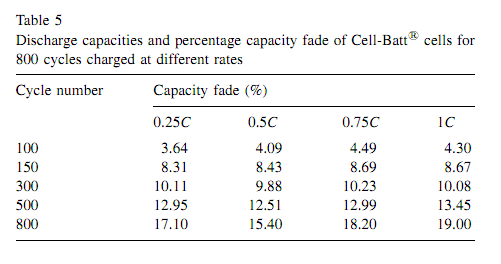
surfingslovak Volker, great comment. I would tend to agree with everything you said with the exception of this. If you used a '<=' sign, it wouldn't be a problem. A while ago, I found a report on battery degradation, which determined empirically that charging at 0.5C is best for long-term battery health. I know it's hard to generalize, but I believe that the rationale for this is balancing heat development with the overall length of the charging process.
In this context, 20kW charging would likely be ideal for the 160-mile Model S trim. I believe that Chademo is capable of throttling its output current. I have only passing familiarity with the Chademo protocol, but I believe that the charging current, among other parameters, can be negotiated between the vehicle and the external DC charger.
The problem with the 20 kW twin-charger configuration is that not many L2 stations will support this power level. This is likely the reason why Roadster owners did not utilize their 18kW onboard charger fully, which in turn prompted Tesla's decision to make it optional, and save some money. It's is just one man's opinion, but as additional details about Tesla's fast charging strategy trickle out, it's a mistake not to support Chademo quick charging. Via an adapter or a factory-installed option.
 �
�
Jan 1, 2012
stopcrazypp I think that is more than a bit unfair (and probably just a reflection of the bitterness of expecting QC included or available as an option on the 160 pack). The Model S is better in the following ways: better performance, better luxury, better passenger/cargo space, better looks, better handling, better range, better level 2 charging, included common 240V socket, etc. The only thing the Leaf/i can do that the base Model S can't is QC, but there's a lot more stuff the base Model S can do that the Leaf/i can't do.
And looking at this thread, I think people are giving Leaf/i + QC a bit too much credit:
http://www.teslamotorsclub.com/showthread.php/7085-Leaf-vs-40kW-Tesla-race.
It seems it would take a trip of 300+miles before the Leaf with QC will beat the base Model S charging on 20kW level 2.�
Jan 1, 2012
brianman Sounds like a worst of both worlds situation. You don't maximize charge amount, you don't maximize charge rate, and you introduce new reliability and predictability concerns by having a mixture.
Put another way, mixing battery types has some of the same types of problems that hybrids have vs. EV.�
Jan 1, 2012
dsm363 I agree. Should we start a new thread with this battery discussion? This hasn't been about someone angry about Tesla's marketing of the 40 kWh pack for a long time.�
Jan 1, 2012
JRP3 There has been discussion of using some high C rate cells such as A123 to help support a lower C rate higher energy density pack to produce needed current under high demand, and take high levels of regen, but only for short periods. I think some of the DIY crowd has tried it, not sure of the results at this point, but I don't think it's the same level of complexity as a hybrid.�
Jan 2, 2012
VolkerP Yup, fully agree. Technically, you can draw 20kW of which some power goes into A/C+fans so we arrive below 0.5C that go into the 40kW pack.
Sounds plausible to me. Here again rises the argument that an EV uses a charge point that cannot make full use of its power, like a GM Volt or LEAF charging on a 30A/240V J1772 or a LEAF with (hypothetical) Tesla->CHAdeMo adapter quick-charging on a 90kW Tesla SuperCharger... call that "charge point enviousness" but it has been brought up. The proposed solution is to have additional plugs for 20kW AC charging at every super charger installation that can be used on an adjacent parking slot.
Most Roadsters road trip stories report that trips are planned around existing HPCs. All of UK and most of Germany is covered with HPCs. California has a fair coverage. Many Roadster owners initiated setting up HPCs for public use in the blind spots between POIs. Most HPCs are wired to deliver the full 70A, some at 208V, some at 240V. If they are converted to J1772 plug, you will find >14kW on the road with the standard J1772 adapter that comes with Model S.
The Roadster on board charger is not put to full use for most of the time because most charging happens at home and overnight (~8h) on a 3/4 full pack. Heat and fan noise are greatly reduced at 32A/8kW. Even Hans-J�rg von Gemmingen who puts >200miles on his Roadster every day is charging at 32A.�

Không có nhận xét nào:
Đăng nhận xét